The rolling mill is where steel becomes product — and where fractions of a millimeter determine whether you ship prime material or scrap it. A modern hot strip mill executes 15-25 passes in under 90 seconds, with each pass requiring precise coordination of roll gap, speed, temperature, and force. Yet most steel plants still rely on static pass schedules and operator experience rather than real-time adaptive optimization. The result: 2-4% yield loss, 5-12% excess energy consumption, inconsistent gauge tolerance, and surface defects that cost $3-8 per ton in downgrading penalties.
A rolling mill digital twin changes this equation entirely. By creating a virtual replica of your mill that mirrors every stand, drive, roll, and sensor in real time, you gain the ability to simulate, predict, and optimize every pass before metal touches the rolls. Oxmaint's rolling mill maintenance and performance platform provides the asset intelligence layer that makes this possible — connecting equipment health data, maintenance history, and performance baselines into a living model that improves with every coil processed.
Every Coil You Roll Is a Data Opportunity You're Probably Missing
A single hot strip mill generates 50,000+ data points per coil. Most plants capture less than 5% of actionable insights. The digital twin captures them all.
Anatomy of a Rolling Mill Digital Twin
A rolling mill digital twin isn't a single model — it's an interconnected system of sub-models that mirror every critical component and process variable. Understanding the anatomy helps you see where maintenance data, equipment health, and process optimization converge:
Roll Gap Model
Real-time roll gap prediction incorporating thermal crown, wear profile, roll deflection, and mill stretch. Accounts for roll grinding history and campaign age tracked in your CMMS.
Temperature Model
Strip temperature prediction from furnace exit through final cooling. Integrates descale spray condition, interstand cooling status, and laminar cooling header maintenance state.
Drive & Motor Model
Motor current, torque, and speed profiles per stand. Predicts bearing degradation, alignment drift, and VFD health from vibration trends and power consumption baselines.
Flatness & Shape Model
Work roll bending force, CVC shifting position, and strip tension distribution. Correlates flatness defects with roll condition, bearing wear, and hydraulic system health.
Surface Quality Model
Predicts surface defects from roll surface condition, descaling effectiveness, and lubrication system performance. Links defect patterns to specific maintenance states across the mill line.
Energy & Load Model
Specific energy consumption per pass, per stand, and per product. Identifies energy anomalies caused by equipment degradation — worn bearings, misaligned drives, or fouled cooling systems.
Stand-by-Stand: Where Equipment Health Impacts Quality
Each stand in a rolling mill has unique failure modes that directly affect product quality and energy consumption. This stand-by-stand breakdown maps the specific maintenance issues to their quality and efficiency consequences:
Know Your Mill's Health Before It Impacts Quality
Oxmaint connects equipment condition data to rolling performance outcomes — giving you predictive visibility into quality risks, energy waste, and maintenance timing across every stand.
How Oxmaint Powers Rolling Mill Digital Twins
The digital twin is only as good as the equipment health intelligence feeding it. Here's how Oxmaint's CMMS delivers the critical maintenance data layer that makes real-time mill optimization possible:
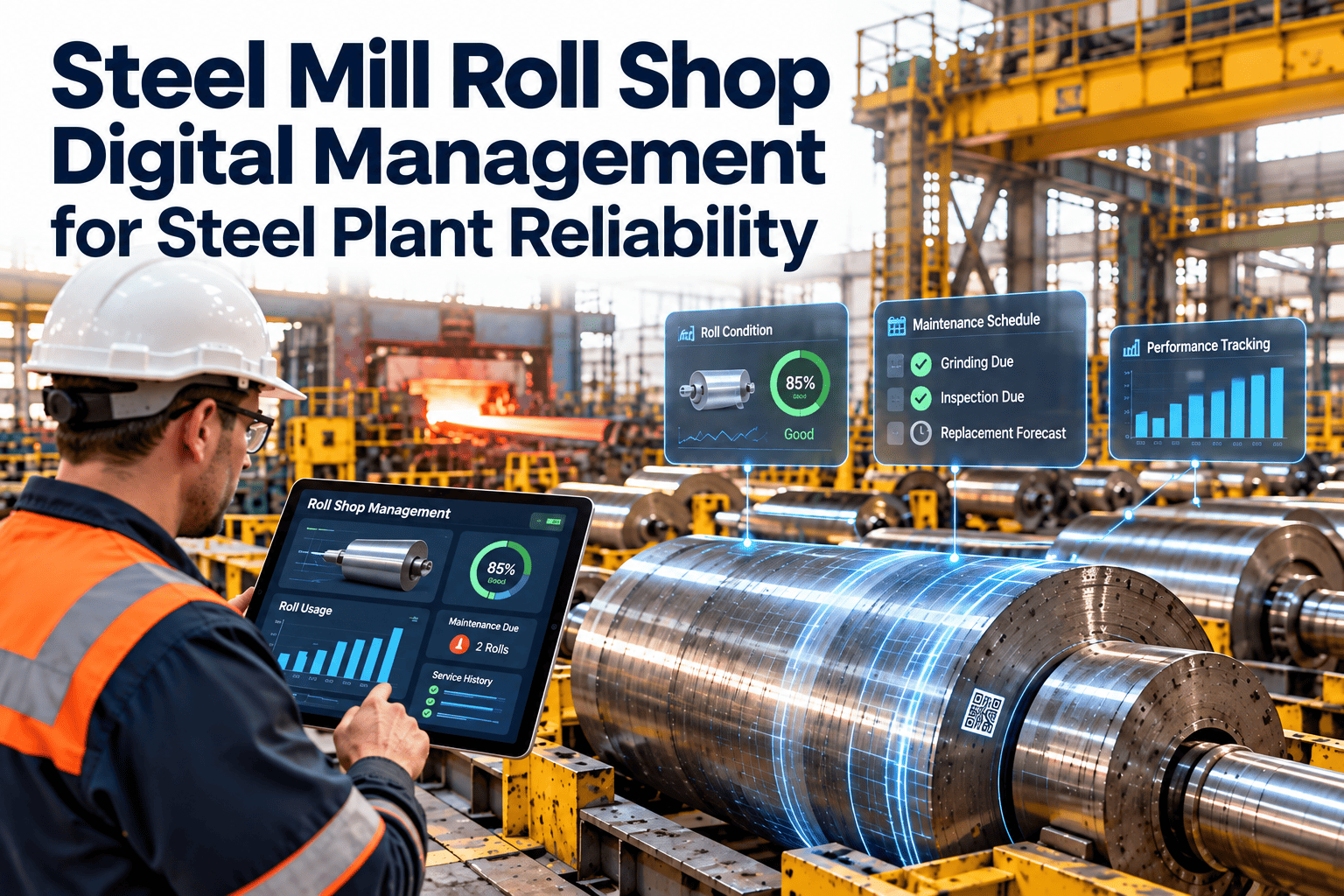
Roll Management System
Complete roll lifecycle tracking: grinding records, surface roughness measurements, campaign tonnage, thermal crown history, and bearing condition per roll set. Predict optimal roll change timing based on actual wear data rather than fixed tonnage limits. Extend campaigns when data supports it; shorten them when degradation accelerates.
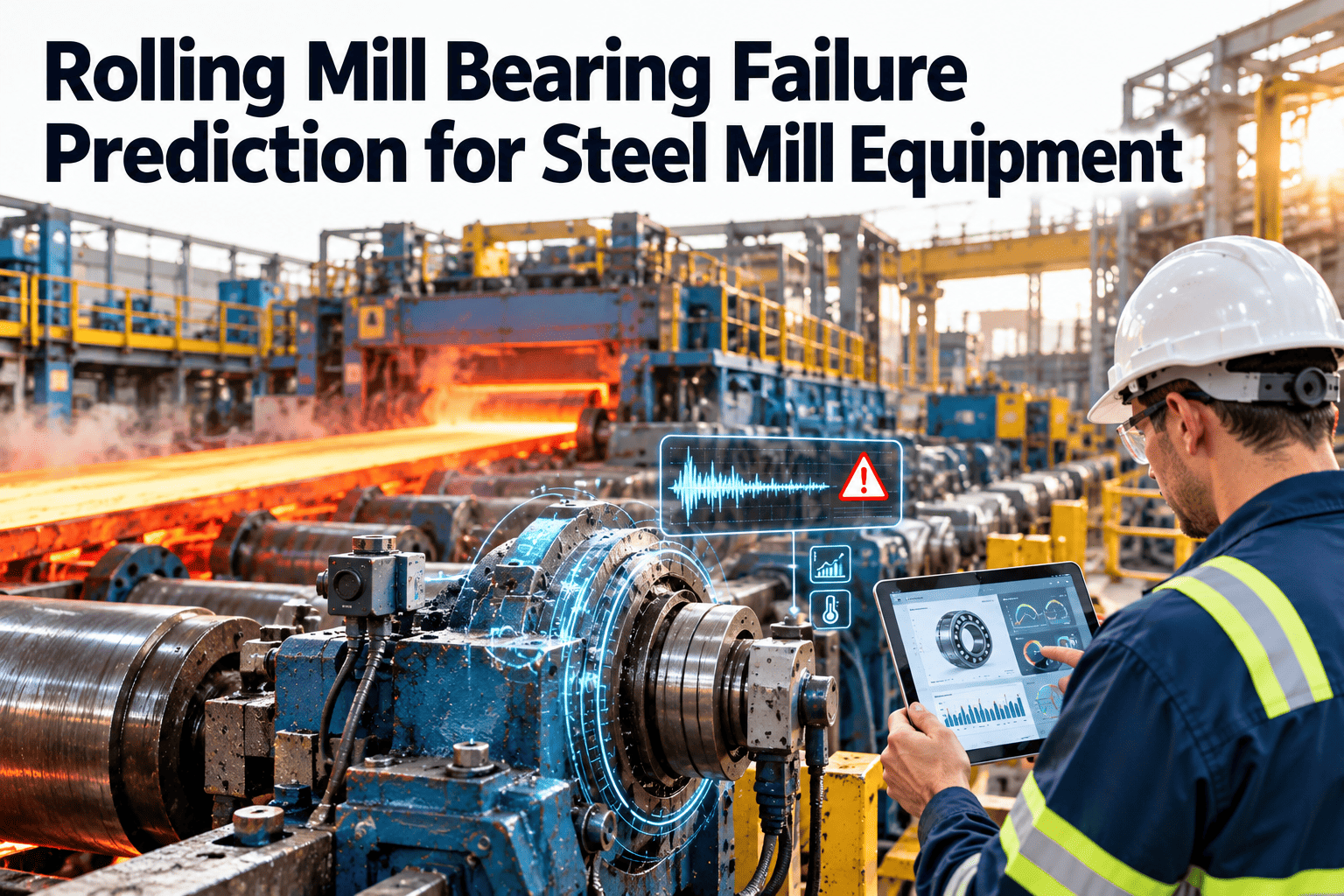
Vibration & Bearing Analytics
Track vibration signatures for every main drive bearing, spindle, and roll neck bearing. Oxmaint trends velocity, acceleration, and envelope data against maintenance events, predicting bearing failure 60-90 days in advance.
Cooling System PM Tracking
Schedule and track maintenance for every descale header, interstand cooling nozzle, and laminar cooling valve. Map nozzle blockage patterns to maintenance cycles and predict flow degradation before it impacts strip temperature.
Hydraulic System Health
Monitor AGC servo valve response times, hydraulic pressure stability, oil cleanliness (ISO codes), filter differential pressures, and accumulator precharge. Correlate hydraulic degradation with gauge control accuracy.
Energy-per-Pass Tracking
Monitor specific energy consumption per stand, per product, and per shift. Identify when a stand's energy consumption drifts above baseline — indicating bearing wear, alignment issues, or lubrication problems that need maintenance intervention.
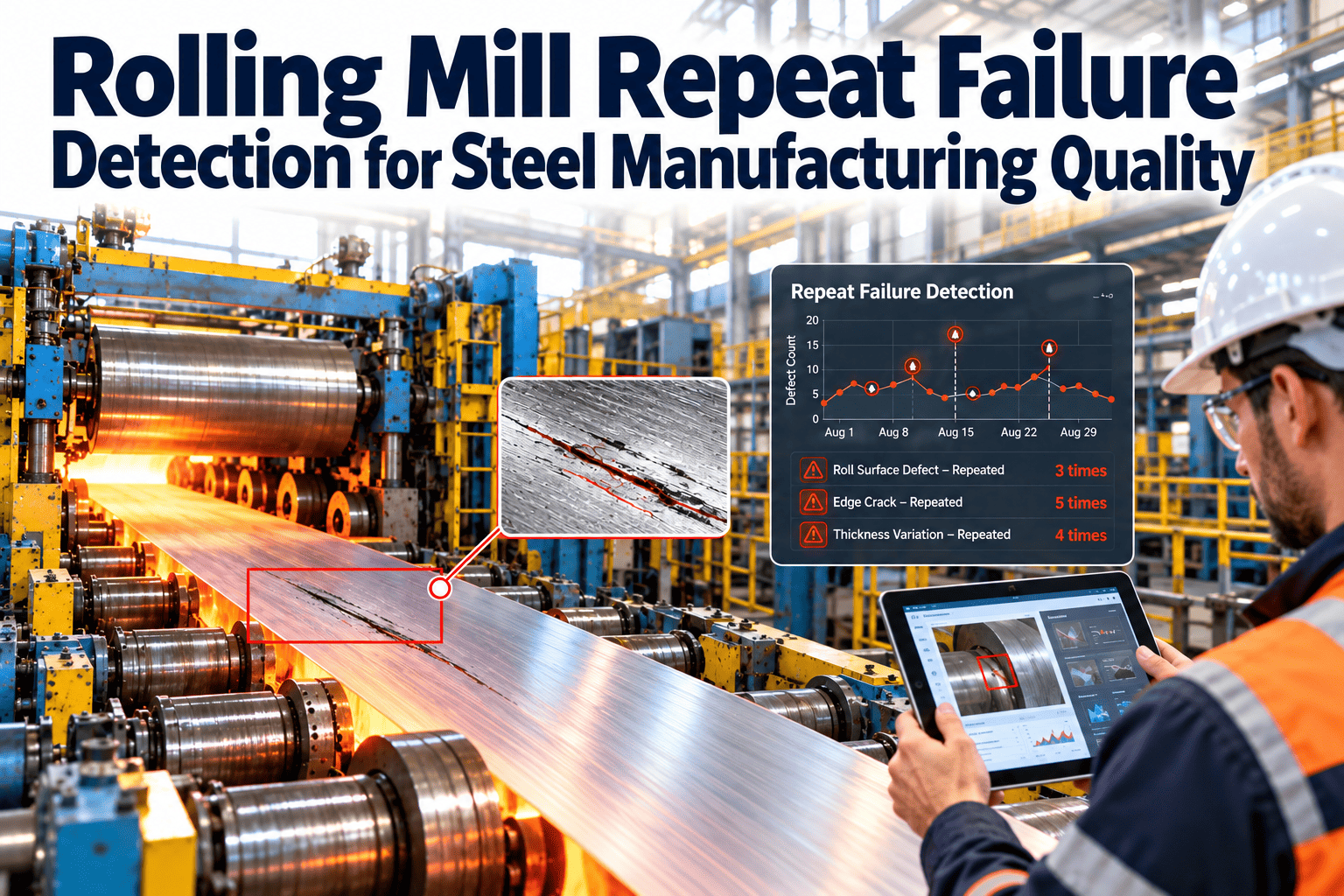
Quality-Maintenance Correlation
Link product quality data (gauge, flatness, surface, mechanical properties) to equipment maintenance states. When a quality deviation occurs, Oxmaint identifies which maintenance event — or missed PM — was the probable cause.
Rolling Mill KPI Benchmarks: World Class vs. Typical
These benchmarks represent the performance gap between mills operating with digital twin intelligence and those relying on traditional approaches. Use them to identify your highest-priority improvement targets:
Implementation Roadmap: 6 Phases to a Smarter Mill
Building a rolling mill digital twin is an incremental process. Each phase delivers standalone ROI while contributing to the full predictive optimization platform. Here's the proven path with Oxmaint's rolling mill implementation team:
Mill Asset Registry & Hierarchy
Map every component: stands, drives, rolls, bearings, hydraulics, cooling systems, measurement devices. Build parent-child relationships showing how each component connects to mill performance.
Roll Shop Integration & Campaign Tracking
Digitize roll grinding records, surface condition data, and campaign histories. Establish roll wear models and optimal campaign lengths per product group and roll position.
Energy & Performance Baselining
Establish kWh/ton, motor current, and force baselines per stand per product. Begin trending to detect degradation patterns linked to specific maintenance events.
Quality-Maintenance Correlation
Link quality data (gauge, flatness, surface) to equipment states. Build a correlation database that identifies which maintenance conditions cause which quality deviations.
Predictive Maintenance Activation
Activate failure probability scoring for critical mill components: bearings, hydraulics, rolls, and cooling systems. Enable automatic work order generation when risk thresholds are crossed.
Full Digital Twin Optimization
Combine all data layers into an integrated mill digital twin: equipment health, roll condition, energy performance, and quality prediction operating as a unified decision-support system.
Make Every Pass Count
Your rolling mill generates thousands of data points per coil. Oxmaint turns that data into predictive intelligence that optimizes quality, reduces energy, and extends equipment life.
Frequently Asked Questions
Can a rolling mill digital twin work without Level 2 integration?
Yes. While Level 2 automation data enriches the twin, a highly functional digital twin can be built from CMMS data alone: roll campaign histories, bearing vibration trends, hydraulic system health, cooling system PM records, and energy baselines. Oxmaint provides 60-70% of full digital twin value from maintenance data alone. Level 2 integration can be added later as a Phase 2 enhancement.
How does the digital twin improve roll campaign management?
Traditional roll changes are triggered by fixed tonnage limits or operator judgment. The digital twin tracks actual roll wear profiles, surface condition, thermal crown evolution, and product mix impact to predict the optimal change point. This extends campaigns by 20-35% when conditions allow and shortens them when accelerated wear is detected — eliminating both premature changes (wasted roll life) and late changes (quality losses).
What's the ROI timeline for a rolling mill digital twin?
Phase 1 (asset registry and roll management) typically delivers ROI within 8-12 weeks through extended roll campaigns and reduced unplanned stops. Full digital twin ROI compounds over 6-12 months as quality-maintenance correlations mature and predictive capabilities activate. First-year savings for a 1M ton/year hot strip mill typically range from $2-5 million across yield improvement, energy reduction, and maintenance optimization.
Does the system work for both hot and cold rolling mills?
Oxmaint supports both hot strip mills and cold rolling mills with dedicated templates for each. Hot mill templates focus on thermal management, descaling, and high-force drives. Cold mill templates emphasize roll surface quality, tension control, lubrication systems, and strip cleanliness. Tandem mills, reversing mills, Steckel mills, and plate mills all have specific configurations available.
How does maintenance data improve gauge accuracy?
Gauge accuracy depends on AGC hydraulic response time, roll gap stability, and mill stretch prediction — all of which degrade with equipment wear. By tracking servo valve condition, hydraulic oil cleanliness, bearing play, and roll wear profiles, Oxmaint identifies when equipment degradation begins affecting gauge control. Proactive maintenance on these systems maintains gauge accuracy at ±0.3-0.8% instead of allowing it to drift to ±1.5-2.5% between overhauls.