Steel plant workers face some of the most hazardous occupational health conditions in modern industry. Rolling mills and grinding operations routinely exceed 100 to 110 decibels, furnace operators endure radiant heat exceeding 1,350 degrees Celsius, and air quality monitoring reveals dangerous concentrations of silica dust, metal fumes, and toxic gases across production zones. Without continuous health monitoring systems, these invisible hazards cause permanent hearing loss, heat-related illnesses, and chronic respiratory diseases that cost steel manufacturers millions in workers compensation claims, lost productivity, and OSHA penalties. OxMaint's integrated health monitoring platform connects noise dosimeters, heat stress monitors, and air quality sensors directly to your CMMS — automatically generating exposure reports, triggering medical surveillance protocols, and creating compliance documentation that keeps your workforce healthy and your facility audit-ready.
Steel Plant Occupational Health Management: Noise, Heat Stress & Air Quality Monitoring
Continuous monitoring systems that track noise exposure, heat stress levels, and air quality across your steel plant — with automated audiometric testing schedules, WBGT alerts, and respiratory protection protocols integrated into your maintenance workflow.
Three Invisible Threats Destroying Worker Health in Steel Plants
Steel production generates a convergence of occupational health hazards that operate silently and cumulatively. Workers must navigate the dangers of hot metals, toxic substances, loud machinery, respiratory irritants, and physically demanding tasks on a daily basis. The damage accumulates over months and years — hearing loss that starts as mild tinnitus progresses to permanent deafness, heat exposure causes kidney damage and cardiovascular strain, and respiratory hazards lead to irreversible lung diseases. Most steel plants discover these problems only after workers file compensation claims or OSHA inspections reveal systematic exposure violations.
Noise-Induced Hearing Loss
Unlike burns, noise damage is invisible and cumulative. Rolling mills, presses, forging hammers, and grinding operations create sustained noise levels between 100 and 110 decibels. OSHA requires audiometric testing for all employees whose exposures equal or exceed an 8-hour time-weighted average of 85 decibels. Without proper monitoring and hearing conservation programs, workers lose their ability to hear high-frequency sounds first, progressing to complete hearing impairment that affects job performance, safety communication, and quality of life outside work.
Heat Stress and Thermal Illness
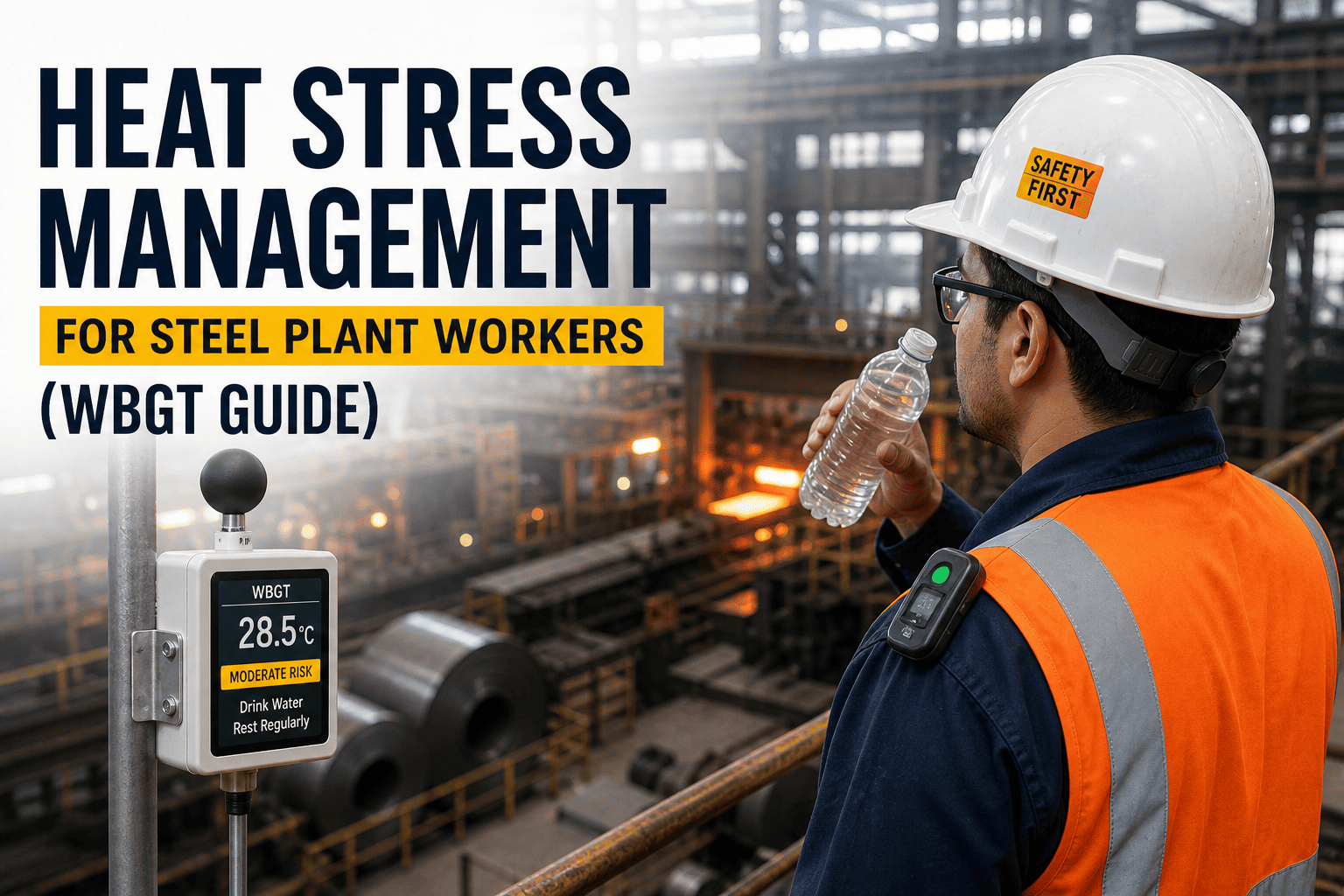
Steel industry workers in tropical settings are subjected to thermally stressful environments that create well-known risks of heat-related illnesses and limit workers' productivity. Furnace operators, coke oven workers, and casting crews face radiant heat that pushes workplace temperatures to dangerous levels. Approximately 90 percent of WBGT measurements in steel plants were higher than recommended threshold limit values, ranging from 27.2 to 41.7 degrees Celsius. Heat exposure causes dehydration, heat exhaustion, heat stroke, kidney damage, and cardiovascular stress — yet most facilities still rely on manual temperature checks rather than continuous monitoring.
Respiratory Hazards and Air Quality
Steel production releases a mixture of airborne hazards including silica dust from raw materials, metal fumes from smelting and welding, carbon monoxide and benzene from combustion processes. Each exposure pathway carries different risk profiles — from immediate irritation and chemical burns to long-term silicosis, emphysema, and occupational lung cancer. Without zone-specific air quality monitoring and respiratory protection programs matched to actual exposure levels, workers inhale dangerous concentrations of particulates, gases, and fumes that accumulate in lung tissue and cause irreversible damage.
What Steel Plants Must Track to Stay Compliant
The employer shall establish and maintain an audiometric testing program, making audiometric testing available to all employees whose exposures equal or exceed an 8-hour time-weighted average of 85 decibels. OSHA's occupational health standards for steel plants are specific, measurable, and enforceable. Violations discovered during inspections result in citations, fines, and mandatory abatement programs. The key to compliance is continuous monitoring combined with documented action when exposure thresholds are exceeded.
| Hazard Type | OSHA Action Level | Permissible Exposure Limit | Required Monitoring | Mandatory Controls |
|---|---|---|---|---|
| Noise Exposure | 85 dBA TWA (8-hour) | 90 dBA TWA (8-hour) | Personal dosimetry, annual audiograms | Hearing conservation program, engineering controls, PPE |
| Heat Stress | Varies by workload | WBGT-based thresholds | WBGT monitoring, work-rest schedules | Hydration stations, cooling areas, acclimatization |
| Silica Dust | 25 µg/m³ (respirable) | 50 µg/m³ (respirable) | Air sampling every 6 months | Engineering controls, respirators, medical surveillance |
| Carbon Monoxide | No specific action level | 50 ppm TWA | Continuous area monitoring | Ventilation systems, gas detection, evacuation plans |
| Metal Fumes | Varies by metal | Substance-specific PELs | Personal air sampling | Local exhaust ventilation, respiratory protection |
Building an Effective Hearing Conservation Program
Under OSHA's Noise Standard, the main elements of an effective hearing conservation program include exposure monitoring, audiometric testing, hearing protection, and training. Steel plants generate noise from dozens of sources simultaneously — rolling mills crushing steel at 105 decibels, pneumatic hammers pounding at 110 decibels, grinding operations screaming at 100 decibels. Workers move between these zones throughout their shifts, accumulating noise dose that must be tracked personally, not just measured by area monitoring.
Personal Noise Dosimetry
Area sound level measurements miss the reality of worker exposure. Employers are known to perform a review of noise in their work environment using a sound level meter to verify noise levels, which often leads the employer to believe they are compliant when a small grouping of instantaneous sound pressure readings is below a certain threshold. Personal noise dosimeters worn throughout the shift capture actual exposure as workers move between zones, accounting for distance from sources, barrier effects, and task duration.
Baseline and Annual Audiograms
Within 6 months of an employee's first exposure at or above the action level, the employer shall establish a valid baseline audiogram against which subsequent audiograms can be compared. Annual hearing tests detect threshold shifts early — the first sign that hearing protection is inadequate or that exposure levels have increased. OxMaint automatically schedules audiometric testing based on exposure monitoring data and flags standard threshold shifts for immediate follow-up.
Hearing Protection Selection
Generic foam earplugs do not provide adequate protection in steel mill environments. Using NIOSH's derating approach — 50 percent for earplugs, 25 percent for earmuffs — often reveals that standard foam earplugs are inadequate in environments above 100 decibels. Protection must be selected based on measured noise levels per zone, with fit testing to verify actual attenuation and replacement schedules tracked in your CMMS.
Engineering Noise Controls
PPE is the last line of defense, not the first solution. Engineering controls — equipment enclosures, vibration damping, barrier walls, process modifications — reduce noise at the source. OSHA emphasizes following the hierarchy of controls, prioritizing long-term solutions over temporary fixes. When dosimetry reveals elevated exposures despite hearing protection, engineering controls become mandatory, not optional.
WBGT Monitoring and Thermal Illness Prevention
Environmental heat is more than just temperature — four factors contribute to heat stress in workers: air temperature, humidity, radiant heat from sunlight or artificial heat sources such as furnaces, and air movement. Steel plant furnace areas generate radiant heat that pushes effective temperatures far beyond what ambient thermometers measure. In steel industry coke ovens and blast furnaces, globe temperature readings reached 67.6 degrees Celsius, creating conditions where workers experience heat stress within minutes even when properly acclimatized.
Heat Stress by Steel Plant Zone
WBGT measurements and recommended work-rest ratios
Heat Illness Warning Signs
Symptoms that require immediate intervention
Critical Heat Stress Controls for Steel Plants
Connect your WBGT monitors, noise dosimeters, and air quality sensors to OxMaint's health monitoring dashboard. Get automated exposure reports, compliance documentation, and medical surveillance scheduling — all integrated with your existing CMMS.
Managing Chemical and Particulate Exposures
Steel production releases airborne hazards including silica dust, metal fumes, carbon monoxide and benzene, with each exposure carrying a different risk profile from immediate irritation to long-term silicosis, emphysema, and occupational lung cancer. Respiratory hazards in steel plants are not uniform across facilities — welding generates manganese and hexavalent chromium fumes, grinding creates respirable silica, combustion processes release carbon monoxide, and coke ovens emit benzene and polycyclic aromatic hydrocarbons. Generic respiratory protection programs fail because they do not account for zone-specific exposures.
Critical Airborne Contaminants
| Contaminant | Sources | OSHA PEL | Health Effects |
|---|---|---|---|
| Respirable Silica | Grinding, abrasive blasting | 50 µg/m³ | Silicosis, lung cancer |
| Carbon Monoxide | Furnaces, combustion | 50 ppm | Asphyxiation, cardiovascular damage |
| Manganese Fumes | Welding, smelting | 5 mg/m³ ceiling | Neurological disorders |
| Benzene | Coke ovens | 1 ppm TWA | Leukemia, bone marrow damage |
| Hexavalent Chromium | Welding stainless steel | 5 µg/m³ | Lung cancer, respiratory damage |
Respiratory Protection Selection
Respiratory protection must be specified based on site-specific air quality data — the respirator required in the smelting area is not the same as the one needed in the maintenance workshop. Selection requires quantitative fit testing, not just issuing N95 masks across the entire facility.
Health Screening Programs That Detect Problems Early
Pre-placement medical examinations are of great importance in selecting persons suitable for the arduous work in the steel plant, with periodic chest examinations provided for those exposed to dust and audiometric examinations for those exposed to noise. Medical surveillance is not optional once exposure monitoring confirms that workers exceed OSHA action levels. The goal is to detect adverse health effects before they become permanent disabilities — catching hearing loss in early stages, identifying silicosis before fibrosis advances, and monitoring cardiovascular stress from heat exposure before it causes organ damage.
Baseline audiogram must be established within 6 months of first exposure at or above the action level, with annual follow-up testing. If a standard threshold shift is identified — a significant change in hearing ability — employers must notify the affected employee and provide further evaluation and protection. OxMaint tracks exposure history, schedules testing based on noise dosimetry results, and flags threshold shifts for immediate medical review.
Workers exposed to silica, metal fumes, and respiratory irritants require baseline chest X-rays, pulmonary function testing, and periodic medical examinations. Frequency depends on exposure levels — quarterly spirometry for high silica exposure, annual chest imaging for moderate exposures. Medical surveillance identifies restrictive lung disease early, when job modification or enhanced protection can prevent progression to disabling silicosis or chronic obstructive pulmonary disease.
Medical supervision must pay particular attention to those exposed to heat stress, with hypertension, heart diseases, obesity and chronic gastroenteritis disqualifying individuals from work in hot surroundings. Pre-placement screening identifies workers at elevated risk, while periodic monitoring detects kidney function decline, cardiovascular strain, and dehydration patterns. Urine specific gravity testing during summer months reveals workers not maintaining adequate hydration despite access to water.
How Health Monitoring Connects to Your CMMS
Occupational health data scattered across spreadsheets, vendor portals, and paper files provides no actionable intelligence. OxMaint centralizes noise dosimetry results, WBGT measurements, air quality samples, audiometric testing schedules, and respiratory fit test records into a single health surveillance platform that connects directly to your maintenance system. When a noise dosimeter registers overexposure, OxMaint automatically creates a work order for engineering controls. When heat stress thresholds are exceeded, supervisors receive alerts with required work-rest schedules. When audiometric testing reveals a threshold shift, medical follow-up appointments are scheduled and exposure history is attached for physician review.
Real-Time Exposure Dashboards
Visualize noise levels, heat stress indices, and air quality readings across all production zones. Historical trending shows seasonal patterns, process changes that increased exposures, and zones where engineering controls successfully reduced hazards. Your safety team sees worker health status in real time, not weeks after exposure occurred.
Automated Medical Surveillance Scheduling
Based on exposure monitoring data, OxMaint automatically schedules baseline audiograms, annual hearing tests, pulmonary function testing, and heat stress medical evaluations. Reminders go to both workers and occupational health providers. Missed appointments trigger supervisor notifications. All testing results are documented with exposure history attached for trend analysis.
PPE Assignment and Fit Testing
Respiratory protection and hearing protection are assigned based on measured exposures per zone, not generic facility-wide policies. Fit testing results are tracked with expiration dates, triggering retest schedules automatically. When air quality sampling reveals increased contaminant levels, OxMaint flags affected workers for enhanced respiratory protection and creates work orders for engineering controls.
OSHA Compliance Reporting
OSHA 300 logs, exposure monitoring records, audiometric test results, medical surveillance documentation, and training records are maintained in a single compliance repository. When inspectors request documentation, export complete exposure histories with one click. Annual summary reports generate automatically with no manual data compilation required.
What Industrial Hygienists Say About Steel Plant Health Programs
"The gap between OSHA's permissible exposure limits and actual worker protection is significant in steel manufacturing. OSHA's 90 decibel permissible exposure limit is legally enforceable, while NIOSH's 85 decibel recommended exposure limit is the scientifically-derived recommendation — workers exposed between 85 and 90 decibels are in the hearing conservation zone, protected under OSHA program requirements but potentially at greater risk than NIOSH's standard would allow. The best programs implement monitoring and controls at the more protective NIOSH levels, not just OSHA minimums. Heat stress is similar — facilities that wait for workers to show symptoms have already failed. Continuous WBGT monitoring with automated work-rest schedules prevents heat illness, while reactive programs only document failures after they occur."
Building Your Occupational Health Program in 90 Days
Baseline Exposure Assessment
Deploy personal noise dosimeters across all production roles for full-shift monitoring. Install WBGT monitors in furnace areas, coke ovens, casting zones, and rolling mills. Conduct air quality sampling for silica, metal fumes, carbon monoxide, and chemical exposures in all work zones. Document current PPE usage, medical surveillance practices, and training programs. This assessment reveals actual exposure levels versus assumed conditions.
Control Implementation and Monitoring Integration
Based on exposure data, implement engineering controls where feasible — noise barriers, equipment enclosures, ventilation upgrades. Install continuous monitoring systems connected to OxMaint for real-time exposure tracking. Establish baseline audiograms for all workers with noise exposures above 85 decibels. Conduct respiratory fit testing and upgrade PPE to match actual exposure levels. Create zone-specific work-rest schedules for heat stress management.
Medical Surveillance and Training Launch
Activate automated medical surveillance scheduling in OxMaint based on exposure categories. Train supervisors on heat illness recognition, hearing conservation protocols, and respiratory protection requirements. Educate workers on symptom recognition, proper PPE use, and self-monitoring techniques. Document all programs, create OSHA-compliant record systems, and establish quarterly review cycles to verify controls remain effective as processes change.
Common Questions About Steel Plant Occupational Health Management
Protect Your Workforce. Document Your Compliance. Prevent Occupational Disease.
OxMaint's integrated occupational health platform connects noise monitoring, heat stress measurement, and air quality analysis to your CMMS — turning exposure data into automated work orders, medical surveillance schedules, and OSHA-compliant documentation that keeps workers healthy and facilities audit-ready.