Switching to sustainable packaging is a materials decision that lands squarely on the maintenance team. The film supplier changes, the sustainability report looks better — and then the sealing jaws that ran flawlessly on multi-layer plastic start producing weak seals on mono-PE, the paper web tears where plastic used to glide, and a line built for one material's behavior is suddenly fighting another's. None of this means sustainable packaging is a bad idea; it means the machine was engineered for the old material, and the maintenance program has to be re-tuned for the new one. Do that deliberately and the transition is smooth. Skip it and reliability drops at the worst possible moment — right when leadership is watching the sustainability metrics. This guide covers FMCG sustainable packaging equipment maintenance: how new materials change machine behavior, the PM adjustments each one demands, quality integration, and the CMMS structure that carries a packaging transition without hurting uptime. Start free on OxMaint or book a demo.
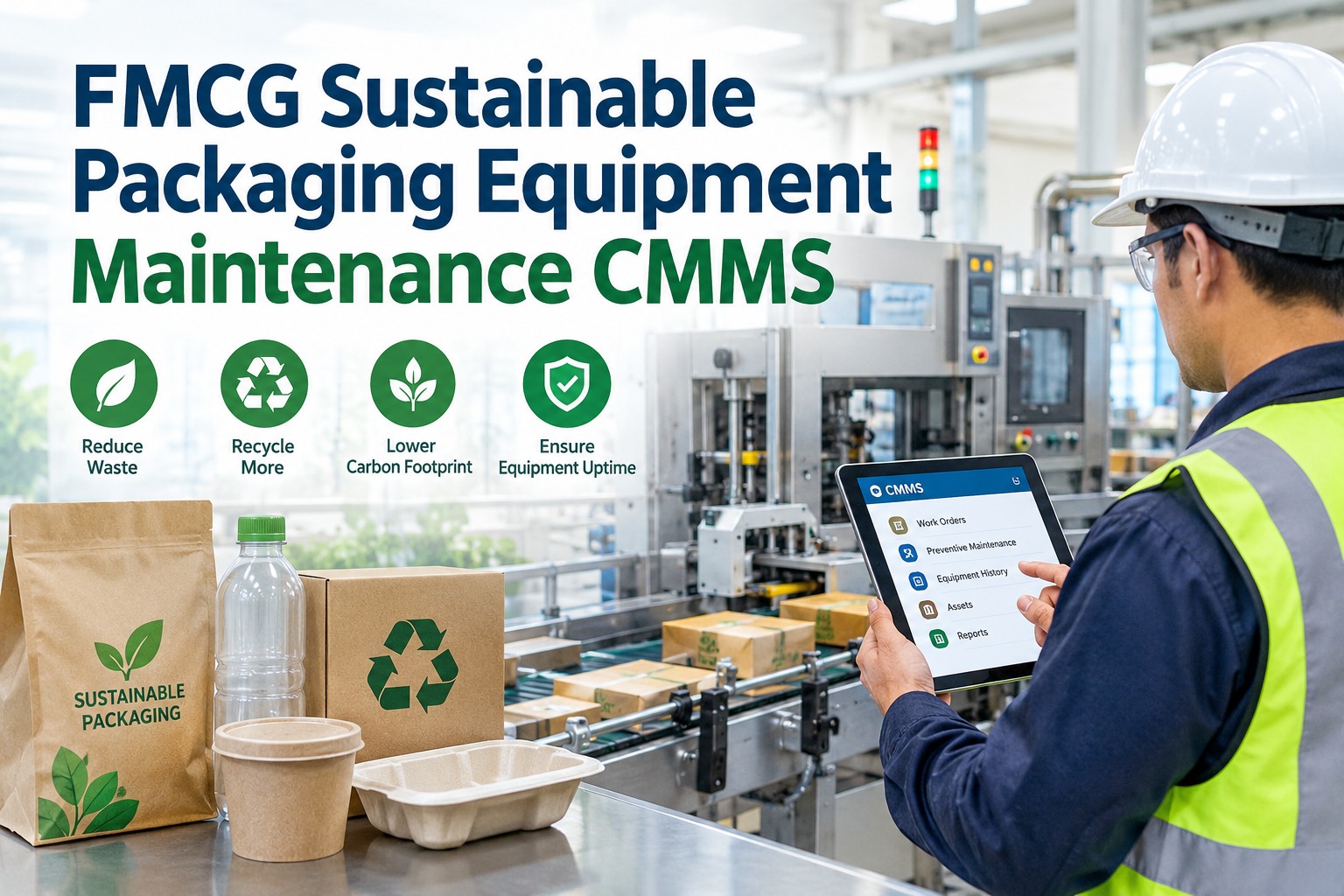
FMCG Sustainable Packaging Equipment Maintenance
Your machine was built for plastic. The new material doesn't behave like plastic.
Narrower
seal temperature & pressure windows on mono-material and paper — less margin for drift
More heat
mono-PE takes more heat and dwell time to seal — but the line can't slow down
Higher friction
paper's coefficient of friction is far above plastic film — feed and tension change
Re-tune, not rip
most lines adapt through maintenance and settings, not wholesale replacement
Why Sustainable Materials Break the Old Maintenance Plan
A packaging line is a machine tuned to one material's physics — its stiffness, its friction, its melting behavior, the exact temperature and pressure that make a clean seal. Sustainable substrates change several of those properties at once. A mono-PE film that recycles beautifully may have a narrower sealing window, poorer hot tack, and different web behavior at speed. Paper lacks the elasticity of plastic and drags where film glided. The equipment doesn't know the material changed for a good reason — it just starts producing the failures it was never tuned to avoid. The maintenance plan built around the old material is now aimed at the wrong targets.
Built for Conventional Plastic
Now Running Sustainable Material
Wide, forgiving seal temperature window
Narrow window — weak seals, microfractures, wrinkling if drift
Low film friction, glides through feed
Higher friction (paper) — feed and tension need re-set
Elastic film tolerates tension swings
Low elasticity — tears or stretches, demands smooth tension control
Stable seals through stop/restart
Poor hot tack — seals distort on stop/restart heat spikes
What Changes on the Machine · By Material
Not every sustainable material stresses the same subsystem. Knowing which one you're converting to tells you where the new maintenance attention has to go. These are the three most common FMCG transitions and the machine areas each one loads hardest.
Mono-Material Films (PE / PP)
Stresses: sealing system
Recyclable because they're a single polymer — but the sealing window narrows and hot tack drops. Seal jaws, temperature control, and pressure calibration become the critical maintenance points. Servo-driven, PID-controlled sealing handles the tighter tolerance far better than worn mechanical setups.
Paper & Fiber-Based
Stresses: feed & tension
Higher coefficient of friction and low elasticity mean paper tears and jams where film flowed. Tension control, feed rollers, forming shoulders, and web-path surfaces need closer inspection and gentler, precisely maintained handling to keep OEE from falling.
Refillable & Reusable Systems
Stresses: cleaning & wear cycles
Returnable formats add wash, inspect, and sanitation stages the line didn't have — new cleaning equipment, more frequent hygiene PMs, and inspection stations whose sensors and mechanisms themselves need a maintenance schedule.
The pattern across all three: sustainable materials trade a wide operating margin for a narrow one. Equipment that was "good enough" slightly out of tune now produces defects, because the material no longer forgives the drift. Maintenance precision is what buys back the margin.
The PM Adjustments a Transition Demands
A sustainable-material switch isn't a one-time re-setting — it changes what preventive maintenance has to watch, how often, and to what tolerance. These are the adjustments that keep reliability intact through the conversion.
01
Tighten Seal-System PMs
Calibrate temperature and pressure to the new material's narrow window, inspect jaws and heating elements more often, and log the seal settings that actually work — the tolerance that was slack before is now critical.
02
Re-Baseline Feed & Tension
Reset and re-baseline tension control and feed components for the new friction and stiffness, then monitor roller and web-path wear — paper abrades surfaces that plastic never touched.
03
Add Cleaning & Hygiene Cycles
For refillable systems, build the new wash and sanitation stages into the PM calendar and treat their equipment as assets with their own schedules — not an afterthought bolted onto the line.
04
Link Maintenance to Quality
Tie seal-integrity checks and defect data back to the machine, so a rise in weak seals or wrinkling triggers a maintenance response before it becomes a batch of failed packs.
Carry the Transition Without Losing Uptime — Free Forever
Sign up on OxMaint's free forever plan and re-tune your packaging PMs for the new material — updated seal-calibration checks, tension and feed inspections, added cleaning cycles for refillables, and the working settings logged against each machine so the whole team runs the same recipe. No card, no time limit.
Maintenance and Quality Are Now the Same Conversation
With a forgiving material, a slightly-off machine still made a sellable pack. With a narrow-window material, the same drift makes a defect — so on a sustainable line, a quality problem is usually a maintenance signal in disguise. Reading the defect as feedback to the machine is what stops a settings drift from becoming a scrapped batch.
Weak or leaking seals
→
Seal temperature/pressure out of the narrow window — recalibrate jaws
Wrinkled or distorted seals
→
Hot-tack distortion on stop/restart — check heat control & dwell
Tears & web breaks
→
Tension set for old film, or worn feed surfaces — re-baseline & inspect
Rising microfractures
→
Pressure drift or jaw wear against a low-margin material — service
How OxMaint Structures the Packaging Transition
A material switch touches settings, PMs, cleaning cycles, and quality all at once — and if those live in separate places, the transition wobbles. OxMaint keeps them on one machine record, so re-tuning a line for sustainable packaging is a managed change rather than a scramble of tribal knowledge.
Log
Working Settings per Material
The seal temperature, pressure, and tension that actually run each material stored on the machine — so the recipe survives a shift change, not just the operator who found it.
Adapt
Material-Specific PMs
PM checklists tuned to the substrate — tighter seal calibration for mono-film, feed and tension inspection for paper, cleaning cycles for refillables.
Track
Wear on New Stress Points
Seal jaws, feed rollers, and web-path surfaces monitored where the new material loads them — catching abrasion and drift before they make defects.
Connect
Defect to Work Order
A seal-integrity failure or defect trend opens a work order against the machine — quality signal to maintenance action, closed and verified.
Manage
Changeover as a Procedure
Format and material changeovers run as standard digital procedures — faster swaps, less material waste, consistent setup every time.
Prove
Reliability Through the Switch
Uptime, defect rate, and PM compliance tracked across the transition — the evidence that sustainability didn't cost you reliability.
Go Greener Without Going Down
Free forever plan — no card, no time limit. Re-tune PMs for the new material, log the settings that work, tie defects to maintenance, and prove reliability held through the switch. Or book 30 minutes and we'll map your sustainable-packaging transition on the equipment side.
Frequently Asked Questions
Do we need new machines to run sustainable packaging?
Usually not wholesale — most lines adapt through re-tuning, settings changes, and targeted upgrades like servo drives or PID-controlled sealing rather than full replacement. What always changes is the maintenance plan: sustainable materials have narrower operating windows, so the equipment has to be maintained to tighter tolerances than the old plastic forgave.
Why do seals fail after switching to mono-material or paper?
Sustainable substrates have a narrower sealing window and often poorer hot tack, so a temperature or pressure setting that was fine for multi-layer plastic now produces weak seals, microfractures, or wrinkling. The fix is recalibrating the seal system to the new material and maintaining jaws and heat control more tightly — the margin that absorbed drift is gone.
Why does paper packaging cause more feed and tension problems?
Paper has a much higher coefficient of friction than plastic film and far less elasticity, so it drags on surfaces that film glided over and tears under tension swings film absorbed. Feed rollers, forming shoulders, and tension control need re-baselining for the new material and closer wear inspection, since paper abrades web-path surfaces plastic never stressed.
How do refillable packaging systems change maintenance?
They add stages the line didn't have — washing, inspection, and sanitation for returned containers. That means new cleaning equipment to maintain, more frequent hygiene PMs, and inspection-station sensors and mechanisms that themselves need scheduled service. In a CMMS these become assets with their own PM schedules rather than an add-on nobody tracks.
How does a CMMS help protect reliability during the transition?
It keeps the moving parts of the switch in one place: the working settings logged per material, PMs re-tuned to the new substrate, wear tracked on the newly stressed components, and defects tied back to maintenance work orders. That turns a material change from tribal knowledge into a managed procedure — and gives you the uptime and defect data to prove sustainability didn't cost reliability.
Start free or
book a demo.