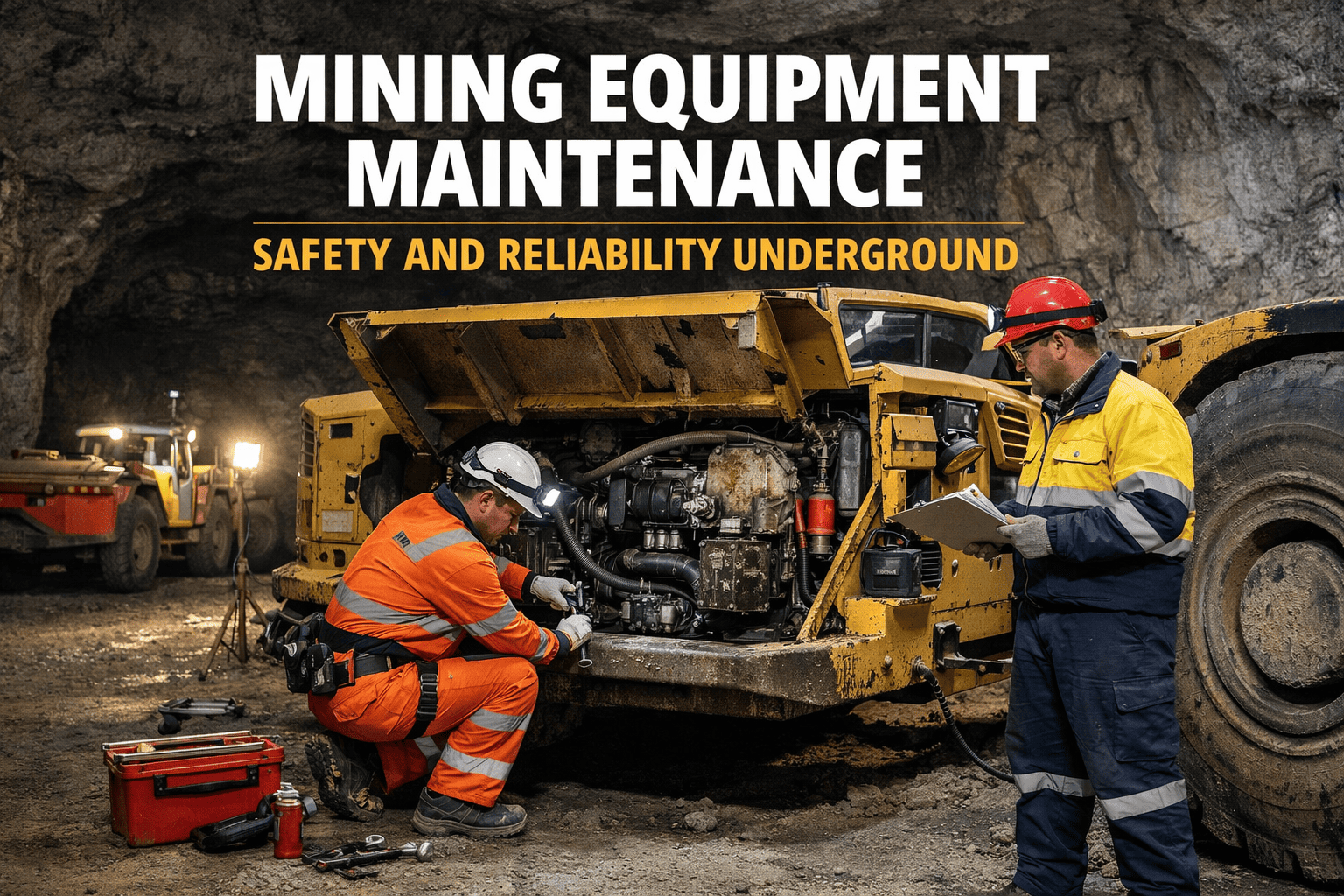
In a mini mill, the furnace, ladle, caster and rolling mill are linked like carriages on one train. There is very little stock in between, so when one stops, the others soon follow. A hydraulic leak on the caster or a cooling-water fault on the EAF roof does not cost one department an hour. It can cost the whole plant a sequence of heats. That is why mini steel mill maintenance is less about fixing machines and more about protecting the flow of the whole chain. This guide maps where mini mills are most exposed, which strategy fits each asset, how to run a planned outage that finishes on time, and how OXMAINT AI, the AI-powered CMMS, keeps the plan on track.
Steel Plant Maintenance · EAF · Melt Shop · Caster · Rolling Mill
Mini Steel Mill Maintenance: EAF Reliability & Uptime Strategy 2027.
OXMAINT AI, the AI-powered CMMS/maintenance management software, organises every asset by process area, schedules PMs and outages, tracks condition readings and turns every warning into an assigned work order.
Area-Based Asset Tree
Outage Planning
Critical Spares
4 Areas
melt shop, ladle metallurgy, casting and rolling
1 Chain
tightly coupled, with little buffer between stages
4 Strategies
matched to asset criticality, not applied equally
90 Days
a realistic path to a working reliability plan
Why Mini Mills Are Unforgiving: The Heat-to-Heat Chain
Steel leaves the furnace in a ladle and has to be cast within a tight window while it is still hot. Casting runs in sequences, and a broken sequence is expensive. The chain below shows how little room each stage has to absorb a stop. Buffer levels vary by plant, so treat them as typical. Sign up free and map your own chain in OXMAINT AI.
Scrap & Charging
Cranes, charge buckets, scrap handling
BUFFER: LARGE
▶
EAF Melting
Furnace, transformer, electrodes, off-gas
BUFFER: NONE
▶
Ladle Furnace
Refining, stirring, alloy additions
BUFFER: MINIMAL
▶
Continuous Caster
Tundish, mold, segments, cooling
BUFFER: NONE
▶
Rolling Mill
Reheat, stands, shears, cooling bed
BUFFER: SOME
The takeaway: the stages with no buffer, the EAF, ladle and caster, deserve the strictest reliability discipline. A stop there is felt everywhere else within minutes.
Hot-Spot Map: What Fails Where, and What to Check
Each area has its own failure patterns. Here is a practical watchlist per area. Always follow your equipment manufacturer's guidance and site safety rules. Book a demo to see an area-based asset tree.
MELT SHOP · EAF
Watch: electrode regulation and breakage, transformer temperature and oil condition, water-cooled panel and roof leaks, tilt and EBT hydraulics, fume extraction fans and baghouse
PM focus: panel and roof inspection, hydraulic filtration, electrode arm and clamp checks, off-gas duct wear
LADLE METALLURGY
Watch: ladle car drives, stirring gas lines and valves, wire feeders, electrode arms, ladle lining and slide gate condition
PM focus: gas train checks, feeder wear parts, cable and hose inspection near heat
CONTINUOUS CASTER
Watch: mold oscillation, segment rolls and bearings, spray nozzles, tundish equipment, hydraulics, cutting equipment
PM focus: segment refurbishment cycles, nozzle checks, oscillator condition, cooling-water quality
ROLLING MILL
Watch: reheat furnace burners and refractory, mill stand gearboxes and bearings, roll changes, shears, cooling bed drives
PM focus: gearbox oil and vibration, lubrication routes, roll shop schedule, guide wear
Safety note: water leaking into any vessel that holds molten metal is a serious safety event, not just a maintenance defect. Treat cooling-water leaks on the furnace and caster as top priority, and keep lockout, hot-work and confined-space permits tied to every job.
Keep Every Heat Moving. Plan the Stops Before They Plan You.
Put your melt shop, caster and rolling mill assets, PMs and outage jobs in one system, so reliability work is scheduled, tracked and proven.
Match the Strategy to the Asset, Not the Other Way Round
Applying one approach everywhere wastes effort. Critical, unbuffered assets need condition monitoring and planned renewal. Low-impact items can run to failure. Start free and tag each asset with its criticality.
| Asset Group | Primary Strategy | Why It Fits |
| EAF transformer & electrode system |
Condition-based |
Failure halts melting and repairs are long. Temperature and oil trends give early warning. |
| Water-cooled panels, roof & cooling circuits |
Condition-based |
Leaks are a safety and production risk. Flow and temperature differences expose them early. |
| Hydraulic power units |
Condition-based |
Oil cleanliness and pressure trends predict valve and pump wear. |
| Caster segments, rolls & mold |
Campaign / time-based |
Wear follows tonnage and cycles, so refurbishment is scheduled by usage. |
| Rolling mill gearboxes & fans |
Condition-based |
Vibration and oil analysis show developing faults well ahead of seizure. |
| Cranes & lifting equipment |
Time-based + statutory |
Inspection intervals are often set by regulation and safety rules. |
| Low-criticality utilities |
Run-to-failure |
Failure is cheap and quick to fix, so monitoring is not worth the effort. |
Six Condition Signals Worth Tracking in a Melt Shop
You do not need to monitor everything. These six signals give the best early warning for the equipment that stops the chain. Book a demo to set up condition readings and alerts.
1
Electrode Consumption & Breakage
Warns of regulation problems, clamp wear and charge issues.
2
Transformer Temperature & Oil
Warns of overload, cooling faults and insulation ageing.
3
Cooling-Water Flow & Temperature Rise
Warns of blocked or leaking panels, roof and caster circuits.
4
Hydraulic Oil Cleanliness & Pressure
Warns of contamination, internal leakage and pump wear.
5
Gearbox, Motor & Fan Vibration
Warns of bearing wear, misalignment and imbalance.
6
Mold & Segment Wear Records
Warns that refurbishment is due before quality or breakout risk rises.
The Outage Countdown: How to Finish a Planned Shutdown on Time
Planned outages are where most reliability work gets done, and where most schedules slip. The slip usually comes from late scope, missing parts and unclear permits. This countdown moves that effort forward. Timings are a guide. Adjust them to your outage length. Sign up free and build an outage checklist.
T-12 WEEKS
Freeze the Scope
Gather backlog jobs, inspection findings and condition alerts into one list.
T-8 WEEKS
Secure Parts & Contractors
Confirm long-lead spares, book specialists and reserve cranes.
T-4 WEEKS
Write the Job Plans
Steps, tools, manpower, permits and lockout points for every task.
OUTAGE
Track Daily Progress
Update job status on mobile and flag delays on the critical path early.
RESTART
Check Before Heat-Up
Sign off checklists, clear the punch list and record all findings.
T+2 WEEKS
Review & Learn
Compare plan with actual, then feed lessons into the next outage.
A Reliability Scoreboard Your Plant Manager Will Actually Use
One screen showing availability by process area tells leadership where to look first, long before the monthly report. Book a demo and see area-level reporting.
Illustrative Area Availability Scoreboard
EAF & Melt Shop
ON TARGET
Sample data for illustration only · your targets and values will differ by plant
What OXMAINT AI Gives a Mini Mill Maintenance Team
Built for steel plant teams who need planned work, clear priorities and a record of every repair. Start free and load your first process area.
Process-Area Asset Tree
Organise equipment by area, line and unit with specs, manuals and history.
Criticality Ranking
Tag assets by impact so the right strategy and priority apply.
Calendar & Usage-Based PMs
Schedule by date, run hours or counters, such as tonnage-linked work.
Condition Readings & Alerts
Log temperatures, vibration and pressures, and get alerts on drift.
Outage & Job Planning
Group jobs, attach checklists and permits, and track progress live.
Critical Spares & Reports
Watch stock of long-lead parts and report MTBF, MTTR and downtime by area.
Your First 90 Days: From Firefighting to a Reliability Plan
DAYS 1–30
Foundation. Build the asset tree for the EAF and caster, rank criticality, and load existing PMs and spares lists.
DAYS 31–60
Control. Start mobile work orders, log condition readings on critical assets, and review top downtime causes weekly.
DAYS 61–90
Planning. Build the next outage scope in the system, set area scoreboards and extend to ladle and rolling mill.
Frequently Asked Questions
What are the biggest causes of unplanned downtime in a mini steel mill?
It varies by plant, but common culprits include cooling-water leaks, hydraulic faults, electrode and electrical system problems, caster mechanical wear and gearbox failures. Your own downtime records will show which matter most.
Sign up free and start logging causes.
Can a CMMS manage EAF and caster maintenance, or do we need specialist software?
A CMMS handles the maintenance side well: assets, PMs, work orders, spares, outages and history. Process control and metallurgy systems remain separate. Many plants use both and link the findings.
Book a demo to discuss your setup.
How do we justify condition monitoring to management?
Start with your costliest recent stops, then show which warning signals existed beforehand. Tracking cost and downtime per asset builds the business case with your own data.
Start free and build your first report.
How does OXMAINT AI support planned outages?
Where should we start if our plant is mostly reactive today?
Begin with the unbuffered stages, the EAF, ladle furnace and caster. Register those assets, rank criticality, fix the top recurring failures and add PMs. Expand once the routine holds.
Sign up free and begin with one area.
Protect the Chain. Plan the Stops. Keep Every Heat Moving.
Move your mini mill maintenance onto OXMAINT AI and turn warnings, PMs and outages into one planned, tracked programme.