Managing maintenance across a single facility is challenging enough — but when operations span 5, 50, or 500 locations, every inefficiency multiplies. A missed PM at one site becomes 47 missed PMs across a portfolio. A spare part sitting idle in one warehouse is urgently needed 200 miles away. 67% of multi-site organizations report inconsistent maintenance standards across locations, and that inconsistency costs an average of $412,000 per year in excess downtime, duplicated inventory, and compliance gaps. The organizations closing those gaps share one thing in common: a centralized CMMS that rolls up data from every site into a single operational picture while preserving site-level autonomy for daily execution. This is not about adding more spreadsheets or hiring more regional managers — it is about structural visibility. If you are running maintenance across multiple facilities and still consolidating reports manually, want to see how OxMaint unifies multi-site maintenance into one platform — start a free trial or book a demo to see the rollup dashboards in action.
Multi-Site Operations · Portfolio CMMS · Standardized Maintenance
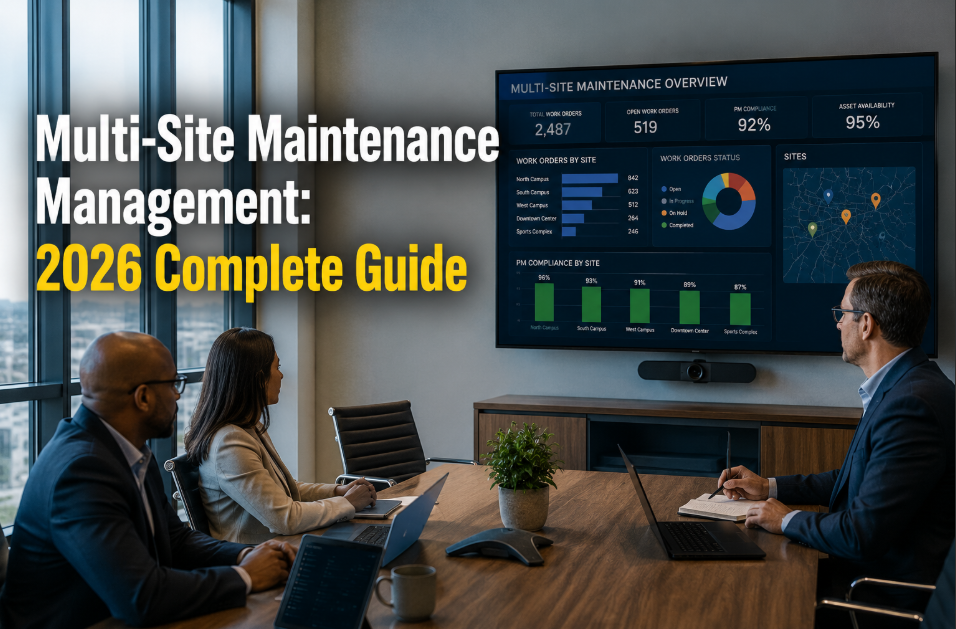
Multi-Site Maintenance Management: 2026 Complete Guide
67% of multi-site organizations run inconsistent maintenance standards across locations. Centralized CMMS with rollup dashboards and standardized templates eliminates the visibility gap — giving portfolio-level control without removing site-level flexibility.
67%
of multi-site orgs have inconsistent PM standards
$412K
average annual cost of multi-site maintenance gaps
4.8x
higher cost for emergency vs planned repairs
38%
spare parts duplication across multi-site portfolios
Definition
What Is Multi-Site Maintenance Management?
Multi-site maintenance management is the practice of coordinating preventive maintenance schedules, work order workflows, asset tracking, spare parts inventory, and compliance documentation across two or more physical locations from a unified system. Unlike single-site maintenance — where one team manages one building — multi-site operations require standardized processes that scale without creating bottlenecks at headquarters or allowing individual sites to drift into reactive-only maintenance.
The critical difference between organizations that succeed at multi-site maintenance and those that struggle is not headcount or budget — it is structural visibility. When every site runs its own spreadsheet, its own naming conventions, and its own PM frequencies, the portfolio-level view does not exist. Decisions about CapEx allocation, staffing models, and vendor contracts are made on incomplete data. OxMaint solves this with a hierarchical asset structure — Portfolio, Property, System, Asset, Component — that gives every stakeholder the right level of detail without information overload. If your current system cannot show you PM compliance across all sites in under 30 seconds, it is time to start a free trial with OxMaint and see what portfolio-level visibility actually looks like.
Core Framework
The 6 Pillars of Multi-Site Maintenance Excellence
Scaling maintenance across locations is not just about deploying the same software everywhere. It requires six interconnected capabilities that work together to create consistency without rigidity.
01
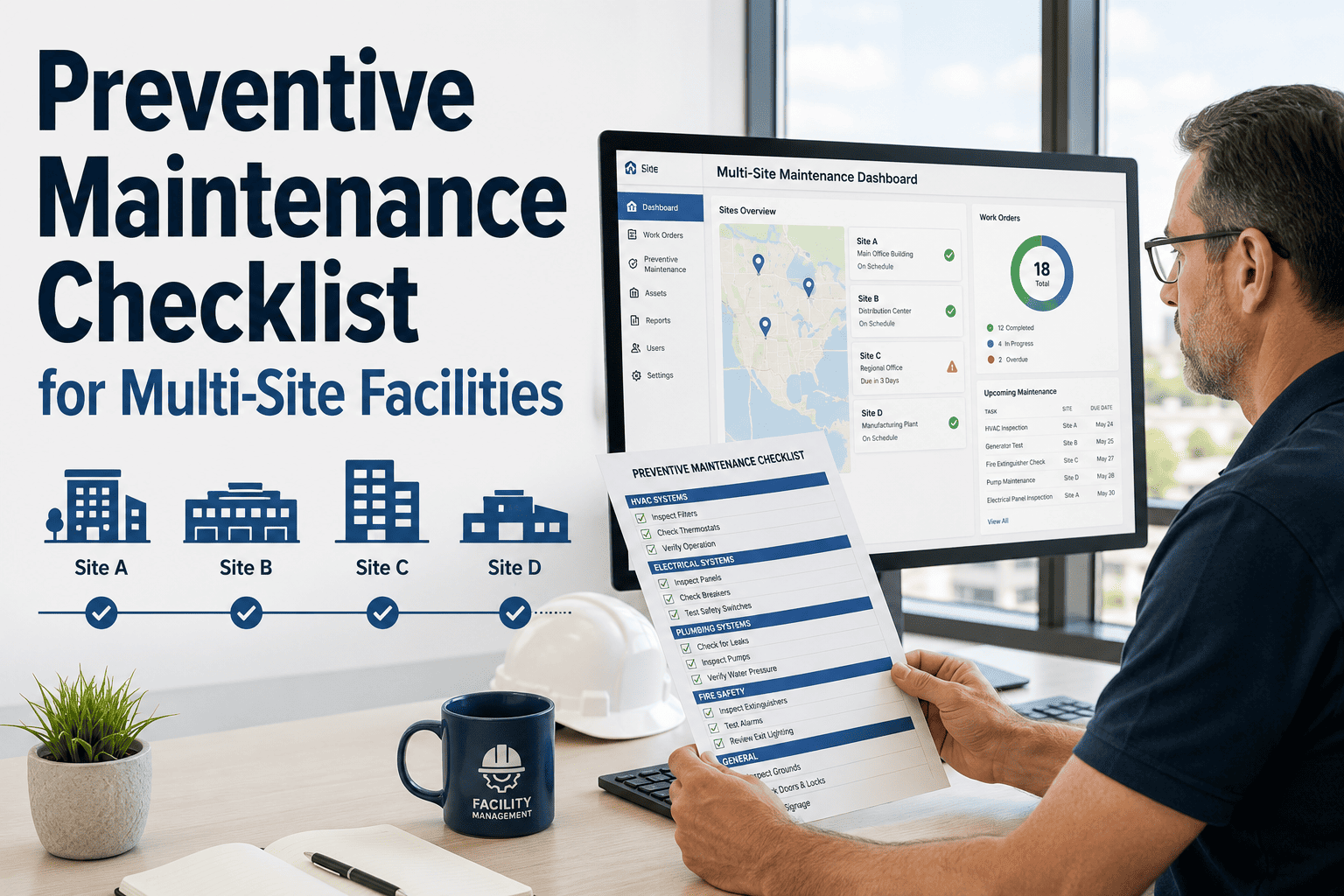
Standardized PM Templates
Create once, deploy everywhere. PM procedures, checklists, and frequencies defined at the portfolio level and pushed to every site — ensuring an HVAC unit in Dallas gets the same preventive care as one in Detroit. Reduces PM creation time by 74%.
02
Centralized Rollup Dashboards
Portfolio-level KPIs — PM compliance, work order backlog, asset condition scores, cost per site — visible in a single dashboard without manual consolidation. Regional managers see their sites; executives see the portfolio. Data refreshes in real time.
03
Cross-Site Parts Sharing
When Site A has 12 filters in stock and Site B has zero, your CMMS should surface that. Cross-site inventory visibility reduces emergency procurement by 41% and cuts total spare parts investment by eliminating duplication across locations.
04
Hierarchical Access Control
Technicians see their site. Site managers see their property. Regional directors see their region. VPs see everything. Role-based access ensures the right people have the right data without information overload or security risk.
05
Unified Asset Registry
Every asset across every site registered in one system with consistent naming, classification, and condition scoring. No more Site A calling it "RTU-3" while Site B calls it "Rooftop Unit North." Standardization enables cross-site benchmarking and lifecycle planning.
06
Portfolio-Level CapEx Forecasting
Rolling 5-10 year capital expenditure models built from actual asset condition data — not guesswork. OxMaint aggregates replacement timelines across all sites to generate investor-grade CapEx reports that prioritize spending where it matters most.
Managing Multiple Sites with Disconnected Systems Costs You $412K Per Year on Average
OxMaint gives you one platform for every site — standardized PMs, rollup dashboards, cross-site parts visibility, and investor-grade CapEx reporting. See it working in a live demo tailored to your portfolio size.
Pain Points
Why Multi-Site Maintenance Fails Without the Right System
Every multi-site operations leader has felt these problems. The question is whether you are solving them structurally or patching them with workarounds that break at scale.
Visibility Gap
No Portfolio-Level View
Each site runs its own system — Excel, paper, or a standalone CMMS instance. The VP of Operations cannot see PM compliance across all sites without requesting reports from every site manager and manually consolidating them. By the time the data is assembled, it is 2-3 weeks old.
72% of multi-site teams spend 8+ hours per month on manual report consolidation
Inconsistency
PM Standards Drift Between Sites
Without centralized templates, each site develops its own PM procedures. One site inspects fire dampers quarterly; another does it annually. One site lubricates conveyor bearings weekly; another waits for noise. Inconsistency creates compliance risk and unpredictable failure rates.
Sites with standardized PMs show 31% fewer unplanned failures than those without
Inventory Waste
Duplicate Parts Across Locations
Without cross-site inventory visibility, every site manager orders independently. The result is 38% parts duplication across the portfolio — one site has $15,000 in idle pump seals while another places an emergency order for the same part at 3x cost from a local supplier.
Cross-site parts sharing reduces emergency procurement costs by 41%
CapEx Guesswork
Capital Planning Without Asset Data
When asset condition data lives in disconnected systems — or does not exist at all — CapEx decisions are based on the loudest site manager or the most recent emergency. Critical replacements at quiet sites get deferred while less critical projects at vocal sites get funded.
Data-driven CapEx allocation reduces total capital spend by 18-25% versus reactive budgeting
The OxMaint Solution
How OxMaint Solves Multi-Site Maintenance at Every Level
OxMaint is built for multi-site from the ground up — not bolted on as an afterthought. The hierarchical structure (Portfolio > Property > System > Asset > Component) means every piece of data has context, and every user sees exactly what they need.
Portfolio Rollup Dashboards
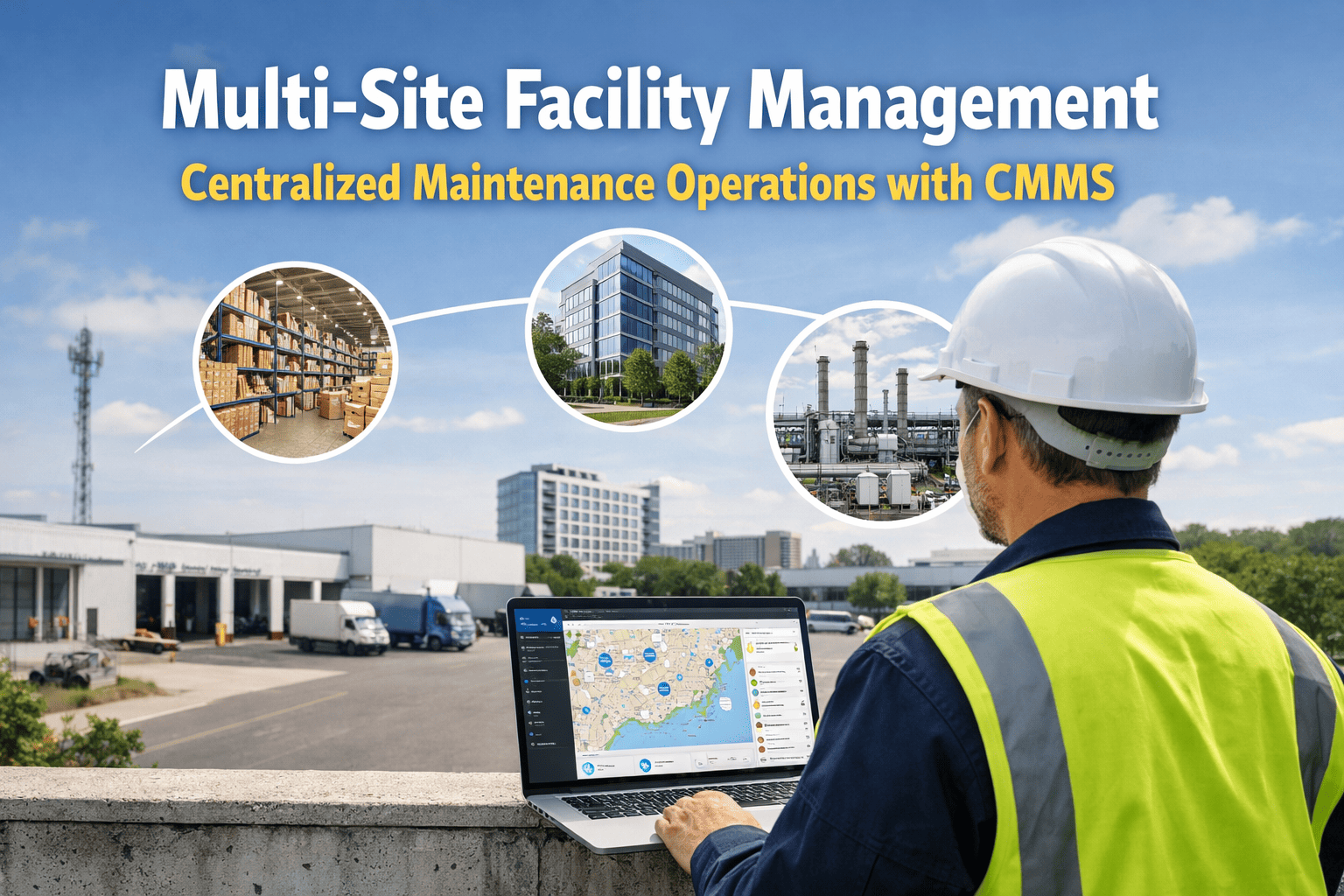
One screen shows PM compliance, open work orders, asset condition scores, and maintenance spend across every site. Filter by region, property type, or individual site. No manual consolidation. No waiting for monthly reports. Real-time data, always current.
Standardized PM Templates
Build PM procedures, checklists, and inspection forms at the portfolio level. Push them to selected sites or all sites simultaneously. When a procedure changes — like a new filter specification or updated safety check — update once, propagate everywhere.
Cross-Site Inventory Visibility
Every spare part across every site is visible in one inventory module. When a technician needs a part that is out of stock locally, OxMaint shows which nearby site has it available. Transfer requests are managed within the system — no phone calls, no emails.
Role-Based Access Hierarchy
Define access at the portfolio, regional, property, or team level. Technicians see their assigned work orders. Site managers see their property data. Regional directors see aggregated KPIs. CFOs see CapEx forecasts. Everyone works from one platform.
Mobile-First Multi-Site Execution
Traveling technicians and regional managers access any site's data from mobile devices. Complete work orders, run inspections, and review asset history from any location. Offline capability ensures functionality even in facilities with limited connectivity.
Investor-Grade CapEx Reporting
Rolling 5-10 year CapEx forecasts built from actual asset condition data, remaining useful life estimates, and replacement cost models. Reports formatted for ownership groups, investors, and board presentations — not maintenance jargon, but financial language.
The difference between managing multi-site maintenance in OxMaint versus a single-site CMMS is structural — not cosmetic. Want to see how your specific portfolio maps into the system, book a demo and walk through it with our team or start a free trial to explore the multi-site features yourself.
Before vs After
Multi-Site Maintenance: Disconnected Systems vs Unified CMMS
| Dimension |
Disconnected Systems (Spreadsheets / Standalone CMMS) |
Unified Multi-Site CMMS (OxMaint) |
| Portfolio visibility |
Manual consolidation — 2-3 week lag |
Real-time rollup dashboards |
| PM standardization |
Each site creates its own procedures |
Central templates pushed to all sites |
| Parts inventory |
38% duplication across locations |
Cross-site visibility and transfer management |
| CapEx planning |
Based on loudest request, not data |
Condition-based 5-10 year forecasts |
| Compliance reporting |
Site-by-site assembly — days of effort |
One-click portfolio compliance reports |
| Onboarding new sites |
Weeks of setup per location |
Clone templates — new site live in hours |
| Cross-site benchmarking |
Not possible — different data formats |
Standardized metrics enable site-vs-site comparison |
| Cost to implement |
$50K-$500K consulting + licensing per site |
No heavy implementation fees — fast onboarding |
Measurable Results
What Multi-Site Organizations Achieve With Centralized CMMS
74%
reduction in PM creation time
Standardized templates deployed across all sites versus creating procedures individually at each location
41%
drop in emergency procurement costs
Cross-site parts visibility eliminates rush orders when nearby sites have available stock
31%
fewer unplanned failures
Consistent PM standards across all sites versus site-by-site ad hoc scheduling
18-25%
reduction in total CapEx spend
Data-driven capital allocation based on asset condition, not reactive budgeting
Scaling Framework
Multi-Site CMMS by Portfolio Size: What Changes as You Scale
The challenges of multi-site maintenance evolve as the portfolio grows. What works for 5 sites breaks at 50. What works at 50 needs restructuring at 500. Here is what each scale demands.
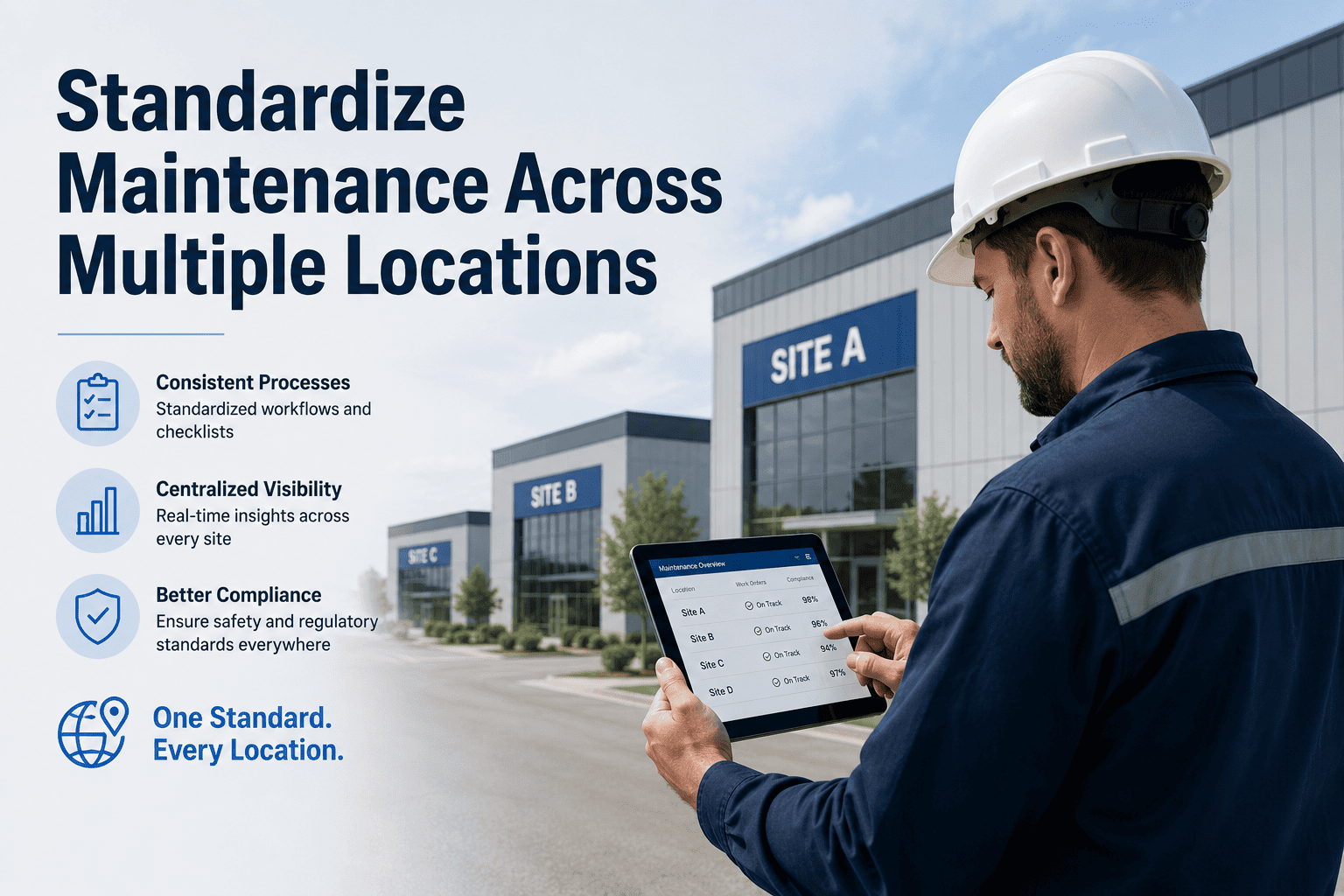
Standardize PM templates across all locations
Establish unified asset naming conventions
Implement single-dashboard KPI visibility
Begin cross-site parts inventory tracking
Priority: Foundation standardization
Deploy regional manager dashboards with drill-down
Automate cross-site benchmarking reports
Implement role-based access hierarchy
Build portfolio-level CapEx forecasting models
Priority: Regional visibility and benchmarking
Integrate CMMS with ERP for financial consolidation
Deploy AI-driven anomaly detection across sites
Implement automated compliance monitoring
Enable investor-grade reporting and audit trails
Priority: Enterprise integration and automation
FAQs
Multi-Site Maintenance Management — Common Questions
Can each site customize PM templates or are they locked at the portfolio level?
OxMaint supports both approaches. Portfolio-level templates can be deployed as mandatory standards — ensuring compliance consistency — or as starting points that site managers can adapt for local equipment variations. The key is that deviations are visible and trackable, not hidden in local spreadsheets. Want to see how template governance works across sites,
book a demo to walk through it.
How long does it take to onboard a new site into OxMaint?
With standardized templates already configured at the portfolio level, a new site can be live in hours — not weeks. Asset registry import, PM schedule deployment, and user setup are all handled through the multi-site administration module. Organizations adding 3-5 sites per quarter report onboarding time under 4 hours per site after the first two sites are configured.
Does OxMaint support different time zones and languages across sites?
Yes. Each site operates in its local time zone for scheduling and reporting, while portfolio dashboards normalize data for cross-site comparison. Multi-language support ensures technicians at each location work in their preferred language while standardized data fields remain consistent across the portfolio.
Start a free trial to explore the localization settings.
What reporting do investors and ownership groups typically need from multi-site CMMS?
Investor-grade reporting from OxMaint includes portfolio-level asset condition summaries, 5-10 year CapEx forecasts, deferred maintenance quantification, PM compliance trends, and cost-per-site benchmarking. Reports are formatted in financial language — not maintenance jargon — and can be scheduled for automatic delivery to stakeholder email addresses on any cadence.
Your Portfolio Deserves One System, One View, One Standard Across Every Site
OxMaint delivers multi-site rollup dashboards, standardized PM templates, cross-site parts visibility, and investor-grade CapEx reporting — with no heavy implementation fees and fast onboarding. See it in 30 minutes.