Boston Dynamics Spot for Plant Maintenance: Best CMMS Integration Guide 2026
Boston Dynamics Spot has redefined what autonomous plant maintenance looks like in 2026. This quadruped robot navigates stairs, catwalks, and hazardous zones while performing thermal imaging, acoustic sensing, and gauge reading inspections—all without human intervention. But the real breakthrough happens when Spot's inspection data flows directly into a CMMS, transforming raw sensor readings into prioritized work orders and closed-loop repairs. This complete guide covers every aspect of integrating Boston Dynamics Spot with your CMMS for autonomous maintenance rounds that prevent downtime and extend asset life. Schedule a free consultation to learn how Oxmaint helps manufacturing plants connect Spot's intelligence to real maintenance action.
Why Manual Inspection Rounds Are Failing Modern Plants
Traditional walkthrough inspections rely on human senses, clipboard checklists, and technician availability. In large-scale facilities with thousands of assets spread across multiple levels and hazardous zones, this approach creates dangerous blind spots. Boston Dynamics Spot eliminates these limitations by delivering consistent, sensor-grade data on every patrol—24 hours a day, 7 days a week. Here is the real cost of relying on manual rounds in 2026.
$260K
average cost per hour of unplanned downtime in discrete manufacturing
47%
of asset failures are detectable through routine inspection but missed by manual rounds
5x
more checkpoints covered per shift by Spot compared to a human inspector
Inspection Reality
A single missed thermal hotspot on a motor bearing can escalate from a $200 repair to a $85,000 emergency replacement in under three weeks. Spot catches these anomalies on every patrol, logging precise temperature data that feeds directly into your CMMS for trend analysis and automated work order generation.
Stop losing assets to missed inspections. Oxmaint turns Spot's sensor data into automated maintenance action—no clipboard required.
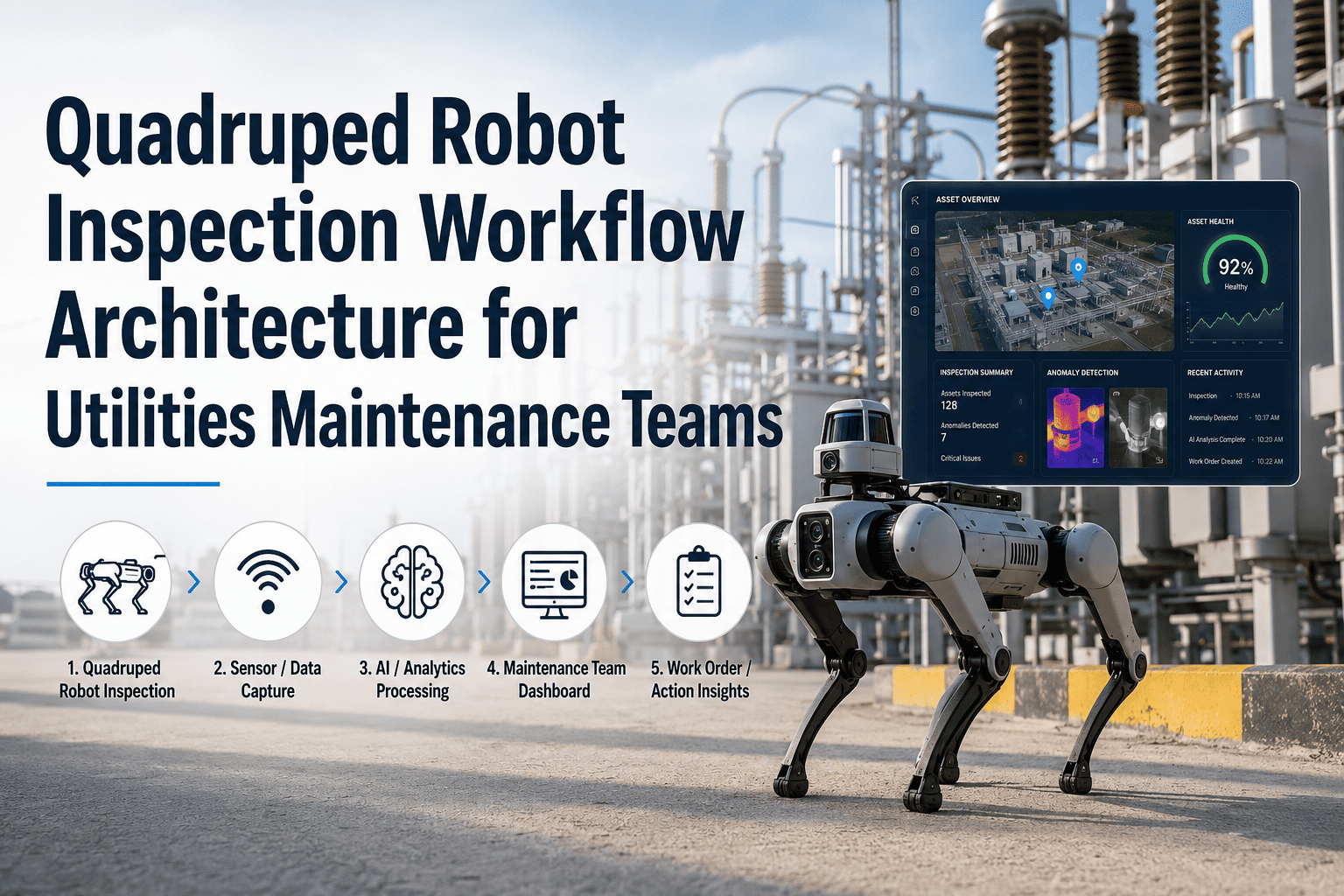
Before diving into CMMS integration, it helps to understand the five mission phases that define every autonomous Spot patrol. Each phase generates distinct data types that must be captured, processed, and acted upon within your maintenance management system for the loop to close effectively.
Five Phases of an Autonomous Spot Patrol
P1
Mission Planning & Route Programming
Using Autowalk, operators record inspection routes by walking Spot through the facility once. The robot memorizes waypoints, camera angles, and sensor positions at each checkpoint. Routes can include stairs, narrow corridors, and outdoor transitions between buildings.
P2
Autonomous Navigation & Patrol
Spot autonomously follows programmed routes on schedule, navigating obstacles, opening doors with the Spot ARM, and self-correcting around unexpected obstructions. LiDAR and stereo cameras provide real-time situational awareness across all terrain types.
P3
Multi-Sensor Data Capture
At each checkpoint, Spot captures thermal images, acoustic signatures, visual photographs, gauge readings via OCR, and vibration data through contact sensors on the Spot ARM. Every reading is geo-tagged and time-stamped for historical trending.
P4
Edge Processing & Anomaly Detection
Onboard and edge computing systems analyze sensor data against established baselines in real-time. AI models flag thermal anomalies, abnormal sound patterns, gauge deviations, and visual defects before Spot even returns to its charging dock.
P5
CMMS Data Ingestion & Work Order Creation
Flagged anomalies are pushed to Oxmaint CMMS via API, where they are matched to asset records and automatically generate work orders with location, severity, sensor evidence, and recommended repair actions—ready for technician dispatch.
Spot's Sensor Capabilities for Plant Maintenance
Boston Dynamics Spot is not just a walking platform—it is a multi-sensor inspection system on four legs. Each payload module addresses specific failure modes across your asset base, and understanding these capabilities is critical for configuring effective CMMS integration. Sign up for Oxmaint to map each sensor output to automated maintenance workflows.
Spot Sensor Payload & Maintenance Applications
Thermal Imaging
Detect overheating bearings and motor windings
Identify loose electrical connections in panels
Spot insulation failures and steam trap malfunctions
Map heat gradients across heat exchangers
Track temperature trends over multiple patrols
FLIR-grade radiometric cameras
Acoustic Sensing
Detect compressed air and gas leaks ultrasonically
Identify failing steam traps by sound signature
Catch early-stage bearing degradation acoustics
Monitor pump cavitation and valve chatter
Baseline ambient noise for anomaly detection
Ultrasonic microphone arrays
Gauge & Visual AI
Read analog and digital gauges via OCR
Detect fluid leaks, corrosion, and belt fraying
Identify structural cracks and weld defects
Monitor fill levels in sight glasses
Compare visual baselines across patrol cycles
HD/4K cameras + computer vision
Vibration & Contact
Measure shaft imbalance and misalignment
Detect inner/outer race bearing defects
Perform spectral analysis on rotating equipment
Calculate Remaining Useful Life (RUL) estimates
Manipulate valves and switches via Spot ARM
Spot ARM contact accelerometers
Every sensor reading becomes a work order. Oxmaint ingests Spot's thermal, acoustic, and visual data and auto-generates prioritized maintenance actions for your team.
The most common failure in robotic inspection programs is the "data graveyard"—sensor readings that sit in dashboards but never trigger repair action. A properly integrated CMMS bridges this gap with a structured detect-analyze-dispatch-verify workflow that ensures every anomaly Spot finds results in a closed work order.
Spot-to-CMMS Closed-Loop Workflow
Detect
Spot captures thermal images, acoustic signatures, gauge readings, and vibration data at every programmed checkpoint during autonomous patrol missions across the facility.
Analyze
AI compares each reading against asset baselines and historical trends. Anomalies are classified by severity, failure mode, and estimated time to failure before being pushed to the CMMS via API.
Dispatch
Oxmaint auto-generates work orders with asset ID, fault type, sensor evidence, severity level, required parts, and recommended repair procedure—then assigns the right technician via mobile alert.
Verify
After repair, Spot re-inspects the asset on its next patrol. The CMMS compares post-repair readings to pre-repair baselines, confirming the fix and closing the work order with documented evidence.
Where the Biggest Maintenance Gains Come From
Every Spot inspection capability contributes to overall plant reliability, but the impact varies by sensor type and application. Understanding the savings potential of each capability helps maintenance leaders build a strong business case and prioritize their CMMS integration roadmap.
Maintenance Impact by Spot Inspection Capability
Thermal Anomaly Detection
Catches 85% of electrical & mechanical faults early
Acoustic Leak Detection
20-30% compressed air energy recovered
Automated Gauge Reading
Eliminates 100% of manual reading errors
Vibration Analysis (Spot ARM)
Predicts bearing failure 4-6 weeks in advance
Visual Defect Recognition
Detects corrosion, leaks, and wear before failure
CMMS Auto Work Orders
65% faster fault-to-repair response time
Facilities combining all Spot inspection modes with CMMS automation typically reduce unplanned downtime by 60-75% within the first 12 months.
Ready to see Spot + Oxmaint in action? We'll show you exactly how autonomous inspection data becomes closed-loop maintenance.
Running Spot without CMMS integration is like having a security camera system with no one watching the monitors. The robot collects extraordinary data, but without automated workflows, that data sits idle while failures progress. Here is what changes when Spot's intelligence connects to Oxmaint.
Spot Without CMMSSpot + Oxmaint CMMS
Thermal images saved to a dashboard nobody checks daily
Thermal anomalies auto-generate prioritized work orders with severity
Acoustic alerts lost in email inboxes or ignored during busy shifts
Leak and fault alerts assigned to technicians with mobile push notifications
Gauge readings collected but no one compares them to limits
Out-of-range readings trigger instant alerts linked to asset history
No way to verify whether flagged issues were actually repaired
Spot re-inspects after repair and CMMS auto-closes verified work orders
Management has no visibility into inspection coverage or results
Real-time dashboards showing patrol compliance, anomaly trends, and costs
Plant Results After Deploying Spot with CMMS Integration
The numbers tell the story. Manufacturing plants that deploy Boston Dynamics Spot with full CMMS integration see measurable improvement across every key reliability metric within the first 12 months of operation.
75%
Fewer Unplanned Downtime Events
Reduction in unexpected equipment failures through early detection of thermal, acoustic, and vibration anomalies during every autonomous patrol shift
65%
Faster Fault-to-Repair Cycle
Reduction in time from anomaly detection to completed repair through automated work order generation, parts staging, and technician dispatch
50%
Lower Manual Inspection Labor
Reduction in technician hours spent on routine walkthrough rounds, freeing skilled workers to focus on actual repairs and reliability engineering
6 mo
Full Program Payback
Average time for the Spot + CMMS program to pay for itself through avoided emergency repairs, reduced labor costs, and prevented unplanned shutdowns
Join plants already running autonomous inspections with Oxmaint. Create your free account and start connecting Spot's intelligence to real maintenance workflows today.
Common Spot Integration Challenges and How to Solve Them
Every maintenance team deploying Spot encounters integration hurdles. Knowing the root causes and proven solutions accelerates your time to value and prevents the most common pitfalls that derail robotic inspection programs before they deliver ROI.
Challenge
Data Overload Without Prioritization
Root cause: Spot generates thousands of data points per patrol. Without intelligent filtering, maintenance teams drown in alerts, leading to alert fatigue and missed critical findings buried in noise.
Solution: Configure Oxmaint's AI-driven anomaly thresholds per asset class. Set severity tiers (Critical, Warning, Watch) so only actionable deviations generate work orders. Low-priority trends are logged for review without creating alert noise.
Challenge
Asset Mapping and Location Accuracy
Root cause: Spot's checkpoint data must map precisely to CMMS asset records. Misaligned asset IDs, outdated plant layouts, or unnamed equipment create orphaned inspection data that cannot trigger work orders.
Solution: Conduct a thorough asset registry audit before deployment. Tag every inspectable asset with a unique ID in both Oxmaint and Spot's mission configuration. Use QR codes or NFC tags at checkpoints for positive asset identification.
Challenge
Establishing Reliable Baselines
Root cause: AI anomaly detection requires "normal" baselines for each asset. Without sufficient historical data, the system generates excessive false positives or misses subtle deviations during early deployment.
Solution: Run Spot in "learning mode" for 4-6 weeks before enabling automated work order generation. During this phase, review flagged anomalies manually and tune thresholds per asset. Oxmaint stores all patrol data for baseline refinement over time.
Challenge
Technician Adoption and Trust
Root cause: Maintenance technicians may distrust robot-generated work orders or view Spot as a replacement rather than a tool. Low adoption undermines the closed-loop workflow and delays ROI realization.
Solution: Involve the maintenance team from day one. Show them how Spot eliminates tedious rounds so they can focus on skilled repair work. Oxmaint presents findings in plain language like "Motor Bearing Overheating — Estimated 3 Weeks to Failure" so technicians trust and act on alerts.
The robot is only as valuable as the action its data triggers. Plants that connect Spot directly to their CMMS see 3-5x faster ROI compared to those using Spot as a standalone inspection tool—because every anomaly immediately becomes a work order, not a forgotten dashboard widget.
— Industrial Robotics Integration, Best Practices Guide 2026
Connect Boston Dynamics Spot to Oxmaint and Close the Maintenance Loop
Your Spot robot is patrolling right now—is every anomaly it finds turning into a completed repair? Oxmaint gives your maintenance team automated work order generation, real-time technician dispatch, spare parts management, and closed-loop verification, all from one platform built for the manufacturing plant floor. Stop collecting data and start preventing downtime.
How does Spot's data actually get into Oxmaint CMMS?
Spot exports inspection data—thermal maps, acoustic recordings, gauge readings, vibration spectra, and visual images—through Boston Dynamics' Orbit software via REST API. Oxmaint's integration layer ingests this data, matches it to asset records, applies anomaly detection thresholds, and auto-generates work orders when readings breach configured limits. The entire process is automated with no manual data entry required.
Can Spot inspect hazardous or restricted areas in our plant?
Yes. Spot is designed to operate in environments that are dangerous or off-limits for human inspectors—including high-heat zones, chemical storage areas, confined spaces, and high-voltage corridors. While Spot does not carry ATEX certification in its base configuration, it can be equipped with intrinsically safe payloads for certain hazardous classifications. For explosive atmosphere zones, consult Boston Dynamics directly for compliant configurations.
How long does it take to set up Spot + CMMS integration?
Most plants complete the full integration within 4-8 weeks. The first two weeks focus on route programming and asset registry alignment. Weeks 3-6 are the baseline learning period where Spot patrols and the AI calibrates "normal" readings. By week 6-8, automated work order generation is live and the closed-loop workflow is operational. Book a demo to see the integration roadmap for your facility.
Does our maintenance team need robotics expertise to operate Spot?
No. Spot is designed for autonomous operation after initial route programming, which Boston Dynamics supports during onboarding. Once routes are configured, Spot patrols independently on preset schedules, docks itself for charging, and pushes data to Oxmaint without technician intervention. Your team interacts with plain-language work orders—not robot controls.
What ROI should we expect from Spot + Oxmaint integration?
Plants typically see measurable savings within 3-6 months. The earliest wins come from catching impending failures in high-criticality assets that would have caused multi-day shutdowns. Combined with reduced manual inspection labor, lower emergency repair costs, and extended asset life, most programs achieve full payback within 6 months and deliver 200-400% ROI by the end of year one. Sign up for Oxmaint to start tracking your savings from day one.