Most maintenance teams have more assets than hours. When every pump, fan and conveyor gets the same PM schedule, the equipment that could stop production or hurt someone gets the same attention as a spare exhaust fan. Asset criticality analysis fixes that by ranking equipment by what happens if it fails, so effort goes where it matters. This guide explains how criticality connects to RCM and maintenance priority, what to look for in asset criticality software, and the mistakes that make scoring useless. OxMaint AI CMMS ties your asset records, inspections and work orders into one workflow.
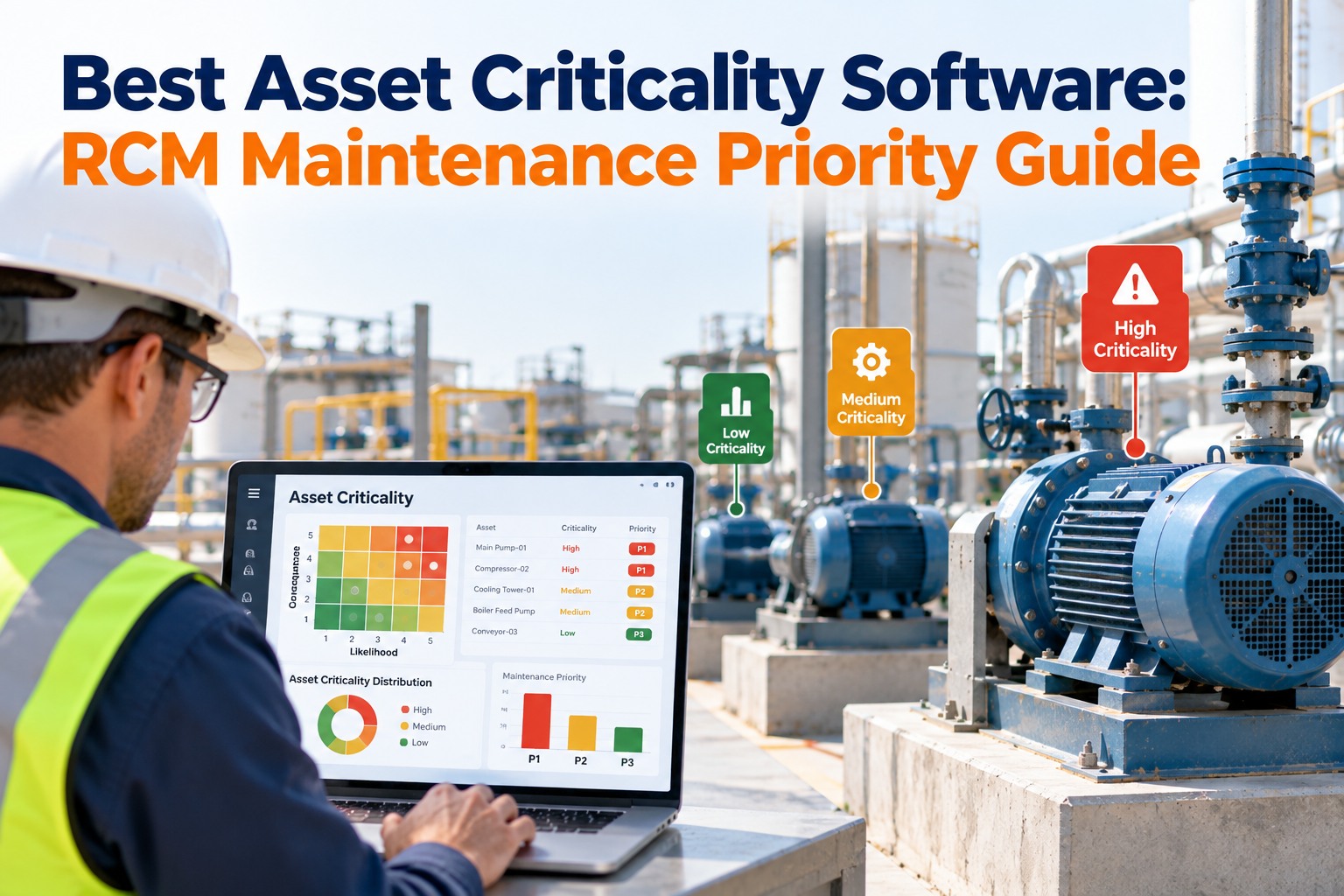
Best Asset Criticality Software: RCM Maintenance Priority Guide
When every asset gets the same PM, the ones that matter most are under-served and the rest are over-served.
OxMaint AI CMMS connects asset records, inspections, work orders and preventive or predictive maintenance in one platform, so priority follows risk and findings turn into action.
The result: better asset visibility, so the team can see which equipment needs attention first.
From Score to Strategy: How Criticality Drives Priority
Criticality is only useful if it changes what the team does. Here is the chain from scoring to daily work. Start free and put your assets in one register.
Rate consequence and likelihood for each asset.
Group into A, B and C.
Match PM, condition checks or RCM to each tier.
Use tier as one input to work-order priority.
Re-score as failures and conditions change.
A Simple Criticality Matrix
Likelihood runs down the side, consequence across the top. The scale below is illustrative; set your own with operations, safety and engineering. Book a demo to map your matrix to your assets.
Condition monitoring, tighter PMs, and a candidate for deeper RCM analysis.
Standard preventive maintenance and routine inspections.
Minimal PM, or run to failure where safe and economical.
A Score Nobody Uses Is Just a Spreadsheet Column
Criticality has to reach the PM schedule, the inspection route and the work order queue. OxMaint AI keeps those connected so the ranking shapes the daily plan.
Software Scorecard: What to Look For
The best asset criticality software is the one that fits how your team works. Use this scorecard in any vendor demo, including ours. Start free and test it on your own assets.
| Capability | Why it matters | Ask in the demo |
|---|---|---|
| Asset hierarchy & unique IDs | Criticality is scored per asset or function | Can I model plant, line and equipment? |
| Criticality tier on the record | Everyone sees priority in context | Where is the tier shown and edited? |
| Tier-driven PM scheduling | Effort follows risk | Can tier change PM frequency? |
| Work-order prioritization | Urgent jobs reach the right crew | How does tier affect job priority? |
| Inspections & condition data | Likelihood should reflect real condition | Do failed checks create work orders? |
| Failure history & reports | Evidence to re-score assets | Can I see repeat failures by asset? |
| Ease of use on the floor | Data is only as good as entry | Can technicians scan and log fast? |
| Audit trail | Shows who scored and changed what | Are changes logged? |
Four Mistakes That Make Criticality Useless
If half the list is Tier A, the analysis did not separate anything. Force differences.
Maintenance, operations, safety and quality see consequences differently. Score together.
Assets, processes and failure history change. Review scores on a schedule.
A current failure state, safety urgency or due date can outrank asset tier.
Start Small: A Five-Step Pilot
How OxMaint AI Supports the Workflow
One record per asset with history, health score and QR lookup.
Automated schedules you can tune as priorities change.
Digital checklists with photos; failed items create work.
Assigned, tracked and recorded with labor and parts.
AI reviews sensor, runtime and history data and raises proactive work orders.
Reports on repeat failures and traceable records of changes.
Frequently Asked Questions
Put Your Maintenance Effort Where It Matters.
Build your asset register, connect inspections and work orders, and let priority follow risk. Start with one area and grow from there.