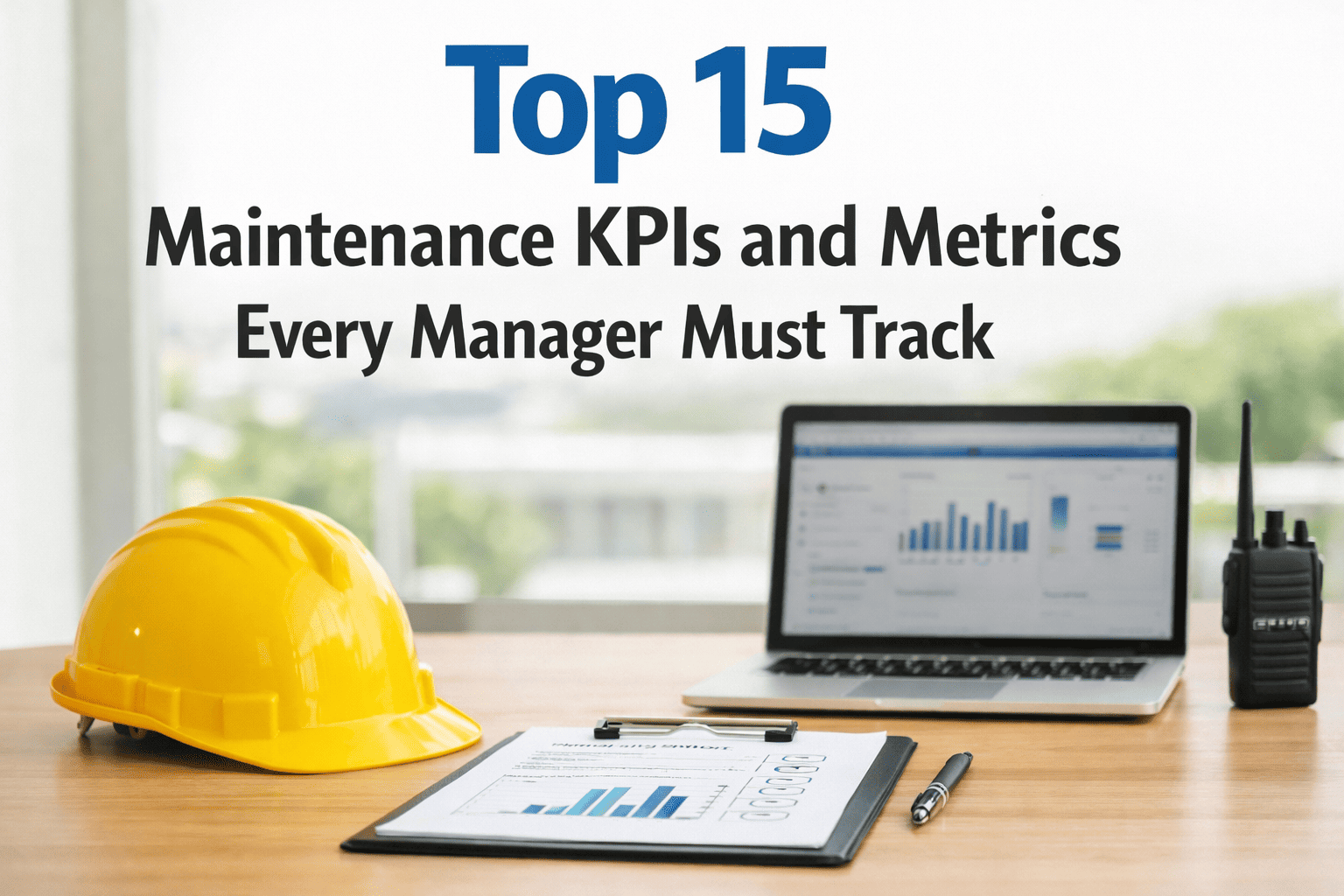
Fleet managers who track the right metrics reduce unplanned downtime by 35%, cut maintenance costs per mile by 22%, and extend vehicle service life by 18–24 months. The difference between a reactive fleet scrambling to fix breakdowns and a proactive fleet running like clockwork is not the size of the maintenance budget — it is knowing which 8–10 metrics actually predict failures before they happen and measuring them consistently. Most fleets track too many vanity metrics that look good in monthly reports but do not inform real decisions. The metrics that matter answer one question: "Is this vehicle going to fail before its next scheduled service?" Track uptime percentage, cost per mile, PM compliance rate, mean time between failures, breakdown frequency, inspection completion rate, parts inventory turnover, and technician utilization — and you will catch 80% of preventable failures before they strand drivers or shut down routes. Schedule a demo to see real-time fleet maintenance KPI dashboards tracking every metric in this article or start a free trial and begin measuring your fleet's baseline performance today.
The metrics you track determine whether your fleet runs smoothly or constantly breaks down. Track the right KPIs and you prevent failures instead of reacting to them.
35%
reduction in unplanned downtime when fleets track PM compliance and MTBF consistently
22%
lower maintenance cost per mile for fleets using data-driven preventive maintenance scheduling
18–24
additional months of vehicle service life from condition-based maintenance vs. reactive repairs
80%
of preventable fleet failures caught by tracking 8 core metrics before vehicles break down
Fleet maintenance metrics are quantifiable measurements that track vehicle condition, maintenance efficiency, cost performance, and operational reliability across your entire fleet. They convert raw maintenance data — work orders completed, parts replaced, hours spent, vehicles down — into actionable insights that tell you whether your maintenance program is preventing failures or just reacting to them. The best metrics are leading indicators: they warn you about problems developing now that will cause breakdowns later if left unaddressed. Tracking cost per mile tells you if maintenance spending is escalating. Tracking PM compliance rate tells you if scheduled services are being skipped. Tracking mean time between failures tells you if specific vehicle classes or routes are wearing out faster than expected. Without consistent metric tracking, fleet managers make decisions based on gut feel and recent memory instead of patterns visible only in the data. Start your free trial and see how modern CMMS platforms auto-calculate fleet KPIs from every completed work order.
Not all metrics are created equal. Some tell you what already happened (lagging indicators like total repair cost), while others warn you about what is coming (leading indicators like PM compliance drift). The eight metrics below give you predictive power — the ability to see failures developing and intervene before they happen. Track these consistently and you shift from reactive firefighting to proactive fleet management. Want to implement fleet metric dashboards that update in real time from every completed repair? Book a demo to see live KPI tracking configured for your fleet type and operating conditions.
1. Vehicle Uptime Percentage
Uptime % = (Available Hours ÷ Total Hours) × 100
Measures the percentage of time vehicles are operationally ready vs. down for maintenance or repairs. Industry benchmark: 92–95% for well-maintained fleets. Below 90% signals chronic reliability problems or deferred maintenance catching up. Track per vehicle and per vehicle class to identify underperformers.
Action trigger: Any vehicle below 85% uptime for two consecutive months requires root cause analysis and accelerated PM schedule.
2. Cost Per Mile (CPM)
CPM = Total Maintenance Cost ÷ Total Miles Driven
The single most important cost metric: how much you spend on maintenance for every mile your fleet drives. Includes labor, parts, fluids, tires, and third-party services. Track trending CPM over time — gradual increases are normal as vehicles age, but sudden spikes indicate emerging failures or inefficient repairs.
Action trigger: CPM increase of 15% or more within one quarter without corresponding mileage increase requires cost breakdown analysis by repair type.
3. PM Compliance Rate
PM Compliance = (Completed PMs ÷ Scheduled PMs) × 100
Percentage of scheduled preventive maintenance services completed on time. Target: 98%+ for critical vehicle classes, 95%+ fleet-wide. Every skipped PM increases the probability of an unplanned breakdown by 12–18%. Non-compliance compounds — skipping two consecutive PMs doubles breakdown risk.
Action trigger: Fleet-wide compliance below 90% or any vehicle with two consecutive missed PMs requires immediate scheduling intervention.
4. Mean Time Between Failures (MTBF)
MTBF = Operating Hours ÷ Number of Failures
Average operating hours between unplanned breakdowns. Higher MTBF = more reliable fleet. Track per vehicle, per system (engine, transmission, brakes, electrical), and per vehicle class. Declining MTBF on specific systems warns you to adjust PM intervals or investigate design flaws before the entire class fails.
Action trigger: MTBF decline of 20% or more on any vehicle system requires PM schedule adjustment and potential component upgrade evaluation.
5. Breakdown Frequency
Breakdown Rate = (Breakdowns ÷ Total Vehicles) per Month
How many vehicles per 100 in your fleet experience unplanned breakdowns each month. Industry benchmark: fewer than 3 breakdowns per 100 vehicles monthly for well-maintained fleets. Track by vehicle age, mileage bracket, and operating environment to identify high-risk segments.
Action trigger: Breakdown rate above 5 per 100 vehicles for two consecutive months signals systemic maintenance gaps requiring program overhaul.
6. Inspection Completion Rate
Inspection Rate = (Completed Inspections ÷ Required Inspections) × 100
Percentage of required pre-trip, post-trip, and periodic safety inspections completed on schedule. Critical for catching developing issues before they become failures. Target: 100% compliance on safety-critical inspections, 98%+ on routine inspections. Missed inspections are missed early warnings.
Action trigger: Any safety inspection compliance below 95% requires driver training and enforcement protocol review.
7. Parts Inventory Turnover
Turnover = Annual Parts Cost ÷ Average Inventory Value
How many times per year your parts inventory cycles through. Target: 4–6 turns annually. Too low (under 3) means you are carrying excess stock tying up capital. Too high (over 8) means frequent stockouts delaying repairs. Track backorder rate alongside turnover to balance availability and efficiency.
Action trigger: Turnover below 3 with low backorder rate signals overstocking — audit slow-moving parts for reduction. Turnover above 7 with rising backorders signals understocking.
8. Technician Utilization Rate
Utilization = (Wrench Time ÷ Total Shift Hours) × 100
Percentage of technician shift hours spent on actual repair work vs. administrative tasks, parts retrieval, or downtime. Industry benchmark: 65–75% for productive shops. Below 60% signals process inefficiencies — technicians spending too much time hunting for parts, waiting for diagnostics, or dealing with poor work order systems.
Action trigger: Utilization below 55% requires workflow analysis and process improvement — likely causes are parts room disorganization or inadequate diagnostic tools.
Fleet metrics split into two categories: lagging indicators that tell you what already happened, and leading indicators that warn you about what is coming. Smart fleet managers track both but make decisions based on leading indicators because they provide time to intervene before failures occur. Lagging metrics are useful for historical reporting and cost analysis but do not help you prevent next month's breakdowns. Here is how to use each type effectively.
Total Maintenance Cost
Tells you how much you spent last month — useful for budgeting and variance analysis but does not predict future spending
Total Downtime Hours
Shows how much uptime you lost — helps calculate lost revenue but does not tell you which vehicles will break next
Completed Work Orders
Volume metric tracking technician productivity — does not indicate whether work was proactive or reactive
Parts Spend by Category
Shows where maintenance dollars went — useful for supplier negotiations but not for failure prevention
PM Compliance Drift
Falling compliance rates predict rising breakdown rates 30–60 days before failures occur — time to intervene
MTBF Decline by System
Shortening intervals between transmission failures warn you to adjust PM schedules before the entire vehicle class fails
Inspection Defect Trends
Rising brake defect rates signal a wave of brake failures coming — order parts and schedule work before vehicles are red-tagged
Cost Per Mile Trending
Accelerating CPM increase on specific vehicles flags chronic reliability issues before total failure — replace or rebuild decision
The difference between fleets that just track metrics and fleets that use metrics to drive performance is action thresholds. Top performers set specific trigger points — "If PM compliance drops below 92%, we add overtime scheduling capacity" or "If MTBF on diesel particulate filters falls below 8,000 hours, we audit fuel quality and adjust regeneration intervals." They review metrics weekly, not monthly, and respond to trends before they become crises. Here is how elite fleet managers translate metrics into operational improvements that reduce costs and improve reliability year over year. Start a free trial and configure automated metric alerts that notify you the moment KPIs cross your defined thresholds.
1
PM Schedule Optimization
Metric tracked: MTBF by component and operating hours between PM services
Action: When MTBF on oil filters drops from 12,000 miles to 9,500 miles, shorten oil change interval from 10,000 to 8,000 miles for affected vehicle class
Result: MTBF recovers to 11,000+ miles, engine longevity improves, oil-related breakdowns eliminated
2
High-Cost Vehicle Retirement
Metric tracked: Cost per mile trending and cumulative maintenance cost vs. replacement value
Action: When CPM exceeds $0.85 and total maintenance reaches 60% of replacement cost, vehicle is flagged for retirement evaluation
Result: Replace money-pit vehicles before catastrophic failures, optimize capital allocation, reduce emergency repair spending
3
Parts Stocking Adjustments
Metric tracked: Parts inventory turnover and backorder frequency by part number
Action: Parts with turnover below 2 and no usage in 12 months are liquidated; parts with 3+ backorders in 6 months get safety stock increased
Result: Inventory carrying cost drops 18%, backorder-related downtime reduced 40%, repair cycle time improves
4
Technician Training Prioritization
Metric tracked: First-time fix rate by technician and repair type, plus average repair duration vs. standard time
Action: Technicians with first-time fix rates below 75% on electrical diagnostics receive targeted electrical systems training
Result: First-time fix rate improves to 88%, repeat repairs drop 35%, customer satisfaction scores increase
5
Vendor Performance Management
Metric tracked: Warranty claim rate, parts defect rate, and delivery timeliness by supplier
Action: Suppliers with defect rates above 4% or delivery delays exceeding 15% of orders receive performance improvement notices or are replaced
Result: Parts quality improves, downtime from defective components eliminated, procurement costs stabilize
6
Route-Based Wear Analysis
Metric tracked: Breakdown frequency and component failure rates segmented by operating route or terrain type
Action: Vehicles operating high-mileage highway routes receive extended oil change intervals; city-route vehicles get accelerated brake inspections
Result: Maintenance schedules optimized for actual operating conditions, over-servicing eliminated, under-servicing prevented
Most fleet managers know they should track metrics. Fewer know how to track them correctly. The most common mistakes are tracking too many metrics without acting on any of them, using inconsistent data collection methods that make trends unreliable, and confusing activity metrics (work orders completed) with outcome metrics (uptime percentage). Here are the five biggest metric tracking failures and how to fix them before they undermine your maintenance program.
Mistake 1: Tracking Everything, Acting on Nothing
Generating 30-page monthly metric reports that nobody reads because no decisions are tied to the data
Fix: Identify your 8–10 mission-critical metrics, set decision thresholds for each, and review weekly instead of monthly
Mistake 2: Inconsistent Data Collection
Technicians record operating hours differently, PM completion dates are estimated not documented, mileage readings are inconsistent
Fix: Mandate digital work order close-out with required fields — no work order closes without mileage, hours, and completion timestamp
Mistake 3: Comparing Apples to Oranges
Averaging cost per mile across light-duty vans and heavy-duty trucks, mixing preventive and reactive maintenance costs in single KPIs
Fix: Segment metrics by vehicle class, age bracket, and operating environment — track trends within segments, not fleet-wide averages
Mistake 4: Ignoring Small Sample Bias
Making decisions based on one bad month of data or single-vehicle outliers that skew fleet-wide averages
Fix: Require 90-day rolling averages for trend analysis, flag statistical outliers for investigation but do not let them drive policy changes
Mistake 5: Lagging Metrics Only
Tracking total maintenance cost and downtime hours without monitoring PM compliance or MTBF trends that predict future performance
Fix: Balance every lagging indicator with a leading indicator — track cost per mile AND PM compliance rate, total downtime AND MTBF
Mistake 6: No Benchmark Context
Reporting metrics without industry benchmarks or historical comparison — "CPM is $0.52" means nothing without context
Fix: Establish baseline performance, track month-over-month and year-over-year trends, compare against industry standards for your fleet type
Manual metric tracking — pulling data from spreadsheets, calculating KPIs by hand, building reports in Excel — consumes hours every week and still produces stale data that is already outdated by the time you review it. Modern cloud-based CMMS platforms auto-calculate every fleet metric in real time from work order data, parts transactions, and inspection records. When a technician closes a work order, cost per mile updates instantly. When a PM is completed, compliance rate recalculates. When a breakdown occurs, MTBF adjusts. You get live dashboards showing current performance against targets without any manual data entry or calculations. Here is what automated metric tracking delivers that manual tracking cannot. Ready to see real-time fleet KPI dashboards in action? Book a demo and watch metrics update live as work orders are completed during the walkthrough.
Real-Time Visibility
Every completed work order, parts requisition, and inspection instantly updates all relevant KPIs — no waiting for end-of-month reports to see where you stand
Value: Identify problems the day they emerge instead of discovering them weeks later when trends are already entrenched
Automatic Segmentation
Metrics auto-filter by vehicle class, age, mileage bracket, operating route, or any custom attribute — see CPM for highway tractors vs. city delivery trucks with one click
Value: Stop making fleet-wide decisions based on averaged data that hides critical segment-specific problems
Threshold Alerts
Set acceptable ranges for every metric — when PM compliance drops below 92% or MTBF falls 15%, automated alerts notify managers before the problem escalates
Value: Proactive intervention based on leading indicators instead of reactive crisis management after failures occur
Trend Visualization
Historical trend charts show metric movement over time — spot gradual MTBF decline or accelerating CPM increase that would be invisible in monthly snapshots
Value: Catch slow-developing problems early when intervention is cheap instead of late when failure is imminent
Benchmark Comparison
Platform compares your fleet's metrics against industry standards and anonymized peer fleets of similar size and composition
Value: Know whether your performance is competitive or lagging before shareholders ask the same question
Zero Manual Calculation
All formulas pre-configured and validated — no spreadsheet errors, no formula mistakes, no debate over how metrics are calculated
Value: Eliminate hours of manual reporting labor every week and redeploy that time to actual fleet improvement
What They Track
Total maintenance cost, total downtime, number of breakdowns, work orders completed — all lagging indicators reporting on failures that already happened
How They Respond
Wait for vehicles to break, dispatch emergency repairs, pull technicians off planned work to handle breakdowns, expedite parts orders at premium cost
PM Program
PM compliance rates below 85%, frequent PM deferrals "because the vehicle seems fine," no tracking of missed PM impact on breakdown rates
Parts Management
Stockouts on common parts requiring same-day premium orders, excess inventory of obsolete parts from vehicles no longer in service
Cost Structure
High emergency repair spending, frequent overtime labor charges, premium parts pricing from expedited orders, revenue loss from unplanned downtime
Annual Performance
Fleet uptime: 82–87%, Cost per mile: $0.68–$0.85, Breakdown rate: 8–12 per 100 vehicles monthly, Technician utilization: 52–62%
What They Track
PM compliance rate, MTBF by component, inspection defect trends, cost per mile trending — all leading indicators that predict failures before they occur
How They Respond
Adjust PM schedules when MTBF declines, address inspection defects before they cause failures, retire high-cost vehicles before catastrophic breakdowns
PM Program
PM compliance rates above 96%, data-driven PM interval adjustments based on actual failure patterns, documented correlation between missed PMs and breakdowns
Parts Management
Strategic stocking based on failure prediction models, inventory turnover of 4–6 annual cycles, backorder rates below 2% from accurate demand forecasting
Cost Structure
Planned maintenance at standard labor rates, volume parts pricing from predictable ordering, minimal emergency spending, downtime scheduled during low-demand periods
Annual Performance
Fleet uptime: 94–97%, Cost per mile: $0.42–$0.58, Breakdown rate: 1–3 per 100 vehicles monthly, Technician utilization: 68–78%
Annual Financial Impact of Metric-Driven Fleet Management
$126K
saved annually from 22% reduction in maintenance cost per mile on 100-vehicle fleet averaging 40,000 miles per vehicle
$240K
saved annually from 35% reduction in unplanned downtime — fewer missed deliveries, routes, and customer commitments
$85K
saved annually from improved parts inventory management — reduced carrying costs and eliminated premium expedited orders
18–24 mo.
additional service life per vehicle from condition-based maintenance — deferred replacement capital spending of $180K–$320K annually
You do not need six months and a consultant engagement to start tracking fleet metrics. The path from spreadsheets and gut-feel to data-driven decisions is a 90-day implementation with clear milestones and immediate value delivery. Start with baseline measurement, add automated tracking, set decision thresholds, and begin optimizing based on what the data reveals. Here is the proven roadmap elite fleet managers follow to transform maintenance operations in one quarter.
Days 1–30
Phase 1: Baseline Measurement
✓ Deploy CMMS platform and migrate vehicle/asset registry
✓ Train technicians on digital work order close-out with required fields
✓ Establish baseline metrics: current uptime, CPM, PM compliance, MTBF, breakdown rate
✓ Configure automated KPI dashboards for the 8 core metrics
Outcome: You know where you stand today and have reliable data collection running forward
→
Days 31–60
Phase 2: Threshold Setting & Alerts
✓ Set acceptable ranges and warning thresholds for each KPI
✓ Configure automated alerts when metrics cross thresholds
✓ Segment metrics by vehicle class, age, and operating environment
✓ Identify top 10 underperforming vehicles and root cause their issues
Outcome: Proactive notifications catch problems early, you know which vehicles need intervention
→
Days 61–90
Phase 3: Optimization & Continuous Improvement
✓ Adjust PM intervals based on observed MTBF patterns
✓ Optimize parts stocking based on turnover and backorder data
✓ Implement condition-based replacement decisions using CPM trending
✓ Measure ROI: compare month 3 metrics to baseline from month 1
Outcome: Maintenance program now self-optimizing based on continuous metric feedback
Start Tracking Fleet Metrics That Actually Drive Performance
OxMaint's fleet CMMS auto-calculates uptime percentage, cost per mile, PM compliance, MTBF, breakdown frequency, inspection rates, parts turnover, and technician utilization from every completed work order. Real-time dashboards, automated threshold alerts, and trend analysis tools transform raw maintenance data into actionable decisions that reduce costs and prevent failures. Stop guessing which vehicles need attention. Start tracking the metrics that predict breakdowns before they happen.
What is the single most important fleet maintenance metric to track?
PM compliance rate is the single best predictor of future fleet reliability. Fleets maintaining 96%+ PM compliance average 35% fewer breakdowns than fleets below 85% compliance. Every skipped PM increases breakdown probability by 12–18%, and the effect compounds — two consecutive missed PMs double the risk. If you can only track one metric, make it PM compliance and enforce it ruthlessly.
How do I calculate cost per mile accurately when some costs are fixed and some are variable?
Include all direct maintenance costs in your CPM calculation: labor (technician wages plus burden), parts, fluids, tires, third-party service fees, and shop supplies. Exclude fixed overhead like shop rent, utilities, and salaried management — those do not vary with miles driven. Calculate monthly: (Total Direct Maintenance Cost ÷ Total Fleet Miles) = CPM. Track both fleet-wide CPM and per-vehicle CPM to identify outliers consuming disproportionate resources.
What is a good MTBF benchmark for commercial fleet vehicles?
MTBF varies by vehicle class and operating conditions. Light-duty commercial vans: 15,000–20,000 operating hours between unplanned failures. Medium-duty delivery trucks: 10,000–15,000 hours. Heavy-duty tractors: 8,000–12,000 hours. The absolute number matters less than the trend — if your medium-duty fleet averages 12,000-hour MTBF but suddenly drops to 9,000 hours, investigate immediately regardless of whether 9,000 is "acceptable." Declining MTBF predicts rising breakdown rates.
How often should I review fleet maintenance metrics to catch problems early?
Weekly review of core metrics (uptime, PM compliance, breakdown rate) catches emerging problems while they are still manageable. Monthly deep-dive analysis for trending metrics (MTBF, CPM, parts turnover) identifies patterns requiring strategic adjustments. Quarterly benchmarking against industry standards and prior-year performance measures long-term program effectiveness. Automated threshold alerts provide real-time notifications when any metric crosses into warning territory between scheduled reviews.