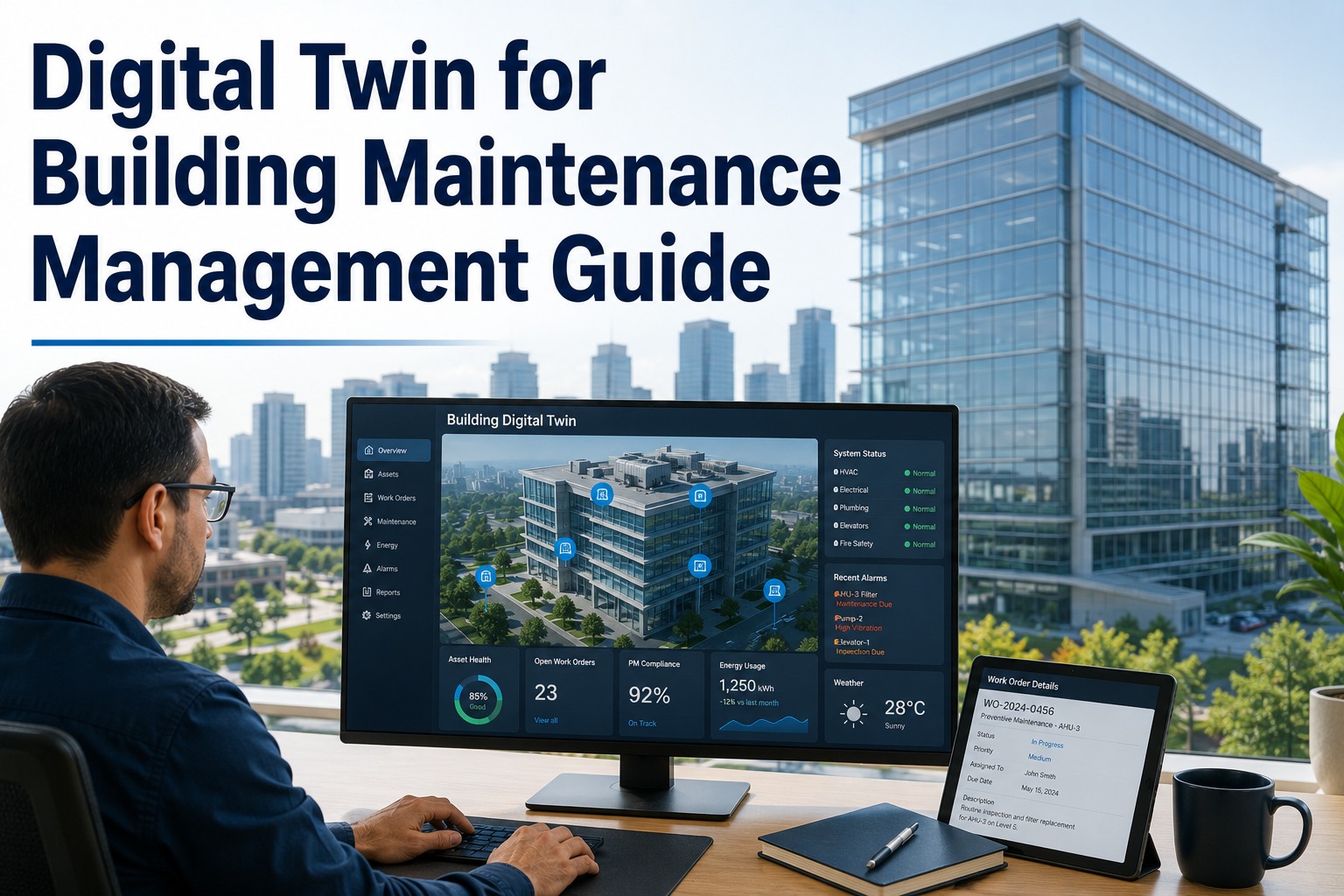
A chemical plant's centrifugal compressor failed 22 days after passing a "satisfactory" vibration analysis because the analyst evaluated the physical machine in isolation — without knowing that process conditions had shifted, suction pressure had dropped 8%, and the operating point had moved toward surge. A digital twin of the same compressor — a virtual replica running in parallel with the physical asset — would have detected that the combination of vibration signature, process deviation, and operating point migration constituted a developing surge condition 31 days before failure. The digital twin does not replace the vibration analyst. It gives the analyst context that the physical machine cannot provide: the intersection of mechanical condition, process behavior, and thermodynamic performance that determines whether a vibration reading is benign or catastrophic. The emergency repair cost $1.4M in parts, lost production, and expedited contractor mobilization. The same repair scheduled during a planned turnaround: $95,000. Digital twin technology for predictive maintenance is not a visualization tool — it is a physics-based simulation engine that predicts equipment behavior under changing conditions, identifies failure trajectories weeks before they manifest physically, and generates maintenance actions that prevent the failures traditional monitoring misses. Schedule a demo to see digital twin integration with CMMS predictive maintenance workflows.
Digital Twin Technology.
Physics-Based Prediction.
Maintenance Without Guesswork.
A digital twin is not a dashboard. It is a living virtual replica of your physical asset — running the same physics, processing the same sensor data, and predicting behavior under conditions that have not happened yet. When the twin says the bearing will fail in 28 days, it is not extrapolating a trend. It is simulating the failure.
What a Digital Twin Actually Is — And What It Is Not
Most "digital twin" implementations are dashboards with 3D models. A true predictive maintenance digital twin is a physics-based simulation that mirrors the real asset's behavior in real time and predicts future states under changing conditions.
Not a Dashboard
A dashboard displays current sensor readings. A digital twin simulates why those readings are what they are — and what they will become tomorrow, next week, and next month under different operating scenarios.
Not a 3D Model
A 3D model shows geometry. A digital twin runs thermodynamic, structural, and fluid dynamic equations inside that geometry — calculating stress, heat transfer, wear rates, and degradation in real time.
Not Static
A digital twin updates continuously from live sensor data. As the physical asset degrades, the virtual twin degrades identically — maintaining simulation accuracy throughout the asset's entire lifecycle.
The Five Layers of a Predictive Maintenance Digital Twin
Each layer adds intelligence. Layer 1 alone is a connected sensor. All five layers together create a virtual asset that thinks, predicts, and recommends maintenance actions autonomously.
Physical Data Layer (Sensor Integration)
Vibration, temperature, pressure, flow, current, and process parameters stream continuously from the physical asset into the twin. This is the foundation — without real-time data, the twin is a static model. OxMaint connects to BAS, SCADA, and IoT platforms via BACnet, Modbus, OPC-UA, and API.
Physics Simulation Layer (Digital Model)
The core engine. Thermodynamic, structural, and fluid dynamic equations model the asset's expected behavior under current operating conditions. When real sensor data deviates from simulated behavior, the difference is the degradation signal — more precise than any threshold-based alarm.
Machine Learning Layer (Pattern Recognition)
ML models trained on historical failure data overlay the physics simulation — correlating multi-parameter deviations with specific failure modes. Physics tells you something is wrong. ML tells you what is wrong and how long you have before it fails.
Decision Intelligence Layer (What-If Simulation)
Run scenarios before committing resources. "What happens if we defer this repair 30 days?" "What if we increase throughput 15% — which component fails first?" "What is the optimal maintenance window given current degradation rates?" The twin answers questions that no amount of sensor data alone can address.
CMMS Execution Layer (Action Generation)
Twin-generated predictions auto-create work orders in OxMaint with: diagnosed failure mode, predicted time-to-failure, recommended repair, required parts (inventory verified), and optimal scheduling window. The reliability engineer reviews the twin's recommendation — not raw sensor data or simulation output.
Where Digital Twins Deliver Maximum Maintenance Value
Digital twins deliver the highest ROI on complex, high-value assets where failure consequences are severe and traditional monitoring methods miss context-dependent failure modes. Sign up free and see how digital twin data integrates with CMMS predictive workflows.
Digital Twin vs. Traditional Predictive Maintenance
ROI of Digital Twin Predictive Maintenance
Documented outcomes at facilities deploying physics-based digital twins on critical rotating equipment, heat transfer systems, and production lines.
Unplanned Shutdown Prevention
Physics-based prediction catches context-dependent failures that trend monitoring misses — preventing 2–4 major shutdowns per year that traditional PdM would not have predicted.
Maintenance Optimization
What-if simulation eliminates unnecessary PM tasks and optimizes repair timing — reducing total maintenance cost 20–30% while improving reliability outcomes.
Energy and Performance Recovery
Efficiency degradation detected by physics simulation — fouling, misalignment, control drift — drives timely corrective action that recovers 5–15% energy waste.
60-Day Digital Twin Deployment Roadmap
Digital twin deployment is incremental — start with your highest-value asset, prove the physics model, then expand. Start your free trial and connect your first asset's sensor data to a digital twin within the first week.
Data Connection and Model Selection
Connect sensor feeds from your highest-criticality asset. Select the appropriate physics model from OxMaint's library (rotating equipment, heat transfer, electrical, structural). Validate model output against known operating data.
Calibration and ML Overlay
Calibrate the physics model to your specific asset's operating characteristics. Overlay ML pattern recognition trained on industry failure data. Configure prediction confidence thresholds and work order auto-generation rules.
What-If Activation and Scenario Planning
Enable decision intelligence layer. Run what-if scenarios on maintenance timing, operating condition changes, and throughput variations. Validate twin predictions against actual equipment behavior over the first 30 days.
Expansion and Portfolio Intelligence
Extend digital twin coverage to secondary critical assets. Deploy system-level twins that model equipment interactions. Generate first twin-backed capital planning report with remaining useful life projections across the portfolio.
Digital Twin for Maintenance FAQ
Do we need to build custom physics models for each asset?
No. OxMaint provides pre-built physics model libraries for common industrial equipment — centrifugal pumps, compressors, heat exchangers, motors, generators, chillers, and boilers. These models calibrate automatically to your specific asset using nameplate data and operating history. Custom models are only needed for highly specialized or one-of-a-kind equipment.
How does a digital twin differ from ML-only predictive maintenance?
ML-only prediction extrapolates past trends — it assumes future conditions will resemble historical data. A digital twin simulates physics — it predicts how the asset will behave under conditions it has never experienced before. When process conditions change, loads shift, or throughput increases, the twin adapts its predictions. ML alone cannot. The most powerful approach combines both: physics for first-principles simulation, ML for pattern recognition and remaining useful life estimation. Book a demo to see physics + ML hybrid prediction on industrial equipment.
What sensor infrastructure do we need to support a digital twin?
Most industrial assets already have sufficient sensor coverage for an effective digital twin — vibration, temperature, pressure, flow, and current data from existing BAS/SCADA systems. The twin's physics model fills data gaps by calculating unmeasured parameters from measured ones. Additional sensors are only recommended for specific high-value measurement points that the physics model identifies as critical for prediction accuracy.
Can digital twins simulate "what-if" maintenance scenarios?
Yes — this is one of the highest-value capabilities. "What if we defer this bearing replacement 45 days — what is the probability of failure?" "What if we increase compressor throughput 10% — which component reaches its limit first?" "What is the optimal time to clean this heat exchanger given current fouling rate and production schedule?" The twin runs the scenario in simulation and provides a quantified risk assessment before any physical action is taken.
What is the realistic ROI for deploying digital twins alongside CMMS?
ROI depends on asset criticality and failure consequence. For a single high-value rotating asset (compressor, turbine, generator), one prevented failure ($500K–$2M) exceeds years of twin deployment cost. Across a portfolio, documented annual value averages $5M+ from shutdown prevention, maintenance optimization, and energy recovery. The highest ROI comes from assets where traditional PdM has blind spots — context-dependent failures that trend monitoring cannot predict. Start free and deploy your first digital twin on your most critical asset.
Simulate the Failure. Prevent the Shutdown. Optimize the Schedule.
OxMaint integrates digital twin simulation with CMMS execution — turning physics-based predictions into scheduled work orders that prevent the failures traditional monitoring misses. Deploy in 60 days. ROI from the first prevented shutdown.