Every pharmaceutical and healthcare facility operates under a single non-negotiable maintenance reality — when the FDA inspector walks in, 61 percent of Form 483 observations trace back to inadequate equipment maintenance, calibration, or documentation controls, not process failures. The calibration certificate is the single most reviewed document in a GMP audit, and the most common reason a sterile manufacturing line, hospital diagnostic platform, or compounding pharmacy enters a regulatory hold is an expired certificate that nobody renewed, an out-of-tolerance instrument that nobody flagged, or a documentation gap that nobody can defend on paper. Quality directors building structured calibration certificate control across regulated environments start a free trial on the most regulated asset class and validate the certificate lifecycle against the inspector readiness model before extending it across the site.
Pharmaceutical and Healthcare Compliance Brief
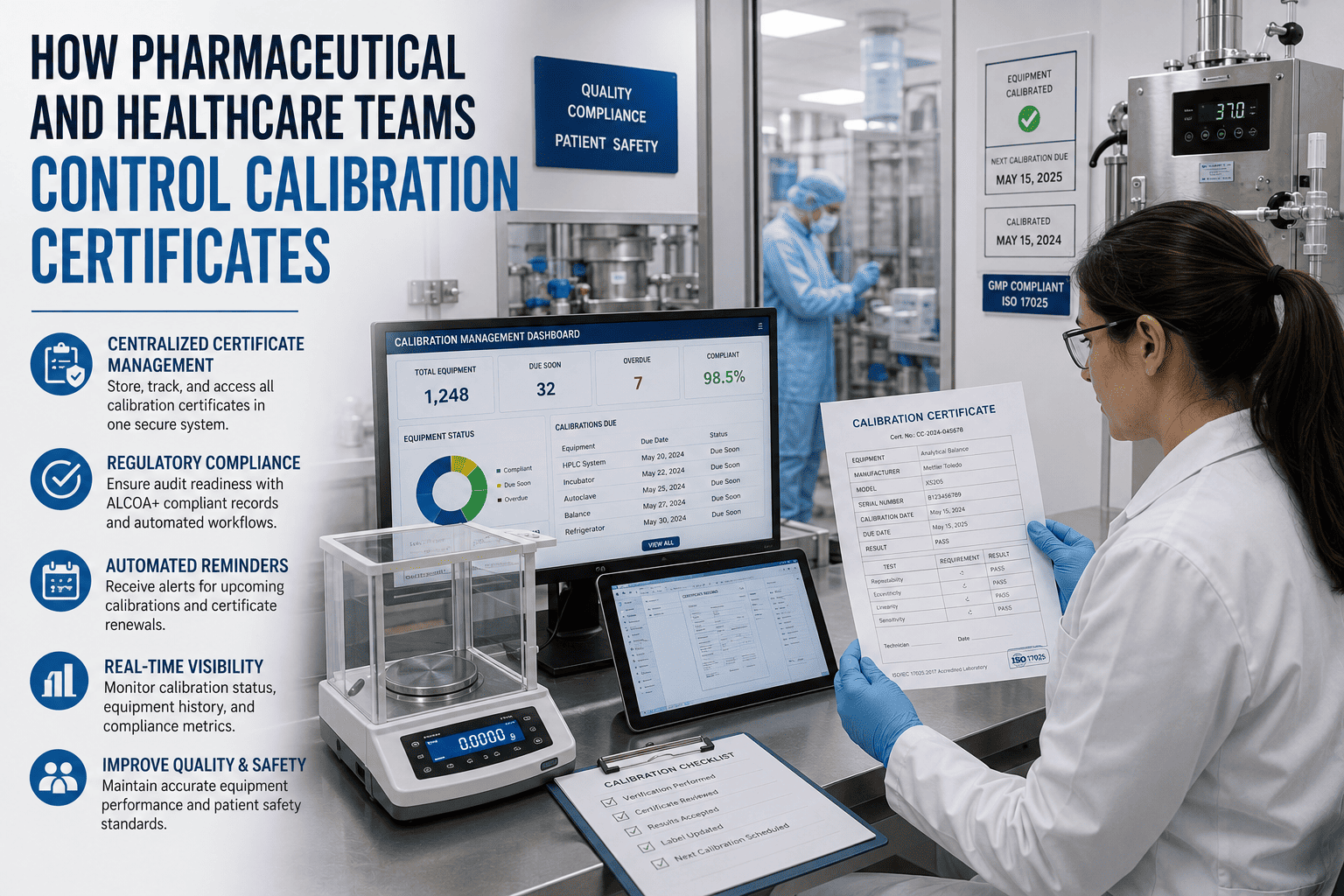
How Pharmaceutical and Healthcare Teams Control Calibration Certificates
Certificate lifecycle tracking, FDA 21 CFR Part 11 audit trails, tolerance management, USP Chapter 41 measurement uncertainty controls, and CMMS-driven calibration documentation that satisfies FDA, EMA, MHRA, and TGA inspectors in the same workflow.
61%
FDA Form 483 observations that trace back to equipment maintenance, calibration, or documentation gaps
99%+
GMP compliance achievable on automated calibration tracking with CMMS audit trails
4-8 wk
Typical 21 CFR Part 11 validation cycle for sponsors implementing structured CMMS controls
0.10%
USP Chapter 41 minimum weight relative error limit applicable to every pharmaceutical balance
What Is Calibration Certificate Control for Pharmaceutical and Healthcare Operations
Calibration certificate control is the discipline of managing every instrument certificate through its full lifecycle — receipt, review, attachment to the asset, expiry tracking, renewal scheduling, out-of-tolerance investigation, and audit-ready export. It applies to pharmaceutical balances, environmental chambers, autoclaves, sterilizers, HPLC and GC systems, dispensing equipment, hospital diagnostic instruments, infusion pumps, and any device that produces data the regulator can question.
The discipline is enforced by FDA 21 CFR Part 11 in the United States, by EU GMP Annex 11 in Europe, by MHRA guidance in the United Kingdom, by PMDA expectations in Japan, by TGA standards in Australia, and by the recent USP Chapter 41 revision that now requires measurement uncertainty documentation on every pharmaceutical balance certificate. Quality directors ready to install the structure book a demo and walk through the certificate lifecycle on a real asset class.
The February 2026 USP Chapter 41 revision now requires every calibration certificate to document total measurement uncertainty — not just pass or fail tolerance.
The Six Stages of Calibration Certificate Lifecycle Control
Every calibration certificate moves through six stages from receipt to renewal. The CMMS that controls all six stages produces a continuously inspection-ready record. The site that misses any one of them leaves a documentation gap that the next FDA, EMA, or MHRA inspector will find.
S1
Certificate Receipt and Authentication
Vendor calibration certificate arrives, gets verified against scope of work, traceability statement, accreditation number, and signed quality endorsement. Anything missing routes back to the vendor before the instrument returns to service.
S2
Asset Record Attachment
Certificate uploads to the asset record with full searchable metadata — instrument ID, calibration date, due date, technician, vendor, measurement uncertainty, as-found and as-left readings. Document control is intrinsic to the asset, not a separate filing system.
S3
Tolerance Compliance Verification
As-found readings checked against acceptance criteria for the instrument's GMP-critical use. Out-of-tolerance findings trigger an investigation workflow before the asset is released, and the impact assessment travels with the certificate.
S4
Expiry Alert and Renewal Scheduling
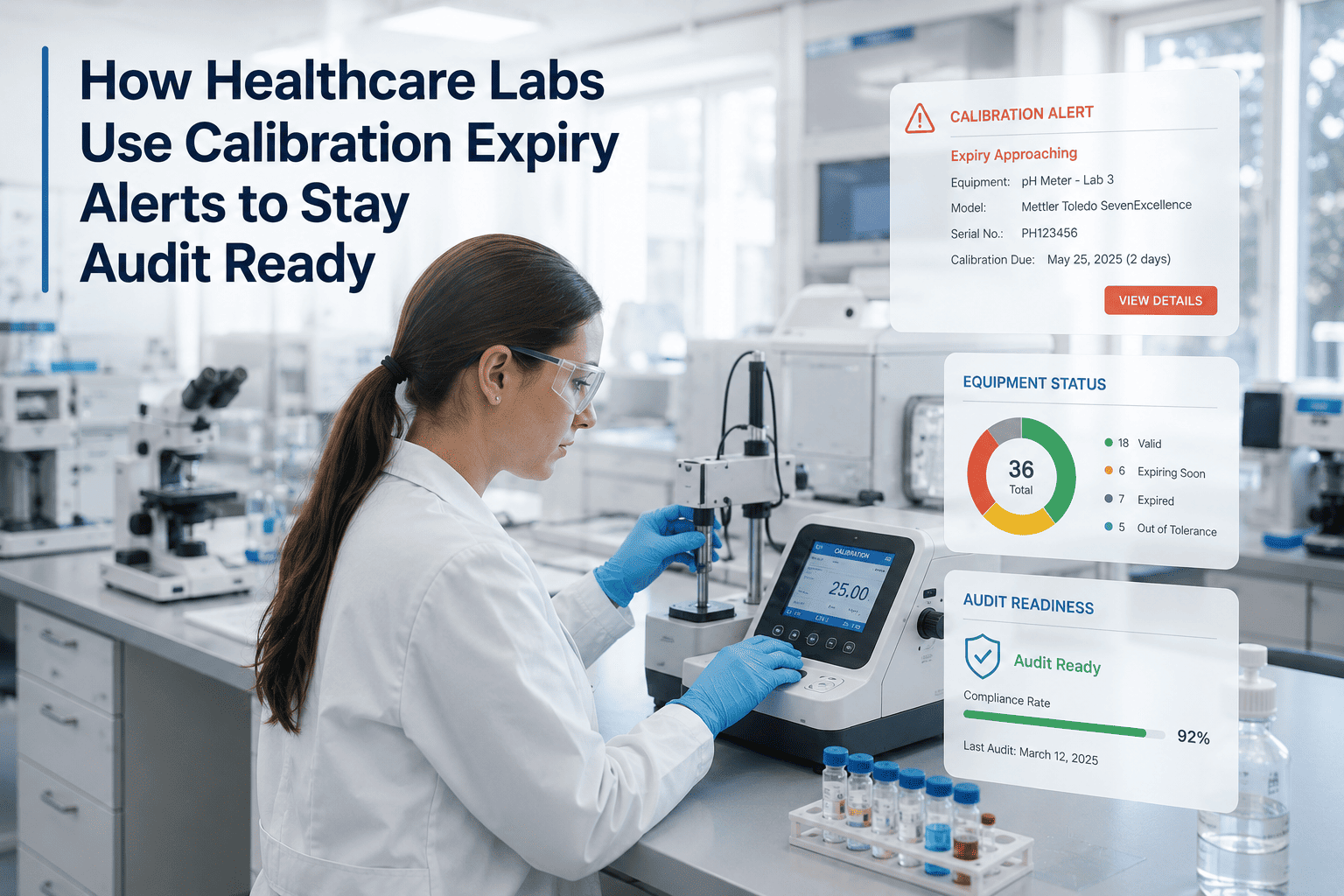
Renewal alerts fire at configurable lead times — typically 90, 60, and 30 days before expiry. Vendor purchase order generation and on-site scheduling happen against the alert, before any instrument runs past its certificate date.
S5
21 CFR Part 11 Audit Trail Capture
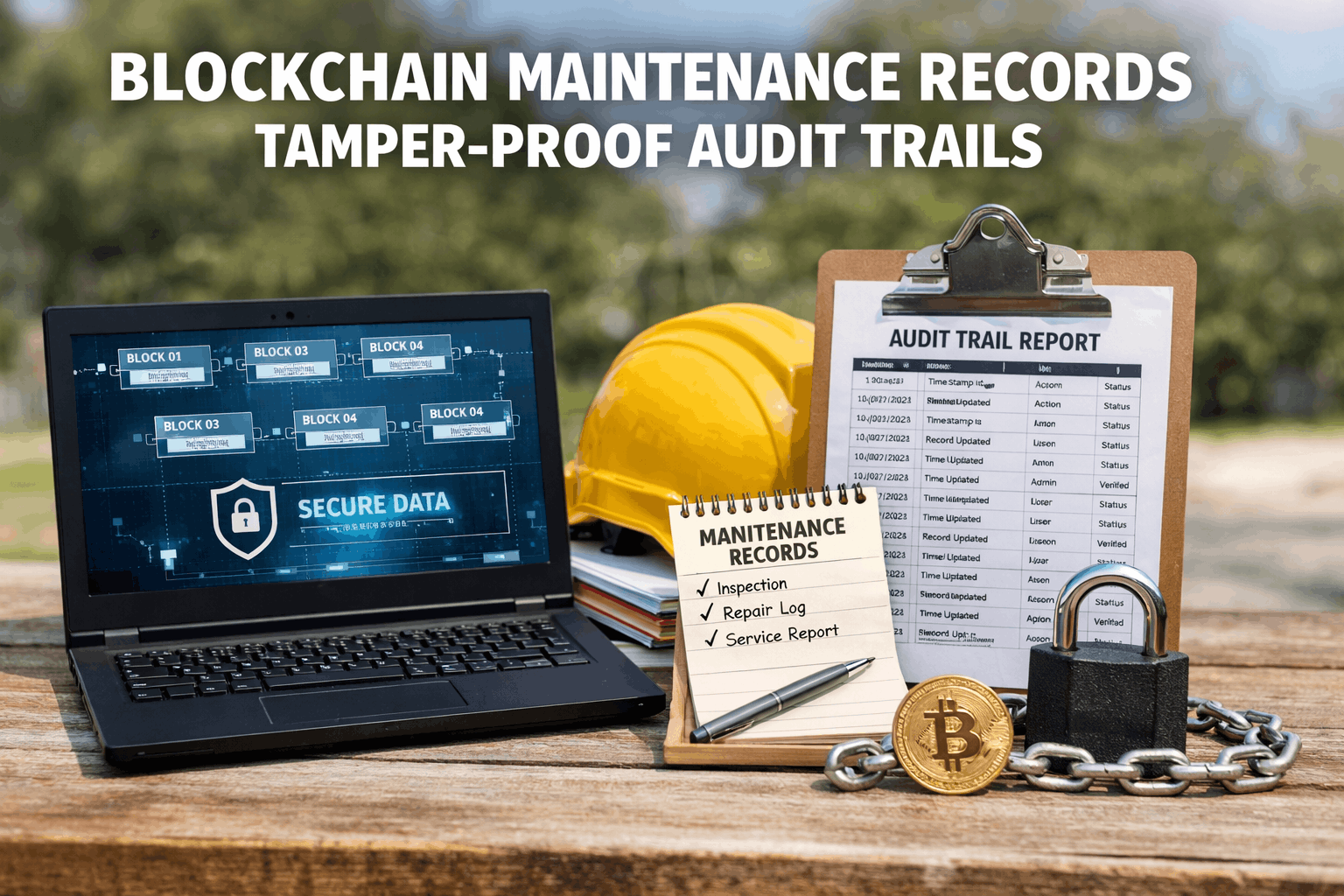
Every certificate action — view, edit, approval, retirement — captured in a tamper-proof audit trail with user ID, timestamp, and reason. ALCOA-plus principles satisfied at every step without manual log maintenance.
S6
Inspector-Ready Documentation Export
Auditor walks in, names the instrument, and the certificate history exports in seconds — current certificate, last three years of history, all out-of-tolerance investigations, all renewal records, and the full audit trail attached.
Run all six stages on one CMMS and the calibration program becomes continuously inspection-ready instead of frantically reconstructed in the two weeks before an FDA visit. Quality directors ready to install the model start a free trial and load the most regulated asset class first.
Why Calibration Certificate Control Fails in Regulated Environments
Certificate control failures are remarkably consistent across pharmaceutical manufacturers, contract laboratories, hospital diagnostics, and compounding pharmacies. Six structural gaps account for the majority of audit findings that quality directors later confirm were avoidable.
G1
Certificates Filed in Shared Drives Without Asset Linkage
PDF lives in a folder. Folder lives on a shared drive. Folder name is misspelled. Auditor asks for the certificate and the QA team takes 25 minutes to find it. Every 25-minute search is a credibility loss the inspector remembers.
G2
Expiry Tracking on Spreadsheets That Nobody Updates
The master calibration tracker is a spreadsheet last touched three months ago. Half the dates are wrong, two instruments expired last week, and nobody notices until the inspector asks for the renewal record.
G3
Out-of-Tolerance Findings With No Investigation Workflow
The vendor certificate shows the as-found reading was outside tolerance. The investigation never opens. Months later the regulator asks about impact assessment on every batch produced during that period and the trail is cold.
G4
Missing Measurement Uncertainty Documentation
USP Chapter 41 now requires measurement uncertainty on every balance certificate. Legacy vendors deliver pass-fail certificates only. The site does not catch the gap until the inspector flags it as a current observation.
G5
No Audit Trail on Certificate Edits and Approvals
QA reviewer edits a certificate metadata field. The action is not logged. The reviewer leaves the company. The next audit asks who authorized the edit, when, and why, and the site has no defensible answer.
G6
Documentation Reconstruction in the Pre-Audit Scramble
The site spends two weeks before every inspection assembling certificate packs from shared drives, paper files, vendor portals, and email threads. The reconstruction itself is a flag — continuous compliance is a documentation system, not an event.
Every one of these is removable when the calibration program runs against a 21 CFR Part 11 capable CMMS — and the quality directors ready to remove them book a demo and walk through the gap audit on their own asset class.
Continuous compliance is a documentation system that runs on a CMMS, not a two-week pre-audit reconstruction project that costs the QA team a full month every year.
How OxMaint Manages the Calibration Certificate Lifecycle
OxMaint runs the calibration program against the asset hierarchy. Every certificate lives on the asset, every renewal fires from the alert engine, every out-of-tolerance event opens a structured investigation, and every action sits inside a tamper-proof 21 CFR Part 11 audit trail.
01
Asset-Linked Certificate Repository
Every certificate uploads to the asset with full searchable metadata. Auditor asks, system answers in seconds — no shared drive search, no folder-naming guesswork.
02
Configurable Expiry Alert Engine
Renewal alerts fire at 90, 60, and 30 days before expiry. Vendor scheduling and purchase order generation happen against the alert, not against the surprise.
03
Out-of-Tolerance Investigation Workflow
As-found out-of-tolerance findings open a structured investigation automatically. Impact assessment, batch review, and corrective action chain through the same record.
04
Measurement Uncertainty Capture
USP Chapter 41 compliant uncertainty field on every certificate record. Vendor uploads measurement uncertainty alongside as-found and as-left values.
05
21 CFR Part 11 Audit Trail Engine
Every certificate action timestamped with user, action, and reason. Audit trail is tamper-proof and exports as a defensible Part 11 record on demand.
06
Inspector-Ready Export Pack
One-click certificate pack export with full history, investigations, renewals, and audit trail — assembled in seconds, defensible by design.
For quality directors managing pharmaceutical operations in the USA under FDA 21 CFR Part 11, in the European Union under EU GMP Annex 11, in the UK under MHRA expectations, in Australia under TGA, in Germany under BetrSichV, or in the UAE under Vision 2030 pharmaceutical modernization — the certificate model is the same and the inspection record travels across regulators. Start a free trial on the most regulated asset class.
Reactive Versus Structured Calibration Certificate Control
The gap between reactive certificate management and structured CMMS control shows up in the same eight places every audit cycle. The table below maps where the inspection risk lives and where the CMMS removes it.
| Certificate Discipline | Reactive Operation | Structured CMMS Operation |
|---|
| Storage and retrieval | Shared drive folders, slow search, misnamed files | Asset-linked repository with searchable metadata |
| Expiry tracking | Spreadsheet last updated three months ago | Automated alerts at 90, 60, and 30 days before expiry |
| Out-of-tolerance handling | Reading buried in certificate, investigation never opens | Automatic investigation workflow with impact assessment |
| Measurement uncertainty | Missing on legacy certificates, flagged in audit | Captured on every certificate per USP Chapter 41 update |
| Audit trail on edits | No log of who changed what or why | Tamper-proof 21 CFR Part 11 audit trail on every action |
| Inspector pack assembly | Two-week reconstruction project before every audit | One-click export in seconds, continuously ready |
| Multi-site portfolio view | Manually compiled from each site's records each quarter | Live portfolio dashboard across every site and asset |
| Regulator audit outcome | Documentation observations and remediation cycles | Continuous compliance with defensible audit posture |
Quality directors moving the calibration program from the left column to the right book a demo and walk through the certificate model on their own asset hierarchy.
ROI and Compliance Outcomes Reported on Structured Calibration Programs
These are the outcomes pharmaceutical and healthcare quality directors report after a full year on CMMS-driven calibration certificate control. Variance depends on starting condition and regulatory complexity, but direction is consistent across manufacturing, contract labs, hospital systems, and compounding operations.
99%+
GMP compliance rate achievable with automated calibration certificate tracking on a CMMS
85%
Reduction in pre-audit certificate assembly hours through continuous documentation
61%
Share of FDA 483 observations attributable to maintenance, calibration, and documentation gaps
4-8 wk
Typical 21 CFR Part 11 validation cycle for CMMS calibration deployment
100%
Certificate expiry tracking coverage achievable with automated alert engine and renewal scheduling
7 mo
Typical payback period on CMMS calibration investment for mid-size pharmaceutical operations
Quality directors stacking these returns across multi-site pharmaceutical and healthcare portfolios start a free trial on the most regulated asset class and use first-year results to fund the network rollout.
Frequently Asked Questions on Calibration Certificate Control
Does OxMaint support 21 CFR Part 11 audit trails for calibration records
Yes. Every calibration certificate action — view, edit, approval, retirement — is captured in a tamper-proof audit trail with user ID, timestamp, and reason for change. ALCOA-plus principles apply across the certificate lifecycle. The audit trail exports as a defensible Part 11 record on demand, and the system supports electronic signatures, access controls, and record integrity throughout.
How does OxMaint handle the USP Chapter 41 measurement uncertainty requirement
Measurement uncertainty is a captured field on every calibration certificate record. Vendors upload uncertainty alongside as-found and as-left values during certificate submission. Existing certificates can be flagged for vendor amendment when uncertainty is missing, and the renewal cycle picks up USP Chapter 41 compliance automatically going forward.
Can OxMaint manage out-of-tolerance investigations and impact assessment
Yes. As-found out-of-tolerance findings open a structured investigation workflow automatically. The investigation captures impact assessment on every batch produced or sample analyzed during the affected period, corrective and preventive actions assigned to owners, and the entire chain attached to the certificate record for inspector review.
How quickly can a regulated site implement CMMS calibration controls
Most pharmaceutical and healthcare sponsors complete 21 CFR Part 11 validation in 4 to 8 weeks. OxMaint provides validation documentation, test scripts, and implementation support. Legacy certificates and IQ/OQ/PQ records can be migrated against each asset during onboarding, and the platform is GMP-ready from go-live.
From Pre-Audit Scramble to Continuous Compliance
Make Every Calibration Certificate Inspector-Ready in Seconds
Every FDA, EMA, MHRA, and TGA inspection tests the same thing — can the site produce the calibration certificate, the audit trail, and the out-of-tolerance investigation when the inspector names the instrument. OxMaint replaces shared-drive folders and outdated spreadsheets with a continuously inspection-ready calibration program that satisfies 21 CFR Part 11, USP Chapter 41, and EU GMP Annex 11 in the same workflow.
Asset-linked certificate repository with tamper-proof audit trail
Configurable expiry alerts and automatic renewal scheduling
Out-of-tolerance investigation workflow with impact assessment
21 CFR Part 11 capable
USP Chapter 41 compliant
EU GMP Annex 11 ready
Validation pack supplied