A trailer that moves while a forklift is inside it can kill. Early pullout, trailer creep, a collapsed landing gear or a separation at the dock face are among the most severe incidents in any warehouse — and the one thing standing between a loaded forklift and a three-foot fall is a vehicle restraint doing its job. That restraint, and the lights and leveler around it, only work if they are maintained. OXMAINT AI is the maintenance management software that keeps every restraint, light and interlock on a documented inspection schedule.
Warehouse & Logistics · Dock Safety · Vehicle Restraints · 2026
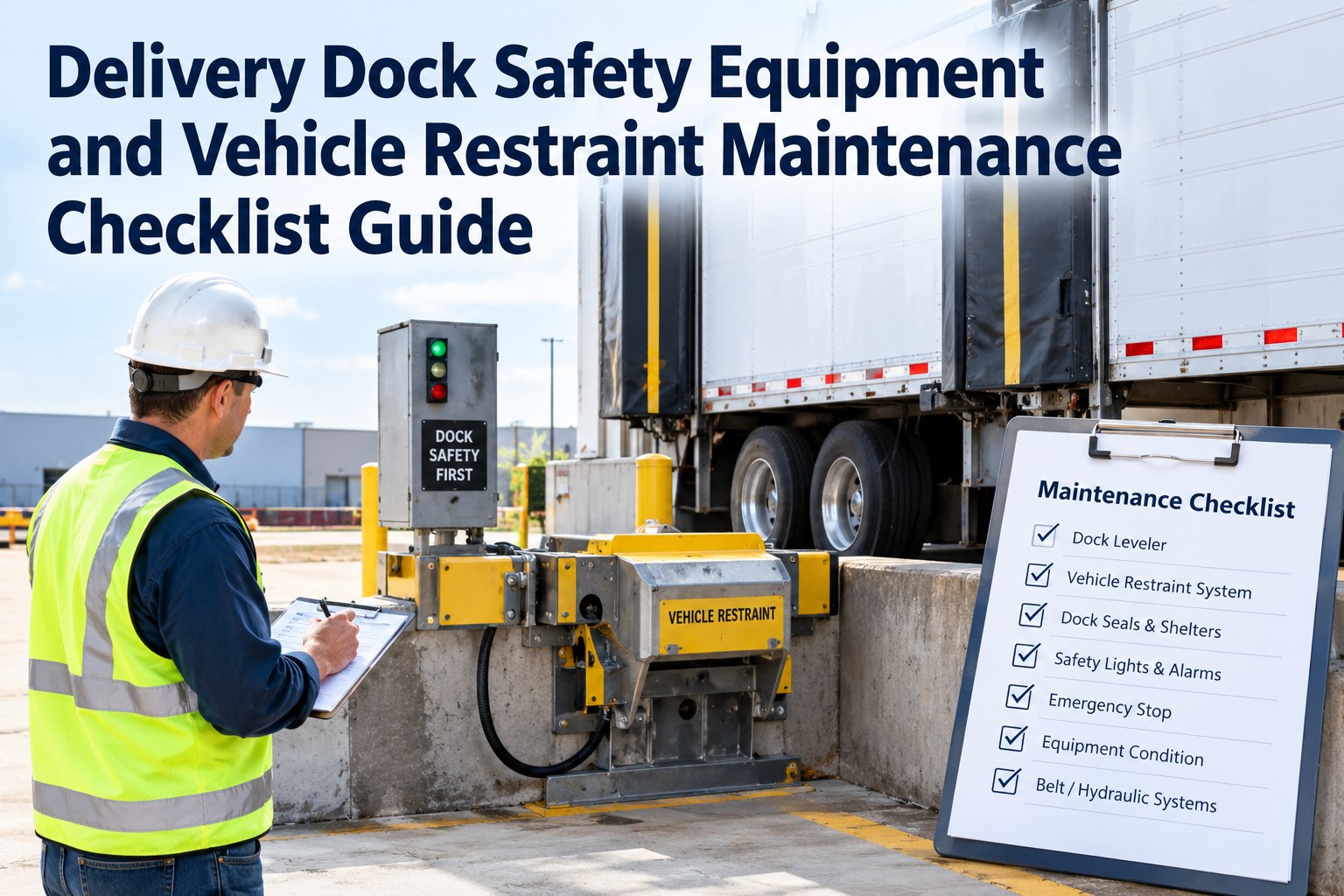
Delivery Dock Safety Equipment & Vehicle Restraint Maintenance Checklist Guide
A vehicle restraint is a life-safety device, and a life-safety device you don't inspect is a gamble. OXMAINT AI puts the whole dock on a schedule: restraints, communication lights, dock levelers, bumpers, doors and the interlocks that tie them together — inspected, tracked and documented. The restraint holds, the lights tell the truth, and every check is a record you can stand behind.
Restrain
→
Signal
→
Load
→
Release
DOCK 12 · LOADING
Restraint engagedLocked
Interior lightGreen
Exterior lightRed
Dock 7 restraintFault
Dock 3 light systemOut
2 types
hook/barrier restraints and wheel-based restraints
Red/Green
the light system that tells driver and loader when it's safe
4 hazards
separation, creep, pullout and landing-gear collapse
Lock out
a failed restraint takes the dock out of service, not a shortcut
The Safe-Loading Sequence the Equipment Enforces
Dock safety isn't one device — it's an interlocked sequence, each step depending on the one before. When the equipment is maintained, that sequence is enforced automatically; when it isn't, the chain breaks silently. Here is the loop every safe load follows.
1
Trailer arrives & parks
The driver backs to the dock face against the bumpers; the exterior light shows green to approach.
↓
2
Restraint engages
The hook rises to the trailer's rear impact guard, or the wheel restraint sets against the tire, and locks.
↓
3
Lights swap — safe to load
Interior turns green, exterior turns red. Only now does the leveler go down and loading begin.
↓
4
Load / unload
Forklifts cross the leveler into the trailer while the restraint holds it fast against creep and pullout.
↓
5
Release — lights swap back
Leveler stored, restraint released, interior red and exterior green. Only then may the driver pull out.
Every step in that chain is a piece of equipment that has to work on cue — a dead light or a weak restraint breaks the sequence without anyone noticing until it's too late. Start free and keep the whole dock sequence inspected in OxMaint.
The Four Hazards a Restraint Prevents
Maintenance makes more sense when you know what failure looks like. These are the four ways a trailer moves when the restraint isn't doing its job — each one capable of putting a forklift and its operator on the ground.
Early Pullout
The driver leaves while loading is still in progress. The classic dock fatality — a restraint and the red/green lights are what prevent it.
Trailer Creep
Forklift forces walk the trailer away from the dock inch by inch, opening a gap at the leveler. A held restraint stops the drift.
Trailer Separation
An unchocked, unrestrained trailer rolls or is bumped away from the dock, dropping the leveler lip and anyone on it.
Landing Gear Collapse
A spotted trailer's landing gear buckles under forklift load, dropping the nose. Restraint, props and inspection together guard against it.
Each of these traces back to equipment that was supposed to hold and didn't — which is exactly why it gets inspected on a schedule, not on a hunch. Book a demo to schedule dock-hazard inspections in OxMaint.
Know Your Restraint Type
Restraints come in two families, and they're inspected differently because they fail differently. Most docks run one or the other; some keep both for trailers the primary type can't engage.
Hook / Barrier Restraints
A powered hook or barrier rises to engage the trailer's rear impact guard (the RIG or ICC bar). Watch the hook's travel and engagement, the guard's condition, hydraulics or drive, and the sensor that confirms a good lock.
Wheel-Based Restraints
A chock or barrier sets against the trailer's rear tire — for trailers with a damaged, missing or non-standard guard. Watch the chock mechanism, the drive, ground-level obstruction and sensor feedback.
Whichever you run, the sensor and light tie-in is what turns a mechanical hold into a safe-to-load signal — and it's the part most often missed on inspection. Start free and track each restraint type in OxMaint.
The Dock Safety Inspection Checklist
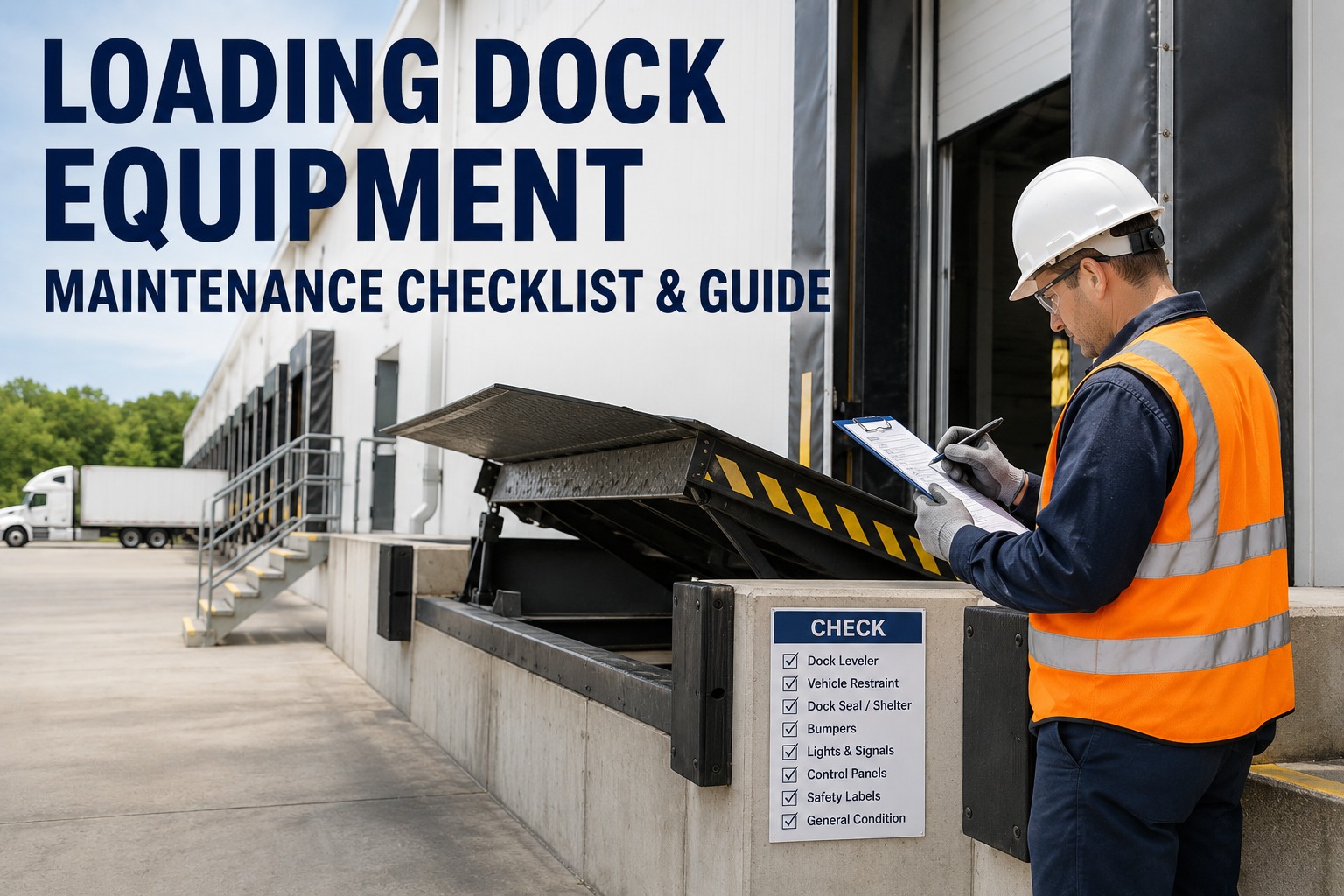
Work these five sections per dock position on a regular cadence. Let qualified personnel sign each item, keep the record dated, and lock out any position with a safety-critical fault until it's repaired.
Twenty checks, one record per dock position — the evidence that the life-safety equipment was actually verified, not assumed. Start free and run this inspection with a dated record in OxMaint.
“The Restraint Was Fine Last Month” Is Not a Defense After a Fall.
A vehicle restraint is only protection if it's proven to work — on a schedule, with a record. OXMAINT AI keeps every restraint, light and leveler on inspection, turns a fault into a lock-out work order, and builds the documented safety trail an incident review will ask for.
How OxMaint Runs Dock Safety
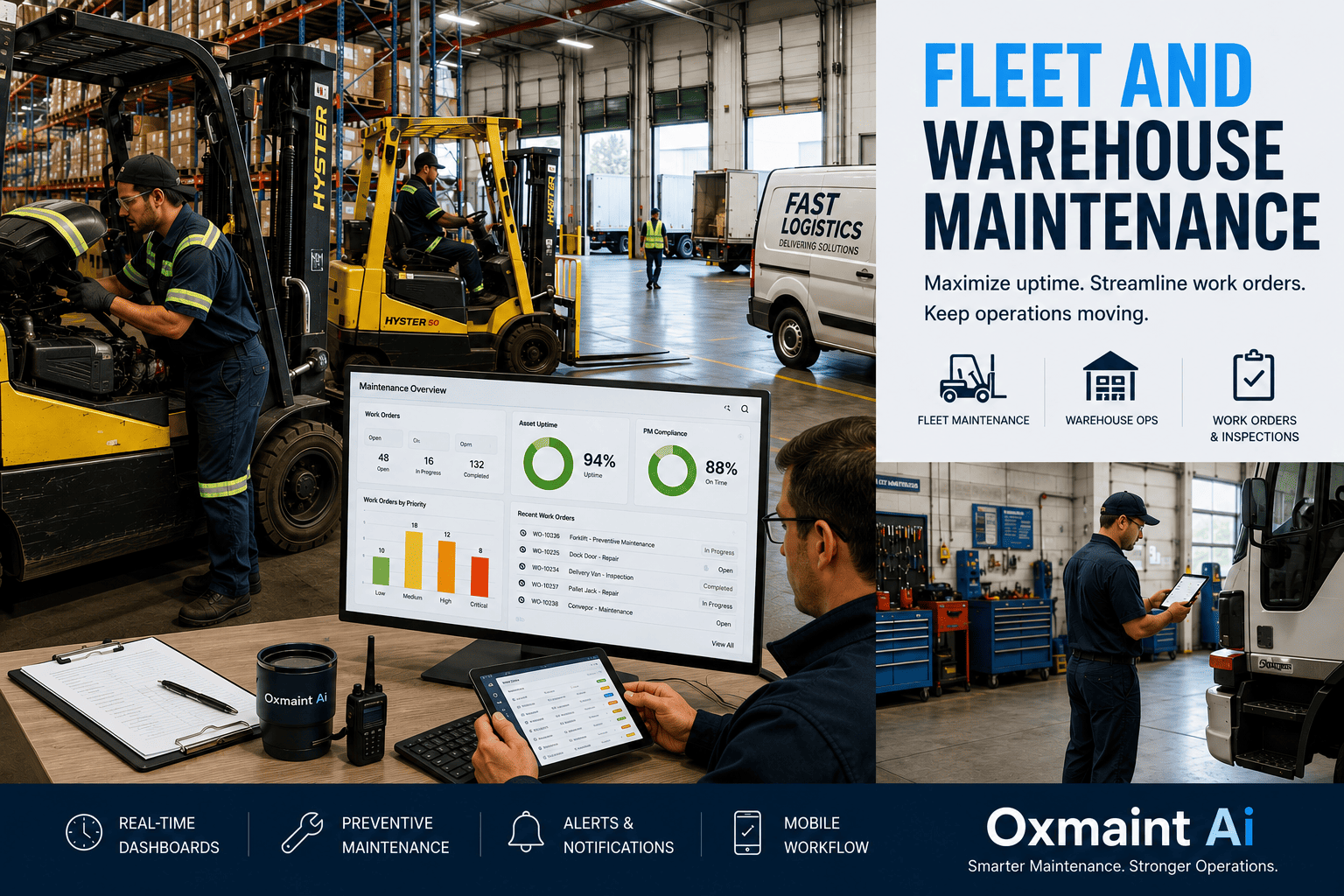
Your safety and maintenance teams do the inspections and repairs. OXMAINT AI runs the program around them — the schedule, the lock-outs, the records and the dashboard that keep every dock position accounted for.
Scheduled Inspections
Restraints, lights, levelers, doors and bumpers inspected per dock on a set cadence, with alerts before each is due.
Mobile Dock Checks
Crews run the checklist from a phone at the dock, logging condition and photos against each position.
Lock-Out Work Orders
A faulty restraint or light raises a priority work order and flags the dock out of service until it's verified repaired.
Per-Dock Asset History
Each dock position carries its own restraint, leveler and door history — every inspection, fault and repair in one place.
Safety & Audit Records
Dated, signed inspection and repair records per dock — the documented trail an OSHA audit or incident review expects.
Readiness Dashboard
A live view of every dock's status and overdue checks, so a supervisor always knows which positions are safe to run.
The inspections and repairs stay with your team; the schedule, the lock-outs and the records live in one place. Sign up free and build your dock safety program in OxMaint.
Reviewed by OxMaint Safety & Facilities Operations
Content reflects established loading-dock safety and vehicle-restraint maintenance practice, including the communication-light interlock and OSHA chocking expectations. Requirements and inspection intervals vary by equipment and jurisdiction — follow the manufacturer's instructions, OSHA and ANSI MH30.2, and your written safe-loading program, and use qualified personnel.
Frequently Asked Questions
What is a dock vehicle restraint?
A powered device at the dock that holds a parked trailer in place during loading — either a hook engaging the trailer's rear impact guard or a wheel-based restraint against the tire — preventing early pullout, creep and separation.
How often should restraints be inspected?
Follow the manufacturer's schedule and your safety program — commonly a quick daily or shift operational check plus a thorough periodic inspection. Because it's life-safety equipment, a fault means lock out, not defer.
Book a demo to set the cadence.
What does the red/green light system do?
It communicates between the dock and the driver. Interior green plus exterior red means the restraint is engaged and it's safe to load; the colors swap on release so the driver knows when it's safe to pull out.
Do restraints replace wheel chocks?
Not automatically — it depends on the equipment and your written program and OSHA obligations. Many sites keep chocks as a backup, especially for trailers a powered restraint can't properly engage.
What happens when a restraint fails inspection?
The dock position is locked out and tagged, a priority work order is raised, and it stays out of service until a qualified repair is verified — with the whole event documented against that dock.
Make Sure the Device That Saves a Life Is Ready to Work.
Put every dock position on one platform with OXMAINT AI — restraints, communication lights, levelers, doors and bumpers on scheduled inspection, faults turned into lock-out work orders, and a dated safety record per dock. Keep the trailer still, the loader safe, and the proof ready for any audit.

.jpg)
