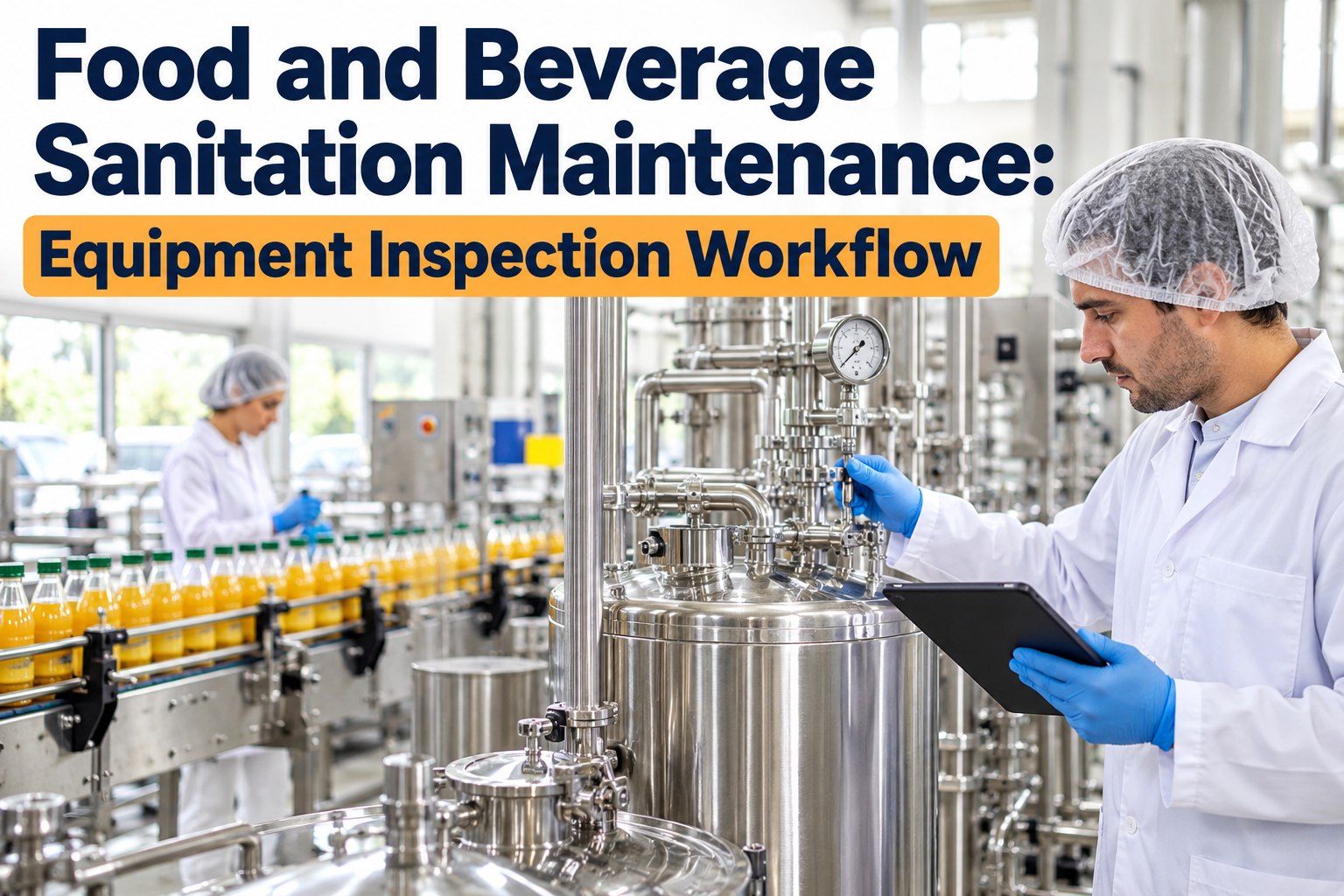
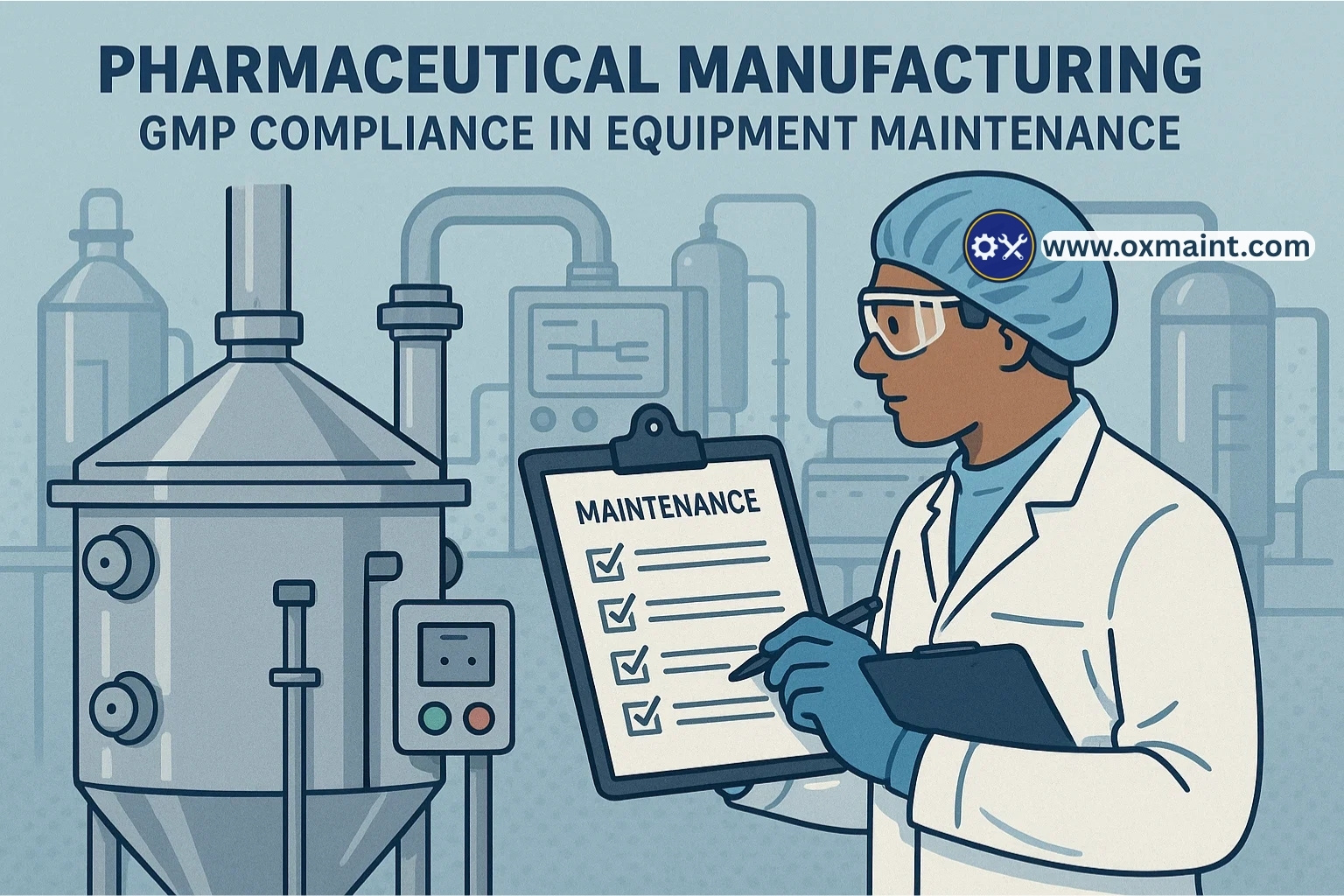
Food packaging line maintenance is the discipline that keeps high-speed fillers, sealers, labelers, conveyors, and inspection systems running at OEE targets while simultaneously meeting GMP, FDA FSMA, and BRCGS hygiene requirements. The core challenge is that packaging equipment in food manufacturing must be both mechanically reliable and allergen-clean — a single skipped lubrication on a wrapper shaft or a missed metal-detector calibration can trigger a recall costing $10M+ and weeks of unplanned line downtime. OxMaint provides the CMMS structure — preventive maintenance scheduling, allergen changeover tracking, GMP documentation, and calibration management — that lets packaging teams hit 85%+ OEE and pass audits without scrambling for paper records. Start Free Trial to see how quickly your packaging lines can become audit-ready and downtime-resistant.
Food Packaging Line CMMS
Can your packaging line pass a GMP audit and hit 85% OEE tomorrow?
Most food packaging teams juggle paper PM checklists, spreadsheet calibration logs, and reactive breakdown calls — and still lose 15–25% of available production time to unplanned stops, changeovers, and allergen cleanouts. OxMaint replaces that chaos with a single, audit-ready CMMS built for hygienic, high-speed packaging operations.
Why Packaging Maintenance Is Different
Food packaging maintenance: where hygiene, GMP, and OEE collide
Food packaging lines operate at the intersection of three uncompromising demands. First, hygiene and allergen control: every product changeover on a shared line requires validated cleaning, and a missed allergen cleanout can contaminate an entire 8-hour production batch. Second, GMP packaging compliance: regulators and auditors expect timestamped, sign-off-ready records for every PM, calibration, and corrective action — paper logs no longer hold up under FSMA's preventive-controls rule. Third, OEE and line reliability: a single rotary sealer running at 400 units/minute that drops out for 45 minutes costs roughly $12,000 in lost throughput, before accounting for scrap and rework labor. Traditional spreadsheet-based or reactive maintenance cannot satisfy all three simultaneously — which is why food-grade equipment maintenance increasingly relies on a CMMS purpose-built for the packaging environment.
Preventive Maintenance
Food packaging PM checklist: critical equipment and intervals
A defensible food packaging PM program covers every asset that contacts product, primary packaging, or inspection systems. Below is the maintenance matrix most GMP-audited plants use as their baseline — OxMaint automates the scheduling, assignments, and digital sign-offs for every line item.
| Equipment | PM Task | Interval | GMP / Compliance Tie-in |
|---|---|---|---|
| Rotary / continuous band sealer | Seal-jaw cleaning, temperature calibration, belt tension check | Daily / Weekly | Seal integrity records for batch release |
| Vertical form-fill-seal (VFFS) | Film-path lubrication (food-grade), former inspection, knife sharpening | Weekly / Monthly | Food-grade lubricant log, allergen clean verification |
| Metal detector / X-ray | Calibration challenge with ferrous, non-ferrous, and SS test pieces | Every shift / 4 hrs | Critical control point (CCP) documentation — HACCP |
| Checkweigher | Load-cell verification, belt inspection, reject-gate test | Daily | Net-weight compliance, fill-control records |
| Conveyor / accumulation table | Belt wear check, food-grade chain lube, allergen strip-down | Weekly / Per changeover | Allergen changeover sign-off, hygienic design |
| Labeler / coder (inkjet, thermal) | Printhead clean, date-code verification, ribbon alignment | Daily / Weekly | Allergen labeling accuracy, traceability code legibility |
| Palletizer / stretch wrapper | Gripper wear, film-tension calibration, safety interlock test | Monthly / Quarterly | Load stability, OSHA/CE machine-safety records |
Allergen & Hygiene
How to manage allergen cleaning and changeover maintenance with a CMMS
Allergen changeover is the single highest-risk maintenance event on a food packaging line. A validated clean between, for example, a milk-containing product and a dairy-free SKU requires disassembly, deep clean, inspection, and environmental swabbing — all documented and signed off before production resumes. OxMaint turns this into a controlled, repeatable workflow: each allergen changeover triggers a digital work order with step-by-step checklists, assigned sanitarians, required swab results, and supervisor sign-off — no paper, no gaps, no missed steps.
Generate changeover work order
OxMaint auto-creates an allergen cleanout work order tied to the production schedule, listing every disassembly step, cleaning chemical, and verification swab required for the specific SKU transition.
Execute and capture in real time
Technicians complete each checklist step on a tablet or mobile device — photos of clean surfaces, ATP swab readings, and chemical-lot numbers are attached directly to the work order.
Supervisor sign-off and release
A QA or shift supervisor reviews the completed checklist, verifies swab results against thresholds, and electronically signs off — only then does OxMaint release the line for the next product run.
Audit-ready archive
Every changeover record — timestamps, personnel, swab data, sign-offs — is permanently stored and searchable, ready for any FDA, BRCGS, or SQF auditor in seconds, not hours.
"We cut allergen changeover time by 28% after implementing structured CMMS work orders — but the real win was passing an unannounced FDA audit with zero findings on our packaging line records."
— Maintenance Manager, mid-size snack food manufacturer (3 packaging lines, 120 SKUs)
Inspection & Calibration
Metal detector calibration and critical-control-point documentation
Metal detectors and X-ray systems are Critical Control Points under HACCP — if they are not calibrated, challenged, and documented at defined intervals, every product that passed through them since the last verified test is suspect. OxMaint enforces calibration schedules down to the shift or 4-hour interval, blocks line release if a challenge test is overdue, and auto-generates the CCP documentation record that auditors demand. The same logic applies to checkweigher load-cell verification, vision-system reject testing, and seal-integrity sampling.
Every-shift CCP challenge tests
- Ferrous, non-ferrous, and stainless-steel test wand passed through detector at start, middle, and end of shift
- Reject mechanism confirmed to eject challenged pack — not just detect
- Results logged with operator ID, timestamp, and test-piece serial number
Quarterly full calibration
- Manufacturer-approved calibration service or internal metrology procedure
- Sensitivity verified at product center-line and worst-case aperture positions
- Calibration certificate attached to asset record in OxMaint — never lost in a binder
GMP equipment maintenance records
- Every PM, repair, and calibration linked to the specific asset and production batch
- Corrective actions (CAPA) triggered automatically when a CCP test fails
- Full traceability: which product ran on which line with which detector status — instantly retrievable
Cost of Inaction
What packaging line downtime really costs a food plant
Consider a typical mid-scale food packaging operation: 3 lines running 16 hours/day at 300 units/minute, generating $0.18 contribution margin per unit. A single 40-minute unplanned sealer stoppage costs $43,200 in lost contribution — and that is before scrap, rework, overtime, and the cascade effect on the downstream palletizer. Over a year, if that line experiences 2 such events per week, the annual loss exceeds $4.4M. Structured preventive maintenance through a CMMS like OxMaint typically reduces unplanned packaging downtime by 30–50%, meaning the payback on implementation is measured in weeks, not quarters.
Annual Downtime Cost (per packaging line)
Units per minute × Contribution per unit × Downtime minutes per week × 52 weeks
300 × $0.18 × 80 × 52 = $224,640 / year per line — and that is only the direct contribution loss.
OxMaint Solution
How OxMaint helps food packaging teams stay compliant and reliable
OxMaint is built for the dual mandate of food packaging maintenance: keep lines running at target OEE and keep every record audit-ready. Here is how specific OxMaint capabilities map directly to the challenges above.
Automated PM scheduling for packaging assets
OxMaint auto-generates preventive work orders based on runtime hours, cycles, calendar intervals, or production batches — so sealers, fillers, and labelers never miss a lubrication or inspection because someone forgot to update a spreadsheet.
Outcome: 30–50% reduction in unplanned packaging line downtime.
Digital allergen changeover workflows
Each allergen transition triggers a templated work order with disassembly steps, cleaning-chemical lots, ATP swab thresholds, and QA sign-off — eliminating paper checklists and the risk of a missed clean step.
Outcome: 20–30% faster changeovers and zero paper-related audit findings.
CCP calibration enforcement and GMP archive
OxMaint blocks line release if a metal-detector challenge or checkweigher verification is overdue, and stores every calibration certificate, test result, and sign-off in a searchable, timestamped archive ready for any auditor.
Outcome: Pass unannounced FDA, BRCGS, or SQF audits with confidence.
AI-driven predictive maintenance
OxMaint's AI analyzes vibration, temperature, and cycle-count data from sensors on critical packaging assets to flag impending failures — a bearing on a rotary sealer or a motor on a conveyor — weeks before breakdown, so you schedule repairs during planned downtime.
Outcome: Catch 70%+ of failures before they cause unplanned stops.
See OxMaint on your packaging assets — book a 30-minute demo
Walk through a live CMMS configured for food packaging: PM schedules, allergen changeovers, CCP calibration records, and the analytics dashboard your auditors will love. No slides — just your workflows, solved.
FAQ
Food packaging maintenance: frequently asked questions
What is food packaging line maintenance?
Food packaging line maintenance is the planned and reactive upkeep of fillers, sealers, labelers, conveyors, and inspection equipment on a food production line — combining mechanical PM, hygiene and allergen cleaning, calibration of critical control points like metal detectors, and GMP documentation. Unlike general industrial maintenance, it must satisfy food-safety regulations (FSMA, HACCP, BRCGS) alongside OEE targets, which is why most plants use a CMMS to manage it.
How often should metal detectors be calibrated on a food packaging line?
Metal detectors should be challenged with ferrous, non-ferrous, and stainless-steel test pieces at the start of every shift, at a defined mid-shift interval (typically every 2–4 hours), and at the end of the run. A full manufacturer-level calibration should be performed quarterly. OxMaint enforces these intervals automatically and blocks line release if a challenge test is overdue — see it in action when you Book a Demo.
How does a CMMS improve GMP packaging compliance?
A CMMS like OxMaint replaces paper PM logs and spreadsheet calibration records with a centralized, timestamped, electronically-signed system. Every work order, allergen cleanout, calibration, and corrective action is linked to the specific asset and production batch, making GMP documentation instantly retrievable for audits and eliminating the gaps, illegible entries, and lost paperwork that trigger findings.
What is allergen changeover maintenance and why does it matter?
Allergen changeover maintenance is the validated cleaning and inspection process performed when a packaging line switches from a product containing an allergen (e.g., milk, peanuts) to one that does not. It involves disassembly, deep cleaning with specific chemicals, environmental swabbing, and supervisor sign-off — all documented. A missed or incomplete allergen cleanout can cause cross-contamination, product recalls, and serious consumer health risks, which is why OxMaint enforces it as a structured, digital workflow.
Can OxMaint integrate with our existing food manufacturing ERP or SCADA system?
Yes — OxMaint integrates with common food manufacturing ERPs (SAP, Oracle, Dynamics) and SCADA/PLC systems via API, so production schedules, asset runtime data, and batch records flow automatically into maintenance work orders. This means PM triggers based on actual production cycles, not just calendar dates, and maintenance records link back to specific product batches for full traceability. You can explore integration options when you Start Free Trial or discuss them in a demo.
Make your packaging lines audit-ready and downtime-resistant
Join the food manufacturers who replaced paper PM logs, spreadsheet calibration records, and reactive breakdown calls with OxMaint — the AI-powered CMMS built for hygienic, high-speed packaging operations.
Free 14-day trial · No credit card