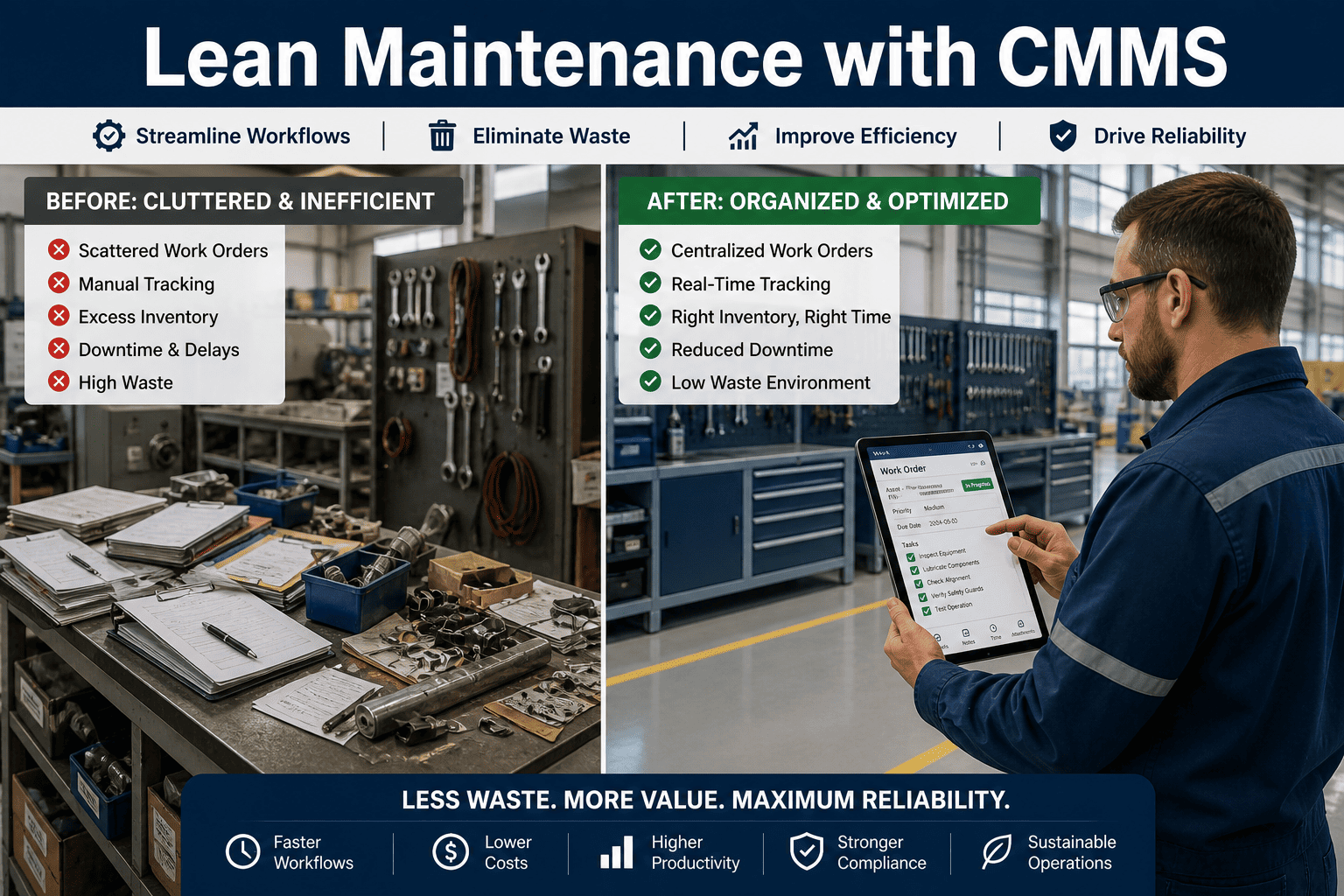
Gas turbine PM optimization is the process of systematically reviewing, rationalizing, and streamlining preventive maintenance tasks to eliminate unnecessary work without sacrificing reliability. Top-performing maintenance plants cut PM labor hours by 20–40% and reduce unplanned downtime by targeting compressor fouling, hot gas path (HGP) degradation, and over-maintained auxiliary systems through data-driven interval optimization. Instead of running every PM on a fixed calendar schedule regardless of condition, reliability teams use CMMS analytics to adjust frequencies, merge overlapping tasks, and eliminate low-value inspections. OxMaint's AI-powered CMMS platform is built for exactly this transition — turning static PM schedules into dynamic, condition-driven workflows that keep gas turbines available and profitable. Start Free Trial to see how quickly you can audit and optimize your turbine PM schedule.
Gas Turbines PM Optimization
Are 30% of your gas turbine PM tasks adding zero reliability value?
Most maintenance teams inherit PM schedules built years ago — tasks layered on after every failure but rarely reviewed or removed. The result is thousands of wasted labor hours, unnecessary outage extensions, and still-unplanned trips. OxMaint gives you the data, automation, and mobile workflows to rationalize your PM program and prove the savings.
The Cost of Over-Maintaining
Why gas turbine PM schedules balloon over time
A typical frame-class gas turbine operates 8,000 hours between major inspections, with combustion inspections every 12,000 hours and hot gas path overhauls every 24,000 hours. But between those major events, plants accumulate dozens of lower-tier PMs — daily rounds, weekly filter checks, monthly lube-oil sampling, quarterly valve calibration, semi-annual borescope inspections — many of which were added reactively after a single incident and never reviewed for effectiveness. A 2019 industry benchmark found that 25–35% of scheduled PM tasks in heavy industrial plants contribute no measurable reliability improvement. For a gas turbine fleet of five units, that can mean 1,500+ wasted technician-hours annually and unnecessary turbine outages that cost $15,000–$50,000 per day in lost generation.
PM Task Review Framework
How to identify and eliminate unnecessary PM tasks on gas turbines
Gas turbines PM task streamlining follows a structured rationalization process: inventory every active PM, map it to a failure mode, and decide whether to keep, merge, adjust frequency, or eliminate it. The goal of gas turbines unnecessary PM elimination is not to cut maintenance — it is to redirect labor hours from low-value tasks to high-impact reliability work.
Audit your active PM library
Export every active PM from your CMMS — work order template, frequency, assigned labor hours, linked asset, and last-completed date. A mid-size gas turbine plant typically finds 40–60 recurring PMs per unit, many duplicated across shifts or inherited from OEM commissioning documents. OxMaint's asset hierarchy view lets you filter all PMs by turbine, aux system, or component in seconds.
Map each PM to a failure mode
For every task, ask: what specific failure does this prevent or detect? If the answer is vague ("general inspection," "visual check"), the task is a candidate for elimination or merger. Tie tasks to documented failure modes — compressor fouling, HGP degradation, bearing wear, fuel nozzle coking, IGV actuator drift — using FMEA or RCM logic.
Analyze PM-to-CM ratio and findings history
Pull 12–24 months of PM completion records. If a PM has been completed 20 times with zero findings, zero corrective work orders generated, and zero condition data captured, its frequency is likely too high or the task itself adds no value. Target these for gas turbines maintenance interval optimization.
Merge overlapping PMs and adjust frequencies
Combine tasks that touch the same component at similar intervals — e.g., a weekly lube-oil level check and a weekly lube-oil pressure gauge reading become one combined task. Extend intervals for tasks with clean histories; shorten or make condition-based those with high finding rates.
Track reliability KPIs post-optimization
After implementing changes, monitor MTBF, forced outage rate, PM compliance percentage, and labor cost per running hour for 90–180 days. If reliability holds or improves, lock in the optimized schedule. If it degrades, revert specific tasks. OxMaint's analytics dashboards surface these KPIs automatically — no manual spreadsheet rollups.
Key Failure Modes
Compressor fouling and HGP degradation: where PM focus matters most
Not all gas turbine components degrade at the same rate. Two failure modes dominate the reliability conversation: compressor fouling (responsible for 70–85% of performance loss in industrial gas turbines) and hot gas path degradation (the most costly inspection scope). Gas turbines PM effectiveness depends on matching task frequency and depth to the actual degradation rate of each system.
| Failure Mode | Primary Cause | Impact | Optimal PM Strategy | Typical Interval |
|---|---|---|---|---|
| Compressor Fouling | Airborne particulates, oil leaks, salt ingestion | 2–5% efficiency drop per 1,000 hours if unchecked | Online water wash + offline crank wash based on trend data, not fixed calendar | Offline wash every 2,000–4,000 operating hours |
| HGP Degradation | Thermal stress, creep, oxidation of blades/vanes | $500K–$2M overhaul scope; 5–15% output loss | Borescope inspection at defined equivalent operating hours; condition-based extend/reduce | 24,000 equivalent operating hours |
| Bearing Wear | Lube oil contamination, misalignment, vibration | Catastrophic failure if undetected; $200K+ repair | Vibration trend analysis + oil sampling; reduce fixed PMs, increase condition monitoring | Oil sample monthly; vibration continuous |
| Fuel Nozzle Coking | Carbon buildup from liquid fuel or low-quality gas | Combustor instability, increased emissions, trips | Combustion inspection with nozzle flow testing; adjust based on fuel quality logs | 12,000 operating hours |
| IGV Actuator Drift | Mechanical wear, calibration loss, linkage binding | Surge risk, reduced efficiency, startup delays | Calibration verification with trended feedback; eliminate redundant visual-only checks | 6,000 operating hours or condition-based |
Worked Example
Gas turbines PM cost reduction: a 3-unit plant scenario
Consider a 3-unit combined-cycle plant running 7FA-class gas turbines. The maintenance team inherited 52 recurring PMs per unit (156 total) — many dating back to commissioning. After a structured PM rationalization using CMMS data, the team eliminated 19 tasks per unit, merged 8 into combined work orders, and extended 6 intervals based on clean finding history. Here is the measurable impact over 12 months:
PM Cost Reduction Formula
Annual Savings = (Eliminated Tasks × Avg Labor Hours × Burdened Rate) + (Avoided Outage Hours × Lost Revenue per Hour)
= (57 × 3.5 × $95) + (24 × $18,000) = $18,923 + $432,000 = $450,923/year
The key insight: gas turbines PM rationalization does not mean doing less maintenance. It means doing the right maintenance — and redirecting the saved hours and budget toward condition monitoring, root-cause analysis, and high-value reliability improvements that actually move the needle.
How OxMaint Helps
OxMaint: the CMMS built for gas turbines PM optimization
Gas turbines optimal PM frequency is impossible to sustain with spreadsheets and paper work orders — you need a system that tracks every task, every finding, and every failure across every unit. OxMaint's AI-powered CMMS and EAM platform gives maintenance and reliability teams the tools to audit, optimize, and continuously improve gas turbine PM schedules with measurable ROI.
PM Audit & Rationalization Dashboards
Instantly see every active PM by asset, frequency, labor hours, and findings-to-completion ratio. Filter to zero-finding PMs in one click and flag them for review — the exact data you need for gas turbines PM task review without manual CMMS exports.
Outcome: Complete PM audit in hours, not weeks — identify your top 20% elimination candidates on day one.
Condition-Based PM Triggers
Replace fixed-interval PMs with condition-based work orders triggered by vibration trends, oil analysis results, performance degradation curves, or borescope findings. OxMaint's AI engine evaluates sensor and inspection data and auto-generates work orders when thresholds are crossed.
Outcome: Cut unnecessary PM executions 30–50% while catching real degradation earlier.
Mobile Work Order Execution
Technicians complete PMs on mobile devices at the turbine — capture findings, photos, measurements, and corrective actions in real time. No more paper checklists that never make it back to the CMMS. Every finding becomes structured data for your next rationalization cycle.
Outcome: Eliminate paper work orders and capture 100% of PM findings for data-driven interval optimization.
Reliability Analytics & KPI Tracking
Track MTBF, forced outage rate, PM compliance, labor cost per running hour, and finding rate by PM template — all updated automatically. Before-and-after dashboards prove the impact of every PM change you make, making it easy to justify further optimization.
Outcome: Demonstrate 20–40% PM cost reduction with zero reliability loss — backed by audit-ready data.
Pillars of Optimization
Four pillars of gas turbines PM schedule improvement
Remove zero-value tasks
Tasks completed 10+ times with zero findings and zero corrective work generated are candidates for elimination. Example: a daily "visual inspection of turbine enclosure" that has never surfaced an actionable finding in 3 years.
Combine overlapping work
Two PMs touching the same lube-oil system within 48 hours of each other should be one task. Merging reduces turbine access events, outage windows, and administrative overhead.
Lengthen clean-history intervals
If a quarterly filter inspection has produced zero findings across 8 consecutive executions, extend it to semi-annual. Use trend data to confirm the new interval is safe before full deployment.
Shift to condition-based
Replace calendar-based PMs with condition triggers wherever sensor data exists. Vibration, temperature, pressure, and oil quality trends are far more reliable indicators than a fixed date on a calendar.
See OxMaint on your gas turbine assets — book a 30-min demo
Walk through a PM rationalization dashboard, condition-based trigger setup, and mobile work order execution — all configured for your turbine fleet. We will show you exactly how many PM hours you can reclaim.
FAQ
Gas turbines PM optimization: frequently asked questions
How often should gas turbine PM schedules be reviewed?
Gas turbine PM schedules should be formally reviewed every 12 months, with a continuous improvement loop running quarterly. During the annual review, evaluate every active PM's findings-to-completion ratio, labor cost, and failure-mode linkage. Quarterly, check for newly created PMs that duplicate existing work and verify that condition-based triggers are functioning. OxMaint's PM effectiveness dashboards automate this by flagging zero-finding and duplicate tasks — you can Book a Demo to see the audit workflow in action.
What is the difference between PM optimization and PM elimination?
PM optimization is the broader process of improving your preventive maintenance program — it includes eliminating unnecessary tasks, but also merging overlapping PMs, adjusting frequencies, and converting calendar-based tasks to condition-based triggers. PM elimination is one tactic within optimization. The goal is never just "fewer PMs" — it is redirecting maintenance effort from low-value work to high-impact reliability activities while maintaining or improving availability.
Can PM optimization reduce gas turbine reliability?
No — not when done correctly. A structured rationalization process uses 12–24 months of findings data, failure-mode analysis, and post-change KPI monitoring to ensure reliability is maintained or improved. The key is tracking MTBF, forced outage rate, and finding rates for 90–180 days after each change. If a metric degrades, the optimized task is reverted. Plants that follow this methodology typically see reliability hold steady or improve while cutting PM labor 20–40%.
Which gas turbine PMs are most commonly over-scheduled?
The most over-scheduled PMs are typically visual-only enclosure inspections (often daily, rarely actionable), redundant lube-oil sampling (monthly when quarterly suffices with stable trends), filter differential pressure checks (frequently scheduled more often than trend data justifies), and manual vibration routes (redundant when continuous monitoring is installed). Compressor wash frequency is another common candidate — many plants wash on fixed schedules regardless of actual fouling rate.
How long does a gas turbine PM optimization project take?
A typical PM optimization project for a 3–5 unit gas turbine fleet takes 6–10 weeks: 2 weeks for PM inventory and data extraction, 3–4 weeks for failure-mode mapping and findings analysis, 1–2 weeks for stakeholder review and approval, and 2–4 weeks for implementation and baseline KPI monitoring. With a CMMS like OxMaint, the data extraction and analysis phases are cut dramatically — dashboards surface elimination candidates on day one. You can Start Free Trial and run your first PM audit within hours.
Stop wasting labor hours on PMs that do not prevent failures
OxMaint's AI-powered CMMS gives you the dashboards, condition-based triggers, and mobile execution tools to rationalize your gas turbine PM program — and prove the savings. Join the maintenance teams cutting PM costs 20–40% without losing uptime.
Free 14-day trial · No credit card