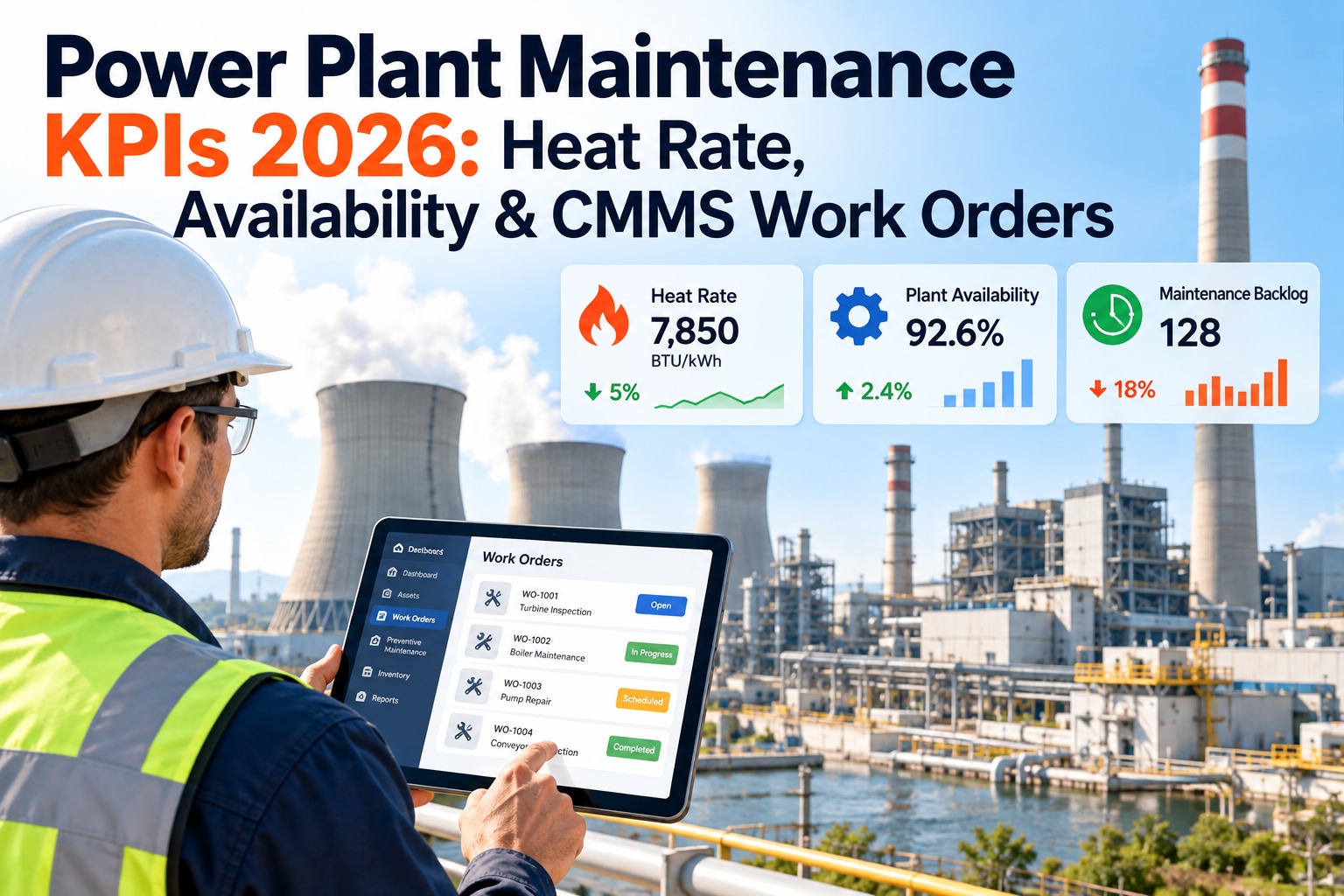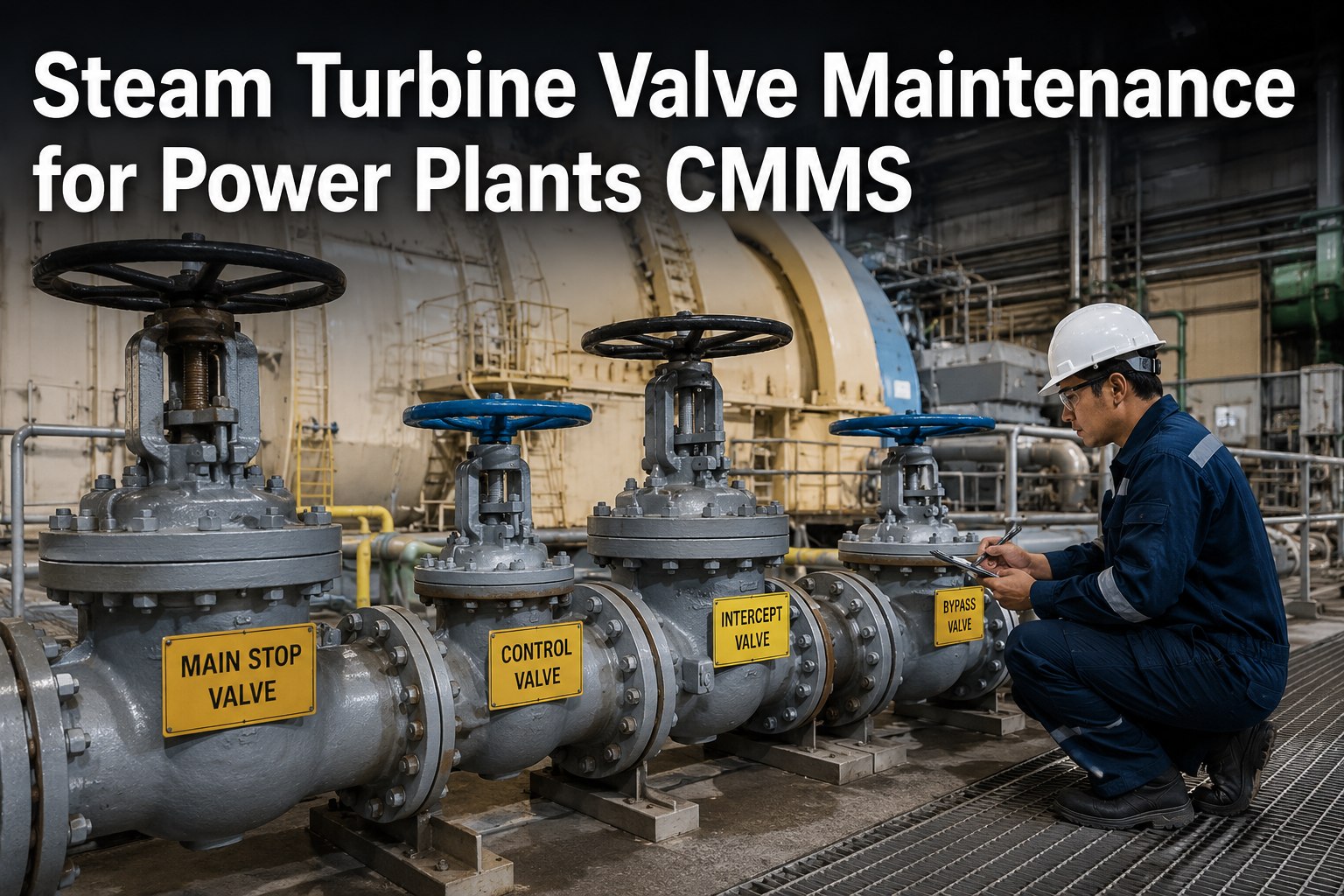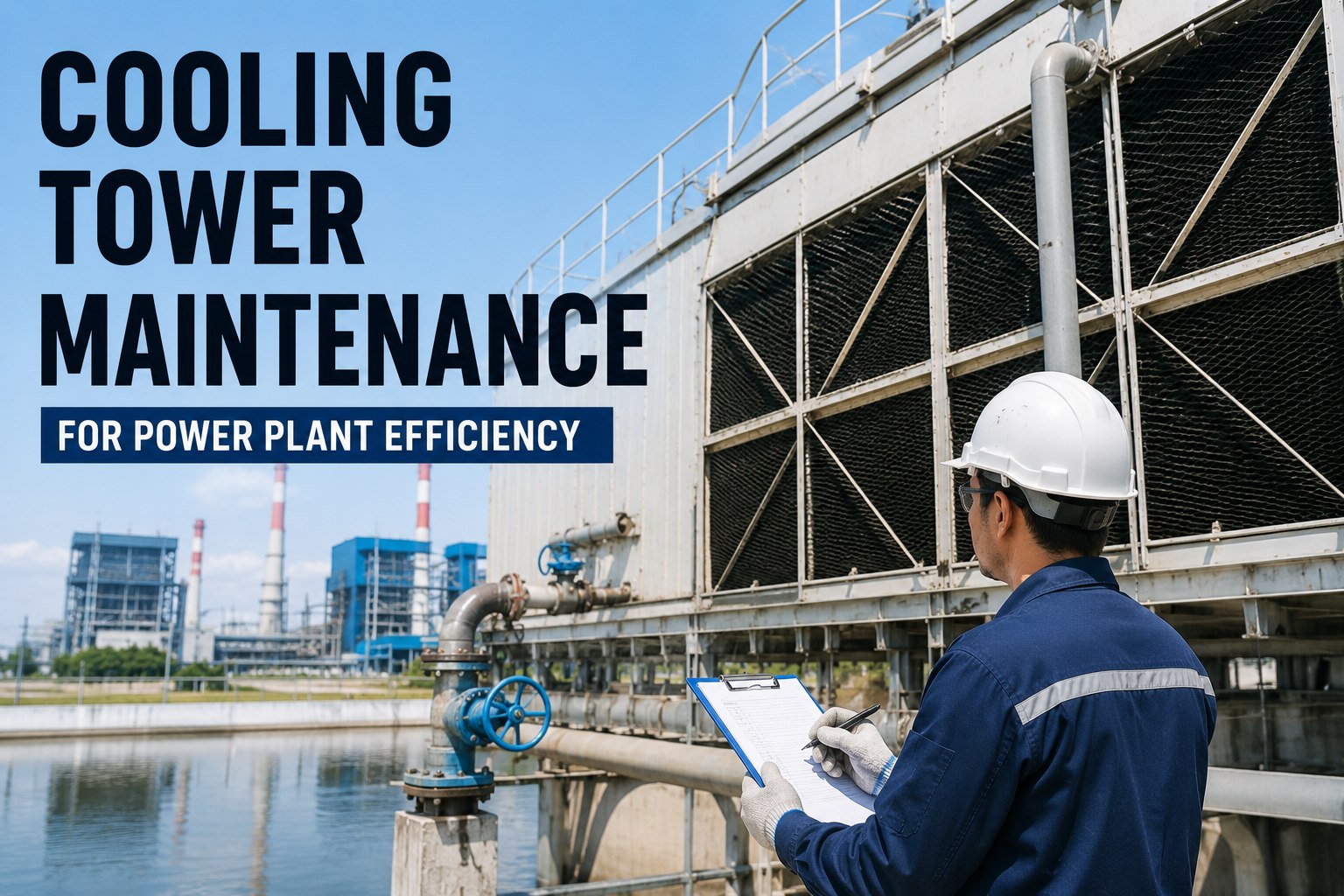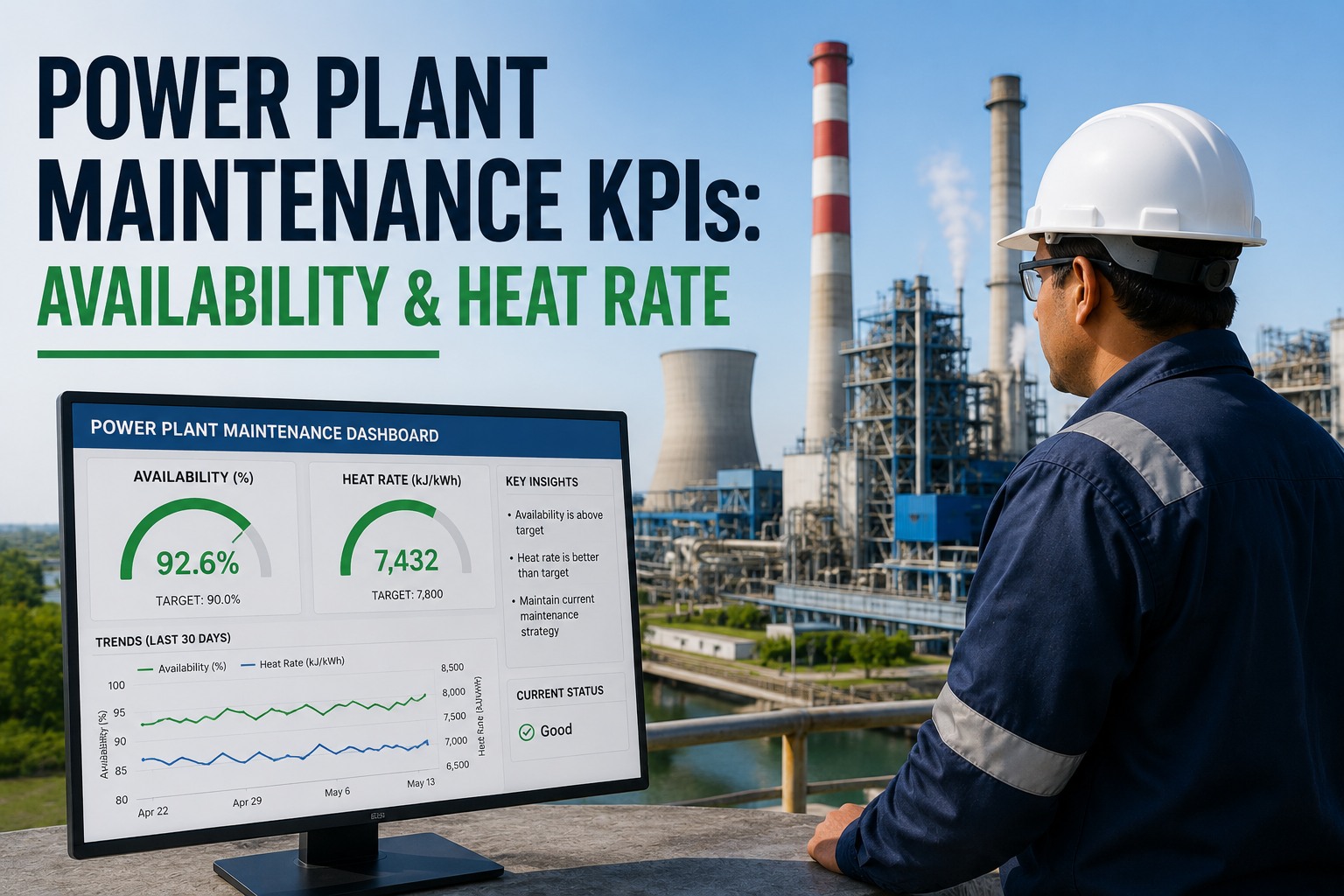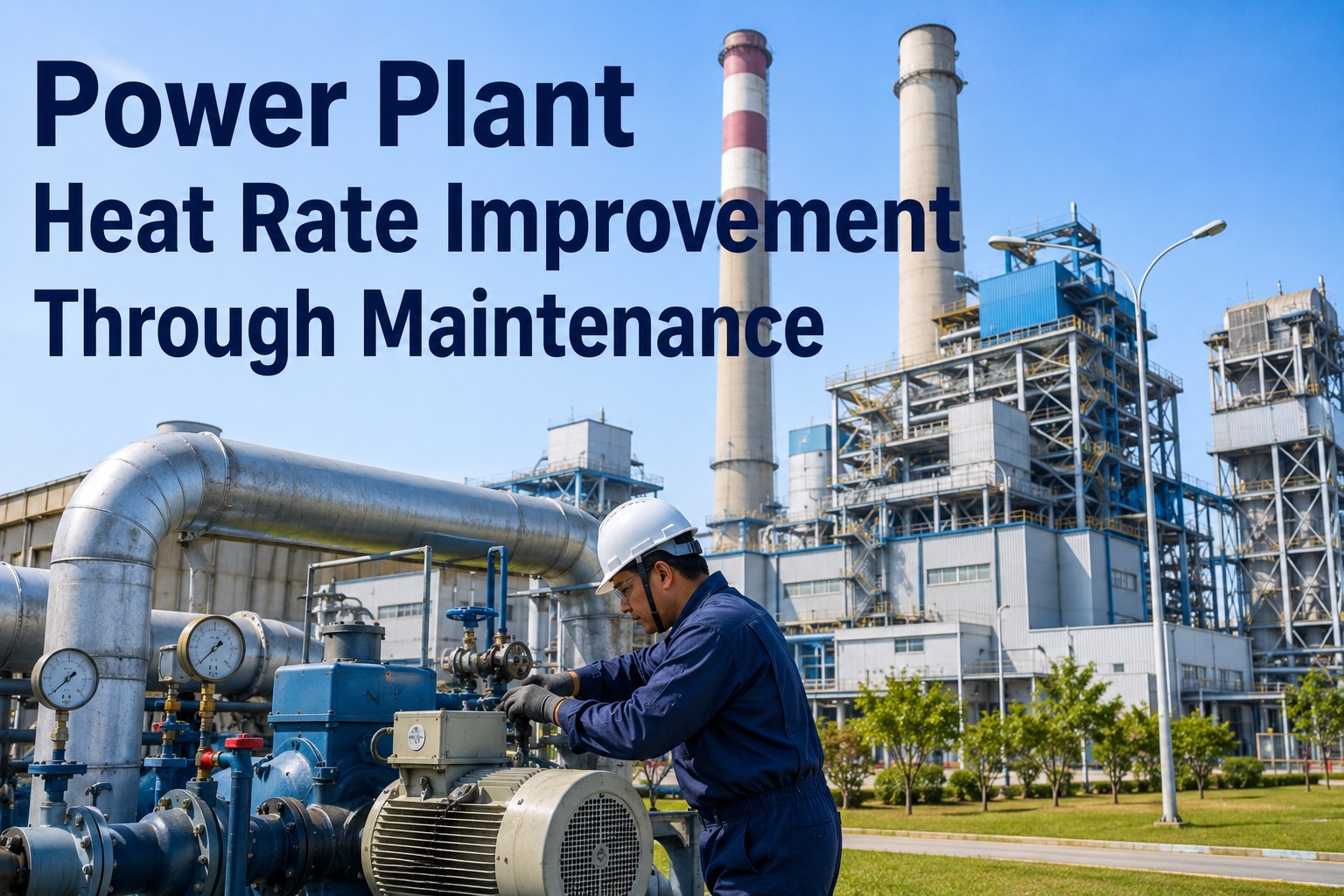
Power plant heat rate improvement through maintenance is the single most measurable way generation teams can turn reliability discipline into fuel-cost savings — every 1% reduction in heat rate can cut annual fuel expenses by $500K–$2M for a 500 MW thermal unit. Heat rate degradation creeps in through fouled condensers, leaking air preheaters, eroded turbine blades and drifting boiler efficiency, yet most plants lose 2–5% in efficiency between outages because these issues go untracked. OxMaint brings condenser cleaning schedules, air preheater PM, turbine efficiency maintenance and boiler efficiency tracking into one AI-powered CMMS so O&M teams catch degradation early, schedule interventions automatically and prove the BTU savings. You can Start Free Trial today or book a 30-minute demo to see the platform on your assets.
Heat Rate Optimization · CMMS-Driven Maintenance
Stop losing 2–5% in heat rate between outages
A 1% heat rate improvement on a 500 MW unit can save $500K–$2M in annual fuel costs. OxMaint turns condenser cleaning, air preheater PM, and turbine blade refurbishment into scheduled, measurable, audit-ready workflows — so thermal efficiency never drifts unmonitored again.
The Economics
How heat rate degradation drains fuel budgets silently
Heat rate — measured in BTU/kWh — is the direct financial pulse of a thermal plant. When it drifts upward, every megawatt-hour costs more fuel, more carbon allowance, and more margin.
Condenser Fouling
A 1°C rise in condenser backpressure from tube fouling can lift heat rate by 0.3–0.5% on a 500 MW unit — translating to $300K–$700K in extra fuel annually at $4/MMBTU.
Air Preheater Leakage
APH seal degradation allows 10–25% flue-gas leakage, forcing ID/FD fans to work harder and raising stack losses. Every 1% leakage adds roughly 0.05% to heat rate.
Turbine Blade Erosion
FOD and steam-path deposits of 100–200 microns reduce LP-turbine stage efficiency by 1–3%, degrading cycle heat rate by 0.2–0.8% between major overhauls.
Boiler Efficiency Drift
Soot-fouled economiser and waterwall surfaces raise exit-gas temperature by 5–15°C, cutting boiler efficiency by 0.5–1.2% and inflating coal or gas consumption proportionally.
Maintenance Strategy
Condenser cleaning schedule and PM playbook for heat rate recovery
The condenser is the fastest-payback maintenance target on the heat-rate curve. A disciplined condenser cleaning schedule, triggered by backpressure thresholds rather than calendar dates alone, consistently recovers 0.3–0.8% in cycle efficiency.
Monitoring & Early Detection
- Log condenser backpressure, cooling-water inlet/outlet ΔT, and hotwell level every shift
- Compare actual vs design terminal temperature difference (TTD); flag if TTD rises >2°C above baseline
- Verify online ball-cleaning system circulation and sponge-ball recovery rate
Trending & Trigger Setup
- Plot 7-day rolling backpressure trend against MW load to isolate fouling from load effects
- Set auto-trigger work order in CMMS when backpressure exceeds design by 0.5 inHg for 48 hours
- Review cooling-tower basin chlorine residual and biological fouling risk
Deep Cleaning & Inspection
- Hydrojet or high-pressure water clean waterbox and tube sheets; Eddy-current test 10% of tubes
- Replace plugged/corroded tubes; verify tube-to-tubesheet joint integrity with helium leak test
- Baseline post-cleaning backpressure and TTD; document heat-rate recovery in CMMS
| PM Activity | Trigger | Heat Rate Recovery | Annual Fuel Savings (500 MW) |
|---|---|---|---|
| Online condenser tube cleaning | Backpressure +0.3 inHg | 0.2–0.4% | $200K–$400K |
| Outage hydro-jet + ECT | 18-month outage | 0.3–0.6% | $300K–$600K |
| APH seal replacement | Leakage >15% | 0.3–0.7% | $300K–$700K |
| Boiler soot-blow optimization | Exit-gas temp +8°C | 0.4–0.8% | $400K–$800K |
| Turbine steam-path refurb | Major overhaul cycle | 0.5–1.2% | $500K–$1.2M |
Step-by-Step Optimization
Power plant heat rate optimization: a 6-month maintenance timeline
Sustainable heat rate improvement is not a one-time project — it is a 6-month rolling discipline that compounds. Here is how a typical O&M team sequences interventions using OxMaint to schedule, track, and verify each step.
Baseline & Asset Register
Import all efficiency-critical assets — condenser bundles, APH rotors, HP/IP/LP turbine stages, boiler sections — into OxMaint. Record design heat rate, current actual heat rate, and per-asset efficiency baselines.
Condenser PM Activation
Deploy backpressure-triggered work orders for online cleaning. Configure auto-alerts when TTD exceeds 2°C above baseline. Recovery target: 0.2–0.4% heat rate within 30 days.
Air Preheater PM
Schedule quarterly APH leakage testing and bi-annual seal adjustments. Set CMMS trigger when leakage exceeds 10%. Expected heat rate improvement: 0.2–0.5%.
Boiler Efficiency Tuning
Optimize soot-blowing frequency based on exit-gas temperature trends. Track O₂ trim and excess-air correction. Target: 0.3–0.6% boiler efficiency gain, verified in maintenance analytics.
Turbine Path Assessment
Turbine Path Assessment
Use predictive analytics on vibration, steam temperature, and stage-pressure ratios to flag blade erosion or deposit buildup. Plan offline cleaning or minor blade repair for next outage window.
Verify & Report Savings
Generate OxMaint heat-rate-trend report comparing Month 1 vs Month 6. Quantify BTU/kWh reduction, fuel-cost savings, and CO₂ avoidance. Present to plant management for budget renewal.
How OxMaint Helps
How OxMaint powers heat rate improvement through maintenance discipline
OxMaint is built for the assets, workflows, and KPIs that determine thermal efficiency. Every capability maps directly to a heat-rate lever — from condenser backpressure triggers to turbine stage-health scoring.
Condition-Triggered Work Orders
Set PI-point or DCS thresholds — backpressure, exit-gas temp, APH leakage — that auto-generate work orders the moment efficiency drifts. No more waiting for the next calendar PM to act.
Predictive Maintenance Analytics
AI models on vibration, temperature, and steam-pressure trends predict turbine blade degradation and boiler fouling weeks before they impact heat rate — turning the next outage from reactive to planned.
Maintenance Analytics & Reporting
Track heat-rate trend, MTBF on efficiency-critical assets, PM compliance, and fuel-cost-avoidance in real time. Export audit-ready reports for management, ISO 55000 alignment, and EPA compliance.
Spare-Parts Inventory Linkage
When a condenser tube-cleaning or APH seal-replacement work order fires, OxMaint auto-checks parts stock — gaskets, seals, sponge balls, ECT probes — and reserves them, so the intervention happens on schedule, not after a 3-week procurement delay.
See It On Your Assets
Book a 30-minute demo and see how OxMaint recovers heat rate
We will map your condenser, APH, boiler, and turbine assets to a live CMMS workflow — and show you the exact triggers, PM schedules, and savings reports your team will use on day one.
FAQ
Power plant heat rate improvement: frequently asked questions
What is power plant heat rate and why does it matter?
Heat rate is the ratio of fuel energy input to electrical output, measured in BTU/kWh. It is the single most direct measure of a thermal plant's efficiency — lower heat rate means less fuel burned per MWh, directly reducing fuel cost, carbon emissions, and marginal generation cost. A 1% improvement on a 500 MW unit typically saves $500K–$2M annually.
How does maintenance affect heat rate degradation?
Fouled condenser tubes, leaking air preheater seals, eroded turbine blades, and soot buildup on boiler heat-transfer surfaces all force the plant to burn more fuel for the same output. Between outages, unmaintained plants typically lose 2–5% in efficiency. Scheduled, condition-triggered maintenance — condenser cleaning, APH seal PM, soot-blowing optimization — directly reverses this drift and is the fastest-payback lever available to O&M teams. You can Start Free Trial to see how OxMaint automates these schedules.
How often should condenser cleaning be scheduled?
Online tube cleaning should run continuously or daily during high-fouling seasons. Deep cleaning — hydro-jetting, Eddy-current testing, and tube-sheet inspection — should occur at every 18-to-24-month outage, or sooner if condenser backpressure exceeds design by 0.5 inHg. OxMaint lets you set both calendar-based and condition-based triggers so cleaning happens exactly when efficiency demands it, not just when the schedule says so.
What is the ROI of a CMMS for heat rate optimization?
A CMMS-driven heat-rate PM program on a 500 MW unit typically recovers 0.8–1.5% in efficiency, translating to $800K–$1.5M in annual fuel savings. With an OxMaint subscription costing a fraction of that, payback is usually achieved in 3–6 months. Additional savings come from reduced unplanned derates, lower overtime, and extended time between major overhauls.
Can OxMaint integrate with our existing DCS or PI historian?
Yes. OxMaint can ingest condition data from DCS tags and PI historian points — backpressure, exit-gas temperature, APH leakage, vibration, stage pressures — to trigger work orders automatically when thresholds are breached. This bridges the gap between control-system data and maintenance execution, so heat-rate degradation is not just monitored but actively acted upon. To see the integration on your stack, Book a Demo.
Recover Heat Rate. Cut Fuel Costs.
Start turning maintenance into measurable fuel savings
OxMaint gives your O&M team the PM triggers, predictive analytics, and heat-rate reporting to stop 2–5% efficiency drift between outages. See it live on your assets in 30 minutes — or start free today.
Free 14-day trial · No credit card