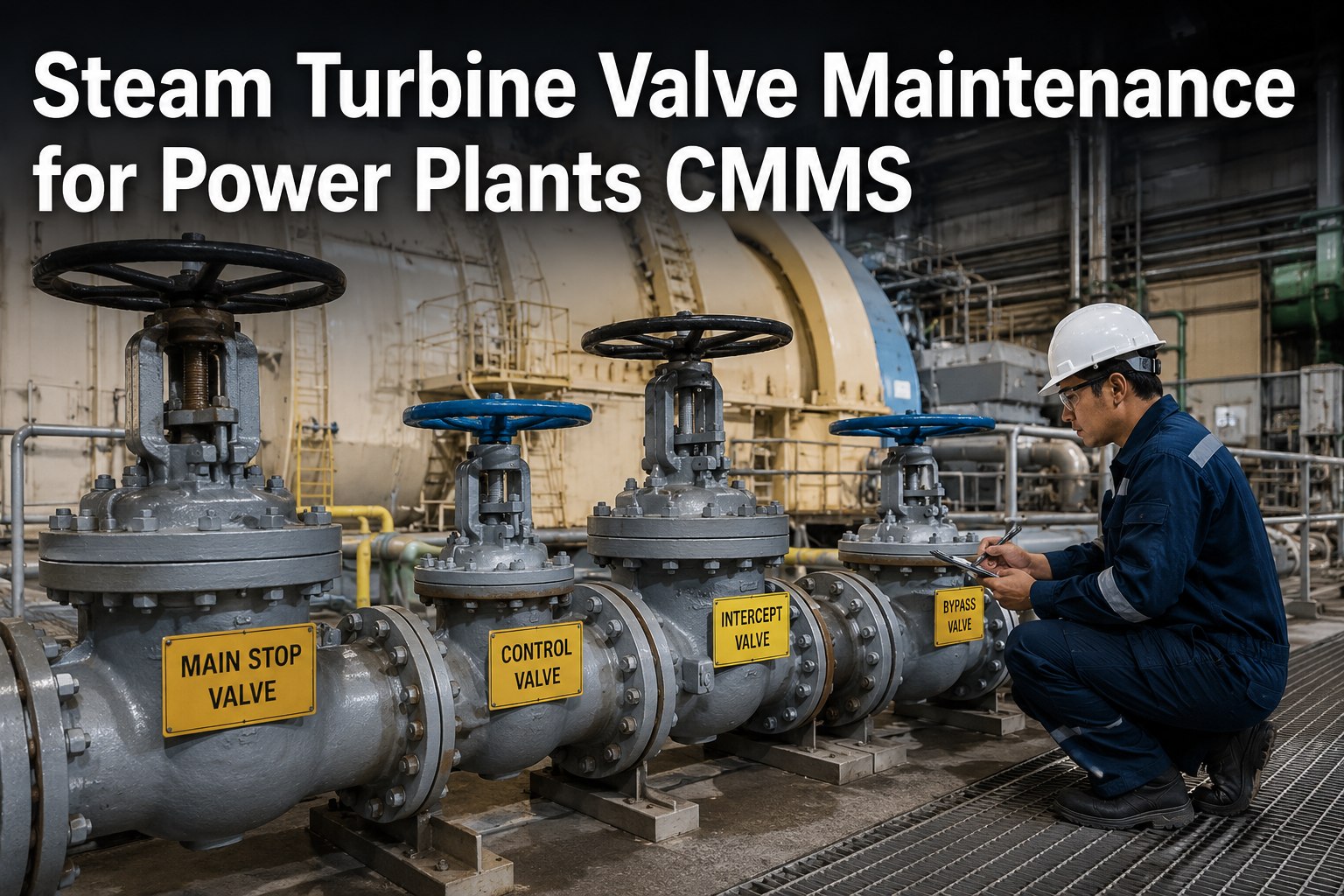
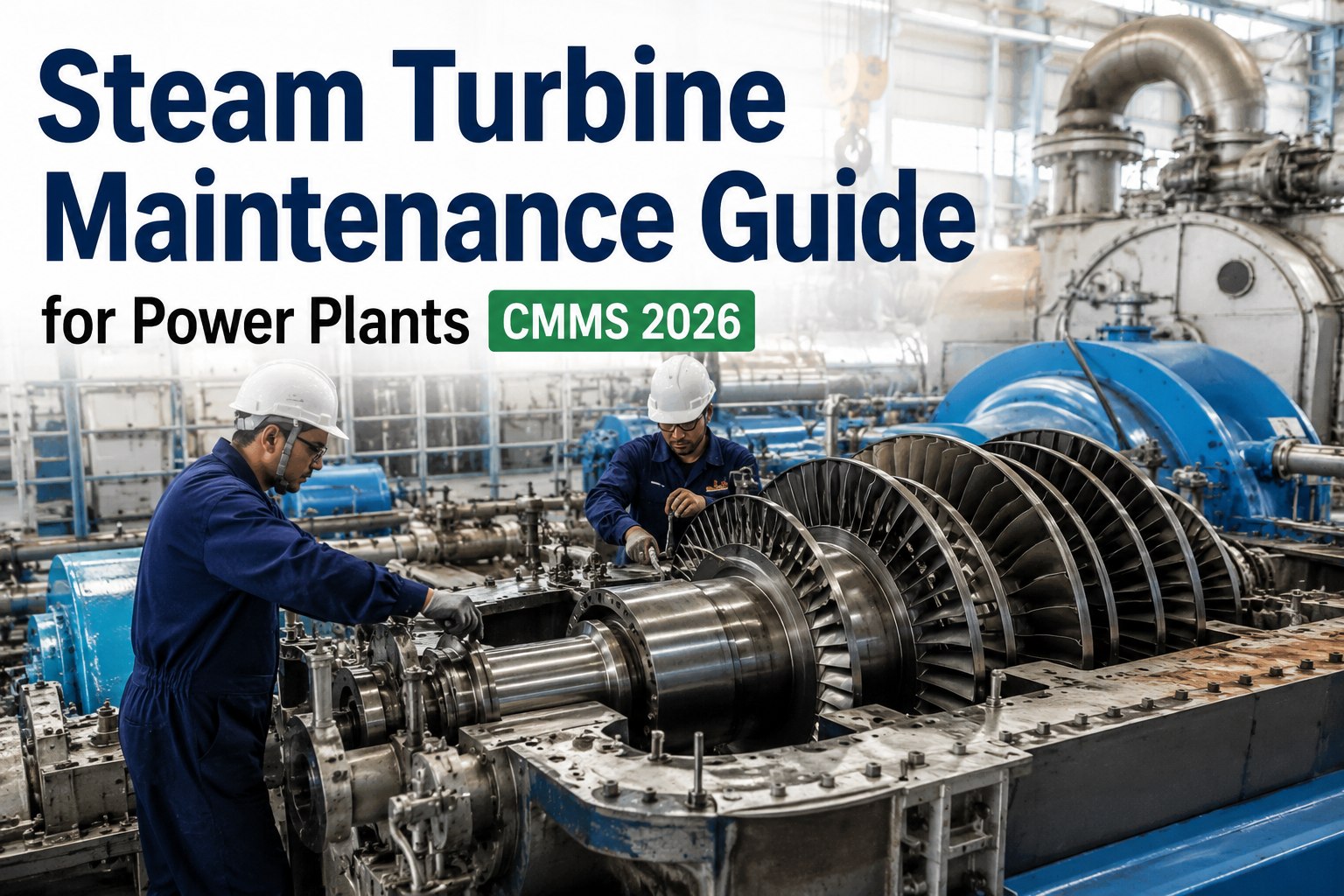
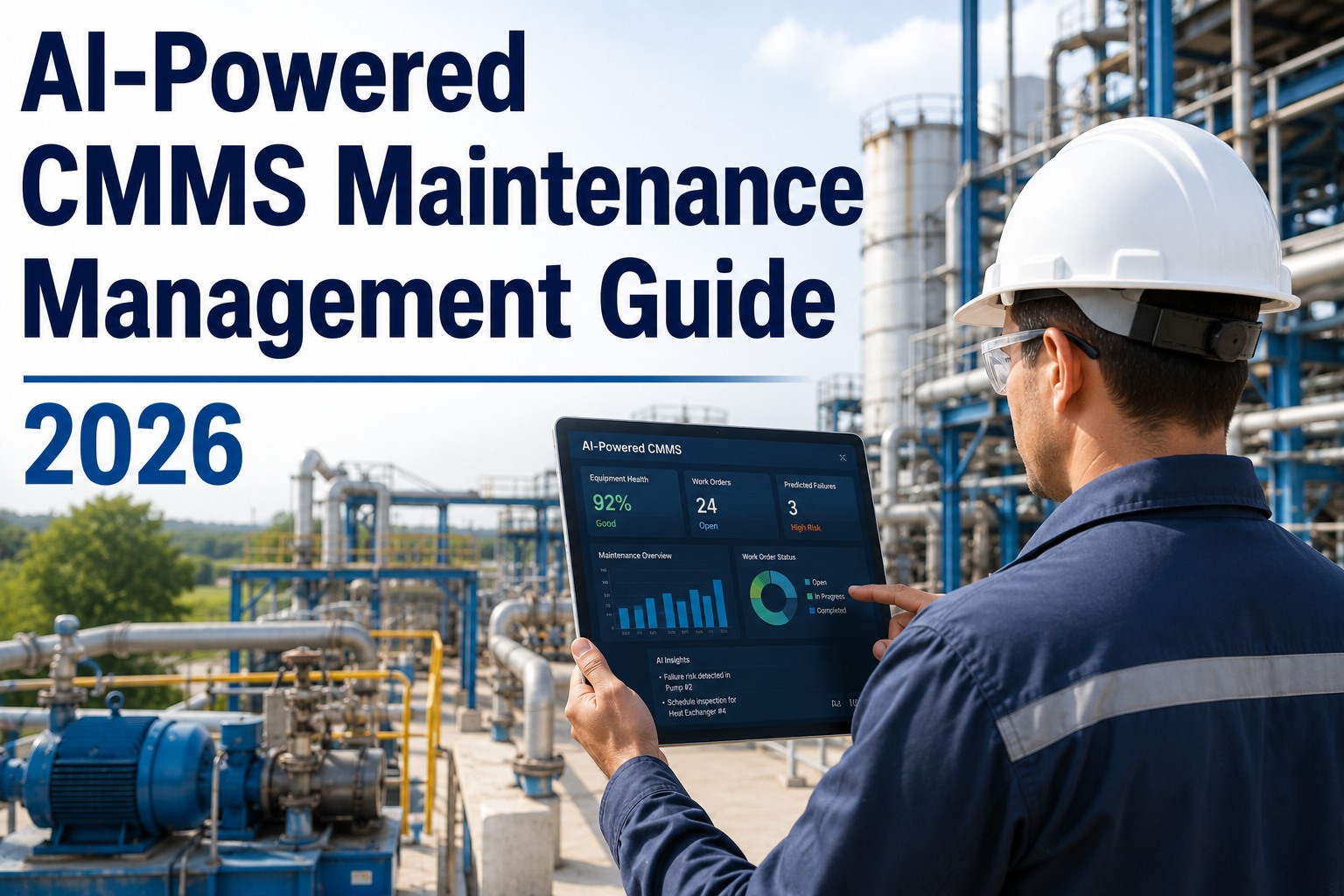
A 600MW combined-cycle gas turbine tripped offline at 2:47 AM because a lube oil pump bearing that had been trending high for 26 days finally seized. Emergency replacement: $1.8M in parts, contractor mobilization, and 11 days of lost generation at $420,000 per day in wholesale power revenue. The same repair during a planned outage: $140,000 in 8 hours. The plant's DCS logged every temperature rise. The vibration monitoring system flagged the anomalyon day 9. Nobody connected the data to a maintenance action because the work order system, the condition monitoring system, and the outage planning tool were three separate platforms with no integration. Power plant maintenance is not equipment repair — it is grid reliability, regulatory compliance, and revenue preservation where every hour of unplanned downtime costs $50,000–$500,000 in lost generation and replacement power purchases. Schedule a demo to see power plant CMMS with turbine monitoring and predictive analytics running on generation data.
$420K
Daily Revenue Loss
Average production loss from a single unplanned gas turbine outage
25%
Downtime Reduction
Achievable with predictive maintenance on critical rotating equipment
26 Days
AI Early Warning
Average advance detection before major turbine or generator component failure
94%+
Availability Target
Plant availability achievable with CMMS-driven maintenance optimization
Why Power Plants Demand Purpose-Built Maintenance Systems
Power generation combines extreme thermodynamic stress, massive rotating equipment, NERC/FERC regulatory mandates, and real-time grid dispatch obligations into an operating environment where a single forced outage triggers replacement power costs, capacity penalty charges, and regulatory scrutiny. Unlike manufacturing where downtime loses product, power plant downtime destabilizes grid reliability and triggers cascading financial consequences across the wholesale energy market. Sign up free and see how a power plant CMMS manages generation assets in real time.
Assets: Combustion turbines, steam turbines, HRSG (Heat Recovery Steam Generator), condensers, and auxiliary systems.
Risk: Blade failure, bearing seizure, or HRSG tube leak forces immediate unit trip — $200K–$500K per day in lost generation plus replacement power costs.
Monitoring: Vibration, bearing temperature, exhaust gas temperature spread, lube oil condition, and combustion dynamics.
Assets: Synchronous generators, excitation systems, step-up transformers, switchgear, and protection relays.
Risk: Generator winding failure or transformer fault requires 4–12 week repair with $10M+ replacement cost. Relay misoperation causes grid disturbance and NERC violations.
Monitoring: Partial discharge, winding temperature, hydrogen purity (H2-cooled), transformer dissolved gas analysis (DGA), and insulation resistance.
Assets: Cooling towers, circulating water pumps, feedwater systems, chemical treatment, compressed air, and fuel gas systems.
Risk: BOP failures derate or trip the unit without damaging the prime mover. A single circulating water pump failure can derate a 600MW unit by 40% on hot days.
Monitoring: Pump vibration, cooling tower fill condition, water chemistry, and fuel gas pressure/temperature.
Assets: SCR (Selective Catalytic Reduction), CO catalyst, CEMS (Continuous Emissions Monitoring), and ammonia injection systems.
Risk: CEMS failure triggers EPA reporting violations. SCR catalyst degradation causes permit exceedances and potential unit shutdown orders.
Monitoring: Catalyst activity trending, ammonia slip, CEMS calibration status, and stack opacity.
The Power Plant Failure Impact Matrix
Every component failure in a power plant carries a cost measured in lost megawatt-hours, replacement power purchases, and regulatory exposure. The gap between emergency and planned repair cost is the entire business case for predictive maintenance.
Gas Turbine Hot Section
Emergency: $3M–$8M
Planned outage: $800K–$1.5M | AI warning: 30–60 days
Generator Winding Failure
Emergency: $10M+ (4–12 wk)
Planned rewind: $2M–$4M | AI warning: 45–90 days
HRSG Tube Leak
Emergency: $500K–$2M
Planned repair: $80K–$200K | AI warning: 14–30 days
One Prevented Forced Outage Pays for a Decade of CMMS. OxMaint monitors turbines, generators, HRSG, and every critical rotating component — generating predictive work orders weeks before failure so repairs happen during planned outages, not peak generation hours.
Start Free Trial
Schedule a Demo
Predictive Maintenance Pipeline for Power Generation
01
Continuous Monitoring
Turbine vibration, bearing temperature, generator partial discharge, and HRSG tube wall thickness feed data continuously. AI builds behavioral models specific to your unit.
02
Anomaly Detection
When performance deviates from the model, AI identifies the degradation pattern and projects time-to-failure. Example: "GT bearing #3 outer race defect — 22–28 days to functional failure."
03
Outage-Aligned WO
CMMS auto-generates a work order with diagnosed failure, parts (stock verified), labor estimate, and recommended repair window aligned with the next planned or opportunity outage.
04
Verification + Learning
Post-repair sensor data confirms recovery. Confirmed diagnoses improve future predictions. By month 12, AI accuracy reaches 92%+ on your specific equipment.
NERC, FERC, and EPA Compliance Integration
Power plants operate under the most stringent regulatory framework in any industry. NERC reliability standards, FERC market rules, EPA emissions permits, and OSHA safety requirements impose simultaneous documentation obligations that paper-based systems cannot sustain. OxMaint auto-tags every maintenance action with its regulatory domain and generates audit-ready reports in one click.
NERC Reliability
Protection system maintenance (PRC standards), generation verification tests, and facility ratings documentation — all auto-tagged and audit-ready.
EPA Emissions
CEMS calibration, SCR catalyst maintenance, and Title V permit compliance tracking with automated deadline escalation.
OSHA Safety
Confined space permits, LOTO documentation, hot work permits, and safety inspection records generated at point of work.
FERC / Market
Forced outage documentation for capacity market compliance. Planned outage scheduling coordinated with ISO/RTO requirements.
Financial Impact for Power Generation
Forced outage prevention — avoiding 2–3 major trips per year
Planned vs. emergency repair cost savings on turbine and generator
Heat rate improvement from timely combustion and BOP maintenance
Outage duration optimization — 15–25% shorter planned outages
60-Day Deployment for Power Plants
Weeks 1–2
Foundation and Asset Registry
- Import generation equipment hierarchy (turbines, generators, HRSG, BOP)
- Apply criticality ratings and NERC applicability flags
- Configure technician profiles across mechanical, electrical, I&C trades
- Load regulatory calendar (NERC, EPA, OSHA inspection deadlines)
Weeks 3–4
Activation and Integration
- Deploy mobile work orders and PM scheduling for all critical assets
- Connect vibration, temperature, and DGA monitoring data feeds
- Enable parts inventory with barcode scanning for turbine and generator spares
- Activate compliance auto-tagging on NERC and EPA-related work orders
Weeks 5–8
Intelligence and Optimization
- Activate predictive models on turbines, generators, and critical BOP
- Configure outage planning and optimization tools
- Deploy OEE, availability, and heat rate dashboards for plant leadership
- Generate first data-backed long-term service agreement (LTSA) cost analysis
By week 8, every critical generation asset is monitored, every PM is protected on schedule, and predictive work orders schedule repairs into planned outages instead of forcing emergency trips. Start your free trial and have your generation asset hierarchy loaded within the first week.
Your Plant Dispatches 8,760 Hours a Year. Protect Every One.
OxMaint gives power plant reliability teams the predictive analytics, outage optimization, and regulatory compliance tracking to keep units generating and maintenance costs controlled — so every megawatt-hour dispatched is profitable.
Frequently Asked Questions
Can OxMaint integrate with turbine condition monitoring and plant DCS systems?
Yes. OxMaint connects to GE Mark VI/VIe, Siemens T3000, Emerson Ovation, and other DCS/CMS platforms via OPC, Modbus, and API. When sensor data exceeds thresholds or AI detects a developing anomaly, the CMMS auto-generates a work order with the specific asset, condition data, and recommended repair — no manual monitoring required.
How does the system handle planned outage scheduling and optimization?
The CMMS aggregates all pending maintenance — predictive work orders, deferred PMs, inspection findings, and capital projects — into a unified outage plan. AI sequences tasks by critical path to minimize total outage duration, pre-stages parts and contractors, and tracks completion in real time. Most plants reduce planned outage duration 15–25% through better sequencing and preparation.
Book a demo to see outage planning configured for power generation.
Does the system track NERC compliance requirements?
Every NERC-applicable maintenance action — protection system testing (PRC standards), generation verification, and facility ratings — is auto-tagged with the specific NERC standard. Overdue items escalate before deadlines. One-click audit reports generate the documentation NERC auditors require without manual assembly.
Can the CMMS manage both OEM-contracted and in-house maintenance?
Yes. OxMaint tracks OEM LTSA scope items alongside in-house maintenance on the same platform. Contractor work orders carry separate approval workflows, insurance verification, and performance tracking. Outage planning integrates both OEM and plant crews into a single coordinated schedule with dependency tracking.
What is the realistic ROI for a power plant deploying CMMS?
ROI is immediate from the first prevented forced outage. A single avoided gas turbine trip ($420K/day × 5–11 days) exceeds years of platform cost. A 200–800MW plant typically documents $8.5M+ in annual value from forced outage prevention, repair cost reduction, heat rate improvement, and outage optimization.
Start your free trial and calculate your plant's predictive maintenance ROI.