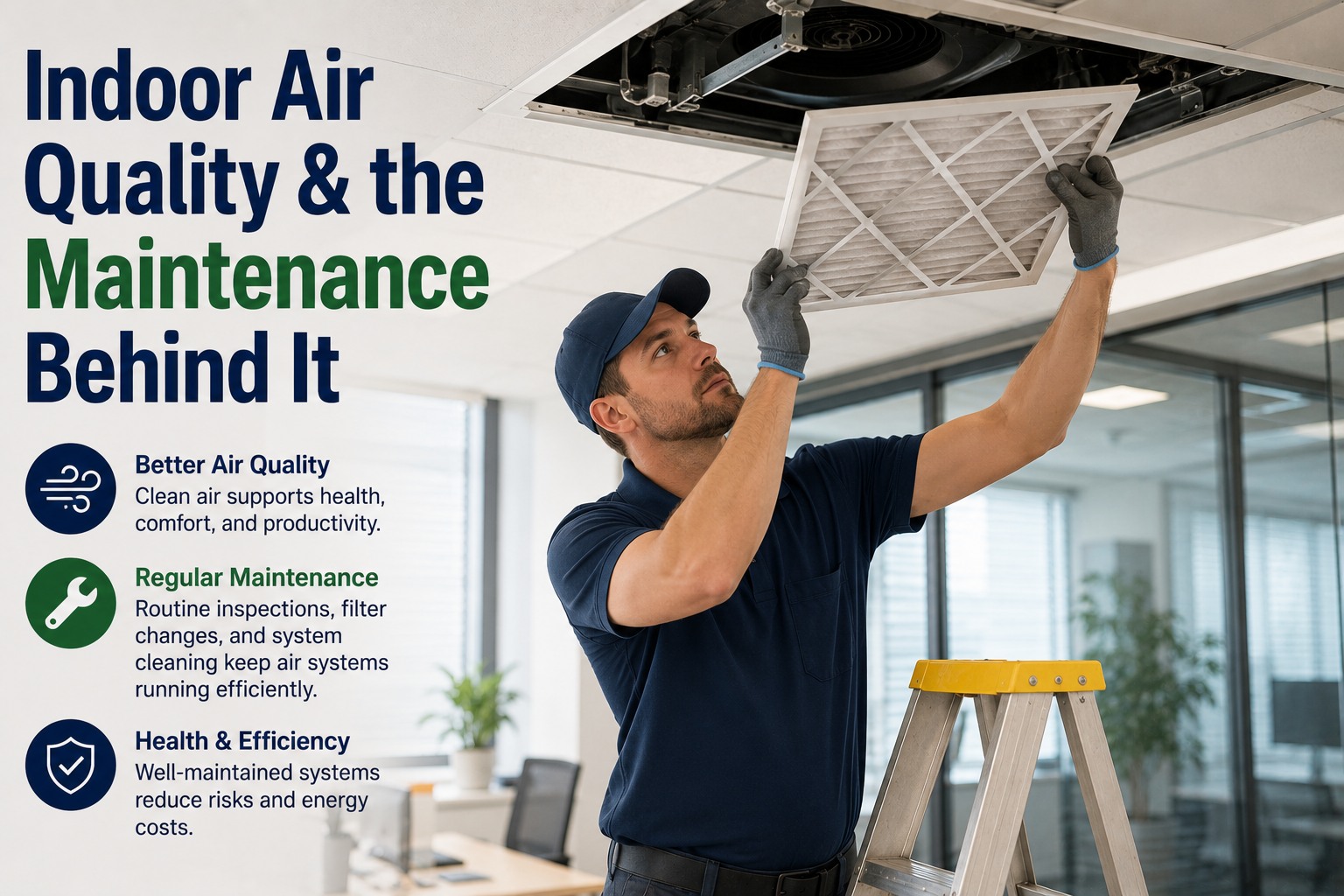
Indoor air quality is not a product of expensive equipment alone — it is the direct output of disciplined, documented HVAC maintenance. When building occupants report stale air, humidity swings, or respiratory irritation, the root cause almost always traces back to overdue filter changes, neglected coil cleaning, or ventilation rates that quietly drifted out of ASHRAE 62.1 compliance. A healthy building HVAC program turns these reactive complaints into a proactive, defensible maintenance cadence — and OxMaint gives facility teams the CMMS structure to enforce it. Keep reading to see how air quality maintenance workflows protect occupant health, keep buildings audit-ready, and eliminate the costly complaint-response cycle, then Start Free Trial to operationalize it today.
Is your building's air quality a documented program — or a complaint-driven fire drill?
Indoor air quality complaints cost facility teams hours of reactive troubleshooting, occupant distrust, and compliance exposure. OxMaint structures filtration, ventilation, and humidity upkeep into a defensible IAQ maintenance workflow with full audit trails.
Why indoor air quality is a maintenance problem, not an equipment problem
EPA research shows indoor air can be 2 to 5 times more polluted than outdoor air — and in poorly maintained buildings, up to 100 times worse. The difference between a healthy building and a sick one is rarely the HVAC unit; it is the maintenance discipline behind it.
A 120,000 sq ft corporate campus logged 47 IAQ complaints in a single quarter — headaches, fatigue, and allergy symptoms concentrated on the east wing. Investigation revealed MERV-13 filters had gone 60% past their replacement date and cooling coil fouling had reduced airflow by 28%. The reactive cost: $14,000 in emergency HVAC service and tenant credits. The preventive cost would have been $1,200 in scheduled filters and coil cleaning — a 91% reduction.
The indoor air quality HVAC maintenance checklist every facility team needs
A defensible IAQ program covers four system domains. Each task below should have a defined cadence, an assigned technician, and a documented completion record inside your CMMS.
Filtration Management
- Inspect and replace air filters per MERV rating and pressure-drop readings
- Log filter brand, MERV level, and replacement date per AHU
- Monitor differential pressure across filter banks weekly
- Order replacement stock before inventory hits 20% threshold
Ventilation Rate Compliance
- Verify outdoor air dampers positioned per ASHRAE 62.1 design CFM
- Test VAV minimum airflow settings seasonally
- Inspect and clean outdoor air intake screens quarterly
- Document CO2 sensor calibration every 12 months
Coil & Drain Hygiene
- Clean cooling coils to restore heat-transfer and airflow efficiency
- Clear condensate drain pans and lines to prevent microbial growth
- Inspect ductwork for biological contamination or debris buildup
- Apply EPA-registered coil treatments on a scheduled basis
Humidity Control
- Maintain relative humidity between 30% and 60% per ASHRAE guidance
- Calibrate humidifier and dehumidifier controls seasonally
- Inspect steam canisters and ultrasonic panels for scale buildup
- Log humidity readings by zone to identify drift trends
How to build a proactive IAQ maintenance program in 90 days
Moving from reactive complaint response to a documented healthy building HVAC program happens in three phases. Here is the cadence facility managers use to operationalize IAQ compliance.
Asset & Compliance Audit
Catalog every AHU, RTU, exhaust fan, and filtration asset into OxMaint. Tag each with its MERV rating, design CFM, ASHRAE 62.1 ventilation requirement, and current filter condition. Baseline readings give you the defensible starting point every IAQ program needs.
PM Schedule & Inspection Cadence
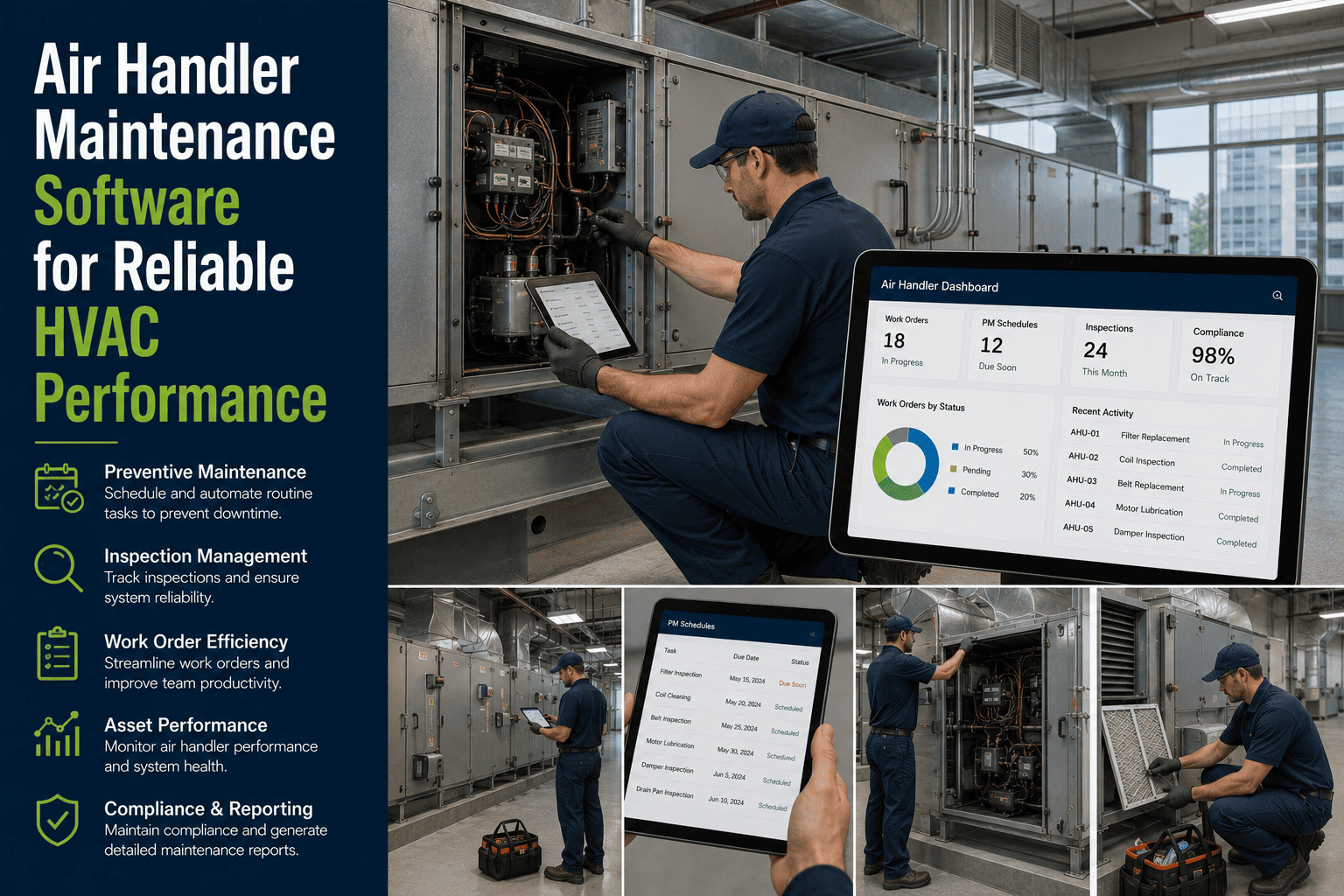
Build preventive maintenance work orders for filter replacements, coil cleaning, damper inspections, and sensor calibration. OxMaint auto-generates tasks based on runtime hours, calendar intervals, or pressure-drop triggers — so nothing falls through the cracks between audits.
Defensible Audit Trail
Every completed work order logs the technician, timestamp, photos, parts consumed, and readings taken. When an IAQ complaint arises or a compliance officer requests records, you export a full history in seconds — not a weekend of spreadsheet reconstruction.
IAQ compliance standards and the maintenance cost of ignoring them
Building air quality compliance is not optional — and the financial exposure of deferred maintenance compounds quickly. Here is what the standards require and what it costs when maintenance lapses.
When all three variables climb — overdue filters, fouled coils reducing airflow, and high occupant density — IAQ complaints spike exponentially, not linearly.
| IAQ Maintenance Task | Standard / Guidance | Recommended Cadence | Cost If Deferred |
|---|---|---|---|
| Filter replacement (MERV-13+) | ASHRAE 62.1 / 52.2 | Every 3–6 months or at pressure drop threshold | $2K–$5K in energy overrun + complaints |
| Cooling coil cleaning | ASHRAE 180 | Quarterly or per condition assessment | 15–25% airflow reduction, microbial growth |
| Ventilation rate verification | ASHRAE 62.1 | Seasonally + after any damper adjustment | CO2 buildup, compliance violation risk |
| Drain pan & condensate line cleaning | ASHRAE 180 / EPA | Bi-annually at minimum | Legionella risk, water damage, mold |
| CO2 & IAQ sensor calibration | Manufacturer / ASHRAE 62.1 | Every 12 months | False readings, failed compliance audit |
How OxMaint turns indoor air quality management into a documented program
OxMaint is an AI-powered CMMS and EAM platform that eliminates the spreadsheet-and-clipboard approach to IAQ. These are the four capabilities facility teams use to move from reactive complaint response to a defensible, audit-ready healthy building HVAC program.
Automated Filter Change Tracking
OxMaint auto-generates filter replacement work orders per AHU based on calendar intervals, runtime hours, or differential pressure triggers. Technicians log MERV level, brand, and condition with photo proof — cutting filter-related IAQ complaints by up to 70%.
ASHRAE 62.1 Compliance Workflow
Pre-built inspection templates enforce ventilation rate verification, damper position checks, and CO2 sensor calibration. Every completed task feeds a compliance dashboard — giving you a defensible audit trail that satisfies building officers and insurance carriers.
Asset & Equipment Hierarchy
Track every AHU, RTU, exhaust fan, and filter bank as a discrete asset with full maintenance history, spare-parts inventory, and warranty data. OxMaint's AI predicts which assets are trending toward failure — so you intervene before IAQ degrades.
IAQ Analytics & Reporting
Real-time dashboards track PM completion rates, complaint trends, filter inventory levels, and compliance status by building or zone. Export board-ready reports that prove your healthy building program is working — and identify drift before occupants do.
"We cut IAQ complaints by 64% in the first six months after implementing OxMaint. The filter-change tracking alone paid for the platform — we stopped sending technicians on emergency calls for problems that scheduled maintenance would have prevented."
See OxMaint manage your IAQ maintenance workflow — book a 30-minute demo
Watch how filter-change tracking, ASHRAE 62.1 compliance templates, and full audit-trail reporting work on your actual asset hierarchy. No slides — just your building, your assets, your program.
Indoor air quality HVAC maintenance: what facility managers ask
How does HVAC maintenance affect indoor air quality?
HVAC maintenance is the single biggest determinant of indoor air quality. Dirty filters stop capturing particulates, fouled coils reduce airflow and promote microbial growth, and miscalibrated dampers cut outdoor air below ASHRAE 62.1 minimums. A disciplined preventive maintenance program — filter replacement, coil cleaning, ventilation verification, and sensor calibration — directly controls the particulate, biological, and ventilation factors that define IAQ. You can Start Free Trial and operationalize all four in days, not months.
What is the ASHRAE 62.1 standard for ventilation maintenance?
ASHRAE Standard 62.1 defines the minimum ventilation rates and indoor air quality requirements for commercial buildings. It specifies outdoor air intake design, demand-controlled ventilation parameters, and the inspection and maintenance procedures required to sustain design airflow over time. Facility teams must verify damper positions, test VAV minimums, and calibrate CO2 sensors on a defined cadence — and document every step to remain compliant during audits.
How often should HVAC air filters be changed for IAQ compliance?
MERV-13 and higher filters in commercial buildings typically require replacement every 3 to 6 months, but the correct interval depends on pressure-drop readings, occupant density, outdoor air quality, and runtime hours. The best practice is to monitor differential pressure across the filter bank and trigger replacement when it exceeds the manufacturer's final resistance threshold — not to rely on a fixed calendar date alone. OxMaint automates this by generating replacement work orders based on either trigger.
Can a CMMS improve indoor air quality management?
Yes — a CMMS is the most effective tool for turning IAQ from a reactive complaint process into a documented program. It schedules and tracks filter changes, coil cleaning, ventilation inspections, and sensor calibration per asset; logs technician names, timestamps, photos, and readings for every task; and generates compliance reports on demand. Facilities using a CMMS for IAQ maintenance typically see a 50–70% reduction in occupant complaints within the first year. Book a Demo to see the workflow on your assets.
What are the most common causes of indoor air quality complaints in commercial buildings?
The top causes are overdue air filter replacement, fouled cooling coils that reduce airflow and promote mold growth, outdoor air dampers stuck below ASHRAE 62.1 minimum ventilation rates, clogged condensate drain pans, and uncalibrated CO2 sensors that mask rising contaminant levels. Nearly every IAQ complaint traces back to a maintenance task that was deferred, forgotten, or never documented — which is why a structured CMMS workflow prevents the vast majority of issues before occupants notice them.
Turn indoor air quality into a documented, defensible program
Stop reacting to IAQ complaints. OxMaint structures your filtration, ventilation, and humidity maintenance into an automated, audit-ready workflow that protects occupant health and proves compliance — on day one.
Free 14-day trial · No credit card