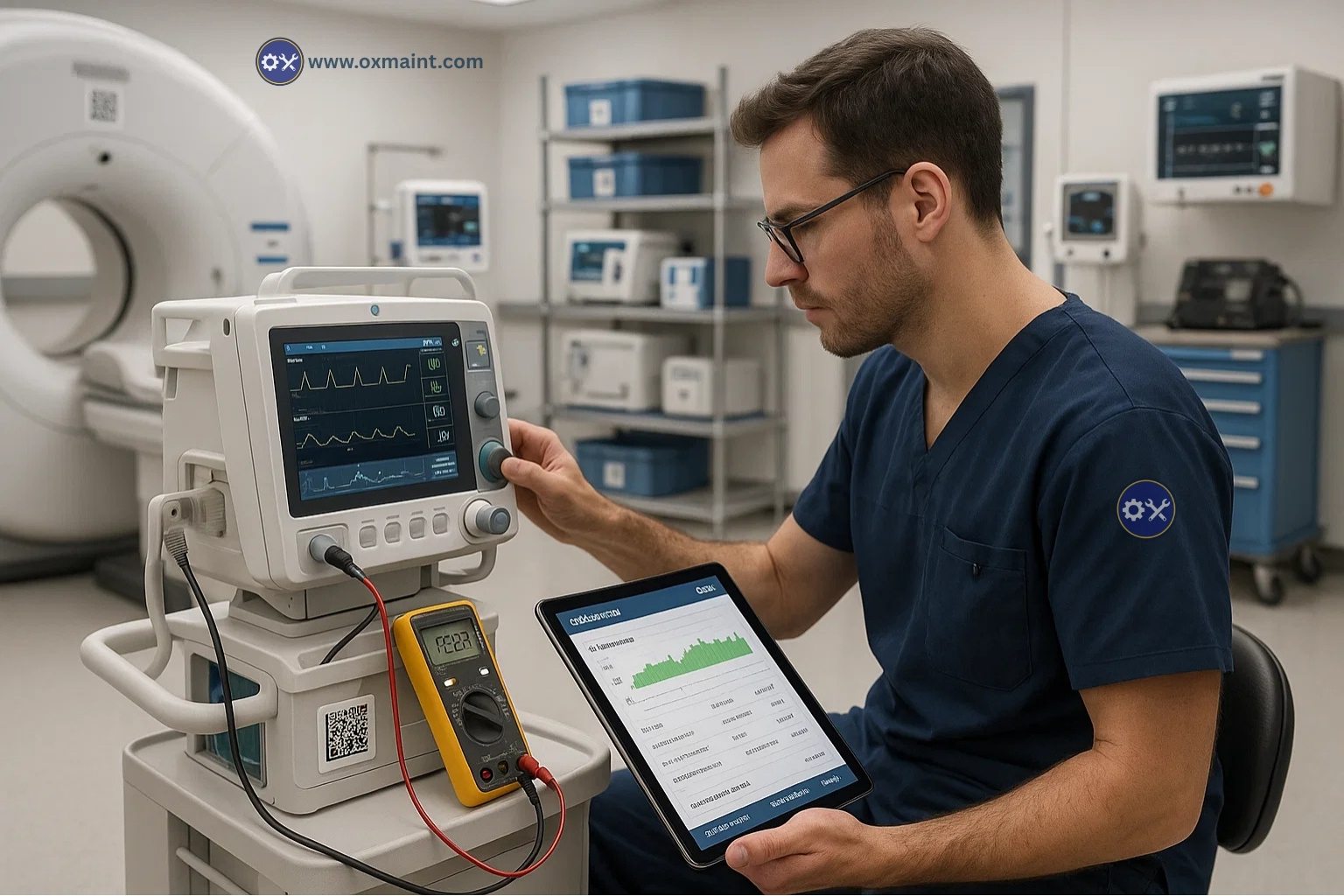
Your hospital administrator storms into the operations meeting with devastating news: "Our CT scanner failed during peak hours yesterday, forcing us to divert 43 emergency patients and losing $127,000 in a single day." You review the maintenance logs—equipment failures up 35% this quarter, maintenance overtime costs exploding and clinical departments losing confidence in equipment reliability—yet traditional maintenance approaches seem powerless against the mounting crisis. Without revolutionary maintenance strategies and proven optimization frameworks, you are watching critical medical equipment fail when patients need it most.
This nightmare scenario haunts healthcare facilities across America as medical equipment complexity skyrockets while maintenance budgets remain flat. The typical hospital experiences $3.2 million in annual losses from equipment downtime, with each critical equipment failure potentially endangering patient lives while devastating operational finances.
Healthcare organizations revolutionizing their maintenance approach slash equipment downtime by 40-50% while extending asset lifespan by 35% and reducing total maintenance costs by 25%. The transformation requires abandoning outdated time-based maintenance for intelligent, predictive strategies leveraging real-time monitoring, advanced analytics, and strategic vendor partnerships that guarantee equipment availability when lives depend on it.
Transform your medical equipment maintenance and prevent costly failures that put patient safety at risk!
Join thousands of healthcare facilities who have already revolutionized their equipment reliability. Don't let another day pass with vulnerable maintenance systems that could fail when your patients need care most. Our proven strategies have helped hospitals achieve 99% uptime while saving millions in operational costs.
Start Your TransformationSee Live Results Demo
The True Cost of Medical Equipment Downtime
Medical equipment downtime creates cascading impacts far beyond immediate repair costs, affecting patient care quality, staff morale, organizational reputation, and financial performance. Understanding these multifaceted costs drives urgency for maintenance transformation and justifies investments in predictive technologies and process improvements.
Financial impacts extend across direct revenue loss, emergency repair premiums, rental equipment costs, and overtime expenses. A single MRI unit generating $400,000 monthly revenue costs facilities $13,000 daily when offline, not including patient dissatisfaction, physician frustration, and potential malpractice exposure from delayed diagnoses.
Revenue Loss
$3,000-8,000 per hour for imaging equipment, $500-1,500 per hour for diagnostic systems, creating millions in annual losses
Patient Impact
Delayed diagnoses, rescheduled procedures, extended stays, and compromised outcomes affecting satisfaction scores and referrals
Clinical Disruption
Workflow interruptions, staff stress, schedule chaos, and productivity losses rippling throughout the organization
Emergency Costs
Premium repair rates, expedited shipping, rental equipment, and contractor fees averaging 3-5x planned maintenance costs
Regulatory Risk
Joint Commission citations, state health department violations, and CMS penalties threatening accreditation and reimbursement
Reputation Damage
Negative reviews, physician dissatisfaction, and competitive disadvantage in attracting patients and recruiting staff
Hidden costs multiply the visible impacts, with equipment downtime causing staff burnout, increasing turnover costs, and creating systemic inefficiencies. Clinical teams lose 2-3 hours daily working around equipment issues, representing $500,000+ in annual productivity losses for mid-sized facilities.
Competitive implications grow as patients increasingly choose facilities based on technology availability and reliability. Facilities with chronic equipment issues lose 10-15% of referrals to competitors offering consistent access to advanced diagnostic and treatment technologies.
Don't let your facility become another statistic. Discover how predictive maintenance can eliminate 85% of your equipment failures and protect both your patients and your bottom line. Healthcare leaders are already seeing results - schedule a consultation to see their success stories.
Revolutionary Maintenance Strategies for 2025
Modern medical equipment maintenance transcends traditional break-fix approaches through intelligent strategies predicting failures before they occur, optimizing maintenance timing, and ensuring maximum equipment availability. These revolutionary approaches deliver the 40% downtime reduction healthcare facilities desperately need.
Predictive maintenance represents the cornerstone of modern equipment reliability, using real-time monitoring and advanced analytics to identify degradation patterns weeks before failure. This proactive approach transforms maintenance from reactive firefighting to strategic asset optimization.
Integrated Maintenance Strategy Components
Condition-Based Monitoring
IoT sensors tracking vibration, temperature, and performance metrics enabling intervention before failure
Predictive Analytics
AI algorithms analyzing patterns to forecast failures 30-90 days in advance with 85%+ accuracy
Risk-Based Prioritization
Focus resources on critical equipment with highest patient impact and failure probability
Precision Maintenance
Targeted interventions addressing specific issues rather than generic time-based service
Performance Optimization
Continuous calibration and adjustment maintaining peak efficiency throughout lifecycle
Strategic Partnerships
OEM collaborations providing remote support, guaranteed uptime, and shared risk models
Implementation sequencing determines success rates, with phased rollouts achieving 80% higher adoption than big-bang transformations. Starting with high-value imaging equipment demonstrates quick wins, building momentum for facility-wide deployment across all equipment categories.
Cultural transformation accompanies technological change, requiring technician upskilling, clinical staff engagement, and leadership commitment. Facilities investing equally in people and technology achieve 2-3x better outcomes than those focusing solely on tools and systems.
| Maintenance Approach | Equipment Uptime | Annual Costs | Staff Requirements | Implementation Time |
|---|---|---|---|---|
| Reactive (Break-Fix) | 75-80% | Highest (baseline) | High (emergencies) | Immediate |
| Preventive (Time-Based) | 85-90% | 30% reduction | Moderate (planned) | 3-6 months |
| Predictive (Condition-Based) | 94-97% | 45% reduction | Lower (targeted) | 6-12 months |
| Precision (AI-Powered) | 98-99% | 60% reduction | Minimal (automated) | 12-18 months |
Ready to move beyond reactive maintenance that's costing you millions? Start implementing these proven strategies today or see how other hospitals achieved 99% uptime with our expert guidance.
Technology Solutions Driving Equipment Reliability
Advanced technologies transform medical equipment maintenance from guesswork to precision science, enabling unprecedented visibility into equipment health, predictive failure detection, and optimized maintenance execution. Understanding and deploying these technologies differentiates leaders from laggards in equipment reliability.
Internet of Things (IoT) sensors provide the foundational data layer, continuously monitoring equipment parameters and streaming real-time health indicators. Modern sensors detect subtle changes in vibration patterns, temperature variations, and electrical signatures that precede failures by weeks or months.
Essential Maintenance Technologies
Vibration Analysis
Detects bearing wear, imbalance, and mechanical issues 60-90 days before failure in rotating equipment
Thermal Imaging
Identifies electrical hot spots and cooling system issues preventing 80% of electrical failures
Oil Analysis
Reveals internal wear patterns in compressors and pumps extending component life 40%
Ultrasonic Testing
Discovers vacuum leaks and electrical discharge preventing catastrophic failures
Remote Diagnostics
Enables OEM support without site visits reducing diagnostic time 70%
AR Support
Guides technicians through complex repairs improving first-time fix rates 45%
Artificial Intelligence and machine learning algorithms transform raw sensor data into actionable insights, identifying complex failure patterns invisible to human analysis. These systems learn from each equipment interaction, continuously improving prediction accuracy and optimization recommendations.
Computerized Maintenance Management Systems (CMMS) orchestrate maintenance operations, automating scheduling, tracking compliance, managing inventory, and providing real-time performance visibility. Modern cloud-based CMMS platforms reduce administrative burden by 60% while improving maintenance efficiency 35%.
Technology Implementation Best Practices
- Start with pilot deployments on highest-value equipment to prove ROI
- Ensure robust network infrastructure supporting real-time data transmission
- Integrate systems avoiding data silos that limit analytical capabilities
- Train technicians thoroughly - technology without adoption fails
- Establish data governance ensuring quality and security
- Partner with vendors providing implementation support and ongoing optimization
- Measure results continuously and adjust strategies based on outcomes
- Scale gradually building on successes rather than rushing deployment
Mobile technologies empower technicians with instant access to equipment history, repair procedures, and expert support. Tablets and smartphones reduce repair time 25-30% while improving documentation accuracy and enabling real-time collaboration with remote experts.
Stop letting outdated technology drain your budget and compromise patient care. Implement these game-changing technologies with our proven implementation roadmap or see live demonstrations of hospitals saving millions through smart technology adoption.
Building High-Performance Maintenance Teams
Technology alone cannot deliver maintenance excellence without skilled, motivated teams embracing new approaches. Building high-performance maintenance organizations requires strategic talent development, cultural transformation, and organizational structures supporting continuous improvement and innovation.
Competency development programs ensure technicians possess skills for increasingly sophisticated equipment and predictive technologies. Leading healthcare facilities invest 3-5% of maintenance budgets in training, achieving 40% higher productivity and 50% better equipment reliability than those minimizing training investments.
Core Team Competencies
Technical Excellence
Multi-modality expertise, OEM certifications, and continuous skill updates for evolving technologies
Data Analytics
Interpreting predictive insights, trend analysis, and evidence-based decision making
Customer Service
Clinical partnership, communication skills, and patient-centered maintenance approaches
Project Management
Planning complex maintenance, coordinating resources, and delivering on-time results
Regulatory Expertise
Compliance knowledge, documentation excellence, and audit readiness
Innovation Mindset
Continuous improvement, technology adoption, and creative problem solving
Organizational structures supporting maintenance excellence balance centralized expertise with distributed responsiveness. Hybrid models combining specialized teams for complex equipment with embedded technicians for routine maintenance deliver optimal results across diverse healthcare environments.
Performance management systems aligning individual goals with organizational objectives drive continuous improvement. Leading facilities implement balanced scorecards tracking technical metrics alongside customer satisfaction, innovation contributions, and professional development.
Cultural Transformation Elements
- Proactive Mindset: Shifting from reactive repairs to predictive optimization
- Data-Driven Decisions: Replacing intuition with analytical insights
- Continuous Learning: Embracing new technologies and methodologies
- Clinical Partnership: Viewing maintenance as patient care enablement
- Innovation Culture: Encouraging experimentation and calculated risks
- Accountability: Owning outcomes and driving improvements
Retention strategies become critical as skilled biomedical technicians grow increasingly scarce. Competitive compensation, career development paths, and engaging work environments reduce turnover costs while maintaining institutional knowledge essential for equipment reliability.
Transform your maintenance team from cost center to strategic advantage. Access our comprehensive team development programs and training resources or learn how top hospitals build world-class maintenance organizations.
Measuring Success and Continuous Improvement
Sustainable maintenance excellence requires comprehensive measurement systems tracking performance across multiple dimensions and driving continuous improvement. Organizations achieving lasting 40% downtime reductions implement robust KPI frameworks with real-time visibility and accountability at all levels.
Key Performance Indicators must balance equipment reliability metrics with financial performance, regulatory compliance, and customer satisfaction measures. Leading facilities track 20-25 KPIs across these dimensions, using dashboards providing instant visibility into performance trends and improvement opportunities.
Comprehensive KPI Dashboard
Reliability Metrics
- Equipment Uptime: Target 95%+ overall, 99%+ critical
- Mean Time Between Failures: Improve 50% annually
- First-Time Fix Rate: Achieve 85%+ resolution
- PM Compliance: Maintain 98%+ schedule adherence
Financial Performance
- Cost per Service: Reduce 10% annually
- Overtime Percentage: Maintain below 5%
- Parts Inventory Turns: Achieve 4-6 annually
- Contract vs. In-House Ratio: Optimize 70/30
Operational Excellence
- Response Time: 30 min critical, 2 hr urgent
- Wrench Time: Achieve 65-70% productivity
- Work Order Backlog: Maintain 2-4 weeks
- Schedule Compliance: 85%+ planned work
Strategic Impact
- Customer Satisfaction: 90%+ clinical ratings
- Safety Incidents: Zero equipment-related
- Innovation Adoption: 2-3 new technologies annually
- Training Hours: 40+ per technician yearly
Continuous improvement methodologies including Lean, Six Sigma, and Kaizen drive systematic enhancement of maintenance processes. Regular improvement events focusing on specific equipment or processes typically yield 15-25% efficiency gains while building team engagement and capabilities.
Benchmarking against industry leaders reveals improvement opportunities and validates performance levels. Top-quartile healthcare facilities achieve 50% lower maintenance costs per adjusted patient day while maintaining superior reliability through optimized practices and technologies.
Continuous Improvement Process
Measure current performance against established KPIs
Analyze gaps and identify root causes
Develop targeted improvement initiatives
Implement changes with clear ownership
Monitor results and adjust approaches
Standardize successful improvements
Return on Investment validation ensures continued organizational support for maintenance excellence initiatives. Comprehensive ROI calculations including downtime reduction, lifecycle extension, and cost optimization typically demonstrate 300-500% returns justifying ongoing investments.
Turn maintenance performance data into strategic advantage. Implement our proven KPI frameworks and continuous improvement methodologies or see how leading hospitals measure and achieve 99% uptime.
Conclusion
Medical equipment maintenance excellence represents a critical competitive differentiator separating healthcare leaders from organizations struggling with chronic reliability issues and budget overruns. Achieving 40% downtime reduction transforms more than maintenance metrics—it revolutionizes patient care delivery, operational efficiency, and financial performance.
Understanding the true cost of equipment downtime reveals impacts extending far beyond repair expenses to encompass patient satisfaction, clinical outcomes, regulatory compliance, and competitive positioning. Total costs often exceed visible expenses by 5-10x, creating compelling urgency for maintenance transformation.
Revolutionary maintenance strategies combining predictive technologies, risk-based prioritization, and precision interventions deliver the dramatic improvements healthcare facilities desperately need. Organizations implementing comprehensive approaches achieve 94-99% equipment uptime while reducing costs 25-60% compared to reactive maintenance.
Technology solutions including IoT monitoring, AI analytics, and mobile platforms enable predictive maintenance strategies preventing 75-85% of equipment failures. However, technology succeeds only when combined with skilled teams, robust processes, and cultural transformation supporting continuous improvement.
Building high-performance maintenance teams through competency development, organizational alignment, and cultural transformation proves equally critical as technology deployment. Leading organizations invest in people alongside systems, achieving 2-3x better outcomes than technology-only approaches.
Measuring success through comprehensive KPI frameworks and continuous improvement methodologies ensures sustainable excellence beyond initial transformation. Organizations committed to systematic improvement achieve 5-10% annual gains, continuously widening competitive advantages while delivering superior patient care through reliable equipment availability.
Your patients deserve equipment that never fails when their lives depend on it!
Every day you delay implementing predictive maintenance is another day of vulnerability. Equipment failures are unpredictable, but their prevention is completely within your control. Join the healthcare revolution where 99% uptime isn't a dream—it's a guarantee. Your competitor down the street might already be implementing these strategies while you're still dealing with emergency repairs and patient diversions.
Secure Your Equipment NowSee Success Stories Live


