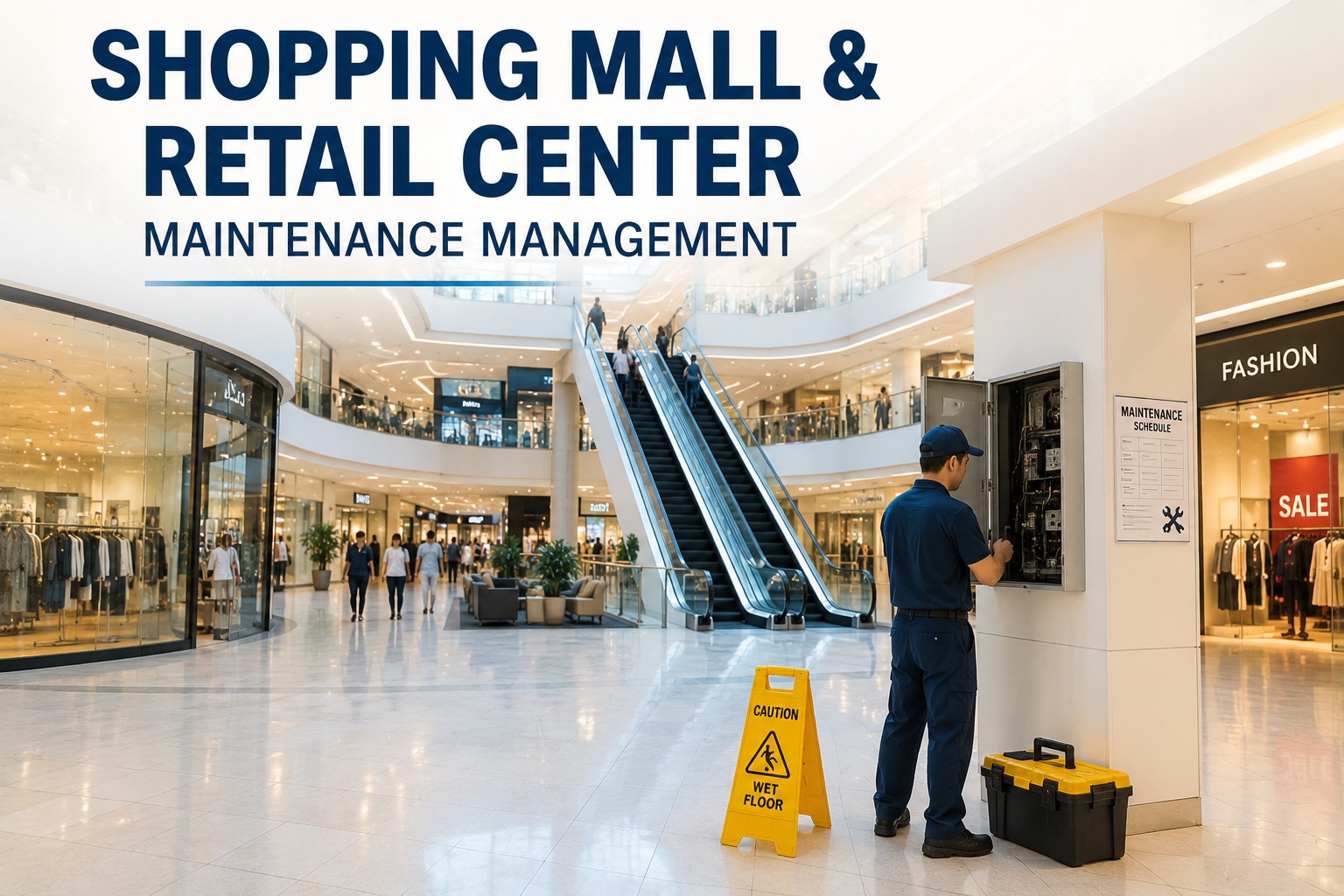
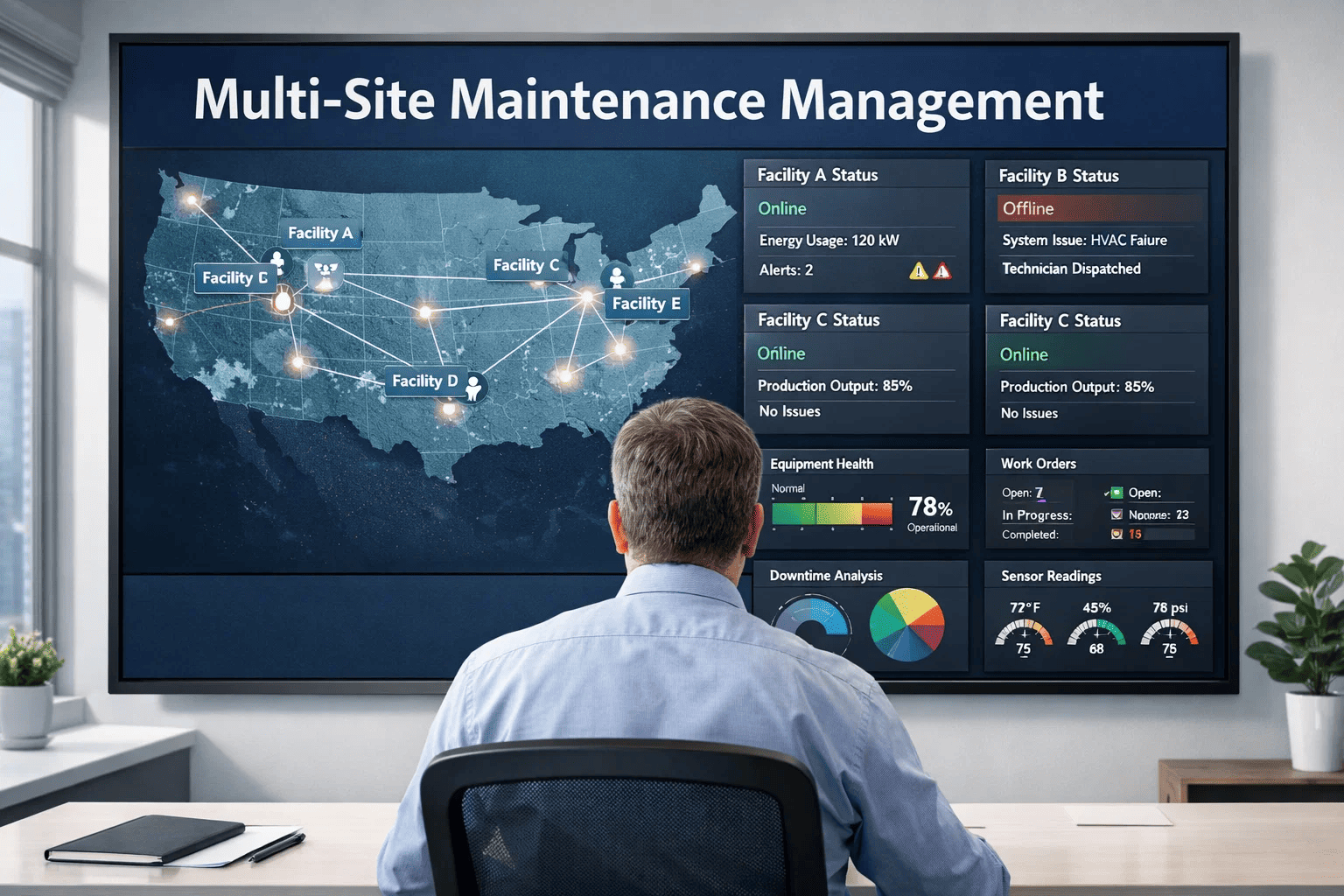
A shopping mall isn't one property — it's six different properties stitched together under a single roof. The central chiller plant serving 800,000 square feet operates by different rules than the anchor tenant's independent HVAC system. The food court's grease trap program has nothing in common with the parking deck's stormwater management. The escalators servicing 12 million annual visitors carry different compliance obligations than the freight elevators moving inventory at 2 AM. And when the property manager walks the floor at 10 AM on a Saturday in December, every one of those six properties needs to be invisible — no breakdowns, no visible technicians, no cordoned areas, no comfort complaints, no evidence that maintenance is happening at all. That is the operational discipline retail center management demands. OxMaint provides the platform that makes it executable across every zone, every tenant, every asset, and every peak-season window. Book a free demo to see retail center operations inside OxMaint.
Z1
Central Plant
Chiller plant · Electrical distribution · Fire pump · Emergency generators
Z2
Anchor Tenants
Department stores · Big-box retailers · Independent HVAC · Separate lease terms
Z3
Common Areas
Concourses · Atriums · Restrooms · Wayfinding · Seating zones
Z4
Inline Stores
50-200 smaller retailers · Shared HVAC · Standard lease terms
Z5
Food Court & F&B
Grease traps · Ventilation hoods · Sanitation · Pest control
Z6
Parking & Exterior
Parking decks · Lighting · Landscaping · Stormwater · Signage
OxMaint's retail center asset tree maps every asset to its correct zone — driving CAM allocation, PM scheduling, and tenant billing from a single source of truth
35%
of a retail tenant's total occupancy cost typically flows through CAM charges — the single largest expense after base rent
80%
of a mall's operating cost is spent on common area maintenance — the number that dominates every CAM reconciliation
15-25%
of the total maintenance budget is consumed by escalator and elevator programs alone
The Peak vs Off-Peak Rhythm That Defines the Year
Retail maintenance operates in two fundamentally different modes across the calendar year. The off-peak months (February through September) are when disruptive capital work happens — parking lot resurfacing, escalator overhauls, HVAC plant projects, floor refinishing. The peak months (October through January) are when all of that work must be finished, because maintenance during Q4 must be invisible. The single largest error retail property managers make is trying to push capital projects into peak season, or skipping inspections during summer. The dual-track calendar below shows what disciplined operations actually look like across the year.
Annual Maintenance Rhythm · Capital Work vs Invisible Maintenance
Capital & Disruptive
JAN
FEB
MAR
APR
MAY
JUN
JUL
AUG
SEP
OCT
NOV
DEC
Invisible / PM Only
JAN
FEB
MAR
APR
MAY
JUN
JUL
AUG
SEP
OCT
NOV
DEC
Peak activity
Moderate
Baseline
Zero disruption tolerance
Common Area Maintenance — Where 80% of the Money Goes
CAM is the single most consequential financial mechanism in retail property operations. It is also the most opaque, the most contested, and the most frequent trigger of tenant-landlord friction. Every dollar spent on common area upkeep flows through CAM back to tenants on a pro-rata basis. Getting the allocation right, documenting the spending transparently, and being audit-ready protects both renewals and property value. OxMaint tracks every CAM-allocable dollar against the specific asset, service event, and cost category — so annual reconciliation becomes a data question, not a spreadsheet reconstruction exercise.
CAM Spend Distribution · Where the 80% Actually Goes
HVAC & Utilities
Chiller plant, common area cooling, shared electrical
Janitorial & Cleaning
Common areas, restrooms, food court cleaning
Elevators & Escalators
Service contracts, compliance inspections, parts
Security & Life Safety
Guard services, CCTV, fire safety, emergency systems
Parking & Exterior
Parking maintenance, landscaping, exterior lighting
Management & Admin
On-site management, accounting, tenant services
Insurance & Reserves
Common area insurance, replacement reserves
Percentages reflect typical distribution across enclosed mall CAM pools · exact allocation varies by property
Elevators & Escalators — The Highest-Liability Assets in the Building
Vertical transportation is the single most compliance-intensive maintenance category in retail property management. ASME A17.1-2025 governs every unit, state and municipal codes layer additional requirements, and every jurisdiction inspects on its own cadence. An elevator that fails an annual statutory inspection doesn't get a warning — it gets closed, and every tenant on floors above ground level loses access until the violation is cleared. Beyond compliance, escalators handle the highest continuous mechanical loading in the entire mall, and a shut-down escalator during holiday traffic is a visible operational failure that reaches management within the hour.
ASME A17.1 Compliance Cadence
Daily
Safety walkthrough · handrail synchronization · combplate visual · door operation · emergency stop verification
Monthly
Machine room inspection · step chain wear · lubrication points · brake operation · controller diagnostic log review
Quarterly
Rope inspection · sheave condition · governor test · door detector calibration · hydraulic fluid analysis
Annual
Statutory inspection by state-licensed inspector · certificate renewal · Maintenance Control Program (MCP) audit
5-Year
Full load safety device test · pressure vessel test · overspeed governor calibration · comprehensive component inventory
Emergency call-outs on unplanned elevator failures cost 3-5× planned service rates · converting 60% of emergencies into planned events recovers the CMMS investment within 12-18 months
See Elevator & Escalator Compliance Run Automatically
OxMaint schedules every ASME A17.1 inspection interval per unit, tracks statutory certificate expiry dates, coordinates contractor packages, and maintains the Maintenance Control Program (MCP) documentation that inspectors require. See it live against your property in 30 minutes.
Tenant Coordination — Three Tiers, Three Playbooks
Not every tenant in the mall gets treated the same. Anchor tenants have separate lease structures, dedicated systems, and negotiated response commitments that reflect their traffic-generation role in the property. Inline stores fit within the standard lease template and share the majority of the building infrastructure. Food court and F&B tenants have their own set of health, sanitation, and grease-management obligations that layer onto everything else. OxMaint's tenant coordination module tracks obligations and response commitments per tenant tier so nothing slips through the cracks.
Tier 1
Anchor Tenants
Department stores & large-format
Lease structureCustom · often 20+ year terms
SystemsOwn HVAC · often own utilities
Response SLA2-4 hour negotiated commitments
CAM positionOften reduced or capped exposure
Comm. priorityDirect GM-to-GM channel
Tier 2 · Largest
Inline Stores
50-200 smaller retailers
Lease structureStandard 5-10 year template
SystemsShared HVAC · shared utilities
Response SLA8-24 hour standard commitment
CAM positionFull pro-rata allocation
Comm. priorityProperty mgmt ticket queue
Tier 3
Food Court & F&B
Restaurants & quick-serve
Lease structureStandard + F&B addenda
SystemsVentilation · grease · plumbing
Response SLA4-8 hour · faster for sanitation
CAM positionStandard + F&B surcharges
Comm. priorityHealth code + sanitation priority
Slip-and-Fall Prevention — The Documentation Chain That Wins Litigation
Slip-and-fall claims are the single most common litigation category in retail property management. Average settlement figures reach five and six figures before attorney fees, and the outcome almost always hinges on documentation: was the inspection scheduled, was it completed, was the hazard identified, was the response time appropriate, was corrective action documented. The four-link chain below is what defense attorneys look for — and what a CMMS-run inspection program produces as a byproduct of routine work.
The Litigation-Defensible Documentation Chain
01
Scheduled Inspection Cadence
OxMaint fires inspection work orders for high-risk zones (entryways, food court, restroom corridors, escalator landings) at documented intervals — proving a program existed
02
Timestamped Completion
Every inspection completed on mobile with time, location, technician ID, and photo evidence — proving the inspection actually happened
03
Hazard Response Time
Reported hazards generate immediate work orders with SLA-bound response commitments — proving reasonable action was taken
04
Corrective Action Record
Repair, cleanup, and follow-up inspection documented against the same asset — proving the hazard was resolved and monitored
Every link exists as auditable evidence in OxMaint by the time the demand letter arrives — reducing claim exposure by an order of magnitude
Executive Perspective · The Retail Operation Is the Property Value
The valuation of a retail center is not built on its base rents alone — it is built on the operating discipline underneath. A property with clean CAM records, documented compliance across every escalator and elevator, litigation-defensible inspection trails, and tenant satisfaction scores above the market average trades at a materially different cap rate than a property where those systems live in spreadsheets and personal knowledge. When we standardized our regional portfolio on a single CMMS platform, the effect showed up in three places at once: CAM reconciliation disputes dropped, compliance audit findings collapsed to near-zero, and tenant renewal conversations shifted from confrontation to partnership. Property managers running old systems don't realize how much value they leave uncaptured every year. The operational layer is not a cost — it is the moat that protects the asset value.
CAM as Trust Currency
Transparent CAM tracking in OxMaint changes annual reconciliation from a defensive posture into an operational advantage at renewal time.
Compliance as Byproduct
Statutory inspections and MCP documentation should be produced automatically by routine work, not reconstructed under audit pressure.
Peak Season Is Won in July
The mall's Q4 performance depends on decisions made 6 months earlier. OxMaint's capital planning ensures the invisible-maintenance discipline holds.
Run Your Retail Portfolio on One Operational Platform
If your mall or shopping center is still managed across spreadsheets, contractor emails, and paper inspection logs, you are leaving CAM transparency, compliance protection, and litigation defense on the table every quarter. See what OxMaint — a maintenance management platform built for retail property operations — looks like against your center.
Frequently Asked Questions
What is shopping mall facility management?
Shopping mall facility management coordinates the operation, maintenance, tenant relationships, compliance, and capital planning across the six operational zones of a retail center: central plant, anchor tenants, common areas, inline stores, food court, and parking/exterior. It combines building maintenance, tenant services, CAM management, and life-safety compliance into one operational discipline. OxMaint provides the platform that runs each of these workstreams from a single asset tree.
How does CAM (Common Area Maintenance) reconciliation work in a mall?
CAM allocates common area operating costs — HVAC, cleaning, elevators, security, parking, insurance — back to tenants on a pro-rata basis, typically by leased square footage. Anchor tenants often have negotiated caps or exclusions. Every allocable dollar spent should be linked to a specific asset, service event, and cost category — which is exactly the data OxMaint captures as work orders are executed. Annual reconciliation becomes a transparent report rather than a spreadsheet reconstruction exercise.
When should mall capital maintenance projects be scheduled?
Between February and September during off-peak traffic. Parking lot resurfacing, escalator overhauls, HVAC plant work, and floor refinishing must be completed before October, because Q4 holiday season requires maintenance to be invisible. Pushing capital work into peak season either disrupts shopping or defers the work into the following year — and deferred maintenance compounds year over year. OxMaint's capital planning module maintains the multi-year outlook.
What compliance requirements apply to mall elevators and escalators?
ASME A17.1 governs all vertical transportation, with the 2025 edition adding cybersecurity requirements alongside traditional mechanical, electrical, and structural mandates. Each state and municipal jurisdiction adds its own inspection cadence and permit requirements. Section 8.6 requires every building to maintain a documented Maintenance Control Program (MCP) — one of the most commonly cited inspection violations nationwide. OxMaint tracks statutory certificate expiry, MCP records, and inspection completion per unit.
How does a CMMS reduce slip-and-fall litigation exposure?
Slip-and-fall claims typically resolve on documentation quality: was there a scheduled inspection cadence, was the inspection actually completed, was the hazard identified within a reasonable timeframe, and was corrective action documented and monitored. OxMaint produces every link in that chain as a byproduct of routine work — timestamped inspection logs with photo evidence, immediate work order generation on hazard reports, response time tracking, and closed-loop corrective action documentation.
Can OxMaint coordinate maintenance across an entire retail portfolio?
Yes. Multi-property portfolios can be managed under a single OxMaint instance with property-level asset trees, portfolio-wide reporting, and standardized PM templates that ensure consistent operational discipline across every center. Regional managers can view compliance status, CAM performance, and tenant satisfaction indicators across the portfolio, while on-site teams work against property-specific work orders and asset histories from their mobile devices.