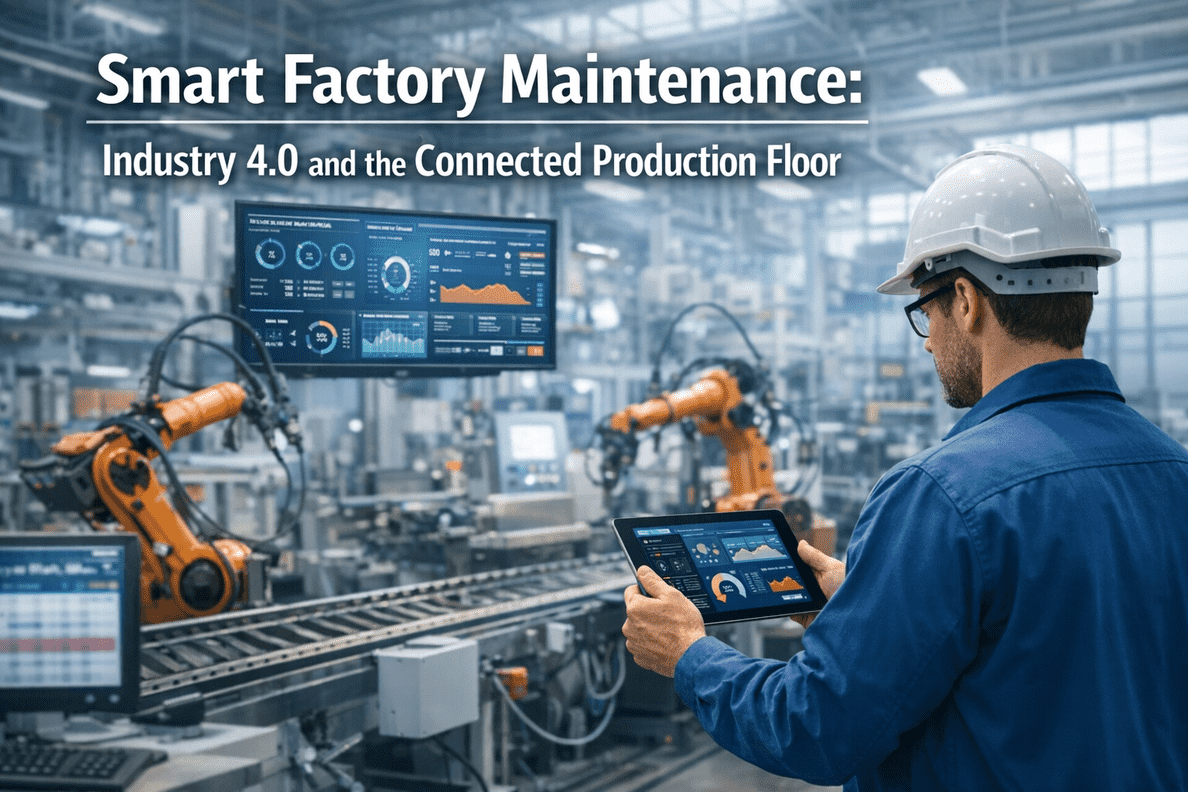
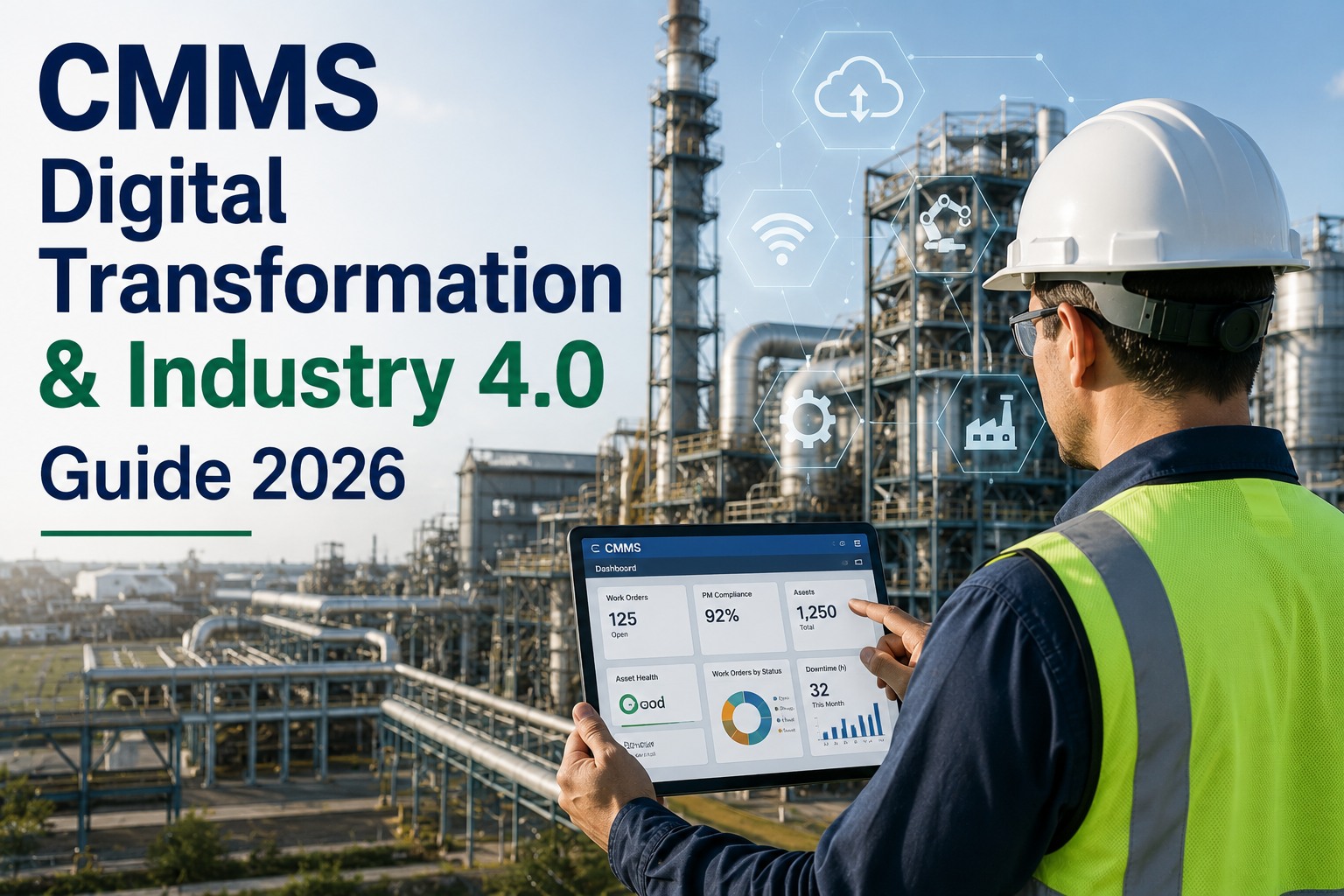
A plant manager at a German automotive supplier walks into Monday's production review with a number that stops the room: 23 hours of unplanned downtime last week across three connected lines — all from equipment failures that sensor data had been signalling for days. The data existed in four separate systems. Nobody had connected it. This is the defining gap of Industry 4.0 adoption in 2025: factories are becoming smart, but their maintenance operations are still running blind. The global smart factory market is valued at $389 billion in 2025 and growing at nearly 10% annually. Book a demo to see how Oxmaint connects your Industry 4.0 infrastructure to AI-driven maintenance management. Nearly 74% of manufacturers are integrating IIoT devices — yet predictive maintenance adoption among US factories sits at only 61%. The gap between connected equipment and connected maintenance is where downtime lives, and it is the gap Oxmaint was built to close.
Your Factory Is Getting Smarter. Is Your Maintenance?
Oxmaint connects IIoT sensor data, real-time OEE, and AI-driven predictive maintenance in one platform — built for the connected production floor.
$389B
Global smart factory market size in 2025, growing at 9.74% CAGR through 2030
74%
Of manufacturers now integrating IIoT devices for predictive maintenance and asset tracking
68%
Of industrial sectors currently undergoing active Industry 4.0 transformations
4.8x
Cost of reactive emergency repairs vs. AI-planned preventive maintenance on connected assets
WHAT IS A SMART FACTORY
Industry 4.0 and the Connected Production Floor — Defined
A smart factory is not a single technology. It is the integration of cyber-physical systems, IIoT sensors, AI analytics, edge computing, and cloud platforms into a unified production environment — where machines communicate, data flows in real time, and maintenance decisions are driven by condition signals rather than schedules or failures. Industry 4.0 transforms the production floor from a collection of isolated machines into a connected ecosystem where every asset, process, and technician operates from a single source of operational truth.
Smart Factory Maintenance — Defined
The practice of using real-time IIoT sensor data, AI failure prediction, OEE analytics, and automated work order management to maintain connected production equipment — eliminating reactive failures and replacing calendar-based PM schedules with condition-triggered precision maintenance.
INDUSTRY 4.0 TECHNOLOGY STACK
Eight Technologies Powering the Connected Production Floor
Each layer of the Industry 4.0 stack generates data that feeds maintenance intelligence. Without a CMMS that can receive and act on that data, the investment in connectivity produces dashboards — not outcomes.
01
Industrial IoT Sensors
Vibration, temperature, pressure, current, and humidity sensors monitor asset condition in real time. IIoT adoption in US manufacturing now stands at 64% — generating continuous streams of failure-predictive signals that manual inspections cannot match.
02
AI and Machine Learning
ML algorithms analyze sensor patterns across thousands of assets simultaneously, identifying failure signatures weeks before breakdown. Predictive maintenance AI reduces unplanned downtime by up to 50% and cuts maintenance costs by 10–25% in documented deployments.
03
Digital Twins
Virtual replicas of physical assets mirror real-time condition, operating parameters, and degradation trajectories. Digital twins are used by 62% of smart factories globally to simulate failure scenarios and optimize maintenance timing without disrupting production.
04
Edge Computing
Processing power deployed at the factory floor — not the cloud — enables sub-second anomaly detection for high-speed equipment. Edge computing in factories has grown 57% in adoption, eliminating the latency gap that makes cloud-only analytics unsafe for critical assets.
05
SCADA and PLC Integration
Supervisory control systems generate rich operational data — cycle times, throughput rates, fault codes, and process parameters. When SCADA data feeds the CMMS directly, maintenance triggers move from fixed intervals to production-based conditions: units produced, cycles completed, operating hours.
06
OEE Analytics
Overall Equipment Effectiveness measures availability, performance, and quality in real time at the individual line level. OEE dashboards surface the maintenance-driven losses hidden inside "planned downtime" — the category where most preventable failures are misclassified.
07
Collaborative Robotics
Cobots sharing tasks with human workers on the production floor generate new maintenance requirements — condition monitoring for servo motors, joint wear rates, and end-effector degradation. 48% of smart factories now deploy human-machine collaboration solutions requiring dedicated maintenance tracking.
08
Cloud-Based CMMS
The integration layer that converts all the above data into maintenance action. A cloud-based CMMS receives IIoT alerts, OEE signals, SCADA fault codes, and digital twin predictions — and converts them into work orders, parts procurement, technician assignments, and compliance records automatically.
THE MAINTENANCE GAP
Why Industry 4.0 Factories Still Suffer Avoidable Downtime
The technology is not the problem. The integration gap between smart devices and maintenance action is. These four failure patterns cost Industry 4.0 operations millions annually — despite having the sensor data to prevent every one of them.
Gap 01
Data Without Action
IIoT sensors generate continuous condition signals. Without a CMMS that can receive, classify, and act on those signals automatically, the data lives in a vendor dashboard — and the failure happens anyway. 61% of US factories have predictive data. Far fewer have closed the loop to work order generation.
Gap 02
Siloed Systems Across the Floor
SCADA, ERP, MES, and CMMS operate as separate platforms with no shared data model. A fault code in the PLC never reaches the maintenance scheduler. A parts shortage in the ERP never blocks a work order. Operational data silos cause the same failures to repeat on the same equipment every cycle.
Gap 03
Calendar PM on Connected Equipment
Scheduling preventive maintenance by fixed time intervals on assets with real-time condition monitoring is industrial waste. A bearing running at 40% load does not need service at 1,000 hours. A compressor running at 110% load needs it at 600. Calendar PM ignores the production data that smart factories generate every second.
Gap 04
No Portfolio-Level Visibility
Multi-site manufacturers running 3, 5, or 20 facilities face the same problem at scale: each plant has its own maintenance data, its own systems, and its own reporting format. Leadership cannot benchmark OEE across sites, identify systemic failure patterns, or allocate CapEx based on actual asset condition data.
HOW OXMAINT SOLVES IT
Oxmaint on the Connected Production Floor: Closing the Industry 4.0 Maintenance Gap
Oxmaint is the CMMS layer that connects your Industry 4.0 infrastructure to maintenance action. IIoT alerts become work orders. OEE drops trigger condition assessments. SCADA fault codes generate PM schedule adjustments. Every signal finds its response — automatically.
IIoT and SCADA Integration
Oxmaint connects directly to IoT platforms and SCADA systems via API and industrial protocols. Real-time sensor data feeds asset condition scores. Fault codes trigger work orders. Production-based maintenance thresholds replace fixed PM intervals — automatically adjusted by units produced, cycles, or operating hours.
AI-Driven Predictive Maintenance
Machine learning models analyze equipment sensor history, failure patterns, and operating conditions to predict failures 2–6 weeks before they occur. Confidence-scored predictions auto-generate work orders with parts lists, technician assignments, and repair windows — zero manual intervention required.
Real-Time OEE Dashboards
Track Availability, Performance, and Quality at the individual line level in real time. When OEE drops below threshold, Oxmaint surfaces the maintenance root cause — planned downtime misclassified, repeat failure on the same asset, or parts shortage blocking a scheduled PM task.
Digital Equipment Inspections
Mobile-first inspection checklists replace paper rounds. Technicians record condition readings, photos, and observations directly against asset records on the production floor. GMP-compliant digital signatures create audit-ready documentation for every inspection completed — on any device, any shift.
CapEx Forecasting from Asset Data
Oxmaint generates rolling 5–10 year CapEx forecasting models from actual asset condition scores, maintenance cost history, and failure rate trends — not spreadsheet estimates. Plant managers and VPs of Operations get investor-grade capital planning data from the same platform running daily work orders.
Multi-Site Portfolio Management
Manage every facility in the portfolio from a single Oxmaint instance. Asset hierarchy: Portfolio, Property, System, Asset, Component. Cross-site OEE benchmarking, failure pattern analysis, and maintenance cost comparison give leadership the visibility that siloed plant-level systems can never provide.
BEFORE VS. AFTER
Traditional Plant Maintenance vs. Smart Factory Maintenance
Industry 4.0 Maintenance Transformation: The Complete Comparison
ROI AND RESULTS
What Smart Factory Maintenance Delivers in Real Numbers
50%
Unplanned Downtime Reduction
Manufacturers deploying AI-driven predictive maintenance on IIoT-connected assets report unplanned downtime reductions of 40–50% within 12 months of full deployment.
25%
Maintenance Cost Reduction
Condition-based maintenance triggered by real production data eliminates unnecessary PMs and emergency repairs simultaneously — cutting total maintenance spend by 10–25% per facility.
15%
Throughput Increase
Deloitte documents 10–15% throughput increases in smart factory deployments where maintenance operations are fully integrated with production data — eliminating the downtime drag on OEE.
61%
US Factory Predictive Maintenance Adoption
Facilities not yet using predictive maintenance face a growing competitive gap — those that have adopted it report measurably higher OEE, lower MTTR, and reduced emergency maintenance spend year over year.
INDUSTRY 4.0 MATURITY ROADMAP
Four Levels of Smart Factory Maintenance Maturity
Industry 4.0 adoption is not binary. Most facilities exist somewhere between Level 1 and Level 4. Understanding where your plant sits determines what maintenance capability gap to close first.
Level 1
Data Available — Not Accessible
Sensors and control systems generate data but it lives in isolated vendor platforms. Maintenance is reactive. Work orders are paper or basic CMMS. No connection between production data and maintenance scheduling. Most brownfield facilities start here.
Level 2
Data Accessible — Not Actionable
CMMS is live and work orders are digital. OEE is tracked manually or in a separate system. IIoT sensors are installed but alerts go to email inboxes, not automated workflows. PM schedules are calendar-based. 48% of manufacturers currently operate at this level.
Level 3
Data Actionable — Partially Automated
IIoT alerts feed the CMMS and trigger work orders automatically for critical asset classes. OEE is tracked in real time at the line level. Predictive maintenance covers 30–60% of assets. PM intervals are shifting from calendar to condition-based for high-value equipment. Oxmaint typically enables Level 3 within 60 days of deployment.
Level 4
Fully Connected — Self-Optimising
All assets are condition-monitored. AI predicts failures across the full asset fleet. Work orders, parts procurement, and technician scheduling are fully automated. OEE, MTBF, and maintenance cost are benchmarked in real time across all facilities. CapEx forecasting is data-driven and investor-ready. This is the full Industry 4.0 maintenance state — and where Oxmaint is built to take you.
FAQ
Frequently Asked Questions
How does Oxmaint integrate with existing IIoT and SCADA systems on the production floor?
Oxmaint integrates with IIoT platforms and SCADA systems via REST API, MQTT, and OPC-UA protocols — the standard communication interfaces used by the majority of industrial control and sensor platforms. Sensor alerts, fault codes, and condition readings map directly to Oxmaint asset records and trigger configurable maintenance workflows automatically. No custom middleware is required. Most IIoT-to-CMMS integrations are operational within the first two weeks of deployment.
Sign up free to connect your first IIoT data source, or
book a demo for a guided integration walkthrough specific to your production environment.
Can Oxmaint support production-based maintenance triggers instead of calendar PM intervals?
Yes — this is one of Oxmaint's core differentiators from standard CMMS platforms. PM schedules in Oxmaint can be triggered by units produced, machine cycles, operating hours, condition score thresholds, or any combination of production metrics received from IIoT sensors or SCADA systems. When a CNC spindle completes 50,000 cycles, a bearing inspection triggers automatically — regardless of whether that happened in 30 days or 90. This production-based approach eliminates both premature PM waste and overrun failures simultaneously.
How does Oxmaint handle OEE tracking and its connection to maintenance decisions?
Oxmaint tracks OEE at the individual production line level in real time — breaking down Availability, Performance, and Quality losses with maintenance root cause attribution. When an OEE drop is caused by an unplanned equipment stoppage, Oxmaint automatically links the downtime event to the relevant asset record and surfaces the maintenance history, recent work orders, and open PM tasks for that asset. This closes the loop between production performance and maintenance action that most factories currently manage across three separate systems.
Book a demo to see the OEE-to-maintenance dashboard in action, or
start free and connect your first production line today.
Is Oxmaint suitable for multi-site smart factory operations with different equipment types?
Oxmaint is purpose-built for multi-site commercial and industrial portfolios. The platform manages a full asset hierarchy — Portfolio, Property, System, Asset, Component — across unlimited facilities from a single instance. Each site can operate independently with its own maintenance workflows, inspection templates, and compliance requirements, while leadership sees aggregated OEE, MTBF, maintenance cost, and asset condition scores across the entire portfolio. Cross-site failure pattern analysis and benchmark comparisons are available out of the box — no custom reporting required. Equipment type coverage spans manufacturing, facility systems, fleet, and industrial production assets across all verticals.
Connect Your Production Floor to Intelligent Maintenance
Oxmaint brings IIoT integration, AI-driven predictive maintenance, real-time OEE tracking, and multi-site portfolio management to your Industry 4.0 operation. Deploy in days. No heavy implementation fees. See results within 60 days.