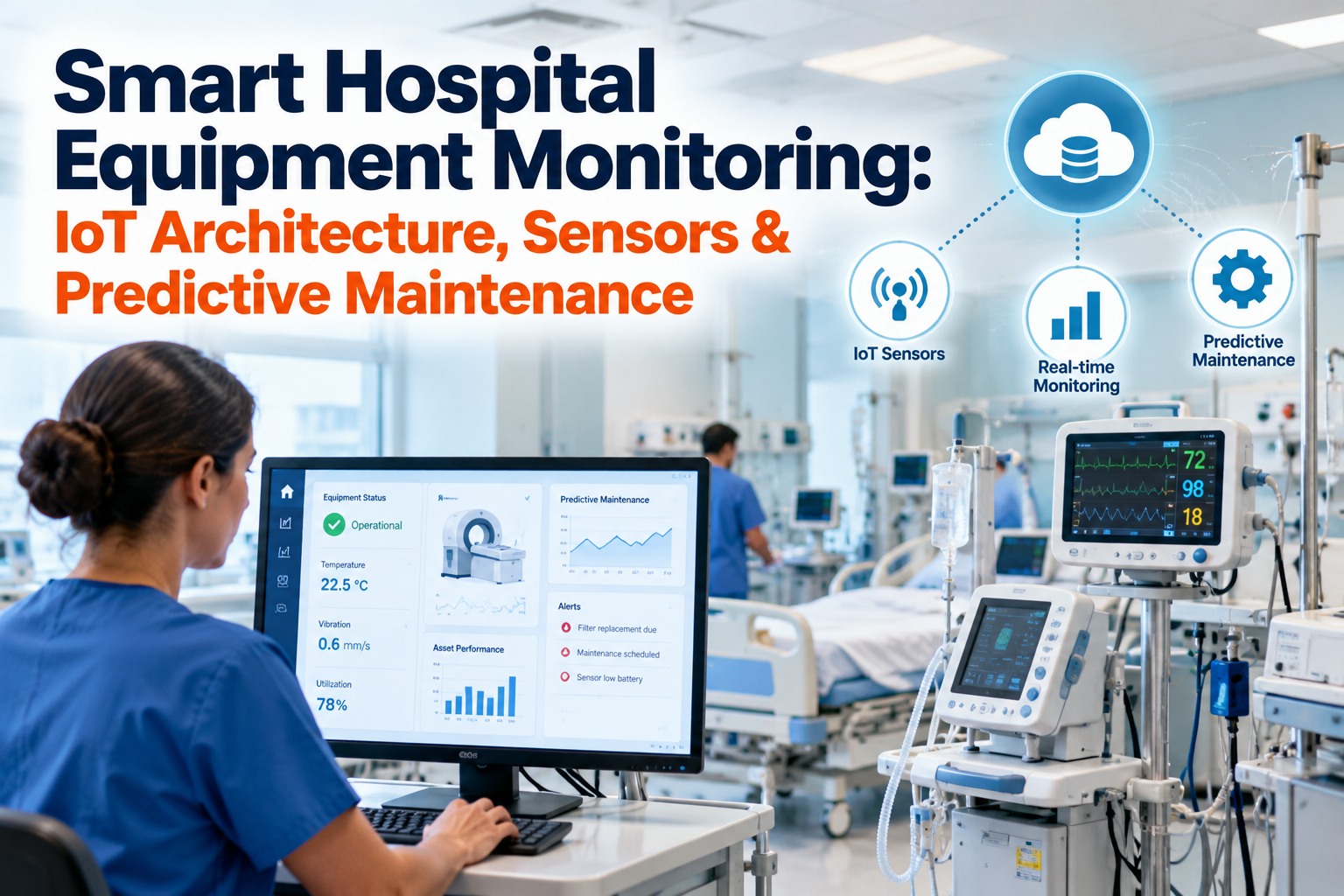
An infusion pump drifts, an MRI chiller runs warm, a sterilizer's pressure curve starts to sag. The sensors often exist already, but the readings sit on a dashboard nobody is assigned to watch, and the first anyone hears of the problem is a failure during a procedure. Smart equipment monitoring only helps when a signal becomes a task with an owner. OxMaint AI is the maintenance layer that receives IoT data, flags anomalies, and turns them into defects and work orders in one platform.
Smart Hospital Equipment Monitoring: IoT Architecture, Sensors & Predictive Maintenance
Sensors tell you something is changing. They don't send a technician. OxMaint AI connects the full path in one platform: sensor readings become alerts, alerts become defects, defects become work orders, and the results feed preventive and predictive maintenance schedules.
Better asset visibility, and faster action from alert to assigned work.
The Four-Layer Architecture, Top to Bottom
Every smart-hospital monitoring setup is the same stack, whatever the brand names. Know the layers and you can see where projects stall. Start free and connect the top layer first.
Which Sensor Watches Which Equipment
Pick the signal that fails first on each asset, not the one that is easiest to install. Book a demo to map sensors to your asset list.
A Reading Is Not a Repair: The Alert Ladder
The common failure of IoT projects is a flood of alerts nobody owns. A ladder fixes it: only a confirmed finding reaches a technician. Start free and set your alert rules.
Most Hospitals Already Have Sensors. Few Have the Next Step.
The gap is rarely hardware. It is the workflow that decides who looks, what happens next, and where the record goes. OxMaint AI gives each alert an owner, a work order and a history.
Climbing the Maintenance Maturity Steps
You don't jump to prediction. Each step adds data and removes guesswork. Book a demo to see where your hospital sits.
| Approach | Triggered by | Typical weakness |
|---|---|---|
| Reactive | A failure | Downtime hits care first |
| Preventive | The calendar | Serviced too early or too late |
| Condition-based | A live reading crossing a limit | Needs sensors and clear thresholds |
| Predictive | A trend or anomaly pattern | Needs history and tuned alerts |
Where to Start: High-Consequence Equipment
Begin where a failure hurts care and cost most, prove the workflow, then widen. Start free with your top ten assets.
Rollout in Four Steps
Frequently Asked Questions
Give Every Signal an Owner.
Monitoring only protects patients when someone acts on it. Connect your sensors to one platform where alerts become defects, defects become work orders, and the record is kept.