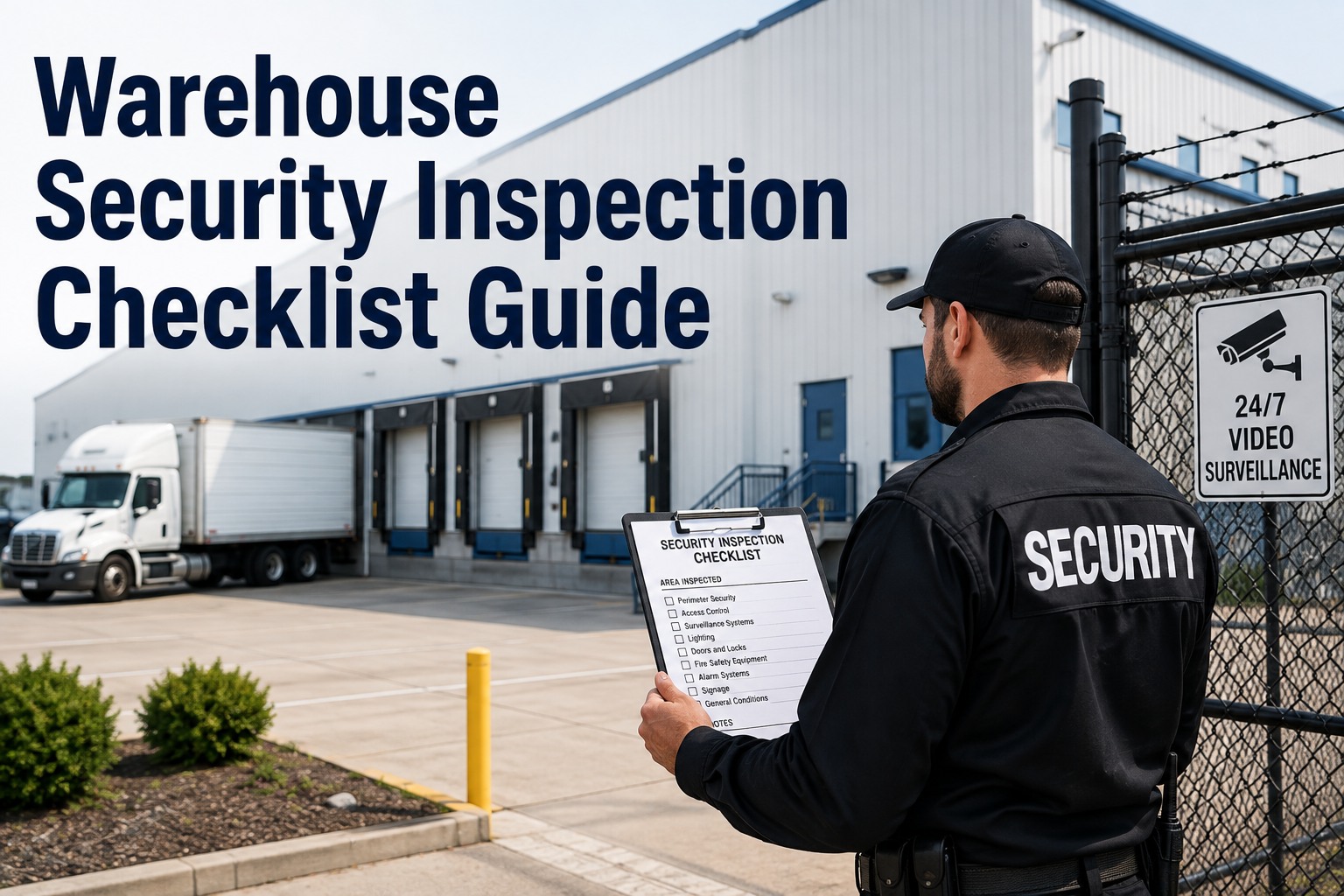
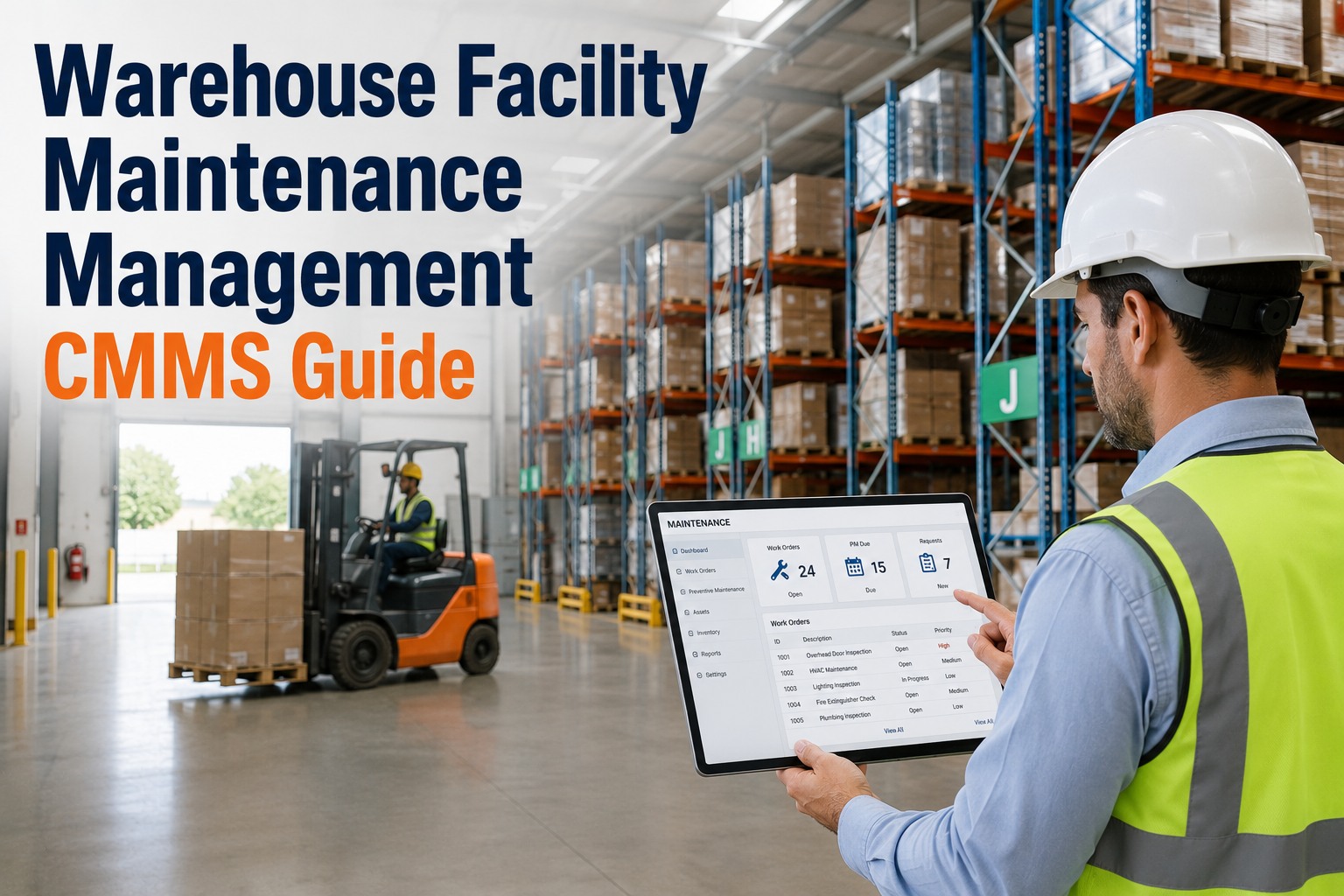
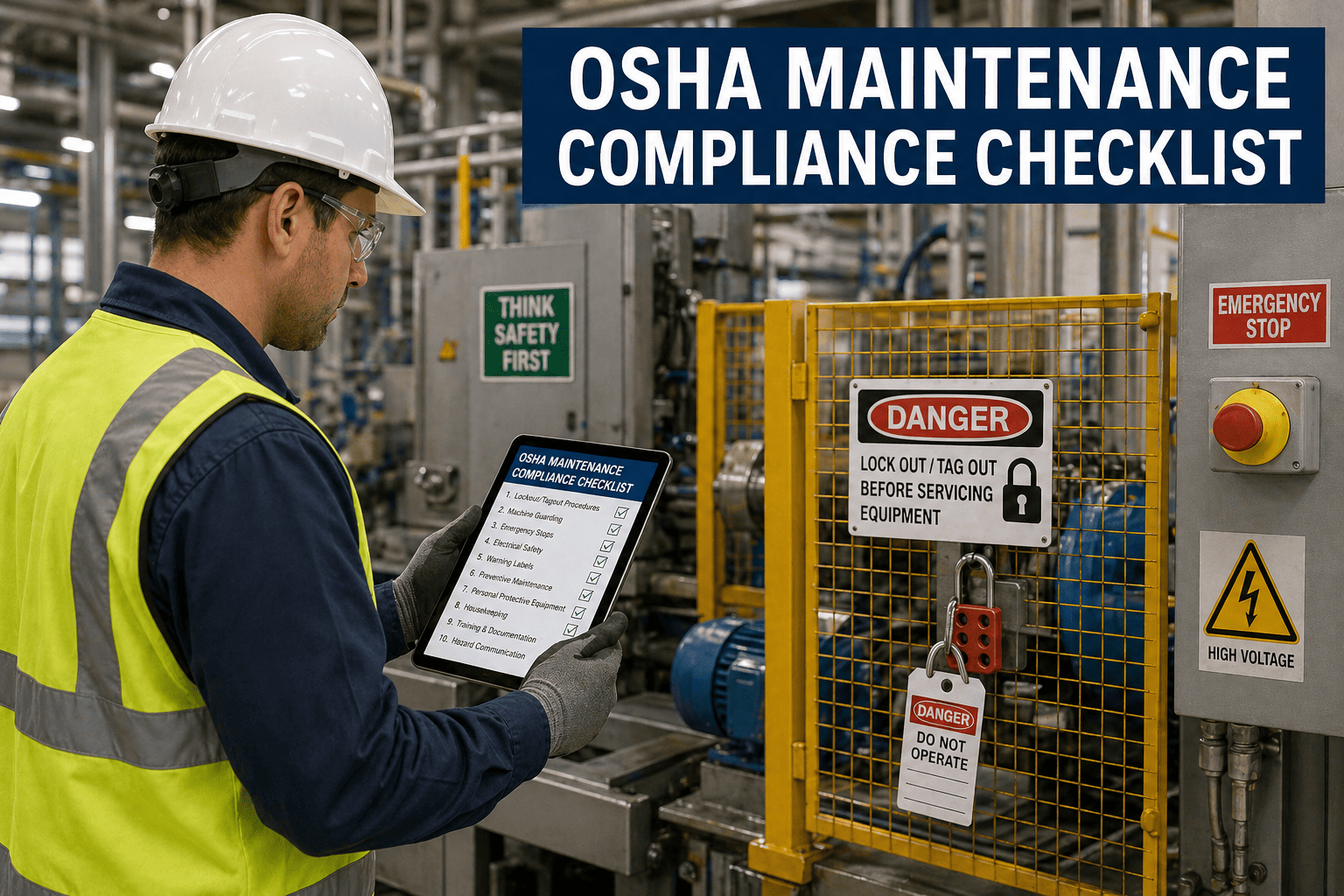
Warehouses and distribution centers now sit at the center of the cargo theft crisis — the single most targeted location type in North America, absorbing 41% of all in-transit loss events while goods sit at rest on the dock or in staging. In 2025, organized criminal groups drove cargo losses to a record $725 million across 2,646 confirmed thefts, with the average incident now costing $273,990 — a 36% jump in per-event value in a single year. Against that backdrop, the warehouse security inspection checklist is no longer a clipboard formality — it's the operational spine of your loss prevention, OSHA 1910 compliance, and insurance defensibility. This guide walks through the full inspection program: what to check, how often, what evidence to capture, and how to close corrective actions before your next audit or your next break-in. Book a free demo to see the digital inspection workflow running against a live warehouse floor plan.
$725M
Total cargo losses in 2025 across US & Canada
▲ 60% vs 2024
$273,990
Average value per theft event in 2025
▲ 36% year-over-year
41%
Of thefts occur while freight is at rest in warehouse storage
#1 targeted location type
2,646
Confirmed cargo theft incidents recorded in 2025
▲ 18% vs 2024
What a Warehouse Security Inspection Actually Covers
A defensible warehouse security inspection checklist crosses three regulatory and operational worlds at once — OSHA 29 CFR 1910 workplace safety, physical security controls that satisfy insurance underwriters and TAPA/C-TPAT auditors, and the internal shrinkage and access-control practices that protect margin. Most facilities try to run these as three separate programs. That's where gaps open up: the perimeter is inspected quarterly by security, the exit routes weekly by EHS, and the racking annually by operations — nobody sees the whole picture, and nobody has a single audit trail. The right approach folds all three into one recurring inspection cycle with clear ownership per zone.
The Six Security Zones Every Warehouse Inspection Must Cover
Rather than a flat list of items, structure the inspection around the physical zones a threat actor — external or internal — actually moves through. This zone-based structure mirrors how OSHA inspectors, insurance loss-control reps, and TAPA auditors walk a facility, and it maps cleanly onto the CMMS work-order templates your team will use in the field.
Warehouse Security Inspection · Zone Map
Zone 01
Perimeter & Fencing
Weekly + post-storm
Fence line intact — no cuts, gaps, undermining
Vehicle gates operational, auto-close verified
Perimeter lighting — no dead lamps >48 hrs
Vegetation trimmed 3 ft off fence line
CCTV coverage confirmed — no blind spots
Zone 02
Access Control Points
Daily shift check
Badge readers functional at every entry
Visitor log complete with photo ID capture
Turnstile/mantrap tailgating alarms active
Employee badge audit — no active terminated IDs
Emergency exits alarmed, not propped open
Zone 03
Loading Docks & Yard
Every shift change
Dock levellers & restraints functional (OSHA 1910.23)
Driver ID verified against BOL — no fictitious pickups
Yard trailer seals intact, seal numbers logged
Overhead doors close and lock properly
Guard shack camera feeds live and recording
Zone 04
Storage & Racking Areas
Weekly walk-through
Racking upright integrity — no bent columns
High-value cage locked, access logged
Aisle CCTV coverage verified with no obstruction
Fire lane clearance 3 ft (NFPA / OSHA 1910.176)
Sprinkler head clearance 18 in maintained
Zone 05
IT / Server / Utility
Monthly + on incident
Server room access restricted, badge-logged
WMS/TMS credentials audit — no orphan accounts
Network cabinet locks intact
Panel rooms LOTO-ready (OSHA 1910.147)
Fire suppression & UPS status green
Zone 06
Emergency Systems
Monthly test cycle
Exit routes clear, signage lit (OSHA 1910 Subpart E)
Fire extinguishers inspected & tagged
Alarm panel armed, communication tested
Assembly points marked and unobstructed
Duress buttons functional at reception & dock
Each zone has its own natural inspection frequency — collapsing them into a single monthly walk-through misses the fast-moving risks (badge readers, dock activity) and over-inspects the slower ones (server room access). Sign up free to load these six zone templates into your OxMaint workspace as ready-to-schedule inspection rounds.
OSHA 1910 Compliance Mapping — What the Checklist Must Prove
Every item on a warehouse security inspection checklist ties back to a specific OSHA general industry standard. When an inspector arrives — or when a workers' comp claim triggers a records request — you're proving compliance not with the walk itself, but with the documented, dated, signed evidence that the walk happened and that findings were closed. The mapping below is the minimum framework your checklist has to satisfy.
1910.22
Walking & Working Surfaces
Aisles clear, floors dry, spill response documented
1910.36
Exit Routes — Design
Two exits per work area, unobstructed, minimum width verified
1910.37
Exit Routes — Maintenance
Signage lit, emergency lighting operational, no propped doors
1910.147
Lockout / Tagout
Energy control procedures posted, LOTO locks inventoried
1910.157
Portable Fire Extinguishers
Monthly visual, annual maintenance tag, unobstructed access
1910.176
Materials Handling & Storage
Racking stability, load ratings posted, aisle clearance
1910.178
Powered Industrial Trucks
Pre-shift forklift inspection logged, operator certification current
1910.303
Electrical — General
Panels closed, no exposed conductors, GFCI where required
Turn Every Inspection Into Audit-Ready Evidence
See how OxMaint captures photo evidence, e-signatures, GPS timestamps, and auto-generates corrective work orders on every checklist failure — 30-minute walkthrough with your actual site layout.
The Inspection Workflow — From Finding to Closed Work Order
The biggest failure mode in warehouse security inspections isn't missed items — it's found items that never get fixed. Every warehouse has a filing cabinet, a shared drive, or a paper binder full of checklists with unchecked boxes and photos of problems that were "going to get to that." Auditors look for exactly this: a finding logged with no corresponding corrective action, or a corrective action with no verification. A defensible inspection program treats every failed item as a work order that has an owner, a due date, and a closure record with photo proof.
1
Capture
Technician walks the zone on mobile — pass/fail per item, photo evidence, GPS location auto-stamped
2
Trigger
Every failed item auto-generates a corrective work order linked to the asset and the source inspection
3
Assign
Priority routes it — security lead, EHS, or maintenance — with SLA clock and escalation rules
4
Verify
Assignee closes with completion photo and e-signature — supervisor countersigns high-priority items
5
Archive
Full inspection + evidence + corrective action chain locked into the asset history for audit retrieval
The workflow above is the difference between paperwork and defensibility. When your OSHA inspector, TAPA auditor, or insurance adjuster asks to see the last twelve months of dock-area security inspections, one filter returns every walk, every finding, every fix, every signature — indexed to the exact asset and date. Book a free demo to see this evidence chain in action.
Inspection Frequency Matrix — What to Check, How Often, Who Signs
OSHA doesn't prescribe a universal inspection cadence — it requires that hazards be identified and controlled, which in practice means a documented, risk-based frequency for every check. The matrix below reflects what actually works in warehouse operations: daily rhythm for high-risk moving parts, weekly for perimeter and racking, monthly for systems tests, quarterly for the deep audits underwriters look at.
Inspection Category
Frequency
Owner
Evidence Required
Forklift pre-shift check
Daily
Operator
Signed digital form, photos of defects
Access control & badge audit
Daily
Security lead
Log export, terminated-ID reconciliation
Dock & yard security walk
Every shift
Shift supervisor
Seal-number log, driver ID scan
Perimeter fence & lighting
Weekly
Facilities
Full walk with geo-tagged photos
Racking integrity survey
Weekly
Maintenance
Column-by-column pass/fail record
Fire extinguisher visual
Monthly
EHS
Tag update, pressure gauge photo
Alarm & CCTV system test
Monthly
Security lead
Test log, camera feed screenshots
Full facility security audit
Quarterly
Site manager
Executive-signed report, action plan
The Five Most Common Findings — And What Auditors Do With Them
Across mid-size distribution operations, the same five findings show up on inspection after inspection. Recognizing the pattern lets you build corrective muscle around the failures that will actually cost you — not the theoretical ones.
01
Propped or Alarmed Emergency Exit Doors
Universally cited by OSHA under 1910.37 and by insurance loss control as the single biggest access-control failure. Fixed with door-alarm integration and posted policy — but re-inspected every walk.
02
Terminated Employee Badges Still Active
HR-to-security handoff gap. Auditors treat active terminated credentials as a per-day compliance violation. Weekly reconciliation of HRIS termination list against the access control system closes it.
03
Bent Racking Uprights Without Load Rating Downgrade
Under OSHA 1910.176 the load rating must reflect the damaged state until the upright is repaired or replaced. Photo evidence + immediate work order + tag-out is the required response.
04
Unverified Driver Identity at Dock Pickup
The single most exploited vulnerability in strategic cargo theft — the fictitious pickup. Driver ID scanned and cross-checked against the BOL and carrier record before any trailer moves.
05
Perimeter Camera Blind Spots After Vegetation Growth
Cameras installed in winter, fully obscured by summer. Quarterly camera field-of-view verification with a screenshot into the inspection record is the fix — not the annual security audit that catches it once a year.
Expert Perspective · Where Warehouse Security Inspections Actually Work
The warehouses that get security inspections right have stopped treating the checklist as a compliance artifact and started treating it as an operating rhythm. A weekly walk that produces four findings and four closed work orders is worth more than a quarterly audit that produces a fifty-page report nobody reads. Cargo theft in 2025 is targeting freight at rest — that means the loading dock at 2 PM on a Tuesday is a higher-risk moment than most operators respect. If your inspection cadence doesn't put eyes on that dock every shift, with driver ID verification and seal-number capture, you're relying on luck. The teams that have moved off luck did it by digitizing — mobile capture, auto-generated work orders, photo evidence, e-signatures — so the walk becomes evidence the moment it happens, not paperwork somebody promises to type up later.
Cadence Over Depth
A frequent short walk beats a rare deep audit. Weekly perimeter, daily access, every-shift dock — that rhythm catches drift before it becomes a finding.
Evidence at Capture
Photo, GPS, timestamp, e-signature captured in the moment. The gap between "walk happened" and "walk documented" is where audits fail.
Closed-Loop Corrective Action
Every failed item becomes a work order with an owner and a due date. Open findings without work-order tracking are the #1 red flag on OSHA and insurance audits.
How OxMaint Operationalizes the Warehouse Security Inspection Program
OxMaint packages the entire inspection workflow into the maintenance system your team already uses — no separate security app, no parallel checklist tool, no data silo. Mandatory safety checks attach to high-risk work orders. Digital LOTO and permit workflows enforce sign-off before any energized work begins. Every inspection record links to the specific asset, retains photo evidence and e-signatures, and rolls up into an audit trail that satisfies OSHA, TAPA, and C-TPAT reviewers on demand — not after a two-week scramble to reconstruct records from binders.
Mobile Inspection Capture
Zone-based checklists on any smartphone, works offline in dead-zone areas, syncs when back in range
Auto Work Order Trigger
Every failed item becomes a corrective work order, assigned by priority, with SLA clock running
Photo & Signature Evidence
Every check timestamped, geo-tagged, photo-attached, e-signed — audit-ready the moment it's saved
Scheduled Recurrence
Daily, weekly, monthly, quarterly cadences per zone — auto-generated, auto-assigned, never missed
Your Next Inspection Should Be Audit-Ready by Default
Stop rebuilding evidence the week before every audit. See how OxMaint turns every warehouse security walk into a signed, timestamped, photo-backed compliance record — with corrective work orders that actually close.
Frequently Asked Questions
Is a warehouse security inspection checklist required by OSHA?
OSHA does not mandate a single prescribed checklist, but 29 CFR 1910 requires employers to identify and control workplace hazards — and documented, dated inspection records are the standard evidence used to prove that duty was met. In practice, a written checklist covering exit routes, materials handling, powered industrial trucks, electrical safety, and fire protection is the minimum an inspector expects to see. Facilities enrolled in TAPA, C-TPAT, or SOC 2 programs face additional documented inspection requirements on top of OSHA.
How often should a warehouse security inspection be conducted?
Frequency is risk-based, not calendar-based. High-turnover zones (loading docks, access control points, forklifts) need per-shift or daily checks. Perimeter, racking integrity, and lighting fit a weekly cadence. Fire extinguishers, alarm and CCTV system tests, and PPE audits are typically monthly. Full facility security audits — the kind an insurance underwriter or corporate EHS team reviews — run quarterly, with an annual deep audit. The matrix above reflects the pattern most mid-size operations converge on.
Sign up free to load pre-built frequency templates into your workspace.
What's the difference between a safety inspection and a security inspection in a warehouse?
Safety inspections focus on preventing injury to workers — fall protection, LOTO, PPE, machine guarding, exit routes. Security inspections focus on preventing loss and unauthorized access — perimeter integrity, access control, driver ID verification, seal management, CCTV coverage, high-value cage controls. In modern warehouse operations the two overlap significantly (a propped exit door is both an OSHA violation and a security breach) and are increasingly run as a single unified inspection program on a single CMMS platform.
Can a digital checklist replace paper-based warehouse security inspections?
Yes — and auditors now expect it. Paper checklists lose the two elements auditors value most: timestamp integrity and photo evidence. A digital mobile inspection captures GPS location, exact timestamp, and photo proof at the moment of the check, then auto-generates corrective work orders on any failed item. The audit trail becomes queryable — "show me every dock inspection failure in the last 12 months and its corrective action closure" — which is impossible with paper binders. Digital inspections also cut inspection time 30-50% because the technician doesn't re-key findings back at a desk.
Book a free demo to see the mobile inspection flow against a real warehouse layout.
How does OxMaint help with warehouse security inspection compliance?
OxMaint provides mobile inspection capture with offline sync, auto-generation of corrective work orders on every failed checklist item, photo and e-signature evidence attached to each record, scheduled recurrence per zone and per frequency, and a full audit trail linked to specific assets. Mandatory safety checks can be attached as gating steps on high-risk work orders, digital LOTO and permit workflows enforce sign-off before energized work, and executive dashboards surface open findings and SLA breaches in real time. The free forever plan is available to test the full workflow before rollout —
sign up free to start with your first zone.