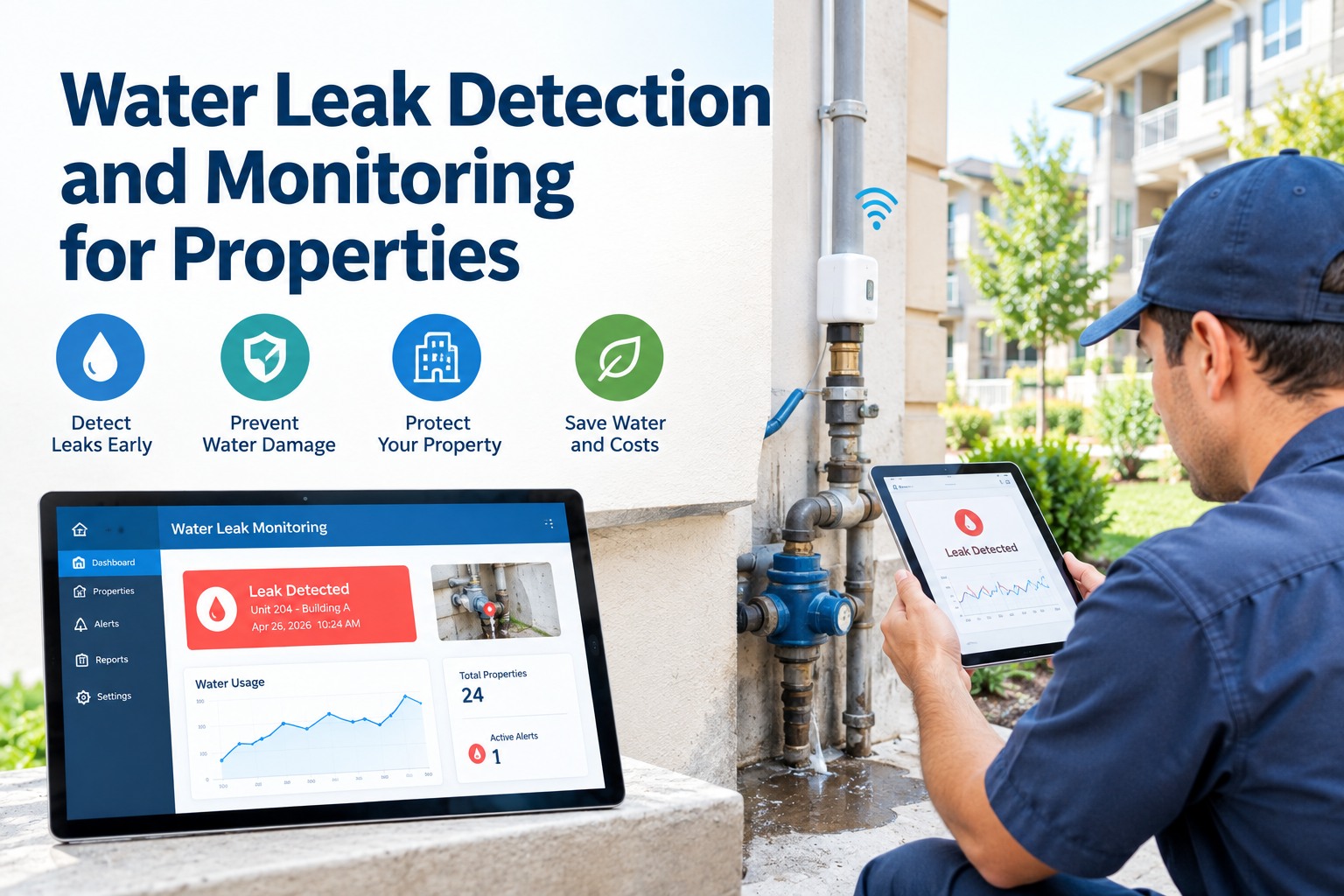
Water damage is the most frequent property loss there is — and the most preventable. Roughly a quarter of all property insurance claims come from water damage and freezing, and in multifamily buildings a single supply-line failure on an upper floor can cascade through four to ten units below before anyone notices. The reason it keeps happening isn't bad luck; it's that most leaks are silent. A running toilet, a weeping valve, a hairline crack in a supply line — none of them announce themselves until the ceiling stains or the water bill spikes. Leak detection flips that: it turns a six-figure claim into a mop-up. This guide covers water leak detection and monitoring for properties — the technology tiers, how the cost math works out so lopsidedly in your favor, response protocols, and the tracking that keeps a detection program running. Start free on OxMaint or book a demo.
Water Leak Detection & Monitoring for Properties
The cheapest insurance you'll ever buy is the leak you catch on day one instead of day thirty.
~25%
of all property insurance claims come from water damage and freezing
1 in 67
insured properties files a water or freezing claim every single year
1 in 10
toilets is leaking right now, per the EPA — and most of those leaks are invisible
2 months
payback periods seen at real properties — among the fastest in risk management
Why a Silent Leak Is So Expensive
The cost of a leak isn't fixed — it's a function of time. The same pinhole failure that costs almost nothing to fix on the first day becomes a structural and mold problem within a week, and a multi-unit insurance claim within a month. Every hour water runs undetected, it moves from the pipe into the subfloor, the drywall, the unit below, and eventually the claims file. Detection's entire value is compressing that timeline — turning days of hidden damage into a minutes-old alert.
Minute 1
A wet floor
Caught here, it's a towel and a repair call. A sensor at the source alerts before water leaves the room. This is the entire goal.
Hour 12
Soaked subfloor
Water has wicked into flooring and drywall. Now it's a drying-and-replace job — still contained, but no longer trivial.
Day 3
Mold begins
Mold can start within 24–48 hours. Remediation, displaced tenants, and health exposure enter the picture.
Day 30
Cascade claim
Upper-floor failures reach 4–10 units below. A five-figure claim, a deductible, and a premium that climbs for years.
The Detection Technology Ladder
Leak detection isn't one product — it's a tiered stack, from a passive alarm at a single spot up to a whole-building system that shuts the water off on its own. Each tier catches more, earlier, with less human dependence. Most properties mix tiers: cheap sensors everywhere, flow-based shutoff on the main.
Tier 1
Point Leak Sensors
A small sensor placed where water shouldn't be — under a sink, by the water heater, behind a toilet. Alerts when it gets wet. Cheap, minutes to install, and the highest-ROI first move. Toilet sensors alone pay back fast, since toilets are the leading hidden-loss source.
Tier 2
Flow & Usage Monitoring
Watches the whole supply line for abnormal flow — a gradually rising baseline signaling a toilet flapper, unusual overnight usage flagging an irrigation rupture. Catches the invisible leaks a point sensor never sits near, and feeds per-unit usage data.
Tier 3
Automatic Shutoff Valves
The game-changer. On detecting anomalous flow, the system closes the main valve automatically — within seconds — while you're still reading the alert. This is what turns a burst supply line over a holiday weekend into nothing at all.
Tier 4
IoT Platform & Analytics
Cloud dashboard tying every sensor and valve across the portfolio together — remote shutoff, per-unit submetering, trend analytics, and predictive warnings like pressure fluctuations that precede a freeze. The layer that makes detection a program, not a pile of gadgets.
The two-tier rule of thumb: sensors tell you where water is; flow-based shutoffs act on the whole line while you respond. A basic point sensor notifies. A shutoff valve contains. Most serious programs run both.
Put Every Sensor and Valve on One Record — Free Forever
Sign up on OxMaint's free forever plan and track every leak sensor, flow monitor, and shutoff valve as an asset — battery health, test dates, alert history, and the work order every alert triggers, all on the property record. Detection hardware you actually maintain instead of forget. No card, no time limit.
The ROI Math That Makes This an Easy Yes
Few property investments have economics this lopsided. Set the cost of detection against the cost of a single avoided claim and the decision makes itself — before you even count the insurance premium credits carriers now offer for verified installs.
What It Costs
$100–250
a few point sensors for a unit
$500–2,000
per unit for flow monitoring + shutoff
vs
What It Avoids
$12.5K+
average water claim — higher in multifamily
5–15%
premium credit for a verified shutoff install
And the claim you avoid isn't just the deductible — a water claim follows you into renewals, raising premiums for years. Increasingly, carriers now require automatic shutoff on larger buildings just to write or renew the policy at all.
Detection Is Only Half — Response Is the Other Half
An alert nobody acts on is just a louder version of not knowing. The value of catching a leak in minute one evaporates if the alert sits unread for a day. A detection program needs a response protocol as disciplined as the hardware — a defined path from alarm to resolution.
1
Alert Reaches a Person
The alarm routes to an on-call responder instantly — not to an inbox checked twice a day. Escalation if the first contact doesn't acknowledge.
2
Contain the Flow
Shut off automatically where a valve exists, or dispatch to close the supply manually. Every minute of flow is more damage — containment comes first.
3
Dispatch & Document
A work order opens automatically — vendor assigned, tenant notified, photos and cause captured for the record and any insurance need.
4
Verify & Close
Repair confirmed, sensor reset and re-tested, the event logged. The pattern feeds back — a unit that leaks twice is a unit to investigate.
How OxMaint Runs the Leak Detection Program
Sensors and valves are only worth what your response makes them worth. In OxMaint, detection hardware is tracked like any other asset and every alert becomes a work order — so a leak program is a managed loop from device health to closed repair, not a box of gadgets nobody tests.
Register
Sensors as Assets
Every sensor, flow monitor, and shutoff valve logged against its unit and property — model, location, install date, battery, and warranty.
Maintain
Battery & Test PMs
Recurring checks so a dead-battery sensor never fails silent — the device meant to catch the leak is itself kept alive on a schedule.
Trigger
Alert to Work Order
A detected leak opens a numbered work order instantly — responder assigned, containment step first, nothing waiting in an inbox.
Dispatch
Vendor & Tenant Loop
The right vendor dispatched and the tenant notified from the same record — status visible to everyone without a status call.
Document
Evidence for Claims
Photos, cause, timestamps, and the full response captured — the record that speeds an insurance claim and proves due diligence.
Trend
Repeat-Leak Patterns
Leak history by unit and asset surfaces the recurring offenders — the failing water heater or the unit with chronic plumbing, flagged for real fix.
Turn Your Next Six-Figure Claim Into a Mop-Up
Free forever plan — no card, no time limit. Track every leak sensor and shutoff valve as an asset, keep them tested, and turn every alert into an owned, documented work order. Or book 30 minutes and we'll map a leak-detection program across your portfolio.
Frequently Asked Questions
What's the difference between a leak sensor and an automatic shutoff?
A point sensor alerts you to water where it physically sits — under a sink or by a heater. An automatic shutoff watches the whole supply line for abnormal flow and closes the main valve on its own, within seconds, before you've even responded. Sensors notify; shutoffs contain. Serious programs use both — cheap sensors widely, a flow-based shutoff on the main.
Why is water damage such a big risk in multifamily properties?
Shared plumbing and stacked units. A single supply-line failure on an upper floor cascades through four to ten units below before anyone notices, turning one leak into a multi-unit claim. That cascade effect is why multifamily water claims run higher than single-family, and why carriers increasingly require shutoff systems on larger buildings.
How fast does leak detection pay for itself?
Fast — payback periods as short as two months have been documented at real properties, especially with toilet sensors, since the EPA estimates one in ten toilets is leaking. A few point sensors cost $100–250; a claim averages over $12,500. Add a 5–15% insurance premium credit for a verified shutoff install and the math gets even better.
Do insurance companies actually reward leak detection?
Yes, in three ways: premium credits (commonly 5–15%), discounted or subsidized devices through carrier partnerships, and eligibility itself — a growing list of carriers now require an automatic shutoff valve before they'll write or renew larger buildings at all. Water damage is the most frequent non-catastrophe loss, so insurers are motivated to prevent it.
What does a CMMS add beyond the detection hardware itself?
The program around the gadgets. It tracks each sensor and valve as an asset with battery and test schedules so none fail silently, turns every alert into an owned work order with vendor dispatch, captures the photo-and-cause evidence claims need, and surfaces repeat-leak patterns by unit. Detection hardware without that loop is a box of devices nobody maintains.
Start free or
book a demo.