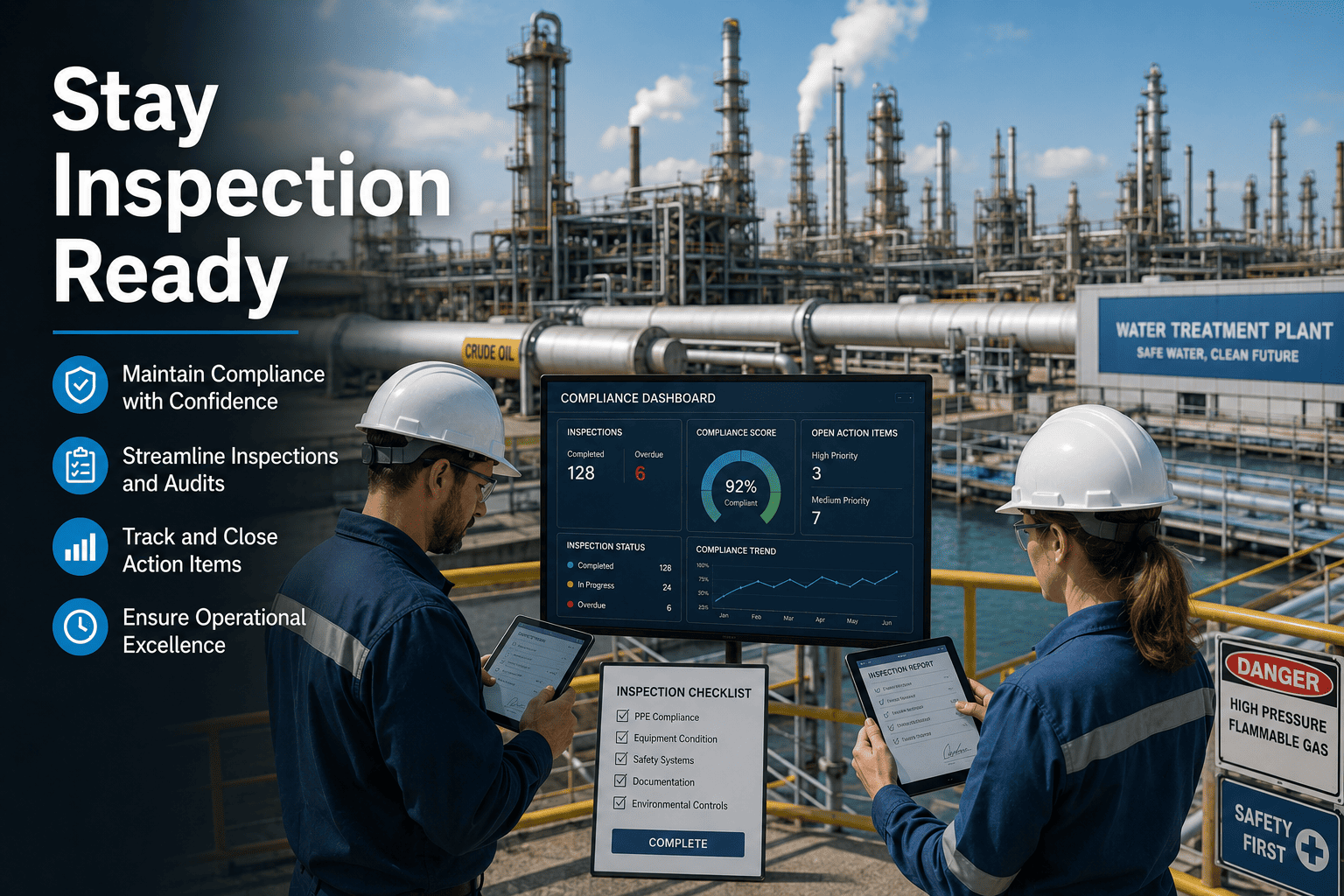
A water utility does not fail at the tap. It fails at a lift-station float switch that stuck two months ago and nobody logged. At a chlorine dosing pump drifting 4% off setpoint — one percent past the SDWA treatment-technique threshold. At a distribution valve that has not been exercised in seven years and will not close when a main breaks under a school. US water systems experience approximately 240,000 main breaks annually with repair costs of $3,000 to $5,000 per incident before property damage, water loss, or emergency overtime. Every one of those failures traces back to a maintenance point that was on somebody's checklist — and skipped, or logged, or lost between shifts. Oxmaint is the maintenance management software municipal water and wastewater utilities use to turn every pump PM, every valve exercise, every dosing calibration into a scheduled digital work order with photo evidence and a SDWA/NPDES-ready audit trail one filter away. Start free and digitize your utility maintenance programme today, or book a demo mapped to your intake, treatment train, dosing systems, and distribution assets.
Water & Wastewater · SDWA · CWA · AWWA-Aligned
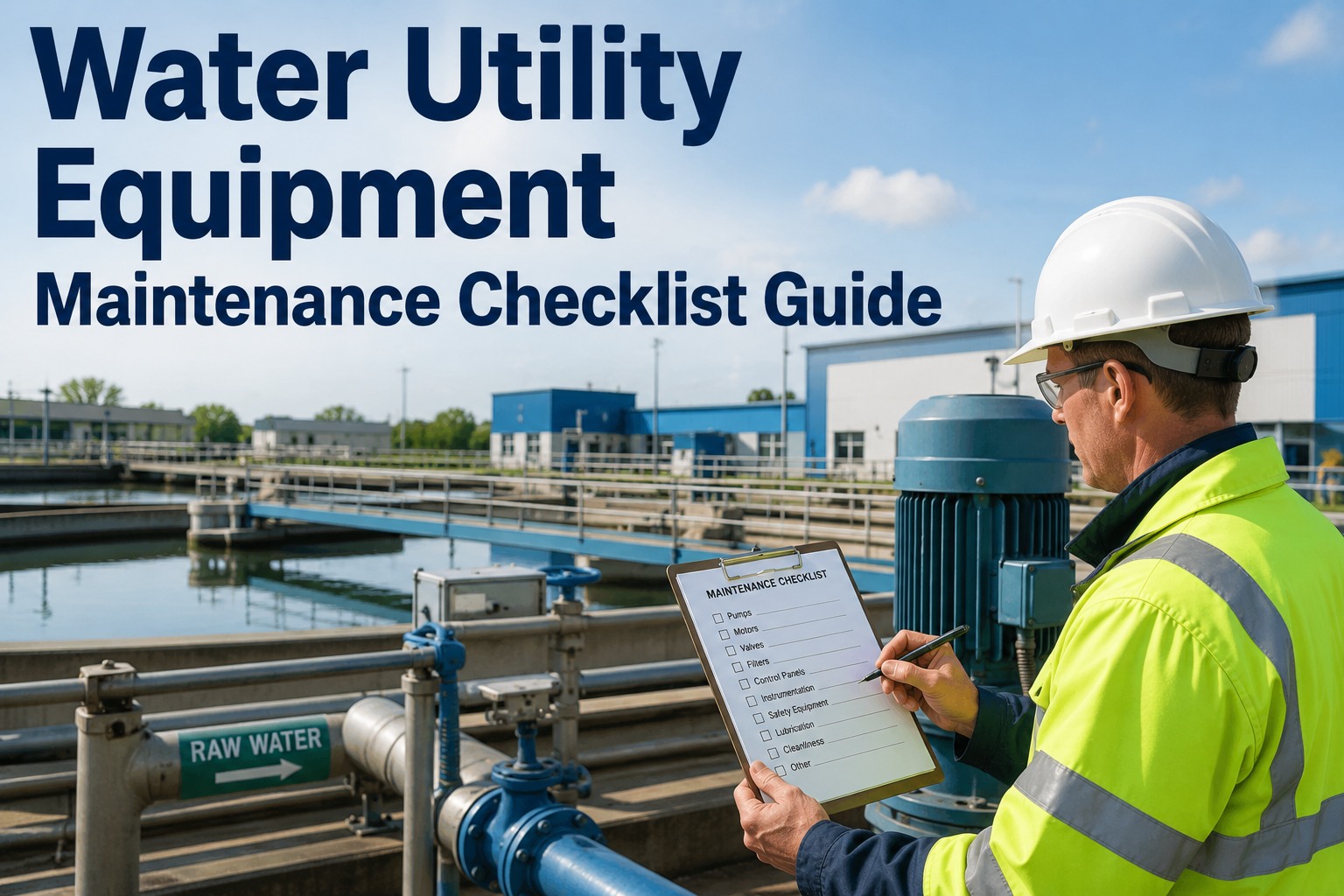
Water Utility Equipment Maintenance Checklist Guide
Every asset class, every calibration deadline, every regulatory evidence point — organized against Safe Drinking Water Act, Clean Water Act, NPDES, and AWWA standards for the pumps, valves, filters, chemical feeds, tanks, UV systems and generators that keep municipal drinking water and wastewater within compliance.
-
240K
US water main breaks per year — many traceable to unexercised valves
-
3%
dosing pump deviation from setpoint that constitutes an SDWA treatment-technique violation
-
91%
PM compliance achieved by wastewater utilities running Oxmaint
-
68%
reduction in emergency work orders after moving off paper PM
The Treatment Train
From Raw Intake to Final Discharge — Every Maintenance Touchpoint
A single missed preventive task anywhere in the treatment train can trigger permit violations, public health risk, and catastrophic equipment failure. This flow anchors the entire checklist library — every stage, every asset class that lives inside it, and the primary maintenance discipline the CMMS enforces at that point.
Raw Intake & Screening
Bar screens, grit removal, intake pumps · debris load PM, motor lubrication
Coagulation & Flocculation
Rapid mix, mechanical flocculators, alum feed · agitator gearbox, dosing calibration
Sedimentation / Clarification
Clarifier drives, sludge collectors, weirs · drive-mechanism PM, weir level trueness
Filtration
Sand, anthracite, GAC, ultrafiltration · backwash cycle, media replacement, ΔP trending
Disinfection
Chlorination, UV, ozone · dose calibration, UV lamp replacement, residual sampling
Storage & Distribution
Ground tanks, elevated tanks, valves, hydrants · AWWA interior inspection, valve exercise
Asset-Class Inventory
Seven Asset Classes That Drive the Entire PM Programme
Every municipal water and wastewater utility maintenance programme reduces to seven asset classes. Load these into Oxmaint once and each row becomes an auto-generated PM cadence firing at AWWA, OSHA, and OEM intervals — with a compliance backstop against SDWA, CWA, and NPDES.
| Asset Class | Dominant Failure Mode | Standard PM Cadence | Regulatory Anchor |
|---|---|---|---|
| Pumps (intake, transfer, high-service) | Bearing failure, seal leak, impeller wear | Lubrication monthly · vibration quarterly · rebuild per OEM hrs | OEM · AWWA M27 |
| Lift Station Pumps & Wet Well | Float switch fail, clogging, seal fail | Weekly walk · annual full inspection · float test biannual | OSHA 1910.146 · NPDES |
| Distribution & Isolation Valves | Seizure from corrosion, sediment buildup | Annual exercise all valves · semi-annual on critical mains | AWWA M44 |
| Filters (sand, anthracite, GAC, UF) | Media fouling, differential pressure rise | ΔP trending continuous · backwash per set point · media 5–10 yr | SDWA SWTR |
| Chemical Dosing Systems | Calibration drift, feed line clog | Weekly calibration check · monthly full calibration | SDWA 40 CFR 141 |
| Storage Tanks (ground & elevated) | Coating loss, sediment, structural weld | External annual · interior AWWA D100/D101 every 3–5 yr | AWWA D100 · D101 |
| Backup Generators & ATS | Battery fail, fuel degradation, ATS stick | Monthly load test · quarterly full transfer · annual fuel sample | NFPA 110 |
Where SDWA Violations Actually Come From
The 3% Rule — Chemical Dosing Deviation That Triggers Enforcement
Dosing pump calibration deviations of more than 3% from setpoint constitute a treatment-technique violation under SDWA requirements. That is the single sharpest cliff in water utility compliance — and the most common cause of enforcement action against small and mid-sized utilities. Oxmaint schedules weekly calibration checks and monthly full calibrations against every dosing pump, and any check outside 3% auto-escalates to a corrective work order before the drift becomes a violation.
Setpoint drift on chlorination, coagulation, pH adjustment, fluoridation, and corrosion inhibitor feeds — measured on every calibration check and logged as a timestamped record acceptable to state primacy agencies and EPA Region auditors.
-
Chlorination
Residual monitored per SDWA sample plan; feed pump calibration weekly
-
Coagulation (alum, ferric)
Jar-test target vs actual dose logged per batch
-
pH Adjustment
Setpoint drift within ±3%; probe calibration weekly
-
Fluoridation
Feed rate against distribution demand, daily verification
-
Corrosion Inhibitor
Ortho-phosphate residual verified per Lead & Copper Rule
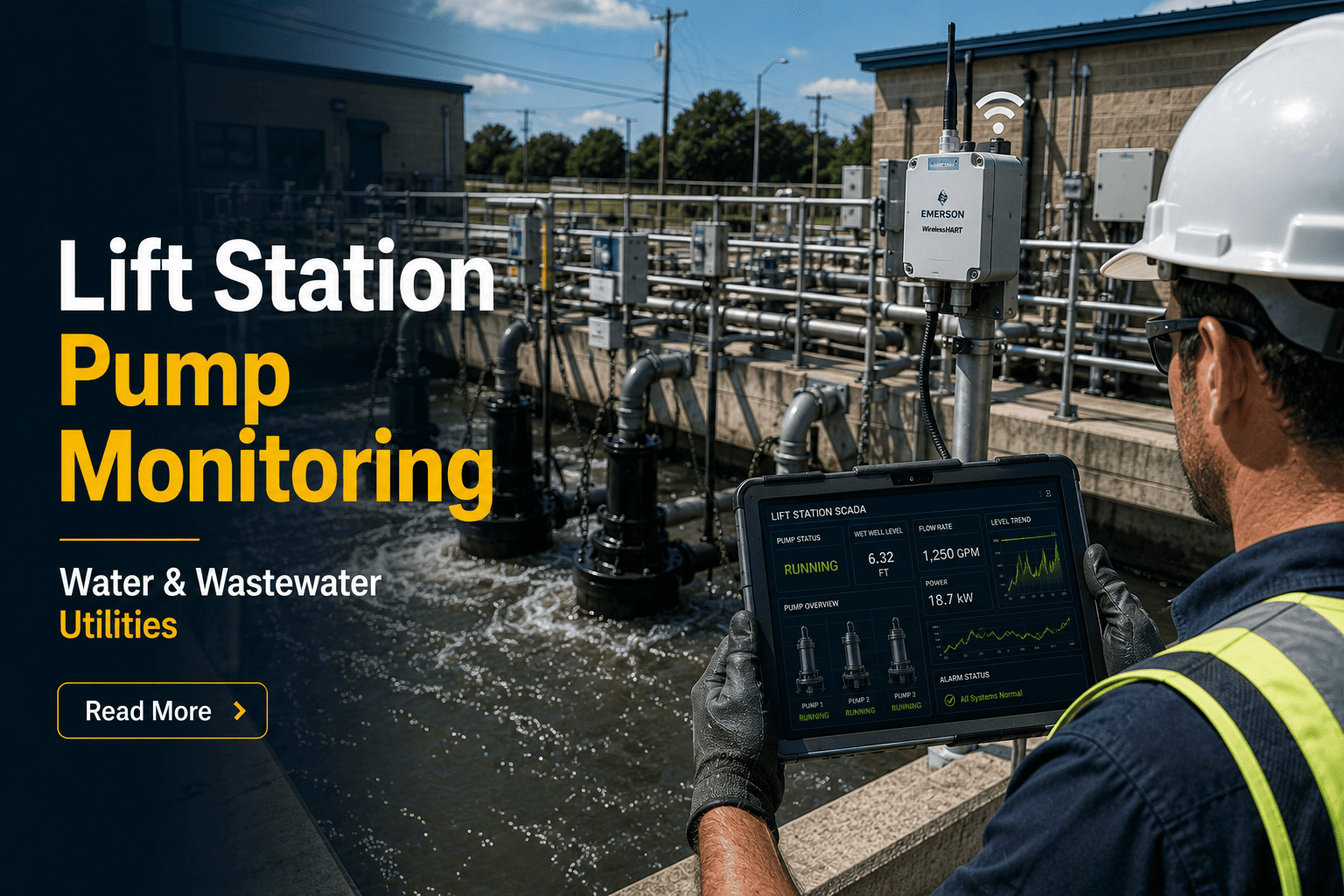
Lift Station & Wet Well
The Highest-Risk Confined Space Any Utility Owns
Lift-station wet wells are the most common site of H₂S exposure and confined-space incidents in a municipal utility. Every entry requires a documented permit, calibrated atmospheric monitor, and rescue plan per OSHA 1910.146. This is the sample checklist Oxmaint deploys against every lift station in the collection system.
Pre-Entry (Above Grade)
- Confined space entry permit issued and authorised
- H₂S / O₂ / LEL monitor calibrated within last 30 days
- Rescue team on site with retrieval tripod and harness
- Ventilation running, verified before entry
- LOTO applied on pump 1 and pump 2 electrical, valves isolated
Pump & Mechanical
- Volute clear of rag build-up, impeller free from wear pattern
- Mechanical seal integrity, no visible weep at gland
- Discharge check valve free-swinging, no chatter
- Guide rails plumb, base elbow gasket intact
- Motor cable jacket undamaged from cable-hanger to junction box
Controls & SCADA
- Float switches — start / stop / high-level alarm functional
- Redundant level sensor (bubbler or radar) reads within 5%
- SCADA alarm test — high-level pushes to central operator
- Runtime hours and cycle counts logged to CMMS
- Backup power auto-transfer test on schedule
The Cost of Unexercised Valves
A Valve That Will Not Close Turns One Break Into a Neighborhood
AWWA recommends exercising every distribution valve annually at minimum, with critical valves on transmission mains and pump station isolation exercised semi-annually. Valves that have not been operated in years become inoperable due to corrosion and sediment — extending emergency isolation areas during main breaks from one block to twenty. Oxmaint schedules every valve as its own asset with an exercise cadence, and records turns to close, direction, and resistance every time.
Criticality-Based Cadence
Not Every Asset Runs on the Same Frequency
Uniform monthly PM either wastes time on low-consequence assets or misses risk on high-consequence ones. A criticality-scored programme runs the frequency that fits the failure consequence. Oxmaint tags every asset with a criticality class and drives PM cadence off that class automatically.
-
Class A · Critical
Loss triggers a compliance violation or public-health event within 4 hours.
Assets: chlorination pumps, high-service pumps, primary clarifier drives
Cadence: weekly operational check, monthly full PM, condition monitoring continuous
-
Class B · Important
Redundancy exists but failure creates operational strain within 24 hours.
Assets: lift-station pumps (of a duplex pair), filter backwash pumps, blowers
Cadence: monthly operational check, quarterly full PM, annual overhaul review
-
Class C · Standard
Failure is inconvenient but does not disrupt service or compliance.
Assets: non-critical valves, secondary lighting, admin HVAC
Cadence: quarterly walk, annual PM, run-to-failure with review acceptable
Audit Evidence That Holds Up
SDWA, NPDES and State Primacy Documentation
EPA Region auditors and state primacy agencies ask for the same evidence set every time — calibration logs, PM completion, corrective actions, and confined-space records. Oxmaint assembles this in real time so an audit is a filter, not a scramble. Wastewater utilities running Oxmaint produce NPDES audit documentation in under 4 hours.
Chemical Feed Calibration Log
Every calibration event with technician identity, setpoint, actual reading, deviation percentage, and corrective action if outside tolerance. Filterable by dose pump and date range.
Filter Backwash & ΔP Trending
Continuous ΔP readings from SCADA integration, backwash cycle records against setpoint, media replacement history per filter bed asset.
Effluent Compliance PM Chain
Aeration blower PM, clarifier drive lubrication, RAS/WAS pump checks — the maintenance chain behind effluent compliance, produced as one report against the discharge permit.
Confined Space Permit Trail
Every wet well entry with permit, atmospheric monitor calibration, entrant log, and rescue plan — the exact chain OSHA inspectors ask for after any confined-space incident.
Valve Exercise Record
Per-valve asset record with exercise date, turns to close, direction, resistance noted, and next-due date. Missed valves surface on the criticality dashboard.
Generator ITM Log
Monthly load test, quarterly full transfer, annual fuel sample results — every event stamped and signed per NFPA 110 emergency-power documentation requirements.
Built for Municipal Utilities
How Oxmaint Runs the Utility Maintenance Programme
-
Auto PM
AWWA, OSHA and OEM Intervals Fire Automatically
Every asset carries its own PM cadence. Work orders escalate at 30, 7, and 1 day before deadline — no coordinator issues them by hand, and none quietly age out unsigned.
-
SCADA Integration
Alarms Become Documented Work Orders
SCADA alarm thresholds — low chlorine residual, high filter ΔP, bearing temperature — auto-create Oxmaint work orders with equipment ID, alarm type, and timestamp pre-populated.
-
Dosing Guardrail
3% Deviation Auto-Escalates Before Violation
Weekly calibration checks record deviation percentage. Anything above 1.5% triggers a watch flag; above 3% escalates as a compliance-critical corrective action to the ORC.
-
Confined Space
Wet Well Permits With Rescue Plan on File
Every lift-station entry generates a digital permit with atmospheric monitor calibration verified, entrant log signed, and rescue team confirmed — the OSHA 1910.146 chain complete before entry.
-
Valve Program
Annual Exercise for Every Valve in the System
Per-valve asset records with turns to close, direction, and resistance logged. Overdue valves surface on the criticality dashboard so no isolation point stays untouched for years.
-
Audit Export
NPDES Documentation in Under 4 Hours
SDWA, CWA, and NPDES evidence packages filter by permit, asset, or date range and export to the format state primacy agencies and EPA Region auditors request — no manual log compilation.
Measured Outcomes
What Municipal Utilities Gain When Oxmaint Runs Maintenance
-
91%
PM Compliance Rate
Wastewater utilities on Oxmaint hit 91% PM compliance — the level state primacy agencies expect and reactive-culture plants rarely reach.
-
68%
Fewer Emergency Work Orders
Emergency call-outs drop by more than two-thirds when scheduled PM catches drift before it becomes failure — freeing crews for planned work.
-
< 4 hrs
NPDES Audit Documentation
Full NPDES audit packages produced in under 4 hours — filterable by outfall, asset class, or date range instead of weeks of log compilation.
-
14 days
Live PM Schedules
Municipal utilities go from asset registry to full PM schedules running in 14 days — no hardware replacement, no consultant fees.
Frequently Asked
Water Utility Maintenance Questions
How often should distribution valves be exercised under AWWA guidance?
AWWA recommends every distribution valve exercised annually at minimum, with critical valves on transmission mains and pump-station isolation exercised semi-annually. Record turns to close, direction, and resistance every time — that record is what defends the isolation strategy during a main break.
What dosing calibration deviation triggers an SDWA treatment-technique violation?
Dosing pump calibration deviations of more than 3% from setpoint constitute a treatment-technique violation under SDWA requirements. Oxmaint's weekly calibration workflow records deviation on every check and auto-escalates any reading above 1.5% as a watch item and above 3% as a compliance-critical corrective action. Start free and put the 3% guardrail on every dosing pump today.
Can Oxmaint integrate with an existing SCADA system?
Yes. SCADA alarm conditions above configurable thresholds auto-create Oxmaint work orders with equipment ID, alarm type, and timestamp pre-populated. Operators work from the mobile app with an enforced documentation trail, rather than acknowledging alarms in the HMI with no follow-through. Book a demo to see SCADA-to-work-order flow on your control system.
How is storage tank internal inspection cadence tracked?
Each tank is an asset with an AWWA D100/D101 interior inspection cadence of every 3 to 5 years. Oxmaint auto-schedules the inspection by an AWWA-certified inspector, generates the confined-space permit workflow, and files coating condition, weld integrity, and sediment accumulation photos against the tank record for the next audit.
Is there a free plan for smaller municipal utilities?
Yes. Oxmaint offers a free forever plan — enough to load a core asset registry, schedule pump and dosing PM, and store photo evidence per asset. Scale into the full platform with SCADA integration and multi-site rollout when compliance scope grows. Sign up for the free plan and stand up your first PM schedule today.
Schedule · Calibrate · Evidence
Every SDWA Violation Was a Calibration Check That Never Got Done
The checklist above is the framework. Oxmaint is the maintenance management software that runs it — every pump PM, every valve exercise, every dosing calibration, every confined-space permit — as a scheduled, mobile-first, evidence-backed programme. Walk into your next EPA Region or state primacy audit with the calibration logs current, the PM compliance above 90%, and the confined-space chain complete.