How Oil and Gas and Water Treatment Teams Stay Inspection Ready

Connect with Industry Experts, Share Solutions, and Grow Together!

Join Discussion Forum
oil-gas-water-treatment-inspection-compliance

An oil and gas pipeline, a refinery process unit, or a municipal water treatment facility runs on inspection cadence — and the inspection cadence runs on documentation. In the United States, API 510 governs pressure vessels, API 570 piping, API 653 atmospheric tanks, and the EPA imposes Safe Drinking Water Act monitoring on every public water system. In Europe, the PED (Pressure Equipment Directive 2014/68/EU), ATEX 2014/34/EU, and Seveso III align with EN 13445 vessel standards and the EU Drinking Water Directive 2020/2184. In the Middle East and GCC, ADNOC HSE codes, Saudi Aramco SAEP standards, OSHAD-SF in the UAE, and the Gulf Cooperation Council Standardization Organization (GSO) water-quality frameworks impose parallel obligations on upstream, midstream, and water-utility operators. Each inspection produces evidence — corrosion measurements, thickness readings, hydrostatic test results, water quality samples — and every piece has to be retained, traceable, and audit-ready under whichever framework applies. The plants that get this right run inspection programs that look like quality systems. The plants that don't carry compliance risk in three-ring binders and discover the gaps the day the regulator arrives. Operations leaders across North America, Europe, and the Gulf start a free trial or request a demo to see how Oxmaint turns inspection cadence into a structured, evidence-backed workflow.

Oil & Gas · Water Treatment · Inspection Compliance

Turn Regulatory Inspection Cycles Into Defensible, Evidence-Backed Workflows

From US API codes to EU PED and Middle East ADNOC and Saudi Aramco standards — every regional inspection framework converges on one requirement: every inspection, every measurement, every sign-off must be retrievable in under a minute and defensible under audit. Oxmaint anchors the entire evidence trail to the asset record, in whichever jurisdiction your facility operates.

  • US API 510 · 570 · 653 · 580 RBI · EPA SDWA · NPDES
  • EU PED 2014/68/EU · EN 13445 · ATEX · Drinking Water Directive
  • ME ADNOC HSE · Saudi Aramco SAEP · OSHAD-SF · GSO water

RECORD · INS-2026-04217
Inspection Evidence Log
CERTIFIED
Asset
V-1042 · Crude Distillation Reflux Drum
Code
API 510 / PED External + Internal
Region
EU · Rotterdam Site 04
Inspector
J. Marrero · API / EN 473 Certified
Evidence
UT 42pts CML Map Photos 18
Next Due
12 Nov 2030 · RBI interval
Signed · Audit-Ready
Retention: Asset-life + 7y
A
$5,632
maximum US OSHA per-instance penalty for inspection documentation gaps (2026)
B
68%
of API, PED, and ADNOC inspection audit findings trace to unverifiable evidence trails
C
3 to 5
business days of audit prep on paper-based inspection programs, per cycle
D
€1.1M
average regulatory penalty exposure per uncorrected EU PED or EPA monitoring lapse

What Inspection Compliance Actually Requires

Inspection compliance in oil and gas and water treatment is the operational discipline of completing every regulator-mandated inspection on schedule, capturing every required measurement with defensible chain of custody, retaining the evidence for the prescribed period, and being able to produce it in audit format on demand. The methodology spans multiple frameworks depending on jurisdiction. In the US, API 510 for pressure vessels (external at half remaining life, internal at the same), API 570 for piping (with risk-based inspection optional under API 580/581), API 653 for atmospheric storage tanks, and EPA Safe Drinking Water Act monitoring. In Europe, the Pressure Equipment Directive 2014/68/EU and EN 13445 govern vessels and piping, with ATEX 2014/34/EU for hazardous-area equipment and the EU Drinking Water Directive 2020/2184 covering municipal water systems. In the Middle East, ADNOC HSE codes, Saudi Aramco SAEP standards, ADNOC inspection circulars, and the GSO water-quality framework impose parallel requirements with similar evidence retention obligations.

What separates working programs from failing ones is rarely inspection skill — it is workflow. Plants that build inspection cadence into the CMMS, link every measurement to the asset record, and enforce sign-off through digital workflow produce audit-ready evidence as a byproduct of normal operations regardless of which regulator arrives. Plants that don't reconstruct evidence binders the week before every audit and discover the gaps in the process. Teams that start a free trial see how Oxmaint embeds the inspection cadence directly into the asset's permanent record, with regional regulatory templates pre-configured.

The Inspection Frameworks Most US, EU, and Middle East Operations Run

Across North America, Europe, and the Gulf, six core inspection frameworks cover the substantial majority of regulatory obligation. Each carries its own cadence, evidence requirement, and audit posture — but every regulator now expects the same digital, asset-anchored evidence trail.

01
VESSELS
Pressure Vessel Inspection
US API 510 mandates external inspection at half remaining life or 5 years. EU PED 2014/68/EU plus EN 13445 imposes notified-body verification on Category III and IV vessels. Saudi Aramco SAEP-1135 and ADNOC AGES-GL-04 govern Gulf operators.
Evidence: UT readings · CML mapping · Notified-body cert
02
PIPING
Piping & CUI Inspection
US API 570 covers Class 1, 2, and 3 piping. EU operators apply EN 13480 with PED conformity assessment. ADNOC and Saudi Aramco SAEP-308 reference API 570 directly. Insulated piping in all three regions requires CUI protocols.
Evidence: UT scans · CUI inspection log · Risk score
03
TANKS
Storage Tank Inspection
US API 653 sets external 5-year and corrosion-rate-based internal intervals. EU EEMUA 159 is the dominant European tank inspection standard. ADNOC and Saudi Aramco operators apply API 653 with regional permit-to-work overlays.
Evidence: Settlement survey · MFL scan · Repair history
04
RBI
Risk-Based Inspection
API 580/581 RBI framework recognized across US, EU, and Gulf jurisdictions. EU regulators accept RBI under PED Article 7 conformity routes. ADNOC and Saudi Aramco have endorsed RBI for mature assets with documented failure history.
Evidence: Risk matrix · POF/COF scores · Interval logic
05
WATER
Water Quality Monitoring
US EPA SDWA requires routine, reduced, and LT2ESWTR Cryptosporidium monitoring. EU Drinking Water Directive 2020/2184 sets parametric values across 48 indicators. GCC Standardization Organization GSO 149 governs municipal water quality in the Gulf.
Evidence: Sample log · COC form · Lab certificate
06
DISCHARGE
Discharge & Hazardous Area
US NPDES governs industrial and municipal discharges with DMR submissions. EU Industrial Emissions Directive 2010/75/EU plus ATEX 2014/34/EU covers discharge and hazardous-area zoning. UAE OSHAD-SF and Saudi NEC apply parallel discharge and ATEX-equivalent rules.
Evidence: Sample results · DMR / IED report · ATEX zone log

Each framework has its own evidence requirement, terminology, and audit posture. Request a demo to see how Oxmaint configures all six against your facility's specific jurisdiction and regulatory mix.

UNDER 60 SEC
— the audit standard for producing any historical inspection record. Paper binders cannot meet this threshold. Digital evidence trails can.

Where Inspection Programs Actually Break Down

Plants do not fail audits because inspectors lack skill. They fail at the seams between inspection execution, evidence capture, and document retention. Four patterns explain almost every documented finding.

A
Evidence in Field Notebooks, Not the System
Inspector captures UT thickness readings in a field notebook. Two weeks later, the readings get typed into a spreadsheet. The original notebook gets filed somewhere. Audit trail breaks at the transcription step.
B
Inspection Cadence Tracked in Calendars
API 510, PED-mandated, or ADNOC vessel due-dates live in someone's Outlook. The reliability engineer who set them up leaves the company. The next-due reminder never fires. Audit cycle finds the missed inspection.
C
CML Locations Without Asset Linkage
Corrosion monitoring locations get mapped on a paper isometric. The drawing gets revised. The new isometric does not match the original CML coordinates. Trend data becomes unreliable.
D
Water Sample Chain of Custody Gaps
Sample collected, chain-of-custody form completed in pencil, sample arrives at lab with one field blank. Whether the regulator is EPA, the EU Drinking Water Directive authority, or a GCC water-quality inspector, the rule is the same: incomplete COC voids the sample. Re-sample required.

Each pattern is a workflow integration gap that a properly configured CMMS closes — start a free trial to see how Oxmaint eliminates all four at the workflow level.

How Oxmaint Builds the Inspection Evidence Trail

Oxmaint's inspection module is built so evidence capture happens at the asset, in real time, with regulatory cadence enforced and audit export ready by default.

Asset-Linked Inspection Cadence
US API 510/570/653, EU PED and EN 13445, and Gulf ADNOC and Saudi Aramco intervals stored against the asset record. Next-due dates calculated from measured corrosion rates, not arbitrary calendar entries. Cadence survives personnel changes.
Mobile Field Evidence Capture
Inspector captures UT readings, photos, visual observations, and signatures at the asset on a phone or tablet. Multi-language interface for North American, European, and Gulf field teams. No transcription step.
CML Mapping Tied to Asset Geometry
Corrosion monitoring locations stored as discrete data points on the asset record with coordinates, drawings, and historical thickness trend. Drawing revisions track CML coordinates automatically.
Chain of Custody Enforcement
Water sample workflow requires all COC fields populated before the sample record can close. Lab interfaces standard for EPA-certified, EU notified, and Gulf accredited laboratory data import.
RBI Score Engine
API 580/581 RBI logic built in, accepted across US, EU PED Article 7, and Gulf jurisdictions. Probability and consequence scoring, interval adjustment, and approval workflow all configured in one module.
Audit-Ready Export
Complete inspection history exportable in formats aligned with US API/EPA, EU PED/IED, and Gulf ADNOC/Saudi Aramco audit requirements. Audit prep collapses from days to under an hour.

Each capability closes one of the four failure modes — request a demo to see the full integration on your facility's inspection scope.

Paper-Based Inspection vs Oxmaint Digital Inspection

The dimensional difference between paper-binder inspection programs and digital, asset-linked inspection programs shows up in every metric a compliance officer tracks.

Compliance DimensionPaper-Based InspectionOxmaint Digital Inspection
Evidence capture locationField notebook / paper formIn-app at the asset
Transcription error rateHigh — multiple handoffsZero — no transcription step
Inspection cadence resilienceCalendar-dependent on individualAsset-linked, role-independent
CML location traceabilityDrawing-dependent, breaks on revisionAsset record, drawing-revision tracked
Chain of custody gap rate12 to 18% incomplete formsWorkflow-enforced completion
Audit prep effort per cycle3 to 5 business daysUnder one hour
RBI documentationSpreadsheet-based, fragileBuilt-in scoring engine

Outcomes Reported by US, European, and Gulf Operators

Results from refineries, midstream pipelines, upstream production facilities, and municipal water treatment plants across North America, Europe, and the Middle East that deployed Oxmaint's inspection workflow within the past 12 to 18 months.

88%
reduction in audit prep effort across API, PED, and ADNOC inspection cycles
73%
drop in audit findings related to missing or unverifiable evidence trails
$1.4M
average annual penalty-exposure reduction per regulated facility
4.2x
faster mean-time-to-retrieve any historical inspection record

Inspection workflow modernization pays back inside the first audit cycle — request a demo to model the penalty-exposure reduction for your specific regulatory scope.

Frequently Asked Questions

Does Oxmaint support API 580/581 risk-based inspection across US, EU, and Gulf jurisdictions
Yes. The RBI module includes probability-of-failure and consequence-of-failure scoring engines aligned with API 580 and API 581 RP. RBI is recognized under US OSHA PSM, EU PED Article 7 conformity routes, and ADNOC and Saudi Aramco asset-integrity frameworks. Interval adjustments are documented with risk-matrix justification and require defined approval roles before activation.
How does the system handle EU PED conformity assessment and notified-body documentation
Oxmaint stores EU PED 2014/68/EU conformity assessment evidence — including notified-body certificates, EN 13445 design calculations, and Category I to IV classification records — against each vessel and piping asset. Periodic inspection records, written scheme of examination outputs, and competent-person sign-offs are all captured in the same workflow used for US API inspections.
Is the system configured for ADNOC and Saudi Aramco asset integrity requirements
Yes. ADNOC AGES-GL-04 vessel inspection, AGES-GL-08 piping integrity, and Saudi Aramco SAEP-1135 and SAEP-308 reference standards are supported with pre-configured inspection templates. Multi-language interface supports Arabic alongside English for Gulf field teams. ADNOC and Saudi Aramco audit export formats are available.
Can inspection records be exported for US, EU, and Middle East regulators in their accepted formats
Yes. Standard exports cover US API 510 vessel history, API 570 piping records, API 653 tank reports, EPA SDWA water-quality summaries, NPDES DMR submissions, and OSHA PSM documentation; EU PED conformity records, EN 13445 inspection reports, ATEX zone logs, Drinking Water Directive monitoring, and IED discharge submissions; Gulf ADNOC AGES inspection records, Saudi Aramco SAEP audit packages, and OSHAD-SF documentation. Custom regulatory formats configurable on request.
US API · EU PED · Gulf ADNOC & SAEP — Audit-Defensible

Build the Inspection Evidence Trail as a Byproduct of Normal Operations

Oxmaint anchors every inspection cadence, every UT reading, every water sample, and every chain of custody to the asset record — with regulatory intervals enforced, evidence captured in-field, and audit export ready by default. Whether the regulator is API, OSHA, EPA, an EU notified body, ADNOC, or Saudi Aramco asset integrity, compliance stops being a binder reconstruction exercise and starts being a workflow output.

  • US: API 510, 570, 653, 580/581 · EPA SDWA · NPDES · OSHA PSM
  • EU: PED 2014/68/EU · EN 13445 · ATEX · IED · Drinking Water Directive
  • Middle East: ADNOC AGES · Saudi Aramco SAEP · OSHAD-SF · GSO water
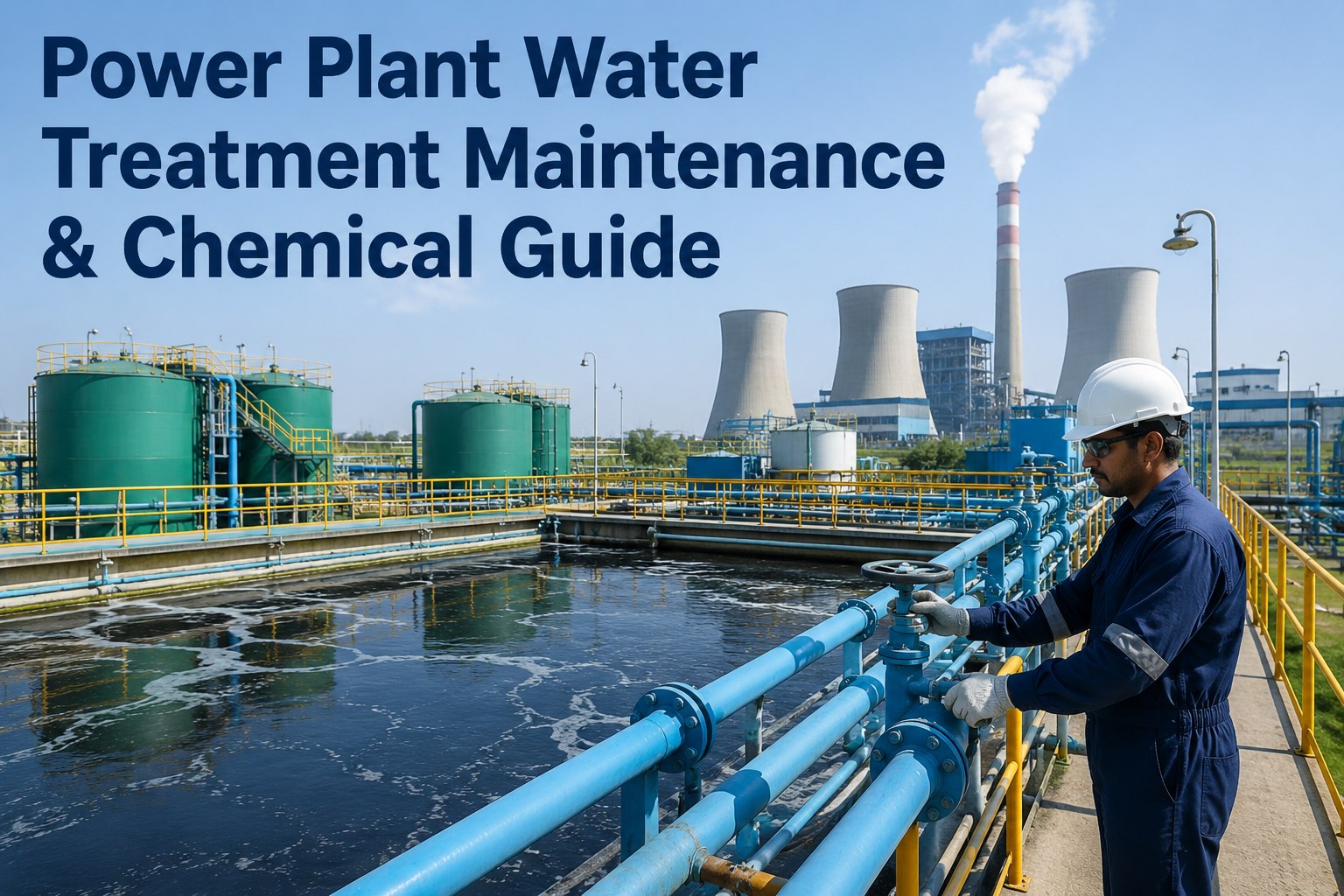
Deployed across refineries, midstream pipelines, upstream production, and municipal water treatment operations in the US, Europe, and the Gulf.
By Jack Edwards

Experience
Oxmaint's
Power

Take a personalized tour with our product expert to see how OXmaint can help you streamline your maintenance operations and minimize downtime.

Book a Tour

Share This Story, Choose Your Platform!

Connect all your field staff and maintenance teams in real time.

Report, track and coordinate repairs. Awesome for asset, equipment & asset repair management.

Schedule a demo or start your free trial right away.

iphone

Get Oxmaint App
Most Affordable Maintenance Management Software

Download Our App