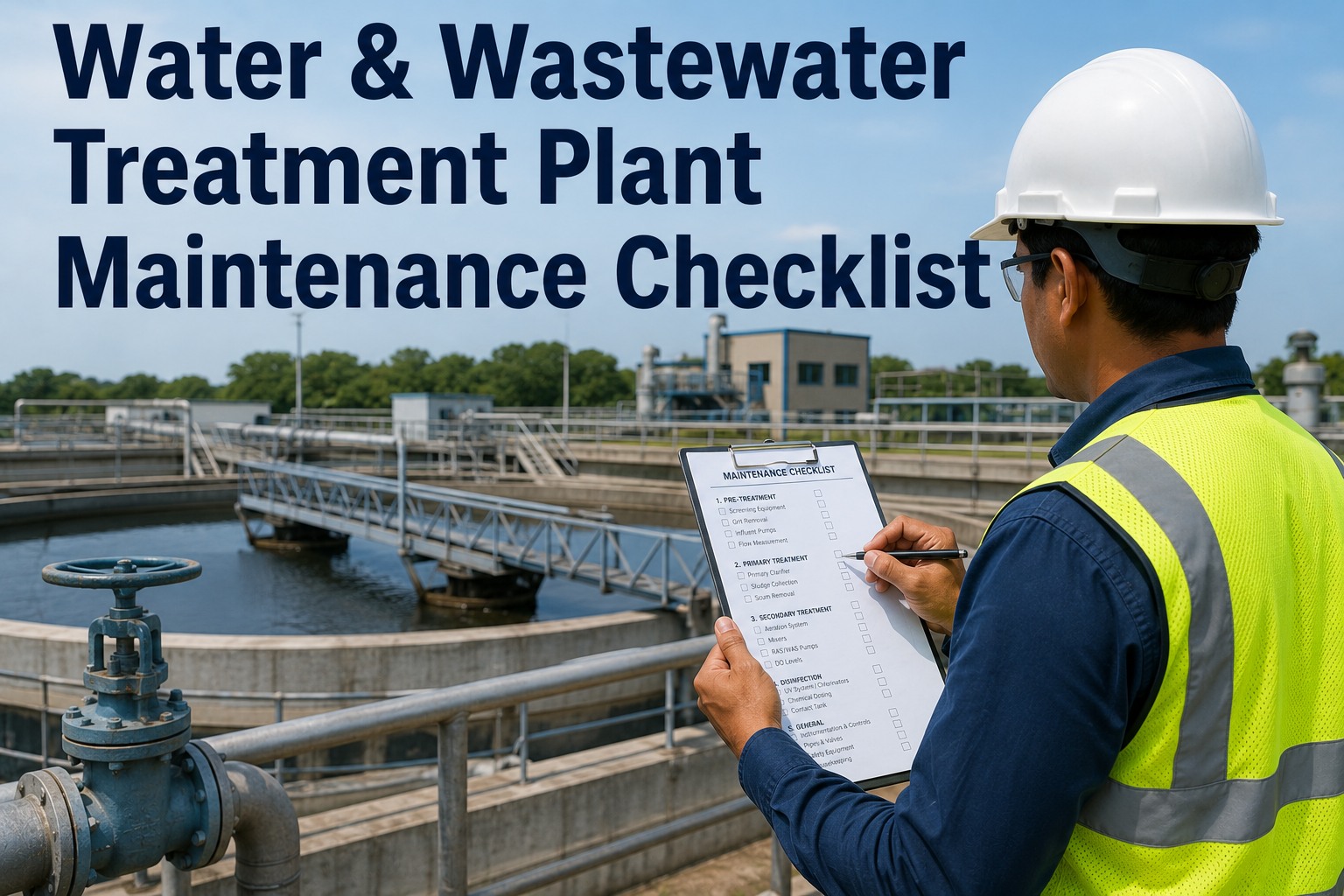
A water and wastewater treatment plant maintenance checklist is the operational backbone that keeps pumps, blowers, clarifiers, and dosing systems running within Clean Water Act (CWA) and Safe Drinking Water Act (SDWA) compliance. Facilities that rely on structured water treatment maintenance reduce unplanned downtime by up to 40% and avoid costly regulatory violations. This checklist outlines the daily, weekly, and monthly tasks required for treatment plant reliability, and shows how modern water utility CMMS platforms like OxMaint automate PM scheduling and compliance documentation so your team can focus on operations. To transition from reactive fixes to predictive maintenance, you can Start Free Trial and digitize your entire maintenance workflow today.
Wastewater Treatment Maintenance Checklist
Keep Critical Treatment Assets Compliant and Online
From raw intake to final effluent discharge, a single missed preventive task can trigger permit violations, public health risks, and catastrophic equipment failure. Use this checklist to standardize your wastewater maintenance strategy and protect your utility's operational reliability.
Daily Plant Maintenance
Daily Water Plant Maintenance Checklist
Daily water plant maintenance focuses on early anomaly detection. Operators should spend the first 30 minutes of every shift verifying that rotating equipment, chemical feed systems, and effluent monitoring instruments are operating within normal parameters. Identifying a slight temperature increase in a process pump today prevents a catastrophic seal failure tomorrow.
- Inspect for unusual noise, vibration, or heat
- Check mechanical seal leakage rates
- Record bearing housing temperatures (baseline +15°C max)
- Verify motor amperage against SCADA trends
- Lubricate per OEM hour-interval guidelines
- Verify chemical bulk storage tank levels
- Inspect dosing pump stroke frequency and speed
- Check for crystallization at injection points
- Calibrate online analyzers (chlorine, pH, ORP)
- Audit secondary containment for leaks
- Review overnight SCADA alarm history
- Record effluent turbidity and flow rates
- Inspect UV disinfection lamp intensity
- Manually verify backup generator auto-transfer
- Log all readings in the CMMS shift handover report
Weekly & Monthly Tasks
Weekly and Monthly Wastewater Treatment Maintenance
Weekly and monthly intervals are where the heavy mechanical lifting happens. This is the phase where sewage treatment maintenance teams tackle clarifier mechanisms, blower air filtration, and screen cleaning. Deferring these tasks directly correlates to a 25% higher risk of bypass events during peak wet-weather flows.
| Asset / System | Frequency | Critical Maintenance Task | Compliance/Outcome |
|---|---|---|---|
| Primary & Secondary Clarifiers | Weekly | Inspect scraper arms, skimmer blades, and torque limiters | Prevents sludge blanket carryover |
| Aeration Blowers | Weekly | Clean intake air filters, check discharge pressure | Maintains optimal DO levels |
| Bar Screens & Grit Removal | Weekly | Lubricate screen rakes, flush grit chambers | Protects downstream pumps |
| Sludge Pumps & Thickening | Monthly | Inspect progressive cavity stators, check polymer dosing | Optimizes sludge cake dryness |
| Distribution Valves & Actuators | Monthly | Cycle automated valves, verify limit switches | Ensures hydraulic flow control |
| Backup Power Systems | Monthly | Run generator under load, check fuel polishing | Guarantees CWA continuity of operation |
Asset Reliability
Clarifier Maintenance and Dosing System Reliability
Clarifiers and chemical dosing systems are the highest-risk assets for regulatory non-compliance. A misaligned clarifier scraper or a miscalibrated polymer pump can cause a total process upset in hours. Proper treatment plant reliability requires condition-based monitoring on these specific assets.
Clarifier Drives & Mechanisms
Check the center drive torque sensor weekly. A rising torque trend indicates thickening sludge or mechanical binding. Grease the main bearing and inspect the scraper flight shoes for wear. Adjust skimmer weirs to maintain a 1-inch freeboard to prevent floatables from entering the effluent launder.
Chemical Dosing Calibration
Calibrate metering pumps monthly using a drawdown cylinder. Verify that the actual stroke volume matches the SCADA-setpoint. Inspect diaphragms for fatigue and check injection quills for scale buildup that restricts chemical delivery and alters the dosing ratio.
Aeration System Efficiency
Monitor dissolved oxygen (DO) probe accuracy weekly against a handheld meter. Clean diffuser membranes quarterly to prevent fine-bubble coalescence. Inefficient aeration is the largest energy sink in water infrastructure maintenance, often consuming 50-60% of total plant power.
Instrumentation & SCADA
Clean and calibrate all critical analytical instruments (turbidity, pH, ammonia) on a strict schedule. Faulty instrumentation leads to false compliance reporting. Ensure all telemetry signals are logged into the water utility CMMS for historical audit trails.
Cost of Inaction
The Real Cost of Reactive Water Utility Maintenance
Consider a 180-asset municipal treatment plant relying on spreadsheet-based tracking and reactive repairs. On average, this facility will experience 12 major unplanned downtime events per year, costing $42,000 annually in emergency labor, expedited parts, and compliance penalties. Moving to a proactive water utility CMMS pays for itself in under 3 months.
Shifting to scheduled PMs stops catastrophic asset failure before it starts.
Automated dispatching balances workloads and eliminates weekend emergency callouts.
Digital logs provide instant proof of CWA and SDWA maintenance documentation.
OxMaint CMMS Platform
How OxMaint Powers Water Infrastructure Maintenance
OxMaint is an AI-powered CMMS and EAM platform built to digitize treatment plant maintenance, automate compliance reporting, and predict equipment failures before they impact public health.
Automated PM Scheduling
Build a digital PM library for every pump, blower, and clarifier. OxMaint auto-generates work orders based on runtime hours, calendar intervals, or condition triggers—eliminating missed maintenance tasks and paper binders.
AI Predictive Maintenance
Connect SCADA and IoT sensor data directly to OxMaint. Our AI engine analyzes vibration and temperature trends to flag bearing degradation weeks before failure, allowing you to schedule repairs during planned outages.
Compliance Documentation
Every work order, meter reading, and parts replacement is automatically timestamped and archived. Generate CWA and SDWA audit reports in seconds, proving regulatory adherence without digging through filing cabinets.
Spare Parts & Asset Tracking
Track critical spares like impellers, mechanical seals, and blower filters in real-time. Set reorder points so you never halt a repair waiting for an expedited shipment. Maintain a complete asset lifecycle history for every piece of equipment.
Stop Drowning in Paperwork and Reactive Repairs
See how OxMaint can digitize your water treatment plant checklist, automate CWA compliance reporting, and predict equipment failures. Book a 30-minute demo tailored to your utility's assets.
Frequently Asked Questions
Water and Wastewater Treatment Plant Maintenance FAQs
How often should clarifier maintenance be performed?
Clarifier mechanisms require weekly visual inspections of skimmers, scraper arms, and weirs. Torque sensors should be monitored daily, while full grease lubrication and mechanical adjustments are typically scheduled monthly. OxMaint allows you to automate these intervals so no task is ever skipped due to operator workload.
What is the role of a CMMS in water utility maintenance?
A water utility CMMS centralizes work order management, schedules preventive maintenance, tracks asset history, and logs compliance data. It replaces paper logs and whiteboards, ensuring regulatory readiness. You can Start Free Trial to instantly digitize your plant's operations.
How does preventive maintenance improve wastewater treatment compliance?
Preventive maintenance ensures that critical assets like aerators, dosing pumps, and UV disinfection systems operate within permitted parameters at all times. By preventing equipment drift and failure, you avoid unauthorized effluent discharges and the steep EPA penalties associated with CWA violations.
What are the most critical assets in a water treatment plant checklist?
The most critical assets include process pumps, aeration blowers, primary and secondary clarifiers, chemical dosing systems, and effluent monitoring instrumentation. These assets directly impact effluent quality and must be prioritized in your daily and weekly maintenance schedules.
How long does it take to implement treatment plant maintenance software?
Most mid-sized utilities can fully implement OxMaint and migrate their existing asset data in under 30 days. To see the platform configured for your specific plant workflows, Book a Demo with our water utility specialists.
Ready to Modernize Your Treatment Plant Maintenance?
Join the utilities using OxMaint to cut downtime, ensure CWA compliance, and streamline operations. Set up your AI-powered CMMS in minutes.
Free 14-day trial · No credit card