A winter storm exposes every deferred inspection at once. The pipe insulation nobody replaced. The generator that never got a load test. The snow-removal contract with an unclear trigger depth. The slip-and-fall salting log that lives in a supervisor's notebook. The 2026 North American winter storm produced record low temperatures as cold as −43 °F in some regions and more than 1 million power outages — and the facilities that came through it best were not the ones with the biggest budgets, but the ones with a documented readiness programme running for weeks before the first flake. Oxmaint is the maintenance management software US EHS and facilities teams use to run every phase of that programme — T-30 preparation, T-7 mobilization, ride-out, and recovery — as digital checklists with mandatory fields, photo evidence, e-signatures, and a full audit trail every insurance adjuster or FEMA reviewer will ask for. Start free and stand up a digital winter readiness programme across every site this week, or book a demo mapped to your building envelope, generator fleet, and snow-removal contracts.
Facility · EHS · FEMA-Aligned Winter Readiness
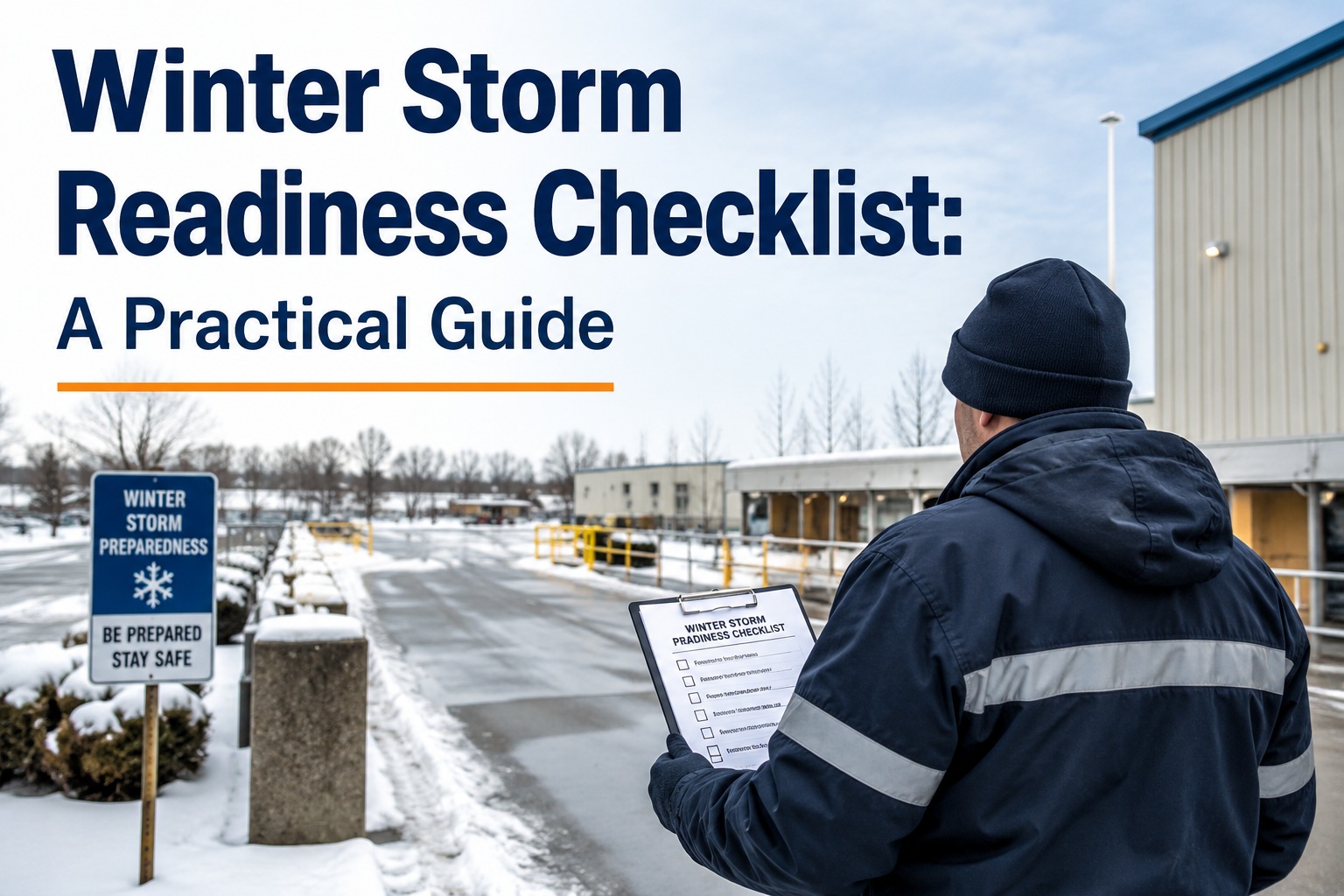
Winter Storm Readiness Checklist: A Practical Guide
Every preparation task, every ride-out inspection, every recovery documentation point — organized on a T-30, T-7, T-24hr, during, and post-storm timeline. Built around FEMA, National Weather Service and insurance-adjuster expectations so slip-and-fall logs, pipe protection records, generator ITM, and vendor sign-offs are already in the file when the claim, the audit, or the incident review arrives.
-
−43 °F
record lows recorded in the 2026 North American winter storm
-
1M+
power outages triggered by a single 2026 storm cycle
-
$10K+
average water-damage insurance claim from frozen or burst pipes
-
55 °F
minimum ambient temperature commonly required in tenant heat memos
The Readiness Timeline
Five Phases That Every Facility Should Run
Winter readiness is not a Friday-afternoon checklist — it is a phased programme that starts 30 days out and ends only after post-storm documentation is filed. Each phase has its own tasks, its own owners, and its own evidence artifacts. This is the working timeline anchoring every winter checklist in Oxmaint.
-
T-30 DAYS
Seasonal Preparation
Roof and gutter inspection, insulation check, HVAC changeover, generator load test, snow-removal contract review, salt and de-icer stock verification, tenant heat memo dispatched.
-
T-7 DAYS
Watch Posture
NWS watch monitoring, vendor stand-by confirmation, backup fuel top-off, weather-critical asset inspection, comms tree test, on-call roster distribution.
-
T-24 HRS
Warning Posture
Building lock-down walk, exterior secured, dripping faucets set in vulnerable zones, salting pre-treatment, emergency supply staging, hot-work permit hold.
-
DURING
Ride-Out
Slip-and-fall inspections at defined intervals, salting logs per zone, generator load monitoring, pipe temperature spot-checks, incident and near-miss reporting.
-
RECOVERY
Post-Storm
Damage walk-through with photos, insurance claim documentation, snow-removal vendor sign-off, incident-review meeting, after-action report filed against site record.
The Threat Map
Five Threats That Cause Almost Every Winter Facility Loss
Every facility winter incident traces back to one of five loss categories. Design your checklist coverage against these first — the low-frequency items take care of themselves. Each threat below carries its own inspection cadence, primary owner, and the evidence artifact Oxmaint stores against the parent asset.
-
Frozen & Burst Pipes
Tier 1 · CatastrophicInsulate exposed plumbing, maintain a moderate heating schedule, and let faucets drip during deep freezes. Know the location of main shut-offs and have emergency plumbing resources on call. Average claim exceeds $10,000 per incident.
Evidence: insulation inspection log per zone, faucet-drip protocol sign-off, shut-off valve location map
-
Ice Dams & Roof Load
Tier 1 · CatastrophicEnsure attic insulation is sufficient and ventilated to keep the roof deck cold. Clean all gutters and downspouts before the first freeze. Know your roof's snow load rating and have a professional removal plan for exceedance.
Evidence: roof inspection with photo, gutter clearance log, snow-load calculation on file
-
Power Outage & Loss of Heat
Tier 2 · HighDuring an outage, keep freezers and refrigerators closed, disconnect appliances to avoid electrical surge damage. Generator load test and backup fuel top-off pre-storm are the two non-negotiables.
Evidence: generator monthly load test, fuel top-off record, ATS transfer test log
-
Slip, Trip & Fall
Tier 2 · HighSlip and fall incidents are the most common winter liability. Proper documentation of snow removal is your primary legal defense — the frequency and completeness of the salting log directly influences claim defensibility.
Evidence: timestamped salting log per zone with photos, sidewalk inspection intervals
-
HVAC Failure & Fuel
Tier 3 · MediumPre-season HVAC changeover, filter replacement, gas leak survey and thermostat calibration. Confirm fuel-oil, LP, and diesel top-offs are done before the watch phase, not during the warning.
Evidence: HVAC pre-season certification, fuel delivery receipts on file
T-30 Building Envelope Walk
The 30-Day Preparation Checklist
Everything below runs 30 days before the first credible freeze forecast for the region. Nothing here should be done during a warning — the ice is already on the way. In Oxmaint these become a scheduled seasonal work package that fires automatically against the site.
Roof & Envelope
- Roof drainage clear, no ponding, membrane intact
- Gutters and downspouts flushed to first freeze standard
- Attic insulation R-value adequate, ventilation open
- Snow load rating documented and posted
- Roof-access safety anchors inspected and tagged
Plumbing & Pipes
- Exposed pipe insulation intact, sleeves undamaged
- Heat trace tape function-tested per circuit
- Main shut-off locations mapped and signed
- Outdoor hose bibs drained and shut off
- Sprinkler antifreeze loop concentration verified
Power & HVAC
- Generator monthly load test complete, log signed
- ATS transfer test performed, results recorded
- Backup fuel tanks topped off to seasonal capacity
- HVAC seasonal changeover certified by contractor
- Boiler / burner combustion analysis on file
Site & Supplies
- Salt and de-icer stock at seasonal minimum
- Snow-plow, shovels, spreaders serviced
- Snow-removal vendor contract active, trigger depth confirmed
- Emergency lighting and exit signage tested
- Tenant heat-minimum memo (55 °F) dispatched
Vendor Trigger Matrix
Snow Removal Contract Triggers That Actually Hold Up
Snow-removal contracts fail in disputes when trigger depths, response times, and liability transfer are written vaguely. Review each contract pre-season and load the triggers into Oxmaint so a hitting depth automatically fires a scheduled work order to the vendor — no phone-tag, no missed call-out.
| Trigger | Vendor Action | Response Time | Evidence Required |
|---|---|---|---|
| Snowfall > 1 inch | Full lot plow + salt walkways | Within 2 hours of trigger | Timestamped arrival photo, GPS log |
| Snowfall > 3 inches | Continuous plow during event + post-event clean | Continuous coverage | Cycle log every 90 minutes, before/after photos |
| Ice / freezing rain forecast | Pre-treatment brine application | Before precipitation onset | Application photo, product SDS, area covered |
| Temperature drop below 20 °F | Switch de-icer product (calcium chloride) | Within 1 hour of trigger | Product change log, application record |
| Post-storm re-freeze risk | Second salting pass + walkway scrape | Within 4 hours of precipitation ending | Vendor sign-off with time and photo per zone |
Where Paper Loses Claims
The Salting Log Is Your Primary Legal Defense
Slip-and-fall is the most common winter liability, and its defense is the completeness of the snow-removal record. A handwritten sheet with times crossed out and initials missing loses in mediation. A timestamped, GPS-tagged, photo-backed digital log per zone with e-signatures per pass wins. This is the exact record Oxmaint builds automatically as the vendor and internal crew work through the storm.
During the Storm
Ride-Out Inspection Cadence
Once the warning hits, the inspection interval collapses. Every zone gets a walk every 2 hours, generator status gets a check every 30 minutes, and pipe temperatures in vulnerable zones get spot-checked continuously. Oxmaint schedules these accelerated intervals automatically the moment the storm phase advances to "During."
-
Every 30 min
Critical Systems Watch
Generator load and runtime, ATS status, UPS battery, boiler operation, fire-pump readiness. Photo capture on any abnormal reading.
-
Every 1 hour
Salting & Sidewalk Pass
Timestamped walk of every zone with the responsible crew or vendor. Photo per pass, salt product logged, refreeze condition noted.
-
Every 2 hours
Building Envelope Walk
Vulnerable pipe zones, roof drainage, exterior door seals, HVAC discharge, tenant-space temperature spot-checks against 55 °F floor.
-
Every 4 hours
Situation Report to Leadership
Status summary — critical systems, incidents, vendor activity, resource burn rate — pushed to site leadership and business-continuity lead.
-
Continuous
Incident & Near-Miss Log
Any slip, fall, equipment failure, pipe issue or utility disturbance logged in real time with photo and immediate action taken.
Recovery & Documentation
Post-Storm Evidence That Insurers and FEMA Look For
The 72 hours after the storm decide whether an insurance claim or FEMA assistance case is defensible. Damage documentation, vendor sign-offs, incident reports and after-action reviews must be filed against the site record before crews stand down. This is the recovery evidence set Oxmaint assembles automatically from the ride-out data.
Damage Walk-Through With Photos
Every damaged asset photographed with timestamp and GPS, condition classification recorded, and a repair or replace disposition assigned to a named owner.
Vendor Sign-Off
Snow-removal, generator, plumbing, and any storm-response vendor countersigns their scope with time on site, product used, and areas serviced.
Insurance Claim Package
Filter ride-out and recovery records by asset, zone, and date range to produce the exact evidence set the adjuster asks for — no assembly, no re-typing.
After-Action Review
Structured post-mortem with corrective actions logged, owners assigned, and due dates set. Findings flow into next season's T-30 checklist as improvements.
Built for Facility Teams
How Oxmaint Runs the Winter Readiness Programme
-
Phased Templates
T-30, T-7, T-24, During, Recovery — All Pre-Loaded
Every phase is a scheduled work package with distinct checklists, owners, and due dates. Advancing the site to a new phase fires the next set of tasks automatically across every asset in scope.
-
Vendor Triggers
Contract Triggers Load Directly Into the CMMS
A weather trigger (snowfall depth, ice forecast, temperature drop) generates a scheduled vendor work order with defined response time and evidence requirements — no phone-tag, no missed call-out.
-
Mobile Salting Log
Timestamped, GPS-Tagged Per Zone
Every salting pass logged from the crew's phone with photo, product, and area covered — the exact record that defends a slip-and-fall claim in mediation.
-
E-Signatures
Vendor and Internal Sign-Off Per Task
Every completed scope is countersigned digitally with time and identity — the audit trail insurance adjusters and FEMA reviewers expect on any recovery claim.
-
Auto Escalation
Missed Ride-Out Rounds Escalate in Minutes
A skipped 2-hour envelope walk during the storm escalates immediately to the incident commander. Nothing waits until after the storm to surface.
-
After-Action Pack
Post-Storm Filter Produces the Insurance File
One filter by site and date range produces every ride-out reading, incident, vendor pass, and damage photo — packaged as the insurance and after-action evidence set.
Measured Outcomes
What Facility Teams Gain With a Digital Winter Programme
-
100%
Salting Log Coverage
Every zone salted, photographed, and timestamped — the record slip-and-fall mediation actually turns on.
-
30 days
Preparation Lead Time Enforced
The T-30 phase fires automatically ahead of the first regional freeze forecast — no more scrambling during a warning.
-
Minutes
Not Weeks to Assemble Claim Files
Insurance and FEMA-ready packages generated from ride-out data by a single site + date-range filter.
-
$0
Free Forever Plan to Start
Facility teams start on the free forever plan, digitise a core winter checklist library, and scale into the full platform when multi-site scope grows.
Frequently Asked
Winter Storm Readiness Questions
How far ahead of a storm should winter preparation actually start?
Thirty days ahead of the first credible freeze forecast for the region. Roof and gutter inspection, generator load tests, HVAC changeover, insulation checks and snow-removal contract review all belong in the T-30 phase. Anything left to a T-24 warning window is already late. Start free and fire the T-30 work package automatically ahead of your first freeze.
What is the single most important document for a slip-and-fall defense?
The salting log — timestamped, per zone, photo-backed, with vendor or crew identity. Proper documentation of snow removal is the primary legal defense against slip-and-fall liability, which is the most common winter liability facilities face.
Can Oxmaint pull an insurance-ready file after the storm without manual assembly?
Yes. Every ride-out reading, incident record, vendor sign-off, and damage photo is filed against the site and asset in real time. A single filter by site and date range produces the complete package for the adjuster — no re-typing, no chasing crews for notes. Book a demo to see the post-storm evidence set generated on your site.
Does the platform handle multi-site winter readiness across a portfolio?
Yes. Regional risk managers run one Oxmaint tenant across every site with site-scoped checklists, per-site owners, and a rolled-up readiness dashboard — completion rates, overdue T-30 tasks, active weather phases and open recovery items visible in one view.
Is there a free plan for smaller facility teams?
Yes. Oxmaint offers a free forever plan — enough to digitise a core winter readiness checklist library, run T-30 preparation across a single site, and store photo evidence per asset. Scale into the full platform when multi-site or vendor-heavy operations expand. Sign up for the free plan and stand up your first digital winter programme today.
Prepare · Ride Out · Document
The Storm Is Coming. The Question Is Whether the Programme Is Already Running.
The five phases above are the framework. Oxmaint is the maintenance management software that turns them into scheduled, mobile-first, evidence-backed work — from T-30 preparation all the way through post-storm insurance filing. Walk into the next storm with the pipes protected, the generators tested, the vendors on trigger, and the audit file already assembling itself.