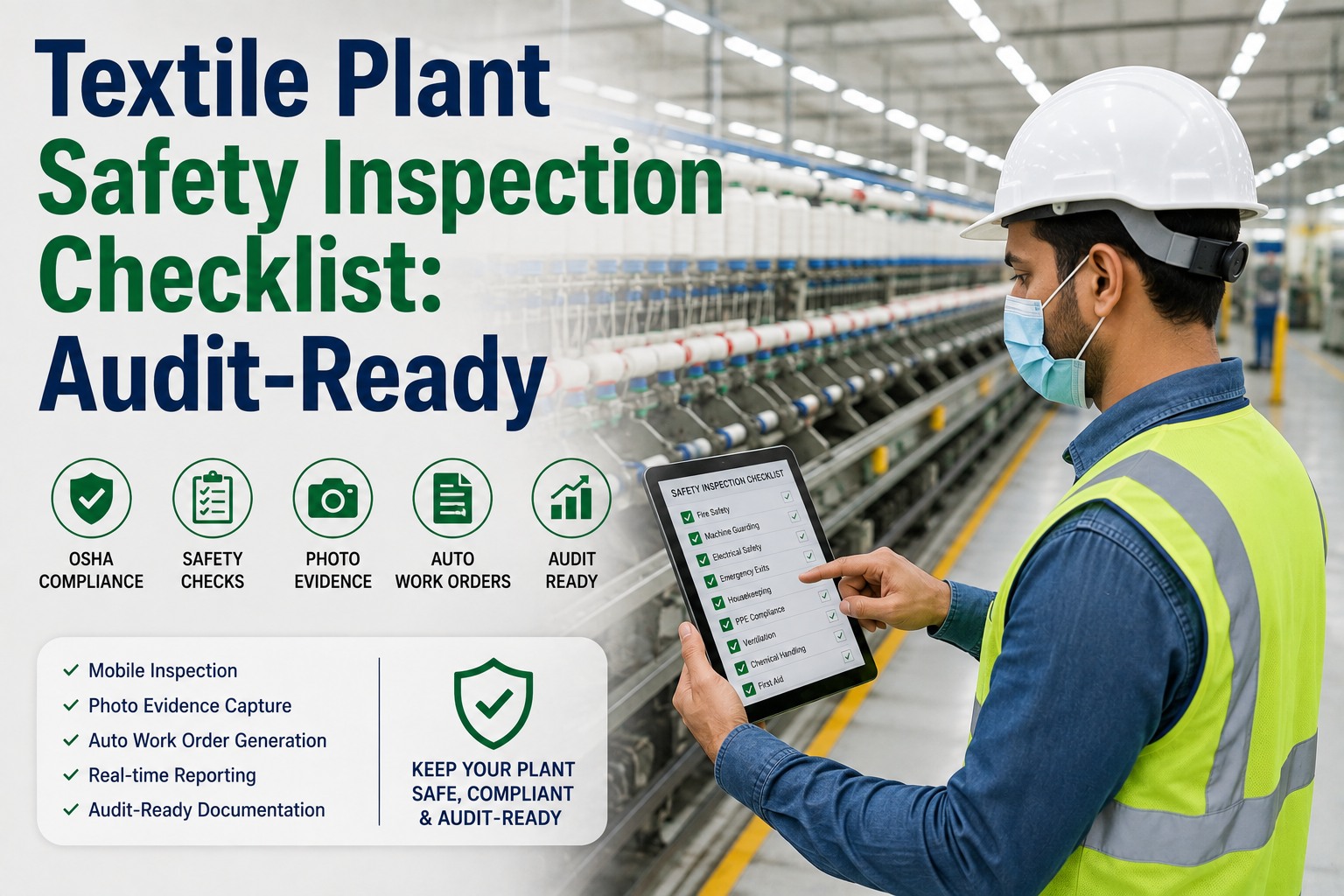
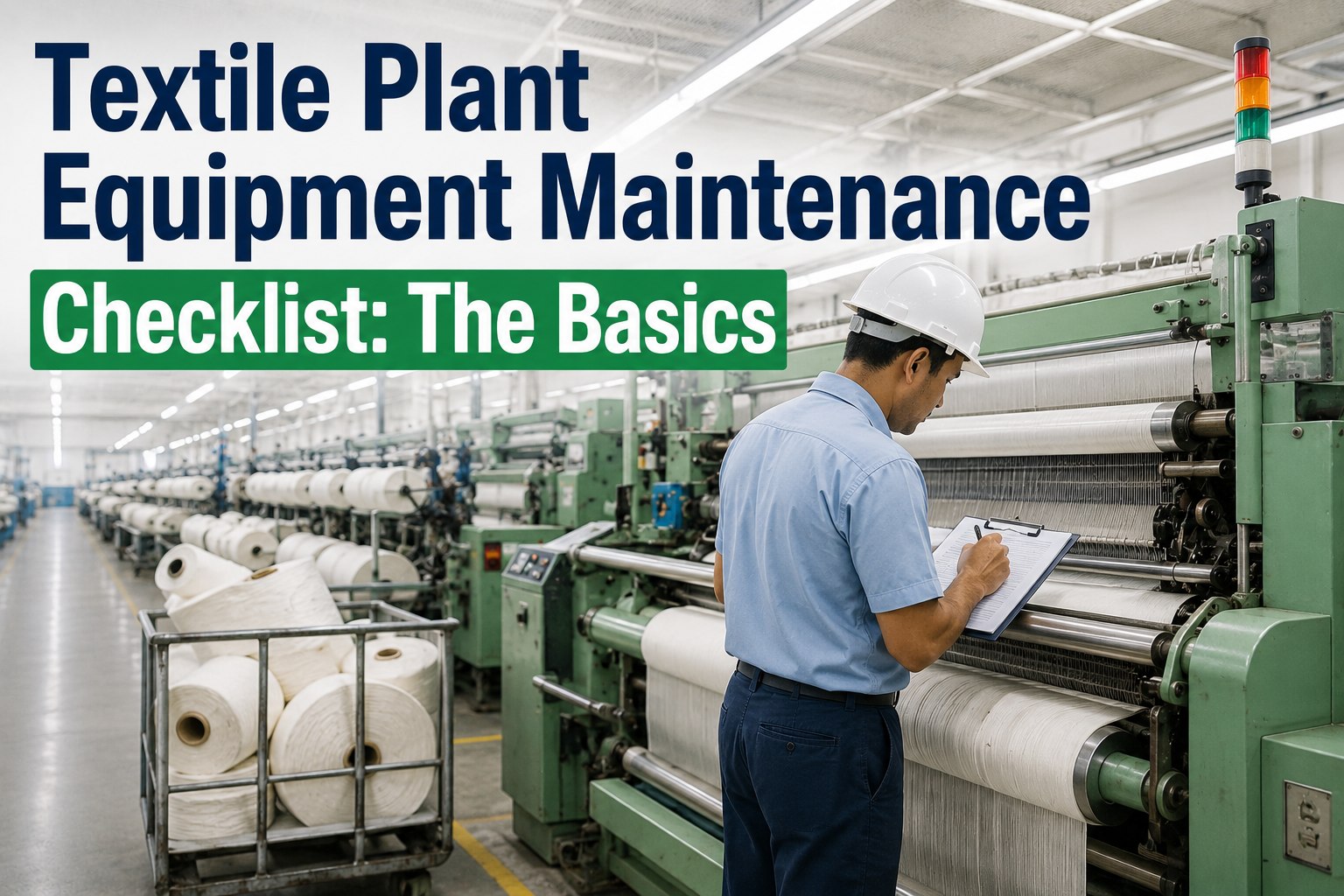
A textile plant EHS audit checklist is the fastest way to catch small compliance gaps and mechanical defects before they escalate into shutdown-level failures or regulatory penalties. Whether you are running ISO 45001 compliance checks, a textile safety walkthrough, or a garment factory audit, the biggest reason inspections fail is inconsistency across technicians, shifts, and sites. OxMaint replaces paper forms and clipboards with a digital textile plant EHS audit checklist procedure, delivering structured inspection workflows directly to your maintenance team's phones, capturing photos and readings against each asset, and escalating corrective actions automatically so nothing falls through the cracks. You can Start Free Trial today to standardize your inspection records, or book a demo to see how it works on your specific equipment.
Is your textile plant audit-ready right now, or just hoping the next inspection goes smoothly?
Inconsistent inspection records across shifts and sites are the leading cause of ISO 45001 audit failures. OxMaint standardizes every textile plant EHS audit checklist requirement, captures digital proof on the floor, and stores a defensible maintenance history against every asset.
- Spinning machine inspection & guarding points
- Weaving loom PM wear limits & safety interlocks
- Textile dye house chemical & spill containment
- Textile finishing audit thermal & pressure readings
The hidden cost of clipboard-driven EHS inspections
Up to 40% of textile facilities fail their first ISO 45001 audit attempt due to incomplete or illegible paper inspection records, not actual safety violations.
When a maintenance manager relies on paper checklists, a textile safety walkthrough becomes subjective. Technician A checks a spinning machine's interlock guards thoroughly, while Technician B on the night shift rushes through the same form. When an auditor asks to see three years of textile dye house inspection history, the paper trail is often incomplete, damaged, or locked in a filing cabinet. This inconsistency is exactly why a digital textile plant EHS audit checklist form is critical—ensuring every reading, defect, and corrective action is captured identically, every time.
Textile plant EHS audit checklist: 4 critical inspection zones
A defensible audit covers visual condition, operating readings, safety devices, and pass/fail criteria. Here are the core zones your procedure must cover.
Spinning Machine Inspection
- Pass/Fail: Rotor housing interlock guards secured
- Reading: Spindle vibration under 4.5 mm/s RMS
- Pass/Fail: Emergency stop cable functional along full frame
- Reading: Auto-doffing sensor alignment verified
- Defect: Fiber buildup in suction ducts cleared
Weaving Loom PM
- Pass/Fail: Warp beam coupling guard in place
- Reading: Heddle frame oscillation within 2.0 mm tolerance
- Pass/Fail: Loom stopping device trigger time under 0.5s
- Reading: Rapier tape wear limit not exceeding 3mm
- Defect: Lube oil leak at main cam shaft
Textile Dye House Audit
- Pass/Fail: Chemical spill containment pallets present
- Reading: Dye vessel pressure gauge calibrated & within MAWP
- Pass/Fail: Emergency eyewash station flow rate verified
- Reading: Exhaust ventilation velocity above 0.5 m/s
- Defect: Corroded steam valve on jigger machine
Textile Finishing Audit
- Pass/Fail: Stenter frame heat guards properly shielded
- Reading: Thermal oil temperature within 180C limit
- Pass/Fail: Padder nip-point safety bar functional
- Reading: Chain tension wear limit under 1.5mm elongation
- Defect: Frayed cable on fabric inspection frame
Textile plant EHS audit checklist example: pass/fail criteria table
Use this textile plant EHS audit checklist example as a quick reference for the minimum acceptable thresholds your technicians must verify during a textile safety walkthrough.
| Inspection Point | Asset / Area | Pass Criteria | Fail Action |
|---|---|---|---|
| Guard Interlock | Spinning Frame | Door opens circuit instantly | Lockout/Tagout, escalate WO |
| Vibration Reading | Weaving Loom Cam | Under 4.5 mm/s RMS | Schedule predictive maintenance |
| Spill Containment | Dye House Chemical Store | 110% sump capacity verified | Halt operations, notify EHS |
| Thermal Limit | Stenter Frame | Oil temp under 180C | Isolate heating, inspect thermostat |
| E-Stop Trigger | Garment Factory Line | Stops within 0.5 seconds | Tag out, replace relay |
| Air Quality | Finishing Exhaust | Flow above 0.5 m/s | Inspect fan belts, clean ducts |
How OxMaint digitizes your textile plant EHS audit checklist procedure
Stop chasing paper. OxMaint's AI-powered CMMS delivers your checklist to a technician's phone as a scheduled work order, ensuring every audit is repeatable, traceable, and defensible.
Mobile Checklist Delivery
Push the exact digital textile plant EHS audit checklist form to the floor as a scheduled work order. Capture photos and readings against each item directly on the mobile app, eliminating missed steps.
Automatic Fail Escalation
If a spinning machine inspection or weaving loom PM reading fails, OxMaint instantly generates a high-priority corrective work order and routes it to the right technician, cutting response time by up to 60%.
Audit-Ready Asset History
Every photo, e-signature, and reading is permanently stored against the asset record. Prove ISO 45001 compliance in seconds without digging through filing cabinets during a garment factory audit.
Predictive Maintenance Analytics
OxMaint analyzes audit reading trends over time to predict failures before they happen, helping you shift from reactive fixes to predictive maintenance and reduce unplanned downtime by 30-50%.
Consider a 180-asset textile plant spending $42K annually on compliance penalties and reactive maintenance due to inconsistent paper audits. By implementing OxMaint's digital textile plant EHS audit checklist procedure, the plant standardized its textile safety walkthroughs, automatically escalated 15 critical defects in the first month, and achieved full ISO 45001 compliance within 90 days—cutting unplanned downtime by 35% and eliminating paper work orders entirely.
See OxMaint on your assets — book a 30-min demo
Discover how a digital textile plant EHS audit checklist can standardize your inspections, secure your compliance, and protect your maintenance budget.
Textile plant EHS audit checklist requirements & answers
What are the core textile plant EHS audit checklist requirements?
A complete checklist must cover visual equipment condition, operating readings (like pressure and vibration), safety device functionality (interlocks and e-stops), and clear pass/fail criteria. The checklist needs to be standardized across all shifts and sites, and every inspection result must be documented with a timestamp and technician signature to satisfy ISO 45001 compliance standards.
How does a digital textile plant EHS audit checklist differ from a paper template?
A digital checklist is delivered directly to a technician's mobile device as a scheduled work order, ensuring the correct form is always used. Unlike paper, a digital textile plant EHS audit checklist form forces photo capture for defects, validates readings in real-time, and automatically escalates failures to corrective work orders without manual data entry. You can Start Free Trial to see how OxMaint digitizes this workflow instantly.
How often should spinning machine inspection and weaving loom PM be audited?
High-speed rotating equipment like spinning machines and weaving looms should undergo a visual safety walkthrough daily, with a comprehensive preventive maintenance audit conducted monthly or quarterly depending on production volume. OxMaint automates this scheduling, ensuring no asset misses its compliance window.
Can OxMaint help with ISO 45001 audit preparation?
Yes. OxMaint stores a permanent, time-stamped history of every inspection, photo, and corrective action against each asset's profile. When an ISO 45001 auditor requests proof of compliance for your textile dye house or finishing floor, you can generate a complete digital report in seconds. Book a demo via Calendly to see the reporting features in action.
What is the ROI of switching to a digital textile plant EHS audit checklist procedure?
Facilities typically eliminate 10-12 hours of weekly administrative paperwork, reduce compliance penalties to near zero, and cut unplanned downtime by 30-50% through early defect detection. The combination of avoided regulatory fines and recovered production time usually delivers a full return on investment within the first 90 days of implementation.
Standardize your inspections. Protect your plant.
Join the maintenance teams using OxMaint to make every textile plant EHS audit checklist repeatable, traceable, and audit-ready year-round.
Free 14-day trial · No credit card