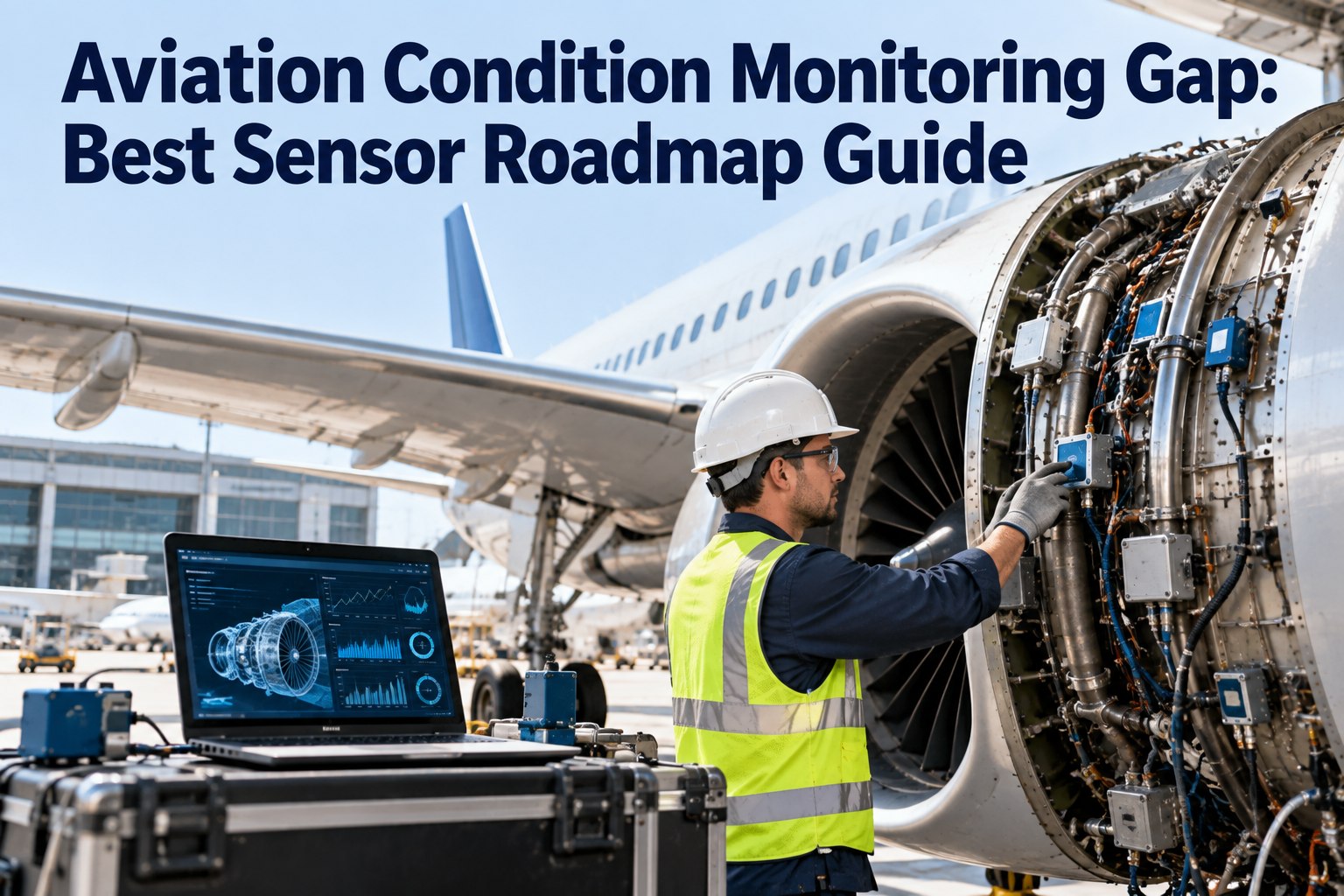
Airport operations run 24/7, yet 82% of facilities still experience costly unplanned equipment failures each year. With the predictive maintenance market projected to grow from $10.6B to $47.8B by 2029, smart airports are embracing IoT condition monitoring to transform reactive firefighting into proactive asset intelligence. Start your free IoT monitoring trial and predict equipment failures 30-90 days before they disrupt your operations.
SMART MAINTENANCE GUIDE
Airport Predictive Maintenance with IoT Condition Monitoring
Real-Time Equipment Health Tracking for Zero Unplanned Downtime
Baggage Conveyor B3
68% - Service Soon
Boarding Bridge 12
85% Health
⚠
Escalator E4: Bearing wear detected - 45 days to failure
The Hidden Cost of Reactive Maintenance
Airport Maintenance Directors face an impossible balancing act: keep thousands of critical assets running while budgets shrink and passenger expectations soar. The reality? Most airports still operate in reactive mode, waiting for equipment to fail before taking action.
$125K+
Average Cost Per Hour of Unplanned Downtime
Large airports can lose $500K+ per hour when critical systems fail unexpectedly
800 hrs
Average Annual Unplanned Downtime
Equipment failures account for 42% of all operational disruptions
82%
Facilities With Unplanned Failures
Most organizations experienced unexpected equipment breakdown in the last 3 years
70%
Unaware When Maintenance Is Due
Lack of visibility leads to missed service windows and premature failures
$47.8B
Predictive Maintenance Market by 2029
35.1%
Annual Growth Rate (CAGR)
50-70%
Maintenance Cost Reduction
How IoT Condition Monitoring Works
Transform your maintenance strategy from guesswork to data-driven precision. IoT sensors continuously monitor equipment health parameters, feeding real-time data to AI algorithms that predict failures weeks before they occur.
1
Sense
IoT sensors measure vibration, temperature, current, and pressure in real-time—24/7 monitoring without manual rounds
2
Analyze
AI algorithms detect subtle anomalies and patterns that indicate developing faults—85-98% prediction accuracy
3
Predict
Get alerts 30-90 days before failure with estimated remaining useful life and recommended actions
4
Act
Schedule maintenance during low-traffic periods—auto-generated work orders flow directly to your CMMS
Critical Airport Assets to Monitor
Every airport has high-value, high-impact equipment that directly affects passenger experience and operational continuity. Here's where IoT condition monitoring delivers the biggest ROI.
Impact if failed: Terminal closures, passenger complaints, regulatory violations
Vibration
Temperature
Pressure
Current
Typical savings: $20K-50K annually per unit
Impact if failed: Flight delays, lost luggage, passenger dissatisfaction
Vibration
Motor Current
Belt Tension
Speed
Typical savings: 30% reduction in conveyor downtime
Impact if failed: Gate closures, boarding delays, safety incidents
Hydraulic Pressure
Motor Load
Position
Vibration
Typical savings: 45% fewer emergency repairs
Impact if failed: Accessibility issues, crowd congestion, safety risks
Vibration
Speed
Motor Temp
Chain Wear
Typical savings: 25% extended equipment lifespan
See Your Asset Health in Real-Time
Connect your equipment to OxMaint's predictive maintenance platform in days, not months.
Schedule Demo
IoT Sensor Types for Airport Equipment
Different failure modes require different monitoring approaches. Here are the key sensor types that provide comprehensive equipment health visibility.
Detect bearing wear, imbalance, misalignment, and looseness in rotating equipment
Accuracy:
95-98%
Detection Lead:
30-90 days
Best For:
Motors, pumps, fans
Monitor thermal anomalies that indicate electrical issues, friction, or impending component failure
Accuracy:
90-95%
Detection Lead:
7-30 days
Best For:
Electrical panels, motors
Track power consumption patterns to identify efficiency degradation and motor issues
Accuracy:
88-94%
Detection Lead:
14-45 days
Best For:
Compressors, conveyors
Monitor hydraulic and pneumatic systems for leaks, blockages, and pump degradation
Accuracy:
88-94%
Detection Lead:
7-21 days
Best For:
Bridges, HVAC, doors
Predictive vs Reactive: The Numbers
The data is clear: predictive maintenance consistently outperforms reactive approaches across every metric that matters.
Failure Detection
After breakdown
Downtime Impact
800+ hours/year
Repair Costs
5-10x higher
Asset Lifespan
Shortened 20-40%
Labor Efficiency
Emergency overtime
VS
Failure Detection
30-90 days ahead
Downtime Impact
Reduced 30-50%
Repair Costs
35-45% lower
Asset Lifespan
Extended 20-40%
Labor Efficiency
Planned scheduling
ROI Impact
Downtime Reduction
Predict failures before they cause operational disruptions
Cost Savings
Lower repair costs through early intervention
Longer Asset Life
Extend equipment lifespan with optimized maintenance
Typical ROI Period
Most airports see payback within 12-18 months
Implementation Timeline
Get from zero to predictive in weeks, not months. OxMaint's rapid deployment approach means you start seeing value immediately.
Week 1
Discovery & Planning
Critical asset identification
Failure mode analysis
Sensor placement mapping
Integration requirements
Week 2-3
Sensor Deployment
Wireless sensor installation
Gateway configuration
Network connectivity testing
Initial data validation
Week 3-4
Platform Integration
CMMS connection
Alert rules configuration
Dashboard customization
Mobile app setup
Week 4-5
Go-Live & Training
Team training sessions
Baseline establishment
Alert threshold tuning
Ongoing support handoff
Frequently Asked Questions
How accurate is predictive maintenance for airport equipment?
Modern IoT-based predictive systems achieve 85-98% accuracy for well-defined failure modes like bearing wear, motor degradation, and belt issues. Vibration sensors are particularly accurate at 95-98%, while temperature and current monitoring typically achieve 88-95% accuracy. The key is having sufficient historical data to train the AI models.
How far in advance can you predict equipment failures?
Depending on the failure mode and sensor type, predictive systems typically provide 30-90 days of advance warning. Vibration-based predictions often detect bearing wear 60-90 days ahead, while thermal anomalies may indicate issues 7-30 days in advance. This gives maintenance teams ample time to plan repairs during low-traffic periods.
What's the typical ROI timeline for airport predictive maintenance?
Most airports see positive ROI within 12-18 months. The biggest savings come from avoided emergency repairs (which cost 5-10x more than planned maintenance), reduced overtime labor, and extended equipment lifespan. A mid-sized airport typically saves $200K-500K annually after full implementation.
Can IoT sensors work with our existing older equipment?
Yes! Modern wireless sensors are designed as non-invasive retrofits. They attach externally to equipment housings and don't require any modifications to the machinery itself. Older HVAC units, conveyors, and motors can all be monitored with surface-mounted vibration and temperature sensors—no digital interfaces required.
How do sensors communicate across a large airport facility?
We use industrial-grade wireless protocols including LoRaWAN (up to 15km range), Wi-Fi mesh networks, and cellular connectivity. LoRaWAN is particularly effective for airports because sensors can communicate through walls and across long distances with battery life of 5-10 years. Most airports need only 2-4 gateways for full coverage.
Does predictive maintenance integrate with our existing CMMS?
OxMaint integrates with all major CMMS platforms via REST APIs. When the system detects an anomaly, it automatically creates work orders with asset details, predicted failure type, recommended actions, and estimated time to failure. Your technicians see prioritized tasks in their existing workflow without switching systems.
Stop Reacting. Start Predicting.
Join forward-thinking airports achieving 50%+ downtime reduction with IoT-powered predictive maintenance integrated with OxMaint CMMS.