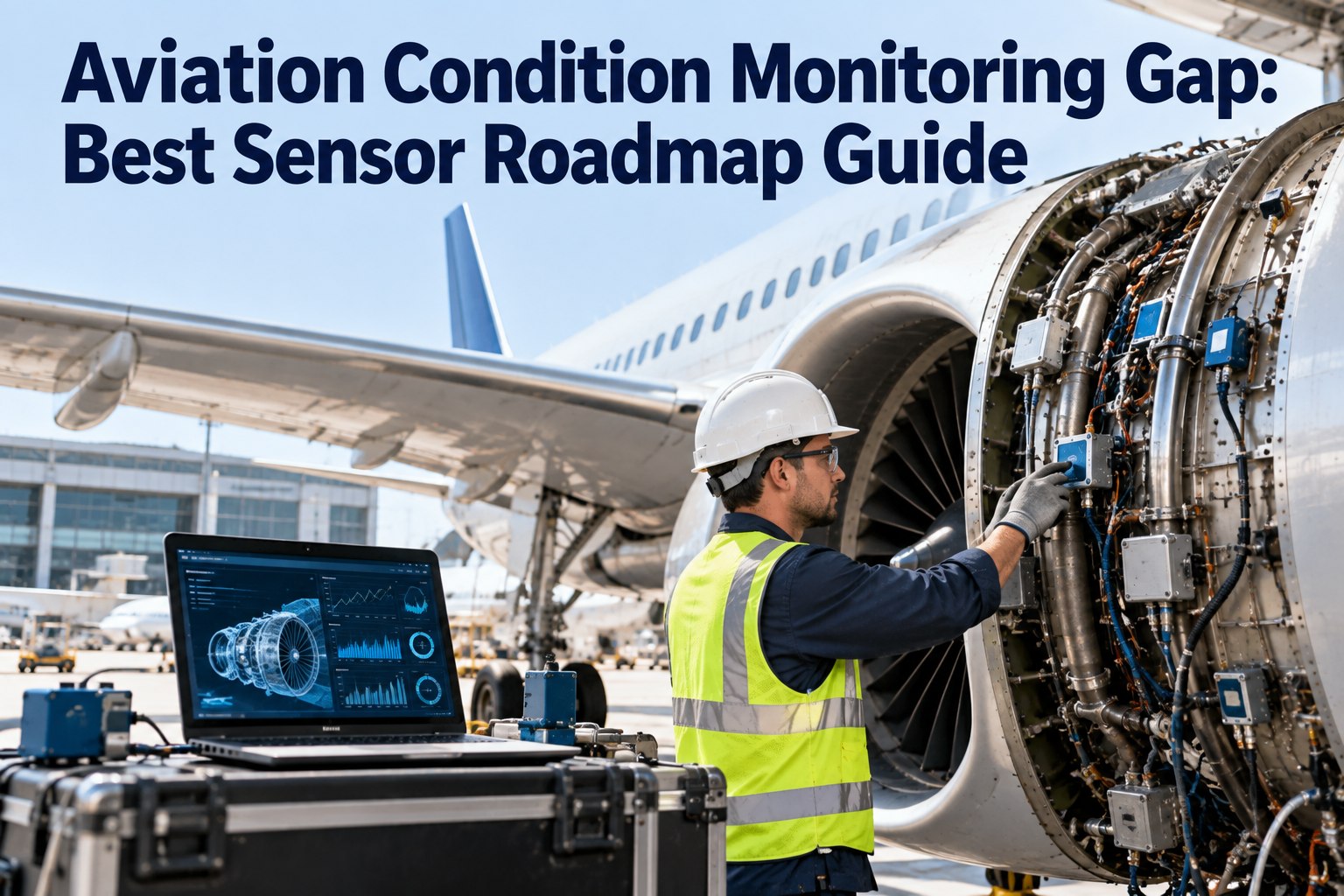
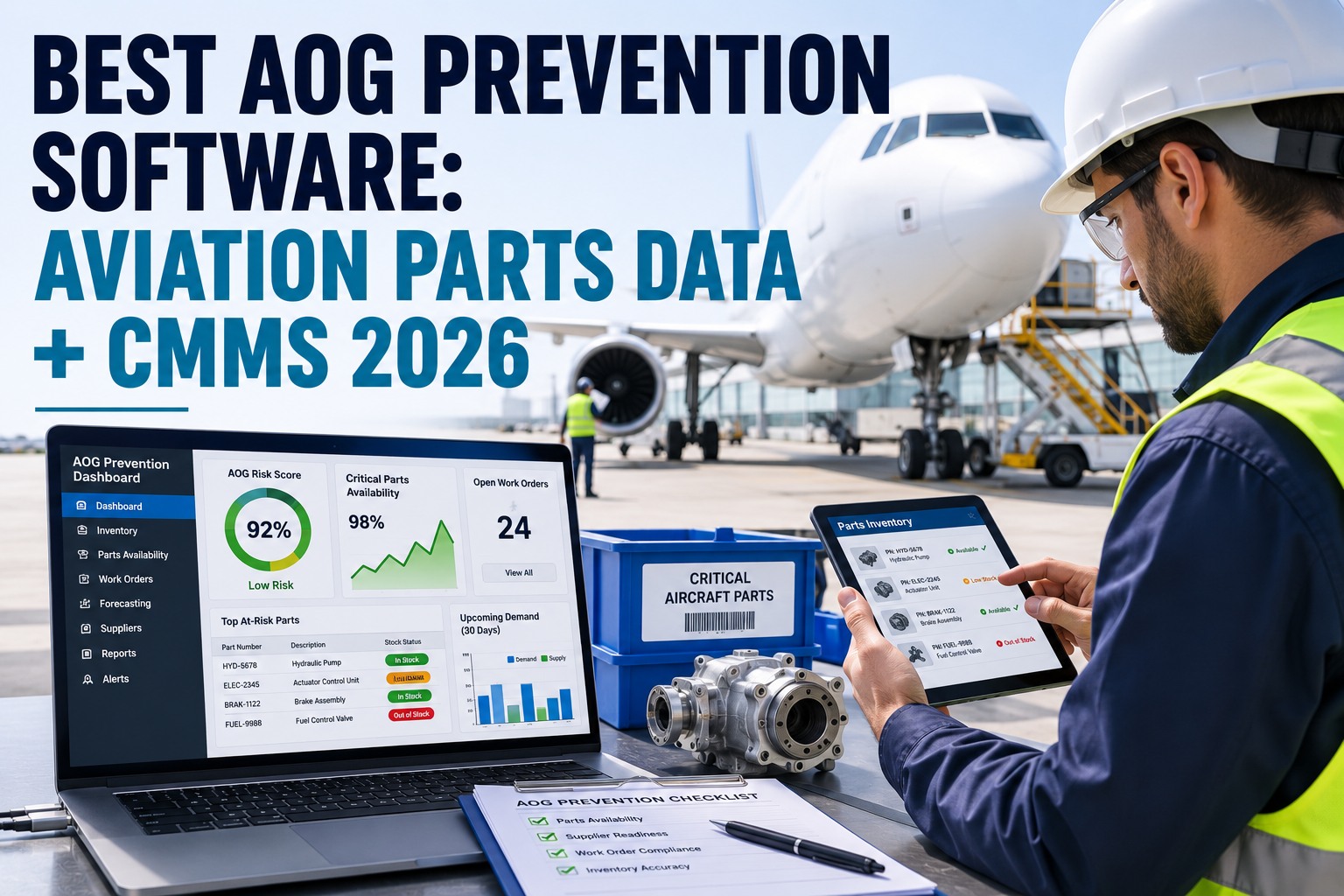
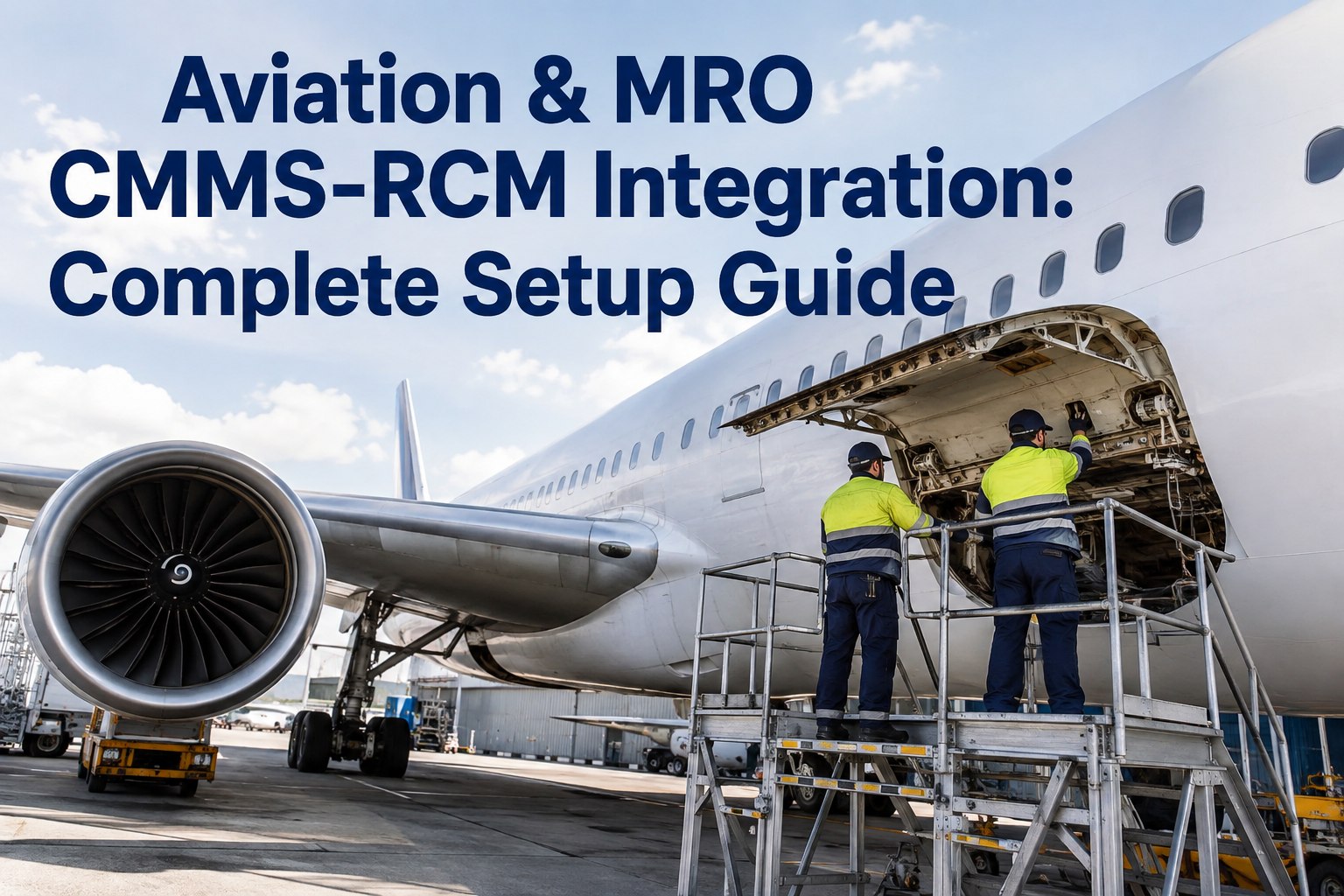
Your MRO base has hundreds of assets — auxiliary power units, hydraulic carts, ground power units, hangar doors, paint-booth extractors, nitrogen carts — and only a fraction wear a sensor. The rest run to failure or to a fixed calendar interval, and your planners find out about problems the same way they did a decade ago: a shift-lead phone call, a red squawk in the logbook, or a tug that won't start on the ramp at 04:30. This guide is the practical sensor roadmap — where to instrument first by criticality, ROI and CMMS integration cost — paired with OxMaint AI as the AI-powered CMMS that turns sensor signals into ranked work orders. Book a 30-minute demo to walk the roadmap on your fleet.
Aviation MRO · Condition Monitoring · Sensor Roadmap · 2026
Aviation Condition Monitoring Gap: Where to Put Sensors First, and How to Turn Signals Into Work Orders
APU squawks at cold start. Hydraulic cart droop nobody logs. A hangar door that jams the morning of a heavy check. Your team needs earlier warning, not another dashboard. OxMaint AI is the AI-powered CMMS that runs the loop — squawk or sensor → ranked work order → adaptive PM — so planners see the problem before the ramp does.
Criticality
rank assets by dispatch impact, not just cost
ROI
visit cost avoided vs sensor + integration outlay
CMMS Fit
integration cost decides which sensor lands first
Workflow
signal → issue → work order → PM / PdM loop
Why Aviation MRO Has a Condition-Monitoring Gap
Aviation maintenance is strong on regulated intervals — A-checks, C-checks, calendar PMs. It is thin on the layer between them, where a bearing or actuator drifts for weeks before anyone notices. Legacy CMMS deployments were built around scheduled work and paper squawks, and blanket sensor rollouts are expensive. Start a free trial and connect one asset class first.
The Gap Today
What Thin Monitoring Looks Like
✕ Coverage is uneven — a handful of critical assets on vibration, the rest on calendar intervals and reactive squawks
✕ Signals live in vendor portals, spreadsheets or hand-held meters — the CMMS work order never sees them
✕ Planners learn about drift from the person who found it broken, not from a trend that flagged two weeks earlier
✕ Sensor pilots stall because nobody has decided where to instrument next, or how to justify the spend
What Closes the Gap
Roadmap + AI CMMS
✓ A written sensor roadmap ranked by criticality, ROI and integration cost — not a blanket rollout
✓ OxMaint AI reads sensor feeds and opens ranked work orders on the same asset record the technician already uses
✓ Preventive schedules adjust as sensor evidence accumulates — fewer wasted PMs on healthy assets, tighter loops on the drifting ones
✓ The maintenance workflow — request → inspection → issue → work order → PM / PdM — runs on one platform
The Aviation Sensor Roadmap: How to Rank What Gets a Sensor First
Every base has a limited sensor budget and a limited integration engineer. The roadmap is the decision framework — three inputs (criticality, ROI, CMMS integration cost) that turn "we should sensor everything" into a prioritized instrumentation plan you can build in phases. Book a demo to score your own asset list against these three inputs.
Input 1
Criticality
Which assets, when they fail, delay a departure, ground an aircraft or trigger a NOTAM? Rank by dispatch impact, not by nameplate cost. An APU on the ramp scores higher than a spare tug in the yard.
Input 2
ROI
Compare visit cost avoided — tech time, spares, unplanned ramp visits — against the sensor + install + integration outlay. Assets with high visit frequency and clear failure signatures pay back first.
Input 3
CMMS Integration Cost
A sensor that lands cleanly on the asset record is worth more than a sensor that needs a custom middleware project. Score assets on whether their sensor feeds already have a supported path into your CMMS.
Output
Phased Rollout
A three-phase plan — instrument the top-scoring assets in Phase 1, expand to adjacent classes in Phase 2, cover the long tail in Phase 3. Each phase closes with a review of signal quality and WO conversion.
The Workflow: Signal → Issue → Ranked Work Order → PM or PdM.
OxMaint AI is the AI-powered CMMS that runs the whole loop. A sensor feed or an inspection squawk becomes an issue on the correct asset record; the issue is ranked against dispatch impact and crew load; a work order is opened, assigned and closed; the preventive schedule updates based on what the sensor evidence actually showed. One platform, one asset history, one place planners look.
Where to Instrument First — Asset Classes Ranked by the Three Inputs
A typical MRO base finds the same short list at the top: assets with high dispatch impact, frequent visits and sensor options that integrate cleanly. Use this as a starting scorecard and adjust for your own fleet mix and hangar layout. Start a free trial and score your first asset class in the platform.
Aviation Sensor Roadmap · Phase 1 Scorecard · OxMaint AI
APUs
Vibration + EGT + oil-pressure trend · high dispatch impact, high visit frequency, clean feed
Hydraulic Carts
Pressure + return-line temperature · high ramp usage, cheap sensors, standard bus
GPU / Ground Power
Load current + coolant temperature · frequent night runs, clear failure signatures
Hangar Doors
Motor current + limit-switch cycles · single point of failure for whole check schedule
PHASE 1 Top-scoring assets — APUs, hydraulic carts, GPUs, hangar doors — sensor feed lands on the asset record, ranked WOs open on drift
PHASE 2 Adjacent classes — nitrogen carts, air-start units, paint-booth extractors — reuse the same integration pattern
PHASE 3 Long tail — tugs, tow-bars, deicer trucks — coverage completes and PM cadence tightens across the fleet
REVIEW Each phase closes with a signal-quality review — false positives tuned, WO conversion rate tracked, next phase re-scored
In-Product Feel — What Planners and Line Leads See
Three views turn a sensor feed into planner-ready action — the asset record with its trends, the ranked work-order queue, and the preventive schedule that adjusts as evidence accumulates. Book a demo to walk the three views on your assets.
Asset Record With Live Trend
Every instrumented asset carries its sensor trend directly on the record — vibration, pressure, current, temperature — alongside the work-order history and the last inspection squawk. One page, one story.
Ranked Work-Order Queue
When a sensor drifts past its threshold or an inspection flags a defect, OxMaint AI opens a work order and ranks it against dispatch impact and crew load. Planners see what to schedule next, not just a list of alerts.
Adaptive Preventive Schedule
PM cadence adjusts as sensor evidence accumulates. Healthy assets stretch their intervals; drifting assets tighten. The schedule reflects what the fleet is actually doing, not what a calendar assumed twelve months ago.
Phase 1 Assets in Detail — Why These Land First
Four asset classes almost always win the Phase 1 scoring. Each is high on dispatch impact, high on visit frequency, and each has sensor options that integrate cleanly with OxMaint AI. Start a free trial and connect your Phase 1 class.
Auxiliary Power Units (APUs)
APU issues surface at cold start on the ramp — the worst possible moment. Vibration, EGT trend and oil-pressure telemetry give the earliest warning; the failure signatures are well-understood; the visit cost of a ramp callout is high. Ranked WOs on APU drift close the biggest single dispatch risk in the ground-support fleet.
Hydraulic Ground Carts
Hydraulic carts run hard, get used across every widebody visit, and fail in ways operators normalize — a slow leak, a warmer return line, a slightly droopy gauge. Cheap sensors on pressure and return-line temperature catch the drift; the integration is standard; the payback comes from fewer cross-hangar swaps mid-shift.
Ground Power Units (GPUs)
GPUs run overnight on maintenance power and daytime on turn support. Load current and coolant temperature trends flag alternator, cooling and connector issues before the aircraft plug drops out. Failure signatures are clear enough that ranked WOs need minimal tuning.
Hangar Doors
A jammed hangar door on the morning of a heavy-check push cascades into missed slots and shuffled crews. Motor current and limit-switch cycle counts are the two cheapest signals that predict actuator, roller and interlock problems. One instrumented door protects the whole check schedule behind it.
CMMS Integration Cost — Why It Belongs in the Scoring
A brilliant sensor that requires a six-month middleware project loses to a modest sensor that lands on the asset record in a week. Integration cost is the input most sensor plans skip and most rollouts stumble on. Four dimensions to score honestly. Book a demo to review integration cost on your candidate sensors.
Feed Format
Does the sensor stream in a format the CMMS already accepts, or does it need a translator? A standard bus is worth points; a proprietary vendor cloud is a cost.
Asset Mapping
Can the feed be tied to the correct asset record without manual reconciliation each cycle? Clean asset IDs upstream save hours downstream.
Threshold Logic
Where does the "open a work order" decision live — in a vendor portal, a spreadsheet, or in the CMMS itself? Logic in the CMMS keeps the work order honest.
Maintenance Overhead
Who keeps the integration running when the sensor firmware changes? A sustainable answer here decides whether the rollout survives its second year.
Getting the Roadmap Off the Whiteboard — A Practical Sequence
The roadmap only matters if it turns into instrumented assets and closed work orders. Six moves take a plan from workshop to running feed. Start a free trial and run this sequence on your Phase 1 class.
01
List your ground-support and hangar assets by class, with an honest count of how many visits each class generated last quarter
02
Score each class on criticality, ROI and CMMS integration cost — a simple 1-to-5 on each input is enough for a first pass
03
Pick the top three or four classes for Phase 1 — resist the pull to include everything; a narrow phase produces cleaner learning
04
Wire the sensor feed for Phase 1 into OxMaint AI against the correct asset records, with the ranked work-order flow enabled
05
Run Phase 1 for one full maintenance cycle — track signal quality, false positives and the rate at which drift alerts convert to closed WOs
06
Review with planners, line leads and reliability — re-score Phase 2 with what you learned before you buy the next sensors
Common Objections — And What They Usually Miss
Every sensor conversation runs into the same four objections. Each one is worth taking seriously; each has a practical answer. Book a demo to work through your team's version of these.
"Our assets are too varied for a standard rollout."
That is exactly why the roadmap is scored per class rather than applied wholesale. A varied fleet is the argument for prioritization, not against it — you instrument the classes that reward it and leave the long tail on calendar PMs until the payback shows up.
"The signals will just add noise for planners."
Sensor feeds become work orders through the ranking logic in OxMaint AI — dispatch impact and threshold plus crew load — so planners see a ranked queue, not raw alerts. The Phase 1 review is specifically where thresholds get tuned to keep the queue useful.
"Integration always slips — we've been burned."
CMMS integration cost is one of the three scoring inputs precisely because burned teams have learned the lesson. The roadmap deliberately picks classes with clean feed paths first; the harder integrations move to Phase 3, when the pattern is proven and the case for spend is easier to make.
"Our technicians already know when things are drifting."
Often true — and the roadmap does not replace that knowledge. What it does is capture the drift on the asset record where the next technician, planner or reliability engineer can see it too, so the tribal memory survives shift changes and staffing turnover.
"
The point of the roadmap is not to sensor everything. It is to instrument the assets that hurt dispatch when they fail, connect those feeds to the work-order flow the team already runs, and let the preventive schedule adapt as the evidence comes in. OxMaint AI sits on top of that — the AI CMMS that runs the maintenance workflow end-to-end so the sensor investment shows up where planners actually work.
OxMaint AI Reliability Desk
FAQ — Aviation MRO Sensor Roadmap
Do we need to replace our existing CMMS to start?
No. OxMaint AI runs as the AI-powered CMMS for teams that want a single platform from inspection to work order to PM/PdM, and it also integrates with existing enterprise systems where those are the source of record. The Phase 1 pilot can run against a narrow asset class before any broader decision.
How do we decide which sensors are worth the money?
The three scoring inputs — criticality, ROI and CMMS integration cost — give a repeatable answer. Sensors on high-criticality, high-visit-frequency assets with clean integration paths pay back first; sensors on the long tail wait for Phase 3.
What if our data flows through vendor portals today?
Vendor portals are a common starting point; the roadmap treats them as an integration cost to score, not a blocker. Where the vendor exposes a supported feed, OxMaint AI reads it and ties it to the asset record; where it does not, that class moves later in the phase order.
How does this change our preventive schedule?
PM cadence becomes adaptive rather than fixed. Assets showing healthy signal trends can stretch their intervals; assets showing drift tighten. The regulated intervals that must stay fixed stay fixed — the adaptation is for the discretionary maintenance around them.
Can we start with one asset class before committing to the full roadmap?
Yes — that is the recommended path. Pick one Phase 1 class, wire its sensor feed into OxMaint AI against the correct asset records, run it for a full maintenance cycle, then re-score Phase 2 with what you learned. The roadmap is designed to survive being built in stages.
Close the Condition-Monitoring Gap — One Phase at a Time.
Start with the assets that hurt dispatch when they fail, wire the sensor feed into OxMaint AI, and let ranked work orders and adaptive PMs do the rest. Start a free trial to connect your first Phase 1 class, or book a demo to review the roadmap on your fleet.