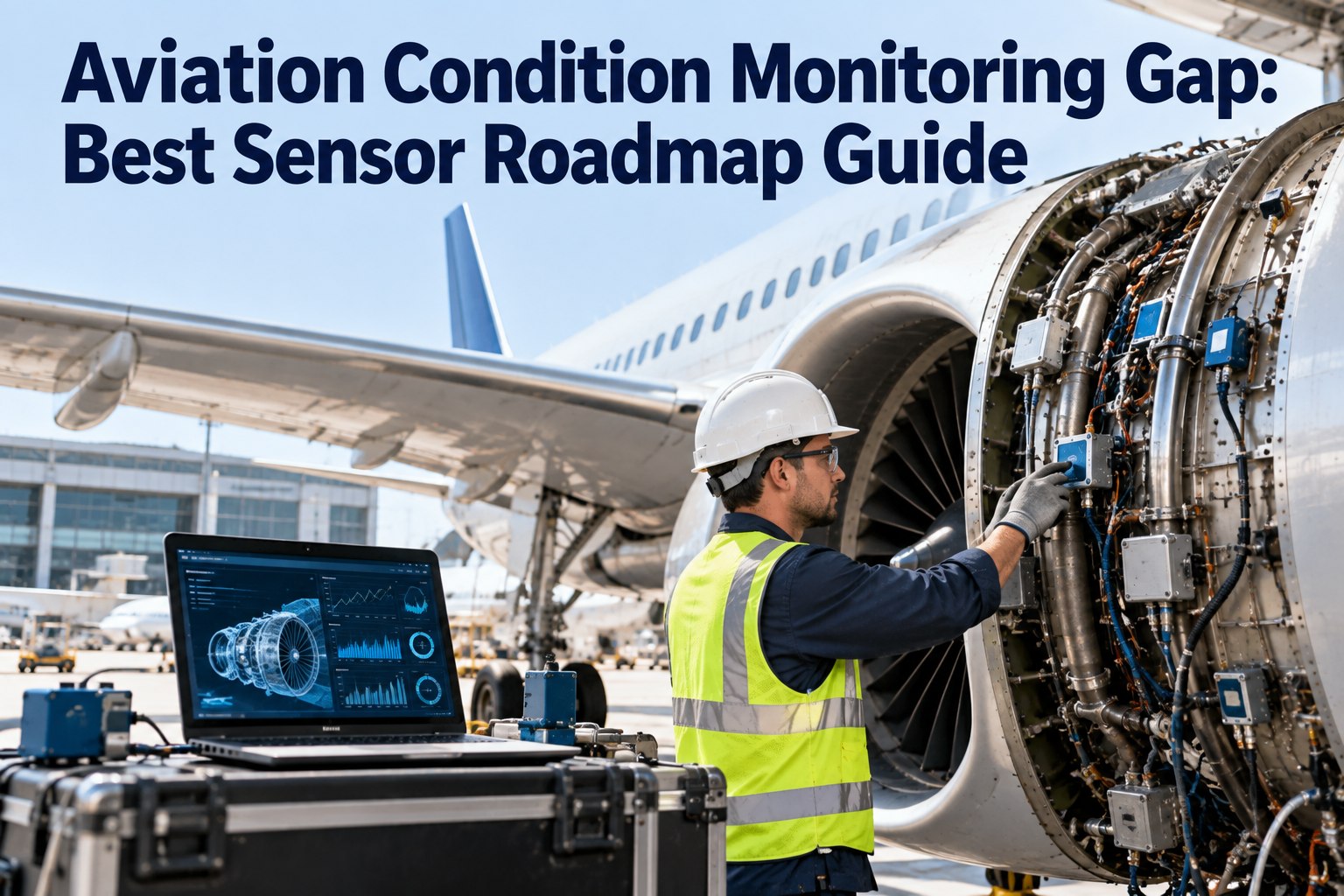
Every commercial aircraft engine generates over 5,000 data parameters per flight—exhaust gas temperature, vibration signatures, oil consumption rates, fuel flow differentials, and dozens of other signals that collectively paint a precise picture of mechanical health. For decades, that picture went largely unread. Maintenance decisions were driven by calendar intervals, flight hours, and—too often—unplanned failures. Today, IoT-enabled predictive monitoring transforms raw sensor streams into maintenance intelligence, giving aviation maintenance teams the ability to act on engine degradation weeks before it forces an AOG event. If you want to explore what this looks like in practice, you can start a free trial of OxMaint's IoT Engine Health Dashboard or book a demo with a technical specialist.
$9B+
Annual cost of unscheduled engine removals globally
IATA 2024
78%
Of engine removals are predictable with continuous health monitoring
Boeing Service Report
4.8x
Cost premium of emergency AOG repair vs. scheduled shop visit
OEMS Benchmark
30–45
Days average early warning window from degradation signal to removal
Rolls-Royce TotalCare
Stop Reacting. Start Predicting.
OxMaint's IoT Engine Health Dashboard connects your sensor data, ACARS feeds, and inspection records into a single predictive intelligence layer—so your maintenance team sees problems forming, not failures already happened.
What Is Predictive Engine Health Monitoring?
Predictive Engine Health Monitoring (PEHM) is the continuous collection, analysis, and interpretation of real-time and historical engine performance data to forecast mechanical degradation before it manifests as a failure. Unlike time-based maintenance—which schedules shop visits at fixed intervals regardless of actual engine condition—PEHM uses sensor telemetry, trend analysis, and machine learning models to determine the optimal intervention window for each individual engine. The result is a dramatic reduction in unscheduled removals, AOG events, and over-maintenance costs. Teams that transition from reactive to predictive monitoring typically reduce engine-related AOG events by 60% within 12 months—explore how by starting a free 30-day trial or booking a demo to see OxMaint's engine analytics in action.
Data Inputs
Sensor telemetry + ACARS + QAR + inspection records
→
Analytics Layer
AI trend detection + deviation alerts + baseline comparison
→
Actionable Output
Maintenance work orders + overhaul forecasts + CapEx planning
The Six Critical Engine Data Streams
A comprehensive engine health monitoring program draws from multiple data streams simultaneously. No single parameter tells the full story—it is the correlation and trending across all six that enables accurate early-warning detection. Understanding what each stream contributes helps teams configure monitoring thresholds that minimize false alarms while catching genuine degradation patterns early.
Thermal
EGT Margin Tracking
Exhaust Gas Temperature margin is the single most sensitive indicator of turbine section degradation. A narrowing EGT margin—even 5°C—signals compressor fouling or turbine tip clearance loss weeks before performance impact is measurable.
Vibration
N1/N2 Vibration Analysis
Fan and high-pressure compressor vibration signatures reveal rotor imbalance, blade damage, and bearing wear with high specificity. Amplitude and frequency shifts from baseline are analyzed per-flight to detect developing mechanical faults in fan, compressor, and turbine stages.
Oil Systems
Oil Consumption and Chip Counts
Abnormal oil consumption rates and magnetic chip detector activations are direct indicators of bearing wear and seal degradation. Trending oil consumption against baseline across engine cycles provides 21+ days of advance warning for bearing-related removals.
Performance
Fuel Flow Delta Trending
Increasing fuel consumption at identical thrust settings indicates compressor efficiency loss. A 0.5% fuel flow increase against fleet baseline may seem minor but represents compressor bleed degradation requiring attention within two to three maintenance cycles.
Telemetry
ACARS Real-Time Reporting
Aircraft Communications Addressing and Reporting System transmits engine parameter snapshots at takeoff, climb, cruise, and approach phases. ACARS integration feeds OxMaint's trending algorithms with standardized cross-fleet data, enabling rapid deviation detection against statistical baselines.
Structural
Borescope Finding Integration
Physical inspection data from borescope findings is logged directly against the digital engine record, correlating visual evidence with sensor trends. This closes the loop between predictive alerts and physical confirmation, improving model accuracy for future forecasting cycles.
Where Conventional Engine Monitoring Breaks Down
Most aviation maintenance organizations collect engine data—but very few translate it into systematic early-warning action. The gap between data collection and actionable intelligence is where unscheduled removals, AOG events, and inflated shop costs originate. These are the four structural failures that predictive monitoring is designed to eliminate. Want to see how OxMaint closes these gaps for fleets like yours? Book a 30-minute demo with our aviation team.
01
Data Silos Between Systems
ACARS data lives in one system. Borescope records in another. Work order history in a third. Without integration, trend analysis is manual, incomplete, and weeks behind. A degradation pattern visible across three data streams goes undetected because nobody has the time to cross-reference them.
Impact: 3–4 week delay in detecting degradation
02
Threshold-Only Alert Fatigue
Legacy systems alert only when a parameter exceeds a hard limit—by which point intervention is often urgent rather than planned. Trend-based monitoring that flags a parameter moving toward a limit at an abnormal rate is far more valuable than a binary alert at 11:59 PM before the limit is breached.
Impact: 65% of alerts arrive too late for cost-effective action
03
No Fleet-Level Baseline Context
An EGT reading of 820°C means nothing without knowing what is normal for that engine type, on that route profile, at that cycle count. Without fleet-level baseline comparisons, maintenance engineers spend hours manually benchmarking data instead of acting on deviations the system should flag automatically.
Impact: 8–12 hours/week per engineer in manual analysis
04
No Forward-Looking CapEx Visibility
Scheduled engine shop visits appear in maintenance plans. Unscheduled removals driven by degradation trends do not—until they happen. Without predictive overhaul forecasting, finance and operations teams cannot budget accurately, leading to reactive CapEx decisions that strain liquidity at the worst moments.
Impact: 38% of engine CapEx spend is unplanned
How OxMaint's IoT Engine Health Dashboard Works
OxMaint's IoT Engine Health Dashboard is architected around the full data lifecycle—from raw sensor ingestion through to maintenance work order generation. Each layer of the platform is designed to eliminate the manual steps that create delays and blind spots in conventional engine monitoring programs. See the entire workflow live—start your free trial today or book a demo and our team will walk you through your specific fleet configuration.
Data Integration
Multi-Source Sensor Ingestion
Native ACARS integration, QAR file parsing, IoT direct sensor feeds, and manual data entry interfaces converge into a single engine digital twin. Every parameter is timestamped, normalized, and cross-referenced against the engine serial number record for end-to-end traceability.
AI Analytics
Adaptive Trend Baselines
The system builds individual engine baselines from actual operating history, not generic fleet averages. Deviation alerts fire when a parameter trends abnormally relative to that engine's specific profile—dramatically reducing false positives while catching early-stage degradation that threshold-only systems miss entirely.
Early Warning
Multi-Parameter Correlation Alerts
Single-parameter anomalies generate advisory flags. When two or more correlated parameters trend abnormally simultaneously—rising EGT margin alongside increasing vibration, for example—the system escalates automatically to a maintenance action alert, enabling pre-emptive scheduling before the next revenue flight.
Forecasting
Overhaul Prediction Engine
Using degradation rate modeling, the platform projects the probable shop visit window 30 to 90 days in advance. Predictions are surfaced as actionable maintenance recommendations with confidence intervals, allowing MRO planning, slot booking, and parts pre-positioning to happen on your schedule—not the engine's.
Work Orders
Automatic Maintenance Triggers
When an alert reaches the action threshold, OxMaint automatically generates a work order linked to the engine record—complete with sensor trend data, alert history, and relevant AMM references. Technicians receive the full diagnostic context before they open a panel, cutting investigation time by up to 40%.
CapEx Planning
Rolling Engine Budget Forecasts
Predicted shop visits feed directly into OxMaint's 5-to-10-year CapEx forecasting model. Finance teams see projected engine maintenance costs by tail number, fleet segment, and fiscal quarter—enabling investor-grade budget planning that reflects actual fleet health, not optimistic assumptions.
Reactive vs. Predictive Engine Monitoring: A Direct Comparison
The operational and financial difference between reactive and predictive engine monitoring is not subtle. The following comparison reflects real-world outcomes across airline maintenance programs that have transitioned to data-driven monitoring protocols. Each dimension represents a decision point where monitoring strategy directly determines cost and operational outcome.
| Dimension |
Reactive Monitoring |
Predictive Monitoring (OxMaint) |
| Removal trigger |
In-flight exceedance or hard limit breach |
Trend deviation 30–45 days before limit |
| Planning window |
0–48 hours, AOG conditions |
30–90 days for optimized scheduling |
| Shop visit cost |
4.8x multiplier vs. planned visit |
Scheduled visits at standard rates |
| Parts availability |
AOG freight, premium pricing |
Pre-positioned, contract pricing |
| MRO slot |
Emergency slot, limited options |
Optimal slot selection, negotiated pricing |
| Revenue impact |
Flight cancellation + rebooking costs |
Scheduled overnight, zero revenue impact |
| CapEx predictability |
Unplanned events distort quarterly budgets |
Rolling 5–10 year forecasts with confidence intervals |
| Data utilization |
Manual review, periodic spot checks |
Continuous automated analysis, every flight |
Measured ROI: What Teams Achieve in the First 12 Months
The following performance improvements are drawn from aviation maintenance programs operating continuous engine health monitoring at the fleet level. Results vary by fleet size, engine type, and baseline monitoring maturity—but the directional improvement across all dimensions is consistent. The maintenance teams achieving these results are not running experimental programs—they are using the same capabilities available in OxMaint's platform today, which you can trial free for 30 days or book a walkthrough demo to evaluate for your fleet.
60%
Reduction in AOG Events
Teams with continuous engine trend monitoring eliminate the majority of surprise removals within the first operational year
$2.1M
Average Annual Savings per 20-Aircraft Fleet
Combining reduced AOG costs, optimized shop visit scheduling, and pre-positioned parts procurement
35%
Lower Engine MRO Spend
Condition-based removals instead of time-based eliminate premature shop visits and over-maintenance waste
94%
Forecasting Accuracy at 30-Day Horizon
OxMaint's multi-parameter trend models achieve industry-leading prediction accuracy for planned shop visit windows
Frequently Asked Questions
How does OxMaint integrate with existing ACARS and engine data systems?
OxMaint ingests ACARS data through standard ARINC 620 message parsing and supports direct integration with major engine data ground station providers. QAR files can be uploaded manually or via automated FTP transfer. For fleets using existing EHM (Engine Health Management) programs from OEM providers, OxMaint accepts standardized CSV and XML exports from GE Aviation's EngineWatch, Rolls-Royce's ACMF, and Pratt and Whitney's FAST platform—consolidating multi-source data into a single dashboard without requiring replacement of existing OEM tools. Contact our integration team during your
demo session to map your specific data architecture.
What engine types and aircraft platforms does the monitoring cover?
OxMaint's engine health module supports turbofan, turboprop, and turboshaft engine types across commercial, regional, and business aviation platforms. Pre-configured parameter libraries are available for CFM56, CFM LEAP, GE90, GE9X, PW1000G, PW4000, V2500, RR Trent series, and PT6 families. Custom parameter sets can be configured for any engine type where sensor data is available. Fleet operators with mixed engine types across multiple aircraft variants benefit from OxMaint's unified asset hierarchy—managing every engine serial number under a single portfolio view with configurable baseline thresholds per engine type.
How long does it take to establish a meaningful engine baseline for trend analysis?
For engines with historical ACARS or QAR data available, OxMaint can generate initial baselines immediately by ingesting 90 to 180 days of historical flight data during onboarding. For engines without historical digital records, the system builds adaptive baselines from 30 to 60 flights of live data collection—typically 2 to 4 weeks of normal operations. During the baseline establishment period, alerts operate in advisory mode rather than action mode to prevent false positives from immature statistical models. Most operators have production-grade predictive alerting active within 6 weeks of platform deployment.
Start your free trial and our onboarding team will guide you through historical data ingestion on day one.
Can engine health data feed directly into CapEx planning and financial reporting?
Yes. OxMaint's rolling CapEx forecasting model directly ingests engine condition scores and predicted shop visit windows from the health monitoring module. Forecast reports present projected engine maintenance expenditure by aircraft, engine serial number, and fiscal period—exportable in formats suitable for investor reporting, board-level review, and MRO contract negotiations. For portfolio operators managing multiple assets across different entities, the multi-property reporting layer aggregates engine CapEx forecasts at the portfolio level with drill-down to individual tail numbers. This is the investor-grade reporting capability that separates OxMaint from single-function EHM tools—see it in a live
demo session.
OxMaint IoT Engine Health Dashboard
Your Engine Data Is Already Telling You Something. Are You Listening?
Every unscheduled engine removal in your fleet's history was preceded by a detectable pattern in the data. OxMaint's predictive monitoring platform makes sure the next one never surprises you. Connect your sensor feeds, build your baselines, and start turning raw engine telemetry into maintenance intelligence that protects your schedule and your budget.
Free 30-day trial, no credit card
Implementation in under 2 weeks
No heavy onboarding fees
Multi-fleet, multi-site capable