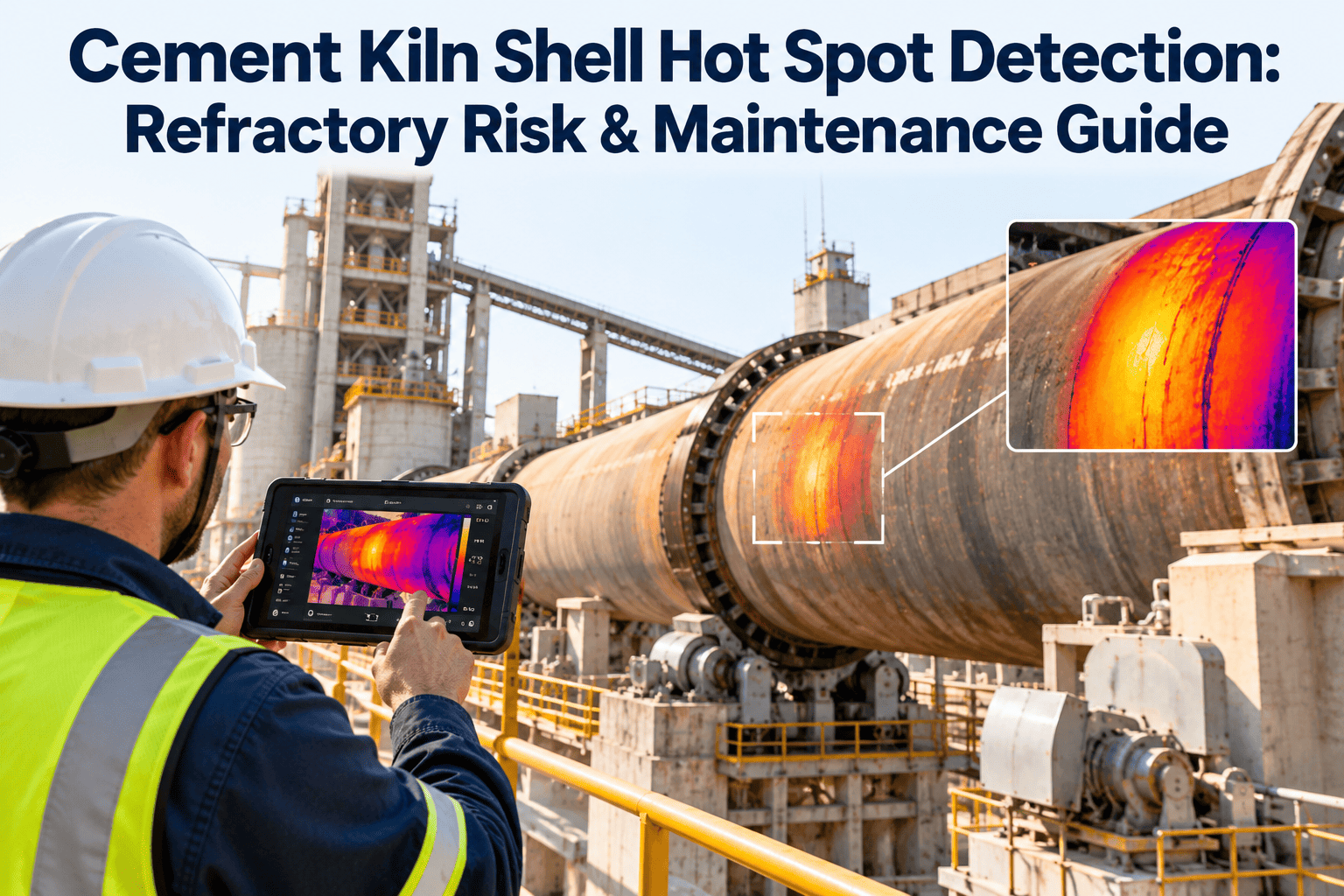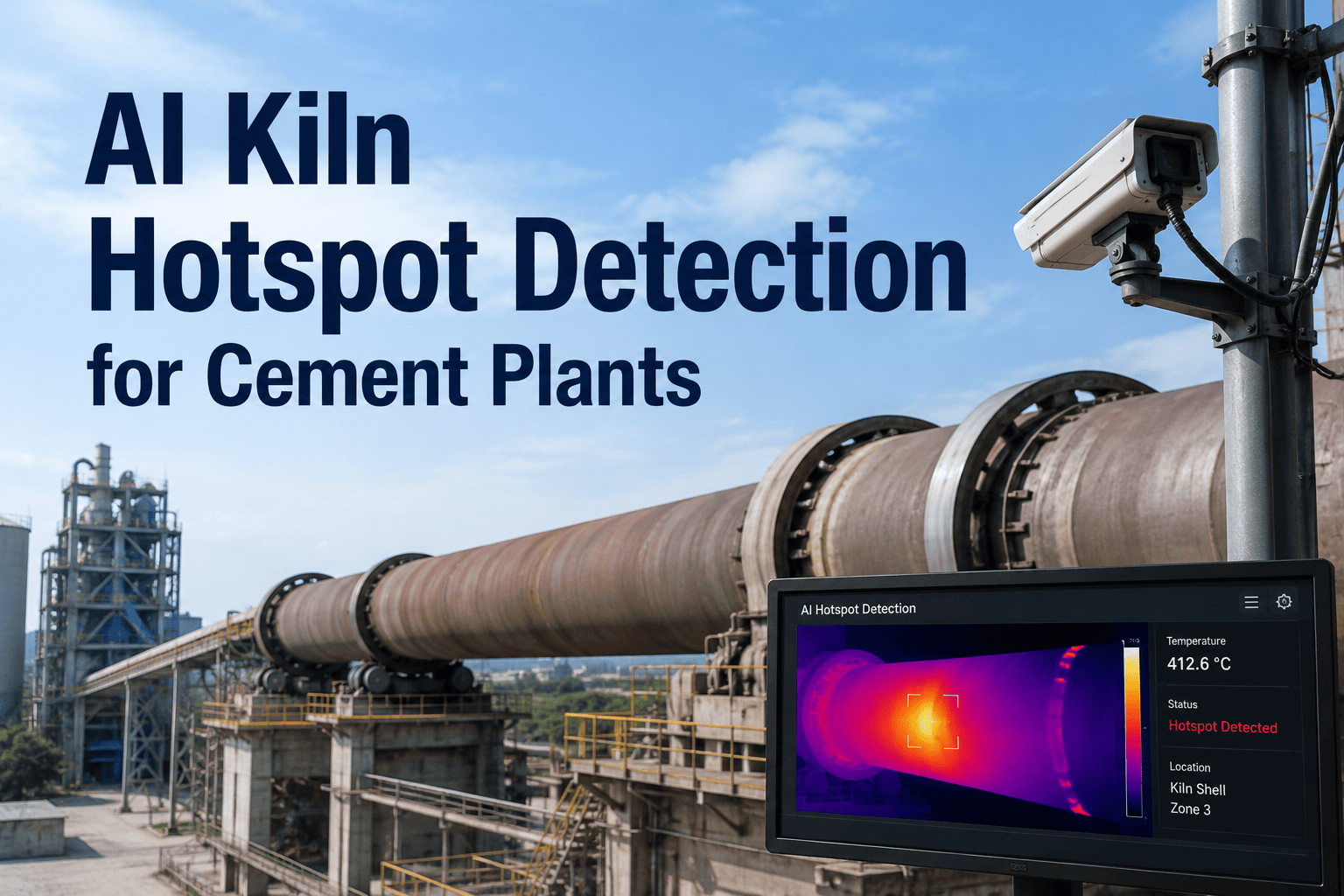
A refractory failure that forces an emergency kiln stop costs a cement plant between $800,000 and $2.5 million — in emergency brick procurement, expedited relining crews, kiln cool-down and heat-up energy loss, and clinker production shortfall. The engineering reality is that every one of these failures is preceded by a detectable thermal signature days or weeks before the shell temperature reaches a critical threshold. AI-powered hotspot detection reads that signature continuously across every zone of the rotating shell, identifies the precursor patterns that precede failure, and triggers a CMMS work order while the intervention is still planned and affordable. The gap between plants that catch hotspots early and those that respond to red-shell alarms is not a gap in equipment — it is a gap in detection and response workflow. Oxmaint closes that gap by connecting AI thermal analysis directly to the work order system your maintenance team already uses. If your plant relies on monthly pyrometer readings or annual shutdown inspections to assess refractory condition, book a consultation to see what continuous AI monitoring changes.
Catch Hotspots 60–90 Days Before Failure
AI thermal monitoring detects refractory degradation, coating loss, and unsafe shell temperature changes — and auto-generates work orders before the red-shell alarm fires.
Why Monthly Readings Miss the Failure Curve
Refractory degradation is not a sudden event — it is a gradual thermal progression that unfolds over days and weeks. A 20% reduction in lining thickness produces a measurable and detectable temperature rise. The problem with monthly pyrometer readings is that they sample a continuous process at 30-day intervals — and a critical hotspot can develop and reach dangerous levels in 72 hours.
What Oxmaint AI Vision Detects — and When
Oxmaint AI Vision processes continuous thermal data from kiln shell scanners and identifies six distinct failure signatures — each with different detection lead times and different recommended responses.
Oxmaint AI Vision connects your kiln shell scanner data to the maintenance system — so every thermal anomaly becomes a structured work order, not a crisis. One prevented emergency stop typically recovers 10+ years of CMMS subscription cost.
From Scanner Data to Work Order in Under 5 Minutes
Oxmaint AI Vision does not replace your kiln shell scanner — it adds the intelligence layer between raw thermal data and maintenance action. The integration is straightforward regardless of scanner brand or vintage.
Questions About AI Kiln Hotspot Detection
Oxmaint AI Vision turns your kiln shell scanner data into a continuous early warning system — detecting refractory degradation, coating collapse, and structural hotspots 30 to 90 days before they become emergency stops, and routing every finding directly to a CMMS work order your team can act on.