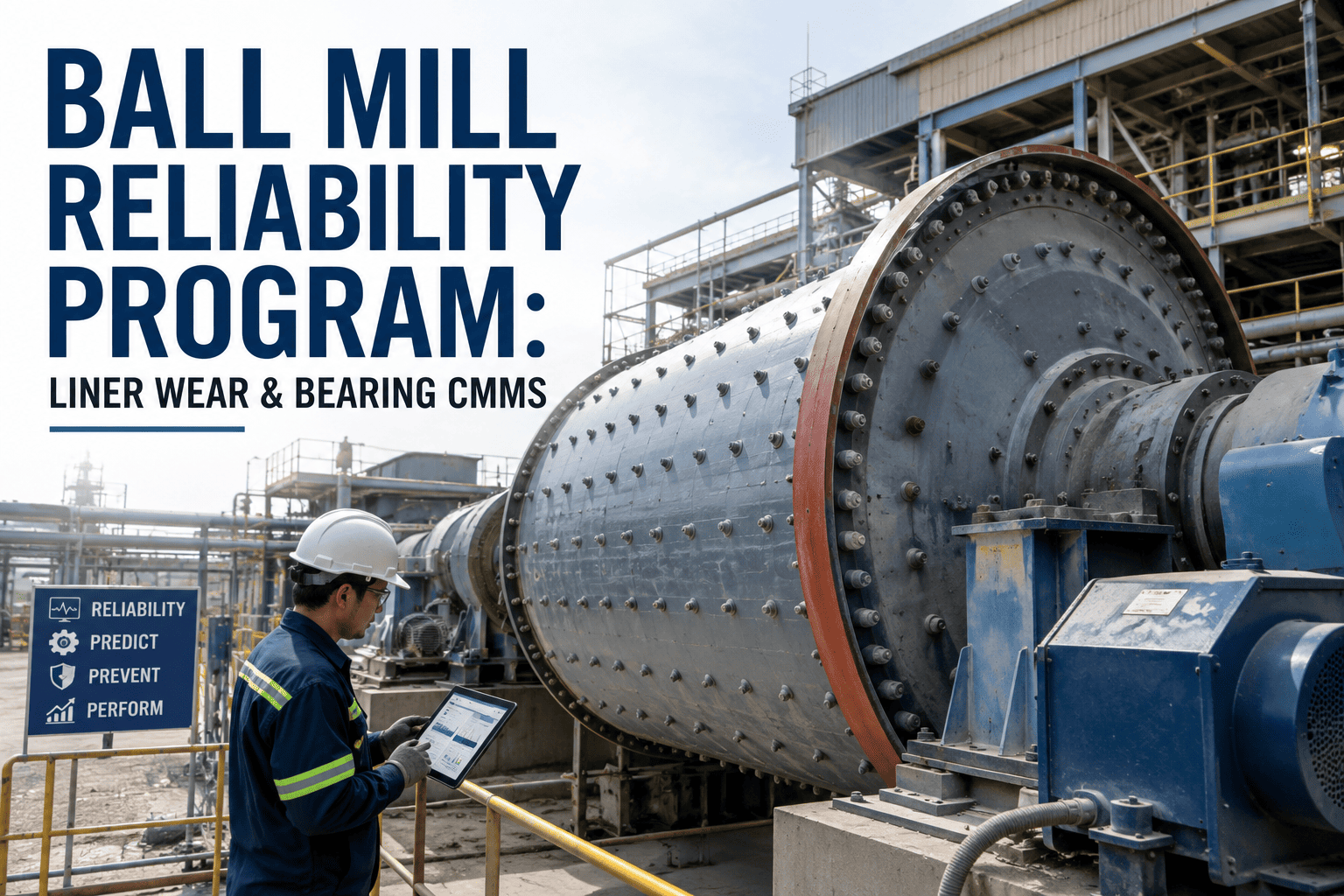
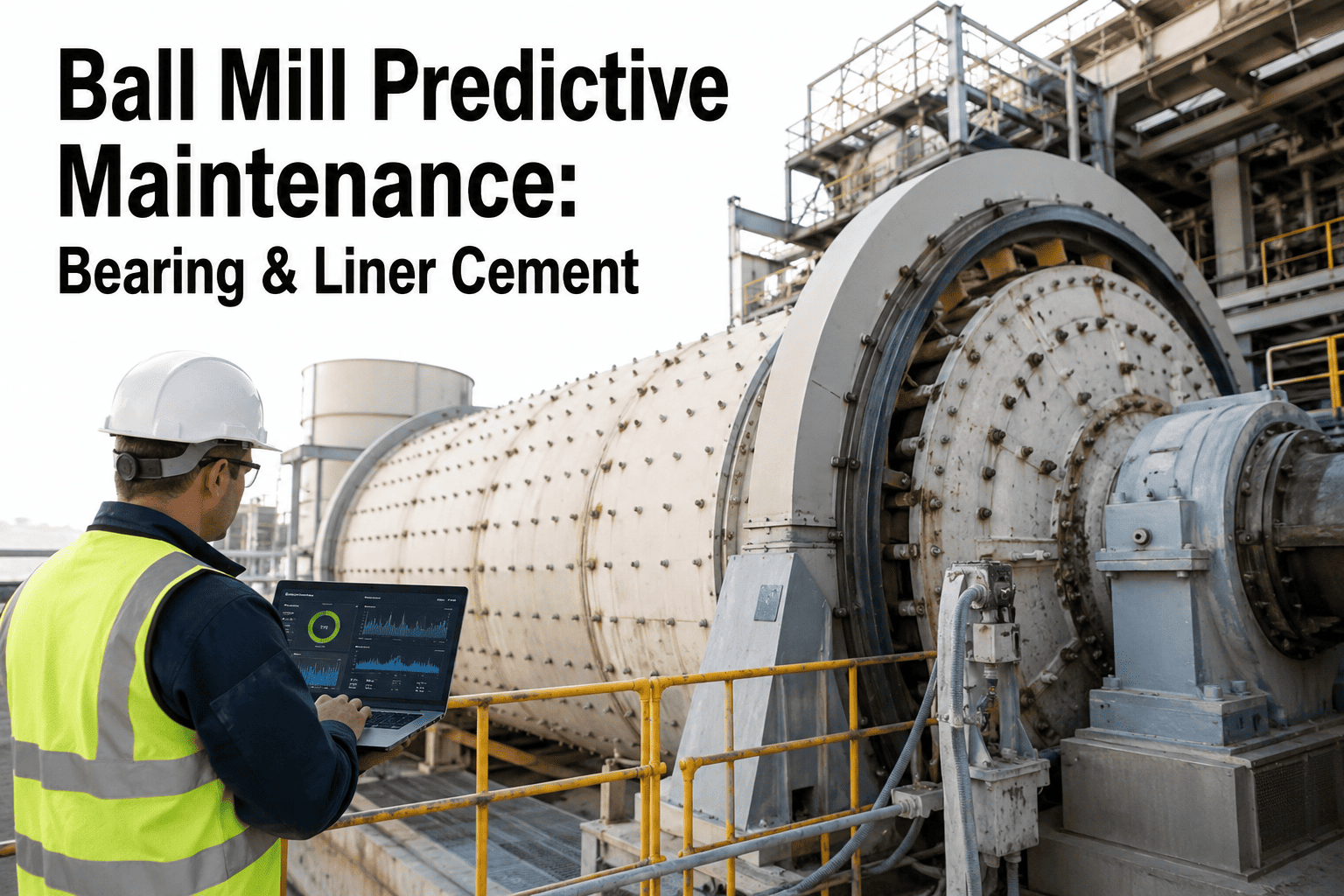
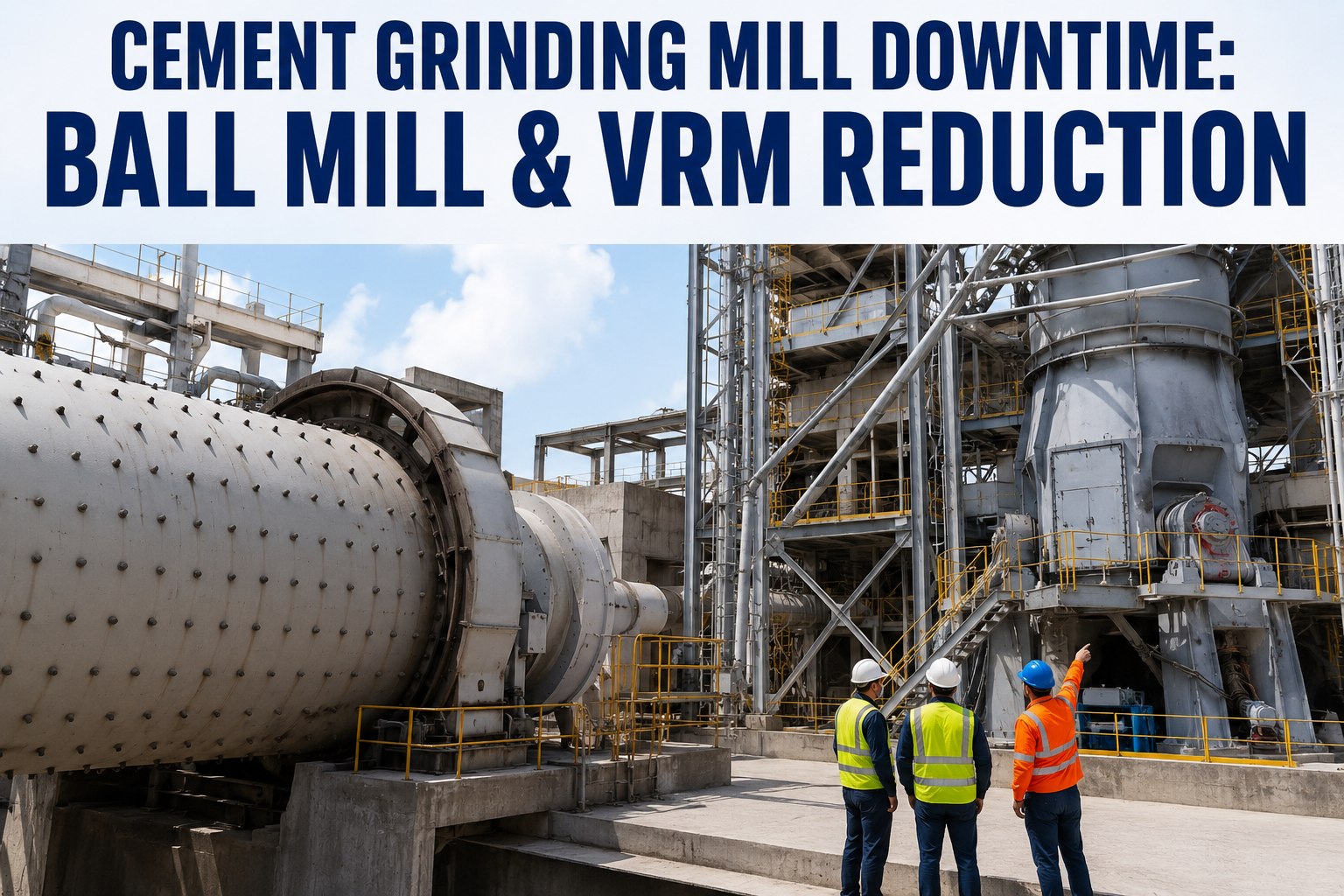
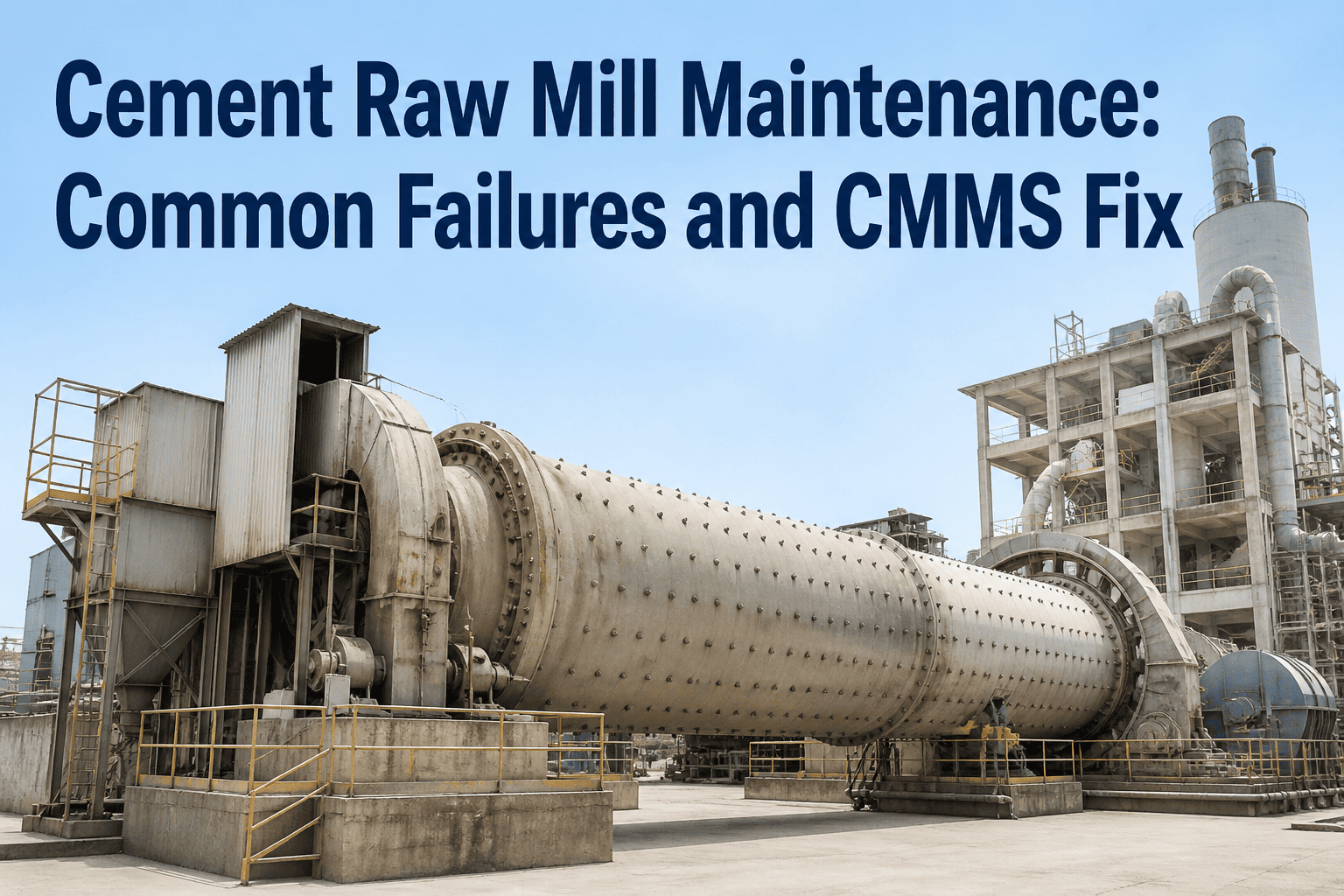
The ball mill is the workhorse of cement grinding, consuming 40-50% of the total energy in a cement plant and representing one of the largest capital investments in the production line. When a ball mill fails, the entire plant stops. Yet many operators treat ball mill maintenance as routine—until a catastrophic failure costs millions in lost production and emergency repairs.
Modern cement plants are pushing mills harder: higher throughput, finer product specifications, and alternative fuels that introduce contaminants. This operational intensity makes proactive maintenance non-negotiable. Oxmaint's CMMS platform transforms ball mill maintenance from reactive firefighting to predictive asset management—tracking liner wear, bearing health, and drive system performance to prevent the failures that stop production.
Prevent Catastrophic Failures. Extend Liner Life. Optimize Grinding Efficiency.
Critical Failure Modes: Diagnosis & Solutions
Ball mill failures follow predictable patterns. Understanding the root causes and early warning signs allows maintenance teams to intervene before minor issues become catastrophic failures. Here are the four most common—and costly—ball mill problems:
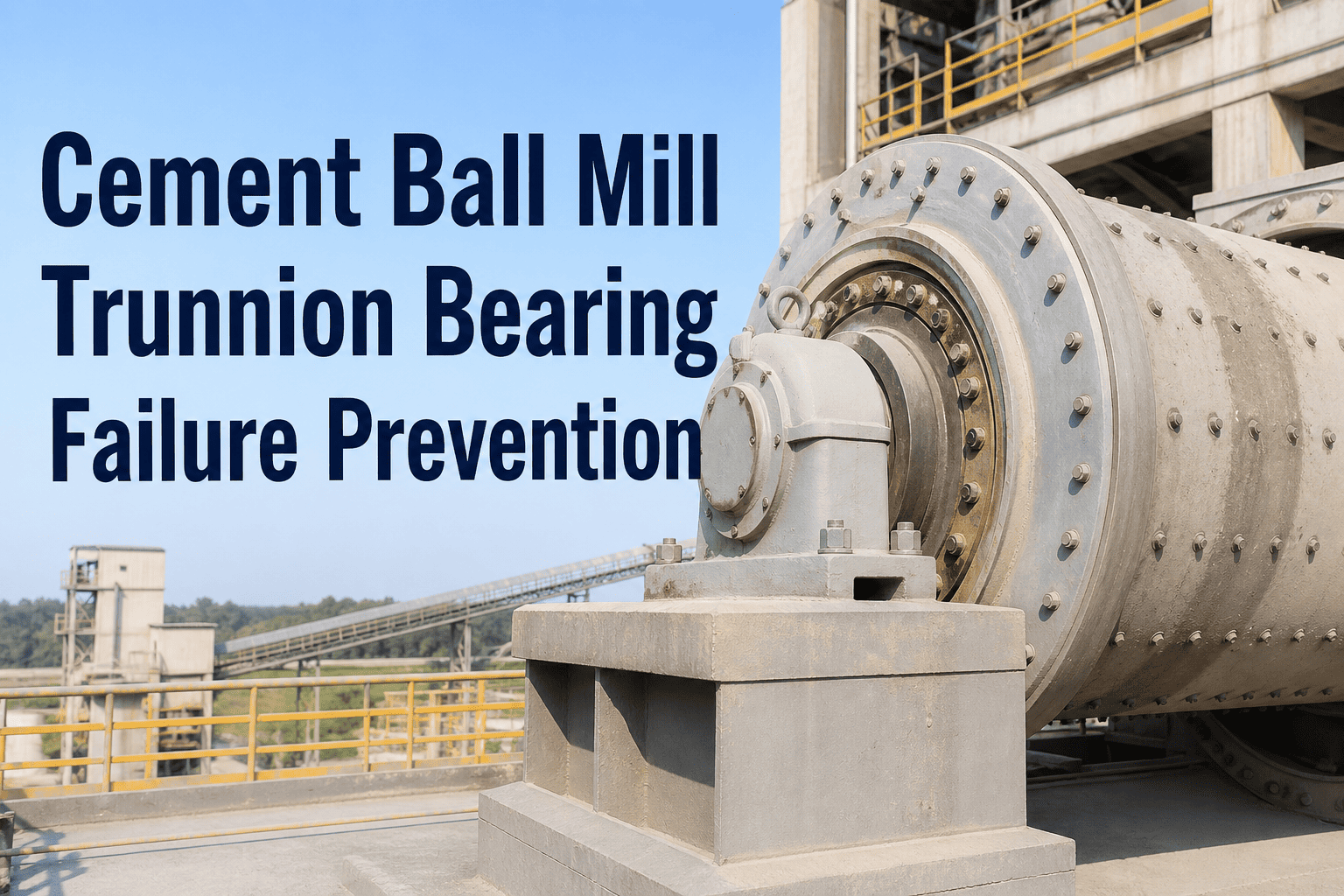
Trunnion Bearing Failure
The most catastrophic and expensive failure mode. Trunnion bearings support the entire mill weight (hundreds of tonnes). Lubrication starvation, contamination, or misalignment leads to overheating, seizure, and potential shell damage.
- Temperature monitoring: Alarm at >65°C, trip at >75°C
- Oil analysis every 3 months for water/contamination
- Alignment checks annually (laser alignment preferred)
- Automated lubrication system verification weekly
Shell Liner Wear & Bolt Failure
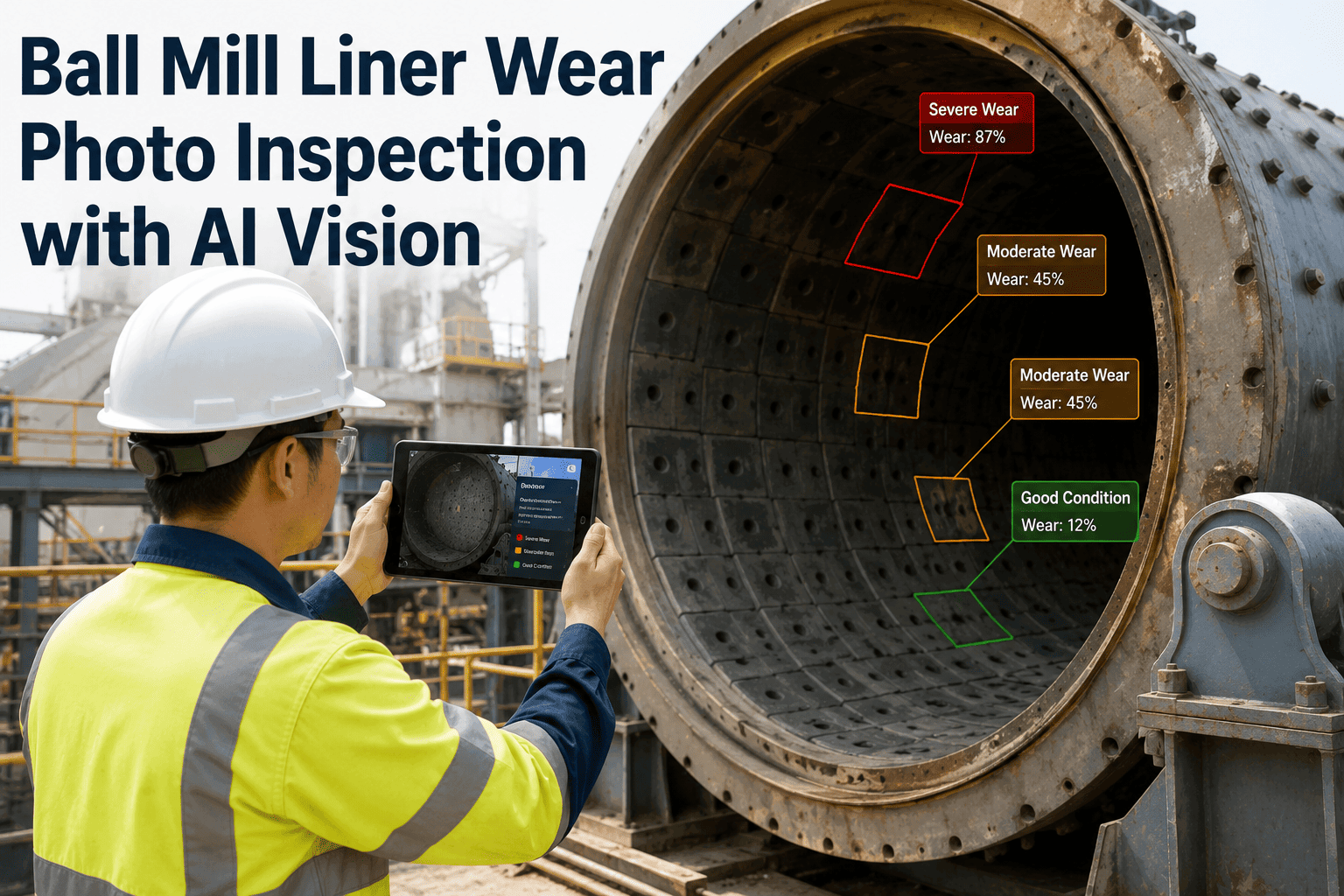
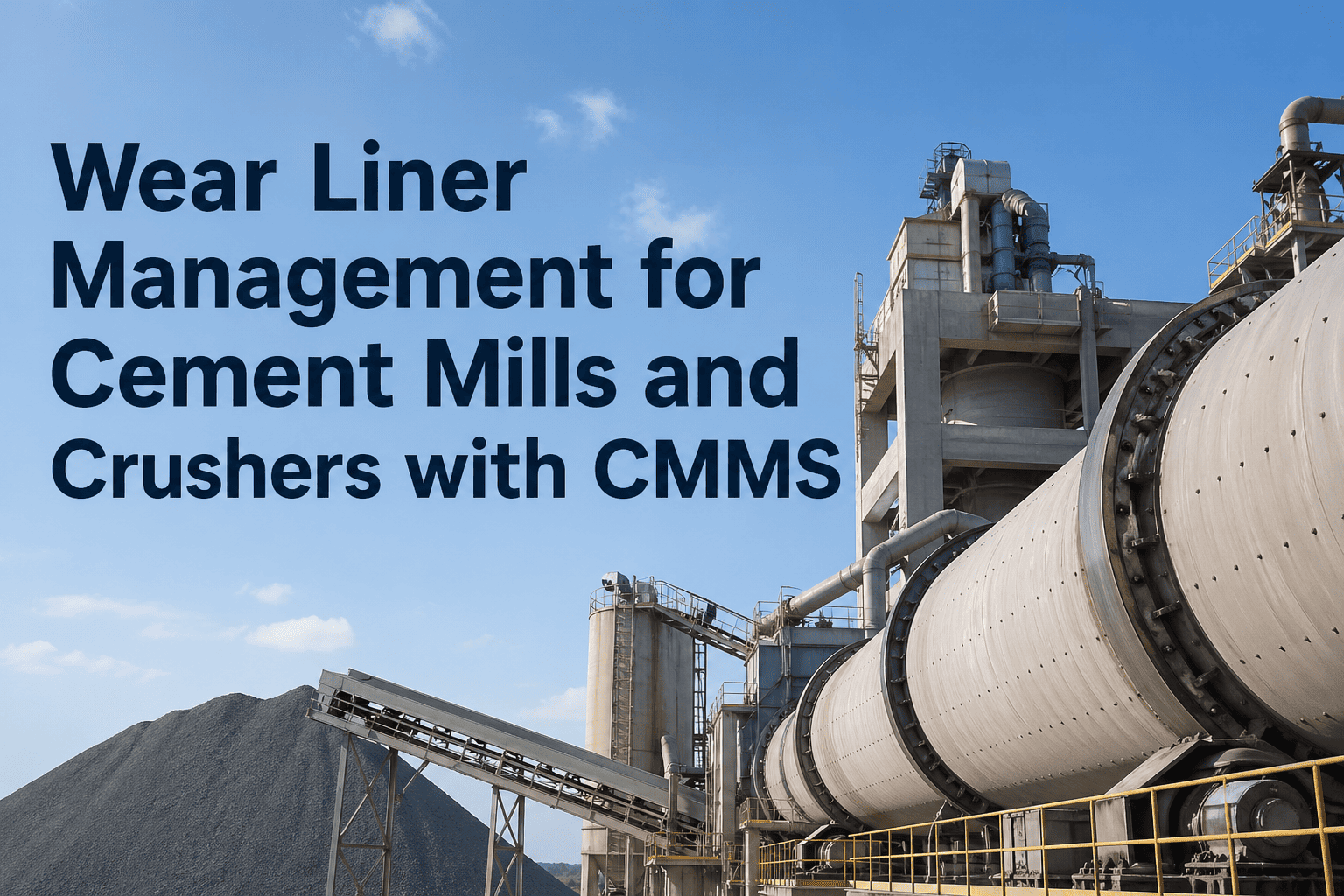
Worn liners reduce grinding efficiency and risk shell damage. Loose or broken bolts can fall into the mill, causing secondary damage to the diaphragm and grinding media. Unplanned liner replacement costs 3-5x scheduled maintenance.
- Ultrasonic thickness testing monthly
- Bolt torque verification every 2 weeks
- Weight-based wear tracking via feed rates
- Planned reline at 25% remaining thickness
Gearbox & Drive System Issues
The girth gear and pinion or gearbox drive system transmits massive torque. Misalignment, lubrication breakdown, or tooth wear causes vibration, efficiency loss, and eventual tooth failure. Gear replacement requires 2-4 weeks downtime.
- Vibration analysis monthly (trending acceleration)
- Backlash measurement quarterly
- Lubricant analysis for metallic particles
- Infrared thermography for hot spots
Diaphragm & Intermediate Partition
The diaphragm separates grinding chambers and controls material flow. Slot blinding reduces throughput; structural failure allows media migration between chambers, destroying grinding efficiency and product quality.
- Visual inspection every liner change
- Slot width measurement (wear increases flow)
- Pressure differential monitoring
- Media grading analysis to prevent slot blockage
Mill Anatomy: Critical Inspection Points
Effective ball mill maintenance requires systematic inspection of components with varying wear rates and failure modes. This risk-based approach focuses attention where it matters most:
High-Risk Components Requiring Continuous Monitoring
Trunnion Bearings
Sliding shoe or trunnion bearings carry the full mill load. Oil film thickness, temperature, and vibration are critical parameters.
High RiskMill Shell & Liners
Subject to impact and abrasive wear. Thickness monitoring prevents shell exposure and structural damage.
High RiskGirth Gear & Pinion
Open gearing requires lubrication monitoring. Alignment critical to prevent pitting and scoring.
High RiskDrive Motor & Coupling
High-torque synchronous motors or wound rotor motors. Coupling alignment and rotor condition monitoring.
Medium RiskDiaphragm & Screens
Control material transport between chambers. Slot wear affects residence time and grinding efficiency.
Medium RiskFeed & Discharge Systems
Chutes, feeders, and separators. Wear liners and flow control devices require periodic inspection.
Lower RiskVibration Analysis: The Early Warning System
Vibration monitoring is the most effective predictive maintenance tool for ball mills. It detects bearing defects, gear mesh problems, and alignment issues weeks or months before failure. Here's how to interpret vibration signatures:
Maintenance Schedule: From Daily to Annual
Ball mill maintenance spans multiple time horizons—from operator rounds to major overhauls. This structured program balances inspection frequency with operational demands:
Liner Wear Optimization: Extending Campaign Life
Mill liners represent 30-40% of maintenance costs and dictate shutdown timing. Optimizing liner life requires understanding wear mechanisms and operating parameters:
Liner Wear Lifecycle & Intervention Points
Break-in (0-500 hrs)
High initial wear rate as surface roughness reduces. Monitor for bolt loosening.
Steady State (500-8K hrs)
Consistent wear rate. Optimal efficiency zone. Schedule reline before next stage.
Accelerated Wear (8K-10K hrs)
Profile changes increase impact. Efficiency drops. Plan shutdown.
Critical (10K+ hrs)
Risk of shell damage, bolt failure, throughput loss. Emergency risk.
Stop Guessing. Start Measuring.
Ball mill failures are predictable—with the right data. Oxmaint CMMS integrates vibration sensors, oil analysis, and inspection checklists into a unified reliability platform. Get advance warning of bearing failures, automate liner wear tracking, and optimize your maintenance shutdowns.
Key Performance Metrics for Mill Reliability
Track these metrics monthly to assess maintenance effectiveness and predict future interventions:
Pre-Shutdown Inspection Checklist
Before any planned mill entry, complete this systematic inspection to maximize maintenance efficiency and safety:
Critical Inspection Points (Lockout/Tagout Required)
Transform Ball Mill Maintenance with Oxmaint
Join cement plants worldwide using Oxmaint to eliminate unplanned mill downtime. Our CMMS handles work order management, predictive maintenance scheduling, spare parts inventory, and compliance documentation—all in one platform designed for heavy industry.
Frequently Asked Questions
How often should ball mill liners be replaced?
Typically every 8,000-12,000 operating hours, depending on material abrasiveness, mill speed, and liner material. High-chrome iron liners in cement grinding average 9,000-10,000 hours. Monitor thickness monthly and schedule replacement at 25% remaining life to avoid shell damage.
What causes excessive ball mill vibration?
Common causes include: trunnion bearing wear (low frequency, <2x RPM), gear mesh problems (GMF sidebands), loose or broken liners (impact pulses), mill imbalance (1x RPM), and foundation issues (structural resonance). Frequency analysis identifies the specific source.
How do I optimize ball mill grinding efficiency?
Maintain proper media charge (28-35% of mill volume), optimize liner profile for material trajectory, control feed rate and size distribution, ensure adequate ventilation (for cement mills), and maintain diaphragm slot condition. Even a 5% efficiency gain saves significant energy costs annually.
What is the best lubrication strategy for trunnion bearings?
Use ISO VG 680 or VG 1000 oil with EP additives. Maintain oil temperature at 40-50°C. Implement offline filtration to achieve ISO 18/16/13 cleanliness. Analyze oil quarterly for moisture, oxidation, and metallic particles. For large mills, consider oil mist or air-oil lubrication systems for better film strength.
How does Oxmaint CMMS specifically help with ball mill maintenance?
Oxmaint provides vibration data integration with automated alarm thresholds, liner wear tracking with predictive replacement scheduling, lubrication management (oil analysis scheduling, filter change tracking), work order automation triggered by condition monitoring alerts, and spare parts optimization for liners, bearings, and drive components. The mobile app enables technicians to complete inspections and access history at the mill.