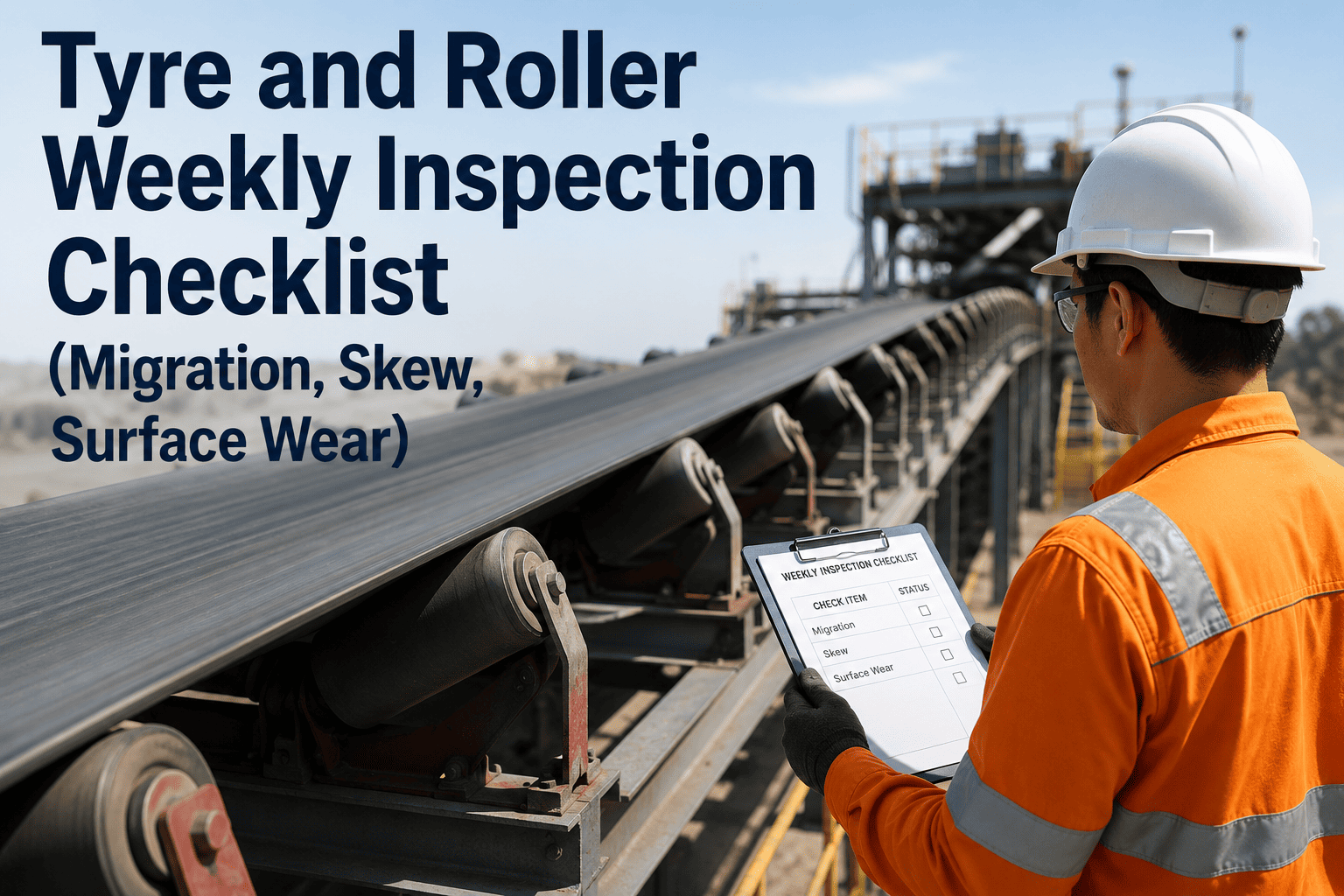
Tyre and Roller Weekly Inspection Checklist (Migration, Skew, Surface Wear)
By Johnson on May 20, 2026
The tyre and roller system is the mechanical heart of any rotary kiln — and it is also the most expensive drivetrain component to replace when neglected. A single worn tyre on a cement kiln can cost $150,000 to $400,000 to replace, including machining, downtime, and installation labour. Yet the failure mechanisms that lead to tyre replacement — migration creep, roller skew, surface spalling, and lubrication breakdown — are all detectable weeks or months in advance with a structured weekly inspection programme. Tyre migration causes shell flexing and refractory cracking. Roller skew generates axial thrust loads that destroy tyre flanges and trunnion bearings. Surface wear patterns on tyres and rollers reveal misalignment and load distribution problems that, left uncorrected, accelerate across every operating hour. This tyre and roller weekly inspection checklist covers migration measurement, skew assessment, surface condition scoring, lubrication verification, and CMMS-tracked condition records — giving kiln engineers and rotating equipment teams a repeatable framework that catches drivetrain problems before they become capital failures. Sign Up Free on Oxmaint to digitise your tyre and roller inspection records and build a full condition-trending history across every kiln station.
Tyre and roller problems give you warning signals weeks before they cause damage — if you know what to measure and how to trend it. Oxmaint captures migration readings, skew assessments, surface scores, and lubrication status by kiln station every week, automatically flagging the conditions that need engineering attention before the next shutdown.
Tyre creep along kiln shell causes shell flexing, refractory joint cracking, and shell ovality. Detectable by weekly migration mark measurement.
Repair cost if missed: $80,000–$200,000
S
Roller Skew
Misaligned rollers generate axial thrust that destroys tyre flanges and overloads trunnion bearings. Detectable by contact pattern and thrust measurement.
Repair cost if missed: $60,000–$180,000
W
Surface Wear
Spalling, grooving, and banding on tyre or roller surfaces indicate load distribution failure and hardness mismatch. Leads to vibration and bearing overload.
Repair cost if missed: $40,000–$120,000
L
Lube Failure
Dry tyre-roller contact causes rapid surface hardening, heat generation, and spalling. A weekly lubrication check takes under 5 minutes and prevents years of damage.
Repair cost if missed: $30,000–$90,000
Phase 01 — Tyre Migration Assessment
Weekly Tyre Migration Measurement and Creep Rate Calculation
Tyre migration — the slow circumferential movement of the tyre relative to the kiln shell — is the primary mechanical indicator of tyre-shell fit deterioration. Every tyre migrates slightly; the engineering question is always the rate. A migration rate below 25mm per week in an established tyre is typically acceptable. A sudden increase in rate, or any migration exceeding 50mm per week, requires immediate engineering review and corrective action before refractory damage and shell flexing compound the problem.
Migration Rate Assessment Scale
0–25mm/week
Acceptable
Log and trend. No action required if stable.
25–50mm/week
Watch Zone
Increase inspection to twice weekly. Review tyre clearance.
50–100mm/week
Alert — Engineer Review
Engineering assessment within 48 hours. Check shell pad condition.
> 100mm/week
Critical — Plan Intervention
Schedule corrective maintenance at next available window. Shell inspection required.
Tyre Migration ChecklistVDZ Guidelines / Plant SOP
Phase 02 — Roller Skew and Alignment Assessment
Roller Skew, Thrust, and Contact Pattern Inspection
Roller skew is the single most common cause of premature tyre and roller surface wear. Even a small skew angle — as little as 0.5° from parallel with the kiln axis — generates significant axial thrust loads that destroy tyre flanges, accelerate bearing wear, and cause uneven contact pressure across the full roller width. Weekly skew assessment uses both contact pattern observation and thrust measurement to detect misalignment before surface damage occurs.
Correct Contact Pattern
Full-width, even contact across roller face. No concentrated wear bands. Minimal axial thrust. No adjustment required.
Partial Contact — Skew Present
Contact concentrated on one side of roller. Wear band developing. Moderate axial thrust. Roller adjustment required within 14 days.
Edge Contact — Critical Skew
Contact limited to roller edge. Severe wear and thrust loading. Immediate roller adjustment required. Check tyre flange for damage.
Phase 03 — Surface Condition and Wear Pattern Scoring
Tyre and Roller Surface Wear Assessment
Surface condition scoring of tyres and rollers is the most direct measure of drivetrain health. A consistent scoring system — applied weekly by the same inspector — builds a trend record that predicts when resurfacing, grinding, or replacement will be needed, allowing planned intervention instead of reactive emergency maintenance.
Surface Condition Scoring System
Score
Condition Description
Surface Features
Required Action
1 — Excellent
Smooth, bright contact surface. No visible defects.
No pitting, banding, or grooving. Even polish.
No action. Log and continue monitoring.
2 — Good
Minor surface marks. Contact band even.
Light surface marks under 0.5mm depth. No grooving.
Monitor weekly. No immediate action required.
3 — Moderate
Visible wear bands or early pitting developing.
Wear bands 0.5–2mm. Isolated pits under 5mm diameter.
Engineering review within 30 days. Plan resurfacing.
4 — Poor
Significant grooving, banding, or spalling present.
Grooves over 2mm. Spall clusters. Surface hardening visible.
Schedule grinding or resurfacing at next planned shutdown.
5 — Critical
Deep spalling, cracking, or structural surface loss.
Spalls over 10mm depth. Cracks visible. Uneven contact.
Immediate engineering assessment. Shutdown may be required.
Tyre-Roller Contact Lubrication and Bearing Lubrication Checklist
Lubrication of the tyre-roller contact zone and roller trunnion bearings is a weekly critical task that takes under 15 minutes per station but prevents tens of thousands of dollars in surface damage. Dry tyre-roller contact causes rapid surface hardening, heat generation, and spalling within weeks. Over-lubrication is also a problem — excess lubricant on the contact zone reduces traction and can cause tyre slippage at the roller.
Weekly tyre and roller inspection data locked in paper logs or spreadsheets provides no early warning capability. Oxmaint structures every migration reading, skew score, surface condition score, and lubrication check by station, building the trend record that tells your team — weeks in advance — which station needs intervention at the next planned shutdown window.
Inspection Parameter, Frequency, Action Level, and Governing Standard
Inspection Parameter
Measurement Method
Frequency
Action Level
Governing Standard
Tyre Migration Rate
Reference mark measurement
Weekly
> 50mm/week — engineer review
VDZ Guidelines / Plant SOP
Tyre-Shell Clearance
Feeler gauge at pad positions
Weekly
> 12mm — shutdown inspection
OEM Maintenance Manual
Roller Contact Band
Chalk/dye marker observation
Weekly
< 70% width — adjustment review
ISO 10972 / VDZ SOP
Bearing Temperature
IR thermometer
Weekly
> 80°C above ambient — immediate check
ISO 15243 / Plant SOP
Surface Condition Score
Visual inspection — 5-point scale
Weekly
Score 4 — plan resurfacing; Score 5 — immediate
ISO 10972 / Manufacturer SOP
Tyre/Roller Diameter
Circumference tape (pi tape)
Monthly
Rate > 1mm/1000hrs — investigate
ISO 10972 / VDZ SOP
Contact Zone Lubrication
Visual film assessment
Weekly
Dry contact — immediate lubrication
ISO 6743 / OEM Lube Schedule
Trunnion Bearing Greasing
Calibrated grease gun
Weekly
Per manufacturer stroke count
ISO 6743 / OEM Maintenance Manual
Tyre Flange Wear
Calliper measurement
Monthly
> 3mm wear — engineering review
ISO 10972 / Plant SOP
FAQs
Frequently Asked Questions — Tyre and Roller Weekly Inspection
What is tyre migration and how is it measured on a rotary kiln?
Tyre migration is the circumferential movement of the tyre ring relative to the kiln shell during operation, caused by the difference in surface speed between the tyre bore and the shell pads. It is measured by marking a reference point on both the tyre and the adjacent shell at the start of each week and measuring the displacement 7 days later. A rate below 25mm per week is typically acceptable; rates above 50mm per week require engineering review. Sign Up Free to track migration rates automatically in Oxmaint.
How do you identify roller skew during a weekly kiln inspection?
Roller skew is identified primarily through two observations: the contact band position across the roller face (uneven or edge-concentrated contact indicates skew) and the direction and magnitude of axial thrust on the tyre. A chalk or dye marker applied to the roller face shows the contact band width after one revolution. Any contact band covering less than 70% of the roller face width, or concentrated on one side, confirms skew that requires adjustment assessment. Book a Demo to see how Oxmaint captures skew data by station.
What surface condition score triggers a planned resurfacing decision?
A surface condition score of 4 — characterised by grooves over 2mm depth, spall clusters, or visible surface hardening — requires resurfacing to be planned at the next available shutdown window. A score of 5 (deep spalling, cracks, or structural surface loss) requires immediate engineering assessment and may require an unplanned shutdown. Scores should be recorded weekly and trended to give advance notice of when resurfacing will be needed.
How does roller bearing temperature indicate a lubrication or alignment problem?
Roller bearing housings operating more than 80°C above ambient temperature indicate either lubrication failure, overloading from roller misalignment, or early bearing deterioration. A temperature differential greater than 20°C between the left and right bearings at the same station typically indicates an alignment or load distribution problem rather than a lubrication issue. Both conditions require investigation before the next weekly inspection interval.
What CMMS records should be created from a weekly tyre and roller inspection?
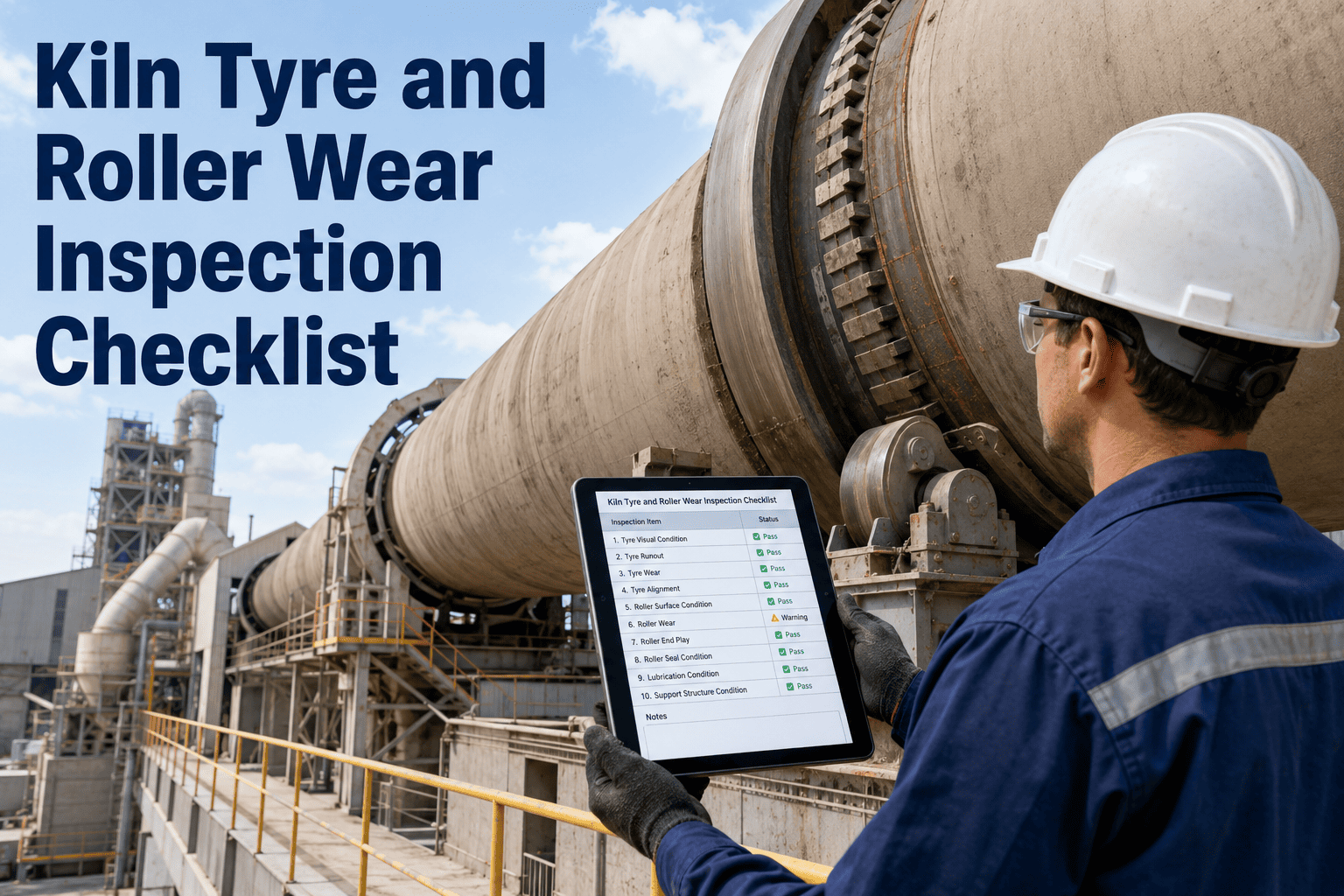
Each weekly inspection should generate a CMMS record containing: migration distance and rate per station, tyre-shell clearance readings, contact band width and position per roller, bearing temperatures L and R per station, surface condition scores for all tyres and rollers, lubrication condition and top-up volumes, and any anomalies with photos attached. Records must be entered within 24 hours and linked to the campaign week number for longitudinal trending. Sign Up Free to build this record structure in Oxmaint.
Every Kiln Station. Every Week. Every Migration Reading, Skew Score, and Bearing Temperature — Tracked and Trended in Oxmaint.
Oxmaint's CMMS puts your complete tyre and roller weekly inspection checklist on your maintenance team's phones, captures every reading by station and campaign week, calculates migration rate trends automatically, and escalates critical condition scores to engineers before surface damage becomes a capital replacement event. Stop replacing tyres and rollers on crisis timelines. Start managing them on data.