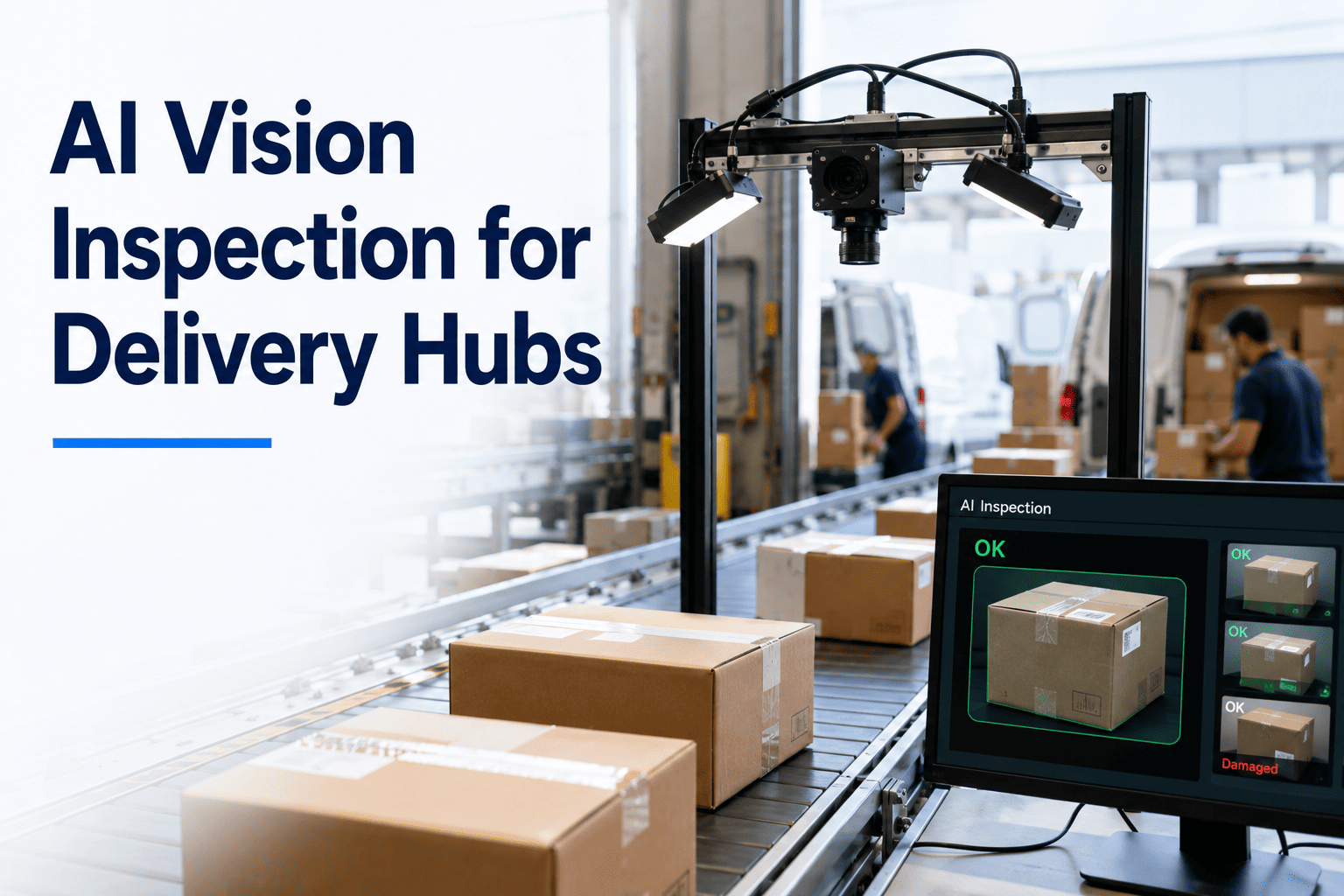
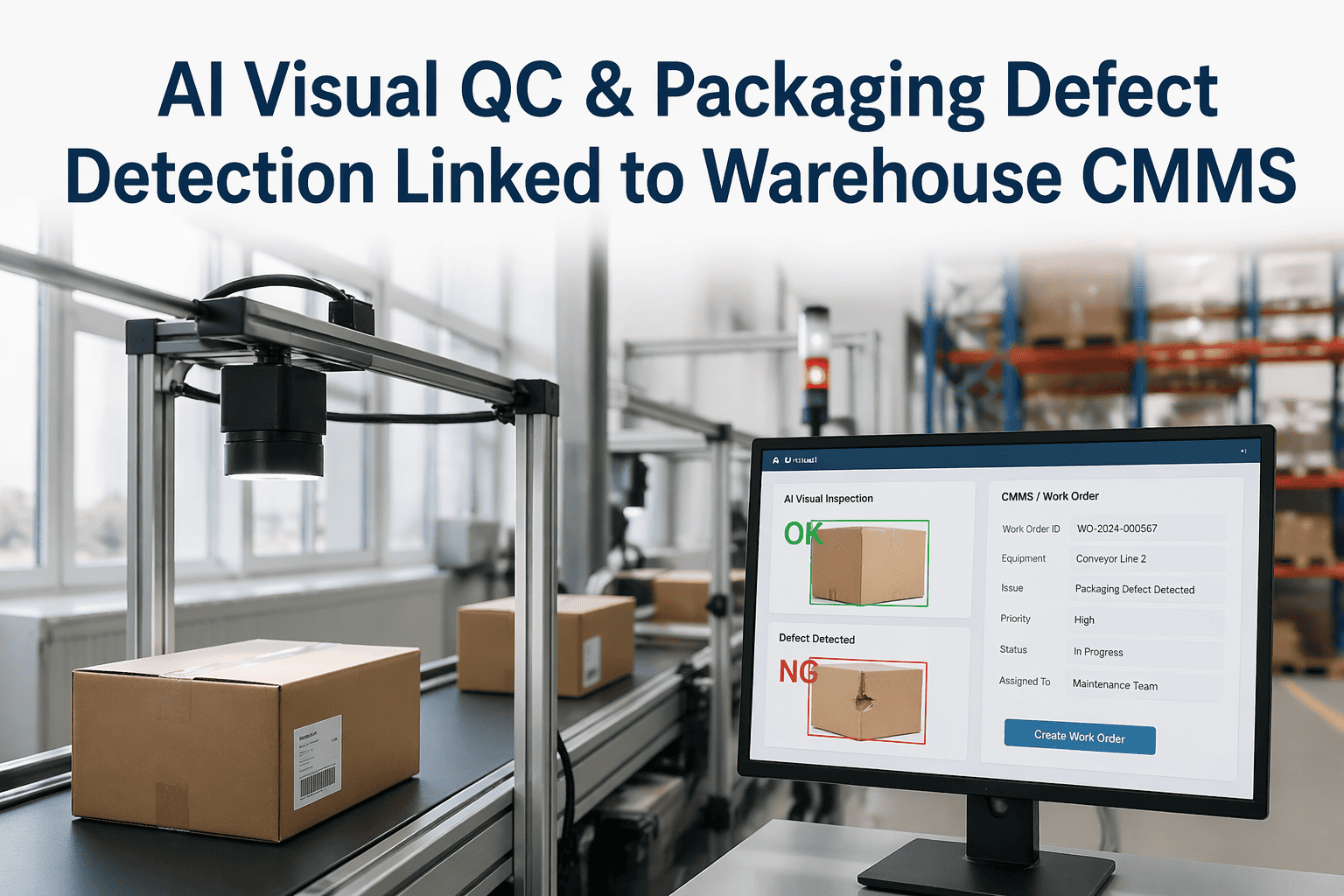
The recall notice went out on a Thursday afternoon in March. A regional dairy processor in Ohio had shipped 42,000 yogurt cups across three states with the wrong allergen label. The cups contained a new strawberry-banana formula that included soy lecithin as an emulsifier, but the printed labels listed ingredients from the original strawberry-only recipe. No soy disclosure. No allergen warning. The labeling error originated during a packaging line changeover at 2:15 AM when an operator loaded the wrong label roll. The line ran for six hours before a morning shift quality auditor caught the mismatch during a routine manual check. By then, 42,000 cups had been sealed, cased, palletized, and loaded onto four refrigerated trucks already en route to distribution centers. The FDA classified it as a Class I recall, the most serious category, because undeclared soy allergens pose a genuine health risk to sensitized individuals. The direct costs were staggering. Product retrieval from 1,200 retail locations cost $310,000 in logistics alone. Destroyed product accounted for $89,000 in raw material and production value. Retailer chargebacks and penalty fees added $145,000. Legal consultation and FDA coordination consumed $78,000. Brand reputation damage was impossible to quantify but immediately measurable in a 14 percent drop in regional sales that took seven months to recover. Total verifiable cost: $622,000 from a single labeling error on a single production line during a single overnight shift. An AI visual inspection camera positioned after the labeler would have caught the mismatch on the very first cup. Not the hundredth cup. Not the thousandth cup. The first cup. The system would have read the label text using optical character recognition, compared it against the active production order in the manufacturing execution system, and triggered a line stop within 400 milliseconds. Forty-two thousand cups would have remained zero cups. The $622,000 recall would have been a $0 non-event recorded as a near-miss in the quality log.
AI-powered visual quality control has crossed the threshold from experimental technology to production necessity. The global AI-based visual inspection market reached $4.13 billion in 2024 and is adding an estimated $12 billion in new revenue through 2033, driven by packaging, pharmaceutical, food and beverage, and electronics manufacturers who can no longer tolerate the defect escape rates inherent in manual inspection and traditional rule-based machine vision. Modern AI vision systems process up to 4,200 packages per minute, detect surface defects as small as 0.1mm with 99.8 percent accuracy, and reduce false positive rates from 30 percent down to under 3 percent compared to legacy inspection systems. When deployed on edge computing hardware directly at the inspection station, these systems make pass or fail decisions in under 50 milliseconds, fast enough to reject defective packages inline without slowing the production line. For packaging operations where a single missed defect can trigger a six-figure recall and a single false positive can waste product that costs real money to produce, AI visual QC is the difference between controlling quality and reacting to quality failures after the damage is done.
$4.1B
AI visual inspection market size in 2024 with $12B growth projected through 2033
99.8%
Defect detection accuracy achieved by state-of-the-art AI vision systems
4,200/min
Maximum inspection throughput for packaging lines with AI vision at full speed
30% to 3%
False positive rate reduction when AI replaces traditional rule-based vision systems
What AI Visual QC Actually Catches on the Packaging Line
Traditional machine vision uses fixed rules: compare this pixel pattern to that reference image and flag differences above a threshold. That approach works for simple, high-contrast defects on uniform packages. It collapses when dealing with reflective surfaces, transparent materials, variable print quality, and the hundreds of acceptable product variations that exist on any real production line. AI visual QC replaces rigid rules with trained neural networks that learn what good product looks like across all its natural variation, then flags anything that falls outside learned boundaries. The result is fewer false rejects on acceptable product and fewer escapes on actual defects.
Label Verification
AI reads every character on every label at line speed using OCR and compares against the active production order. Catches wrong product labels, incorrect allergen declarations, mismatched lot codes, expired date formats, barcode readability failures, and label placement errors including skew, wrinkles, and peeling edges. This single capability prevents the highest-cost packaging failures in food, pharmaceutical, and consumer goods manufacturing.
Labeling errors cause 25%+ of FDA Class I food recalls
Missing Seal Detection
Detects incomplete heat seals, missing tamper bands, broken shrink wraps, and unsealed edges in real time. Uses thermal imaging combined with visual analysis to verify seal integrity even on transparent packaging where traditional systems produce high false positive rates.
Prevents contamination that leads to product recalls
Print Defect Identification
Identifies smudged text, color shifts, registration errors, missing graphics, ink splatter, and streaking across printed packaging surfaces. AI models trained on acceptable print variation distinguish between cosmetic variations within spec and genuine defects that affect brand presentation or regulatory compliance.
Catches defects invisible during high-speed visual sampling
Fill Level Consistency
Monitors fill levels in bottles, cups, pouches, and containers using calibrated vision measurement. Flags underfills that violate net weight regulations and overfills that waste product and margin. AI compensates for foam, meniscus effects, and container variation that confuse traditional optical fill sensors.
Protects net weight compliance and reduces product giveaway
Assembly and Component Verification
Confirms all package components are present, correctly oriented, and properly assembled. Verifies cap presence and color, straw attachment, spoon inclusion, desiccant packet placement, insert cards, and multi-component kit completeness. One missing component across thousands of packages creates customer complaints that erode brand trust and generate retailer chargebacks far exceeding the cost of the missing part.
Eliminates component-missing complaints at retail level
Every one of these defect categories shares a common pattern. They are easy for a human to spot on a single package held at arm's length. They are nearly impossible for a human to spot consistently across 2,000 packages per minute over an eight-hour shift. That gap between what humans can detect in theory and what humans actually detect in practice is exactly where AI visual QC delivers its value. Sign up free on OXmaint to start logging inspection events, defect categories, and line-stop triggers alongside your equipment maintenance data.
How Edge AI Vision Deployment Works on Packaging Lines
The critical distinction in packaging AI vision is where the processing happens. Cloud-based AI requires sending images to remote servers for analysis and waiting for results. That roundtrip latency of 200 to 2,000 milliseconds is unacceptable for inline packaging inspection where packages move at 500 or more units per minute. Edge deployment runs the AI model directly on hardware installed at the inspection station, achieving inference times under 50 milliseconds with zero dependency on network connectivity.
1
Image Capture
Industrial cameras (area scan or line scan) capture high-resolution images of every package. Programmable LED lighting eliminates shadows and reflections. Trigger sensors synchronized to the conveyor ensure each package is captured at the same position and orientation. Multi-camera setups inspect top, sides, and bottom simultaneously.
2
Edge Preprocessing
Raw images are normalized for exposure, cropped to the region of interest, and formatted for model input. Running on GPU-accelerated edge hardware (NVIDIA Jetson, Intel Movidius, or industrial PCs with dedicated GPUs), preprocessing takes 5-10 milliseconds per image. No data leaves the production floor.
3
AI Model Inference
Convolutional neural networks (CNNs) analyze the image against trained defect patterns. Multi-model architectures run parallel checks: one model for label OCR, another for seal integrity, another for print quality. Combined inference time: 15-30 milliseconds. Each model outputs a confidence score and defect classification.
4
Decision and Action
Pass or fail decision based on confidence thresholds. Failed packages trigger reject mechanisms (air jets, diverter arms, or robotic pick) within the physical reject window. All decisions are logged with timestamped images, defect classification, confidence score, and production context for full traceability.
5
CMMS and MES Integration
Inspection data feeds directly into the maintenance management system and manufacturing execution system. Defect rate spikes trigger automatic equipment investigation work orders. Trend data identifies drifting processes before they cross rejection thresholds. Every defect is linked to the specific machine, line, shift, and operator for root cause analysis.
The entire pipeline from image capture to package rejection executes in under 50 milliseconds. At 500 packages per minute, the system has 120 milliseconds per package. That 70-millisecond margin ensures zero missed inspections even at peak line speed. Schedule a demo to see how OXmaint integrates with vision system outputs to automate quality-triggered maintenance workflows.
Model Training: Teaching AI What Good and Bad Packaging Looks Like
The quality of an AI visual inspection system is entirely determined by the quality of its training data and the rigor of its training process. A model trained on insufficient data or poorly labeled examples will either miss real defects or flood operators with false rejects. Both outcomes destroy trust in the system and lead to operators overriding the AI, which eliminates its value entirely.
Phase 1
Data Collection
Capture thousands of images of both good product and every known defect type under actual production conditions. Include variation: different lighting conditions, line speeds, product SKUs, label variants, and seasonal material changes. Minimum 500-1,000 images per defect category for reliable classification. Few-shot learning techniques can reduce this to 20-40 images for initial deployment, with accuracy improving as production data accumulates.
Critical Detail: Collect training images from the actual production cameras in the actual installation position. Models trained on laboratory images or stock photography fail immediately when exposed to real production conditions.
Phase 2
Annotation and Labeling
Quality engineers label every training image with precise defect classifications. For detection models, this means drawing bounding boxes around each defect. For segmentation models, pixel-level masks outline exact defect boundaries. Label quality determines model quality. Ambiguous or inconsistent labels create models that produce ambiguous and inconsistent results.
Critical Detail: Use your own quality engineers for labeling, not outsourced annotation services. Only people who understand your specific acceptance criteria can correctly label borderline cases that define the boundary between pass and fail.
Phase 3
Model Training and Validation
Train CNN architectures on labeled datasets. Split data into training (70%), validation (15%), and test (15%) sets. Validate against held-out test data that the model has never seen. Measure precision (what percentage of flagged items are actually defective), recall (what percentage of actual defects are caught), and the F1 score that balances both. Target precision above 97% and recall above 99% before production deployment.
Critical Detail: Recall matters more than precision for safety-critical defects (allergen labels, seal integrity). Precision matters more for cosmetic defects where false rejects waste product. Set thresholds accordingly per defect type.
Phase 4
Continuous Retraining
Production conditions change constantly. New SKUs, new suppliers, seasonal material variation, equipment wear, and lighting degradation all drift the visual characteristics of product over time. Models that are trained once and never updated degrade in accuracy within months. Establish a retraining loop where operator-verified false positives and false negatives feed back into the training dataset, and updated models are validated and deployed on a defined schedule.
Critical Detail: Track model accuracy metrics weekly. A model losing 0.5% accuracy per month will cross your acceptable threshold within a quarter if nobody is watching the trend data.
False Positive Reduction: The Hidden Cost That Kills AI Adoption
A false positive is a good package that the AI incorrectly flags as defective. Every false positive is real product thrown away, real production time lost to line stops, and real operator frustration that erodes trust in the system. When false positive rates are high, operators start ignoring or overriding the AI, which means real defects pass through undetected. False positive reduction is not a technical nicety. It is the difference between an AI system that works in production and one that gets turned off within three months.
Why False Positives Happen
Insufficient Training Data Variety - Model has not seen enough examples of acceptable product variation (lighting differences, normal print variation, acceptable material color shifts). It flags anything outside its narrow training window.
Environmental Drift - Camera lens contamination, lighting degradation, conveyor speed changes, and ambient light shifts change the visual input without changing the product. The model sees different images and interprets them as defects.
Overly Sensitive Thresholds - Confidence thresholds set too aggressively during initial deployment to avoid missing any defects. Catches everything, including good product that falls near the decision boundary.
SKU Changeover Gaps - Model not updated with images of new product variants or packaging redesigns. First production run of a new SKU triggers mass false rejection until the model learns the new normal.
How to Reduce False Positives Below 3%
Expand Training Dataset Continuously - Feed confirmed false positives back into training as "good" examples. Every false positive the operator verifies becomes a training data point that prevents future false positives on similar product.
Implement Environmental Monitoring - Track camera cleanliness, lighting intensity, and ambient conditions as maintenance items in the CMMS. Schedule camera lens cleaning and light source replacement on defined intervals.
Use Tiered Confidence Thresholds - Set different confidence levels for different defect types. Safety-critical defects (allergens, seals) use low thresholds (catch everything). Cosmetic defects use higher thresholds (only reject clear defects).
Pre-Production SKU Enrollment - Before any new SKU runs production, capture 20-40 reference images and enroll them in the model. This 15-minute step prevents hours of false rejects on the first run.
The benchmark has shifted dramatically. Legacy rule-based vision systems operate with false positive rates of 8-10 percent or higher. AI systems that are properly trained and maintained achieve below 3 percent, and best-in-class implementations report below 1 percent. That reduction is not incremental improvement. It is transformational because it is the point where operators trust the system and stop overriding it. Sign up free to integrate vision system accuracy tracking with your equipment maintenance schedules.
Manual Inspection vs. AI Visual QC: The Real Comparison
Most packaging plants still rely on manual visual inspection for at least some quality checkpoints. Research from Sandia National Laboratories concluded that traditional visual inspection methods miss up to 20 to 30 percent of defects. Here is what that means in practice across every dimension that matters.
Inspection coverageStatistical sampling: 1-5% of production checked100% of every package inspected at line speed
Defect detection accuracy70-80% under ideal conditions, drops to 60% by end of shift99.5-99.8% consistent across all hours and shifts
False positive rate8-10% for rule-based, variable for manualBelow 3% with proper training, below 1% best-in-class
Response to new defect typesRequires reprogramming or new inspection proceduresModel retraining with 20-40 sample images in under 24 hours
Fatigue and consistencyPerformance degrades 20-40% over an 8-hour shiftIdentical performance at minute one and hour ten thousand
Defect traceabilityPaper logs, no images, no automatic correlation to equipmentTimestamped images linked to machine, shift, and production order
Root cause speedDays to investigate after customer complaint surfacesReal-time defect spike alerts trigger immediate equipment checks
Cost at 200 packages/min$180K-$240K/yr (2-3 inspectors across shifts + escaped defect costs)$50K-$120K/yr (system + CMMS platform with full 100% coverage)
ROI of AI Visual QC in Packaging Operations
These figures represent a mid-volume packaging operation running two lines at 300 packages per minute, 20 hours per day, producing approximately 7 million packages per month across food and consumer goods applications.
Recall Prevention
$622,000
Preventing one major labeling or allergen recall event per year (industry average for mid-size operations)
Scrap Reduction from False Positive Elimination
$185,000
Reducing false reject rate from 8% to below 3% saves 350,000+ packages per year from unnecessary destruction
Manual Inspector Labor Savings
$210,000
Redeploying 3 inspection positions to higher-value quality engineering and root cause analysis roles
Customer Complaint Reduction
$145,000
Eliminating retailer chargebacks, credit processing, and complaint investigation from escaped defects
Throughput Improvement from Fewer Line Stops
$98,000
AI inspects inline without stopping the line, recovering 180+ hours of production time versus manual sampling stops
Total Annual Value
$1,260,000
Against AI vision system + CMMS investment of $85K-$160K, first-year ROI is 8-15x
At $1.26M in annual value against a $85K-$160K investment, the first-year ROI is 8-15x. The recall prevention line item alone justifies the entire investment. Everything else is pure upside. Schedule a demo and we will model your specific ROI based on your current defect rates, line speeds, and inspection costs.
Implementation Roadmap: From First Camera to Full Line Coverage
Deploying AI visual QC does not require replacing your entire inspection infrastructure. The most successful implementations start with a single high-impact inspection point, prove the ROI, and expand. Sign up free to begin building the asset registry and work order workflows that connect your vision system data to maintenance action.
Weeks 1-3
Pilot Station Deployment
Select the single inspection point with the highest defect escape cost. Install camera, lighting, and edge computing hardware. Capture 1,000+ training images from live production. Train initial model. Run in shadow mode alongside existing inspection for two weeks to validate accuracy before going live.
Weeks 4-6
Validation and Threshold Tuning
Analyze shadow mode results: compare AI decisions against manual inspection decisions. Tune confidence thresholds per defect type. Feed confirmed false positives and false negatives back into training dataset. Retrain model. Validate updated model achieves target precision and recall before switching to live rejection mode.
Weeks 7-10
CMMS Integration and Live Rejection
Connect vision system output to CMMS for automatic work order generation on defect rate spikes. Activate live rejection on the pilot station. Monitor reject rates, false positive rates, and operator overrides daily. Establish weekly model accuracy review cadence. Document ROI from pilot station.
Weeks 11-16
Expansion to Additional Lines
Use pilot results and proven ROI to justify expansion. Deploy cameras at remaining high-value inspection points. Transfer learning from pilot models accelerates training for new stations. Establish enterprise-wide quality dashboard showing defect rates, model accuracy, and equipment correlation across all inspection points.
Critical Performance Metrics for AI Visual QC
These KPIs give quality managers, plant directors, and maintenance leaders the visibility to manage AI vision systems as production assets that require the same operational discipline as any other line equipment.
Above 99.5%
Detection Rate (Recall)
Percentage of actual defects that the AI correctly identifies. Below 98% means real defects are escaping to customers and requires immediate model retraining.
Below 3%
False Positive Rate
Percentage of good packages incorrectly rejected. Above 5% erodes operator trust. Above 8% typically triggers operators to override or disable the system.
Under 50ms
Inference Latency
Time from image capture to pass/fail decision. Must be fast enough to trigger physical rejection within the available conveyor distance at maximum line speed.
100%
Inspection Coverage
Every package inspected on every pass. Any gap in coverage means defective product can reach customers. Camera uptime and trigger reliability are maintenance priorities.
Zero
Operator Overrides Per Shift
When operators override AI decisions, the system is not trusted. Every override should trigger a root cause review. Sustained overrides indicate model retraining is needed.
Weekly
Model Accuracy Audit Frequency
Review precision, recall, and F1 scores weekly. Degradation of 0.5% per month is normal. Retraining should occur before accuracy falls below deployment threshold.
Frequently Asked Questions
How many training images does an AI packaging inspection model need?
For reliable defect classification, you need a minimum of 500 to 1,000 labeled images per defect category. Modern few-shot learning techniques can produce a functional initial model from as few as 20 to 40 images per defect type, but accuracy improves significantly as the training dataset grows from production data. The most important factor is not the total number of images but the variety of conditions represented: different lighting states, line speeds, product SKUs, and material batches. A dataset of 200 images all captured under identical conditions trains a worse model than 100 images captured across diverse real production conditions. Collect training data from actual production cameras in actual installation positions, and update the training dataset continuously with operator-verified images from live production.
What edge hardware is needed for packaging line AI vision?
Edge hardware requirements depend on the number of cameras, image resolution, line speed, and number of concurrent AI models running per station. For a single-camera station running one or two models at standard packaging speeds, an NVIDIA Jetson Orin series module provides sufficient GPU compute at industrial temperature ratings. Multi-camera stations or high-resolution applications may require industrial PCs with dedicated NVIDIA L4 or A2 GPUs. All edge hardware should be enclosed in industrial-rated housings rated for the production environment including temperature, humidity, washdown compatibility, and vibration. Budget $3,000 to $15,000 per inspection station for edge compute hardware, not including cameras and lighting.
How does AI visual QC handle SKU changeovers?
SKU changeovers are the most common source of false positives in AI vision systems. The solution is pre-production SKU enrollment where the production team captures 20 to 40 reference images of the new SKU before starting the production run and enrolls them in the active model configuration. Advanced platforms automate this by linking vision system SKU profiles to production orders in the MES, automatically loading the correct inspection recipe when a changeover occurs. Without SKU management, the AI model will flag the new product appearance as defective based on its training on the previous SKU. This 15-minute enrollment step prevents hours of false rejects and wasted product on every changeover.
What types of packaging defects are hardest for AI to detect?
The hardest defects for AI vision are those with subtle visual signatures on variable backgrounds. Transparent packaging seal inspection is challenging because the seal area and the unsealed area often look similar under standard lighting. This is addressed with specialized lighting (polarized, UV, or backlighting) that creates contrast invisible under normal illumination. Defects on reflective surfaces like metallic labels or foil pouches create false signatures from specular reflections that vary with package orientation. Multi-angle camera setups and diffuse lighting mitigate this. The most categorically difficult challenge is detecting defects that are defined by absence rather than presence: a missing desiccant packet in a pharmaceutical bottle or a missing instruction insert in a multi-component kit. These require the model to learn what should be there and flag when it is not, which demands more sophisticated training than defect identification alone.
What ROI can a packaging plant expect from AI visual QC?
A mid-volume packaging operation running two lines at 300 packages per minute can expect approximately $1.26 million in annual value from recall prevention ($622K), false positive elimination ($185K), labor redeployment ($210K), customer complaint reduction ($145K), and throughput improvement ($98K). Against system investment of $85,000 to $160,000 including hardware, software, and CMMS platform, first-year ROI ranges from 8x to 15x. The single largest value driver is recall prevention. One prevented recall event typically exceeds the entire system cost for multiple years. Plants with higher line speeds, more SKUs, or regulated products like pharmaceuticals and allergen-containing foods see even higher returns because both the probability and the cost of quality failures are greater.
How does AI vision data connect to the maintenance system?
AI vision systems generate quality data that directly indicates equipment condition. A sudden spike in label skew defects suggests the labeler applicator head needs alignment. Increasing seal failure rates indicate the sealer bars need temperature recalibration or element replacement. Print defect increases correlate with inkjet head clogging or anilox roll wear. When the vision system feeds defect data into a CMMS, these correlations trigger automatic investigation work orders before the equipment condition deteriorates further. This transforms the quality system from a defect detector into a predictive maintenance tool. Instead of waiting for defect rates to cross a threshold, maintenance teams see trending data that tells them the labeler is drifting toward failure and act before product is affected.
42,000 Wrong Labels Went Out the Door Because Nobody Was Watching
That Ohio dairy processor spent $622,000 because a $0 label verification did not exist. Your packaging line is running right now. Every package that passes an inspection point without AI vision is a package that might be wrong in a way no human will catch at production speed. The cameras are fast. The models are accurate. The ROI is undeniable. The only question is whether your next quality event is a near-miss caught by AI or a six-figure recall discovered by a customer.