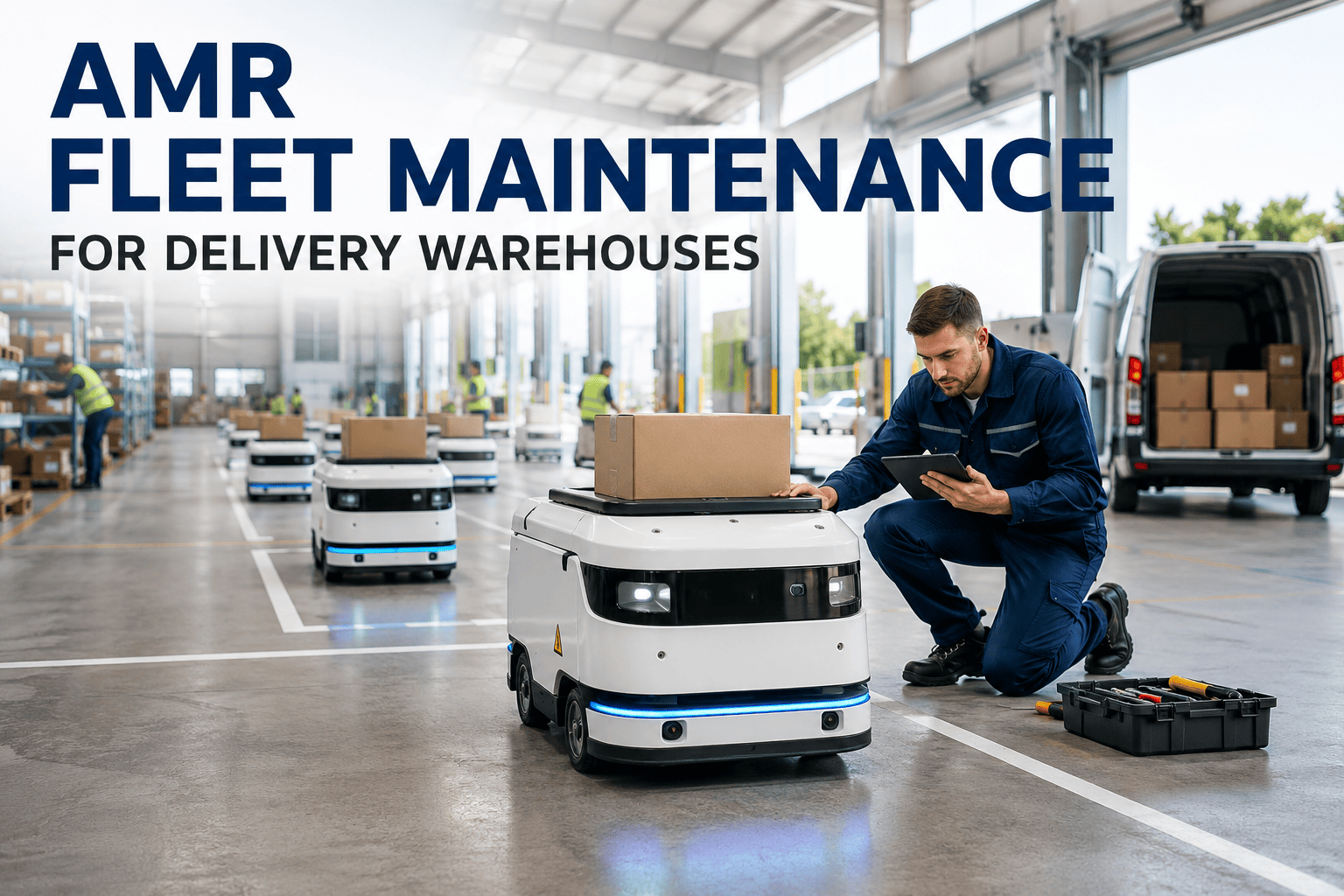
Autonomous mobile robots keep delivery hubs moving, but a single AMR stuck mid-aisle can back up an entire pick wave in minutes. Most fleets run dozens of units across multiple shifts, and when one goes dark, nobody knows if it's a dead battery, a sensor fault, or a software glitch until someone walks over and checks. That guesswork costs throughput every single day. Teams that track AMR health the same way they track conveyor or forklift health catch problems before a robot ever stops moving. See how Oxmaint tracks AMR fleet health free and stop treating robots like a mystery box on wheels.
Keep Every AMR Moving, Not Just the Ones You're Watching
AI-driven maintenance built for warehouses running fleets of autonomous mobile robots around the clock.
Why AMR Downtime Spreads Faster Than Other Equipment Failures
One stalled robot blocks an aisle other robots use, so the slowdown spreads beyond the broken unit itself.
Unlike forklifts, nobody walks an AMR for a daily visual check, so early warning signs go unnoticed.
A firmware or charging issue on one model often affects every unit of that batch at the same time.
Without logged history, technicians start troubleshooting from zero every time a robot stops.
From Robot Alert to Closed Work Order
Battery, motor, sensor, or navigation alerts feed in directly from fleet controller systems.
Oxmaint generates a work order tagged with the robot ID, fault type, and zone location instantly.
The nearest available technician gets the alert on mobile with full fault history attached.
Repeated fault types across the fleet surface in analytics so root causes get fixed, not just patched.
Stop chasing robots across the floor
See exactly which AMR needs attention, why, and how fast your team responded.
Reactive Fleet Fixes vs Tracked AMR Maintenance
| Situation | Without Tracking | With Oxmaint |
|---|---|---|
| Robot stops mid-aisle | Staff search the floor manually | Exact unit and zone flagged instantly |
| Repeated battery faults | Each one treated as a one-off | Pattern flagged across the whole fleet |
| Technician handoff | No history, starts fresh each time | Full fault and repair history attached |
| Peak shift readiness | Found out the hard way mid-shift | At-risk units flagged before shift start |
Fleets that log every AMR fault by unit ID, not just by symptom, usually find that a small number of robots account for most of the downtime — and that's exactly where maintenance attention should go first.
Oxmaint Warehouse Automation TeamCommon Questions on AMR Fleet Maintenance
Give your AMR fleet the same maintenance discipline as the rest of the floor
Oxmaint turns scattered robot alerts into traceable work orders, so downtime gets shorter and root causes actually get fixed.