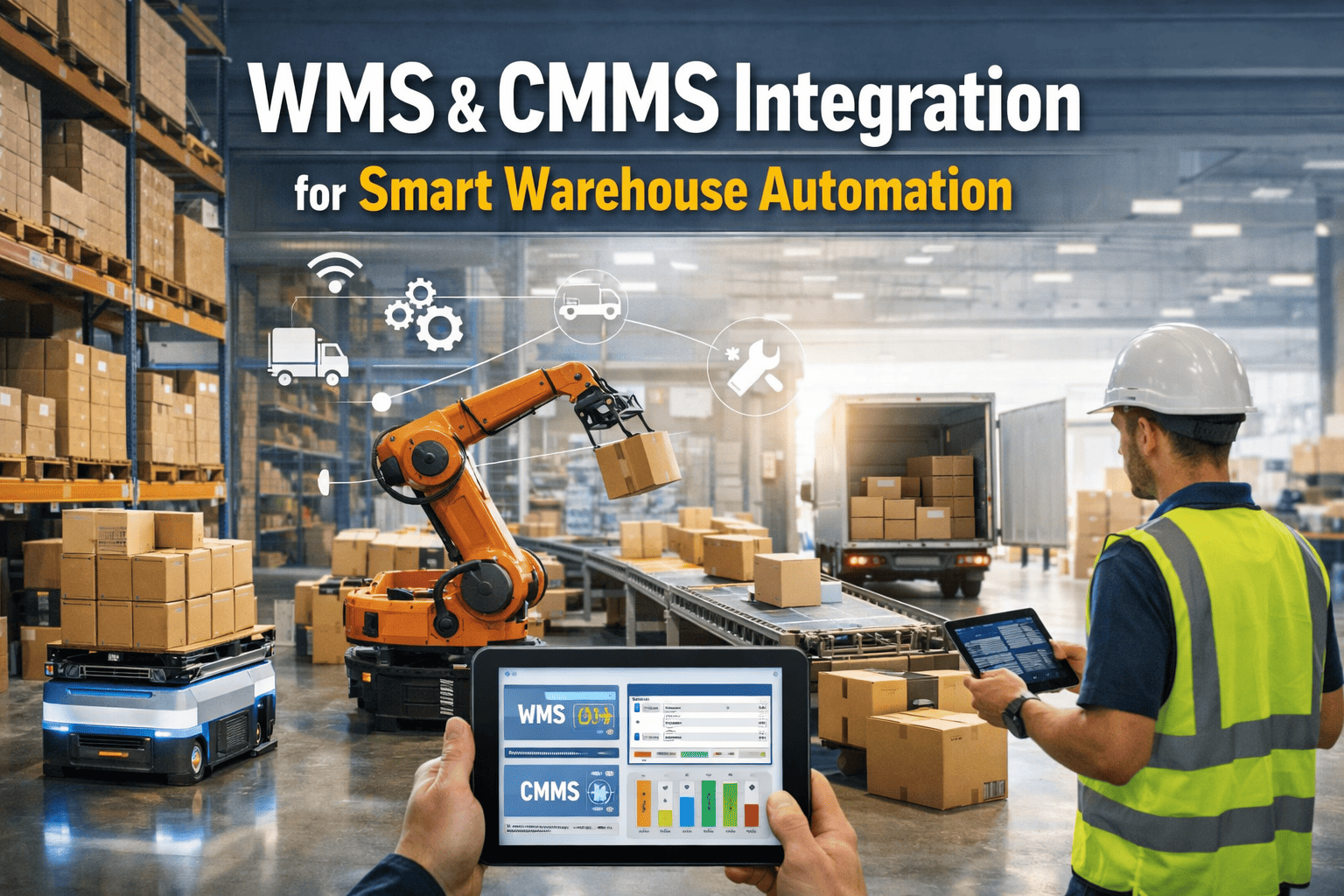
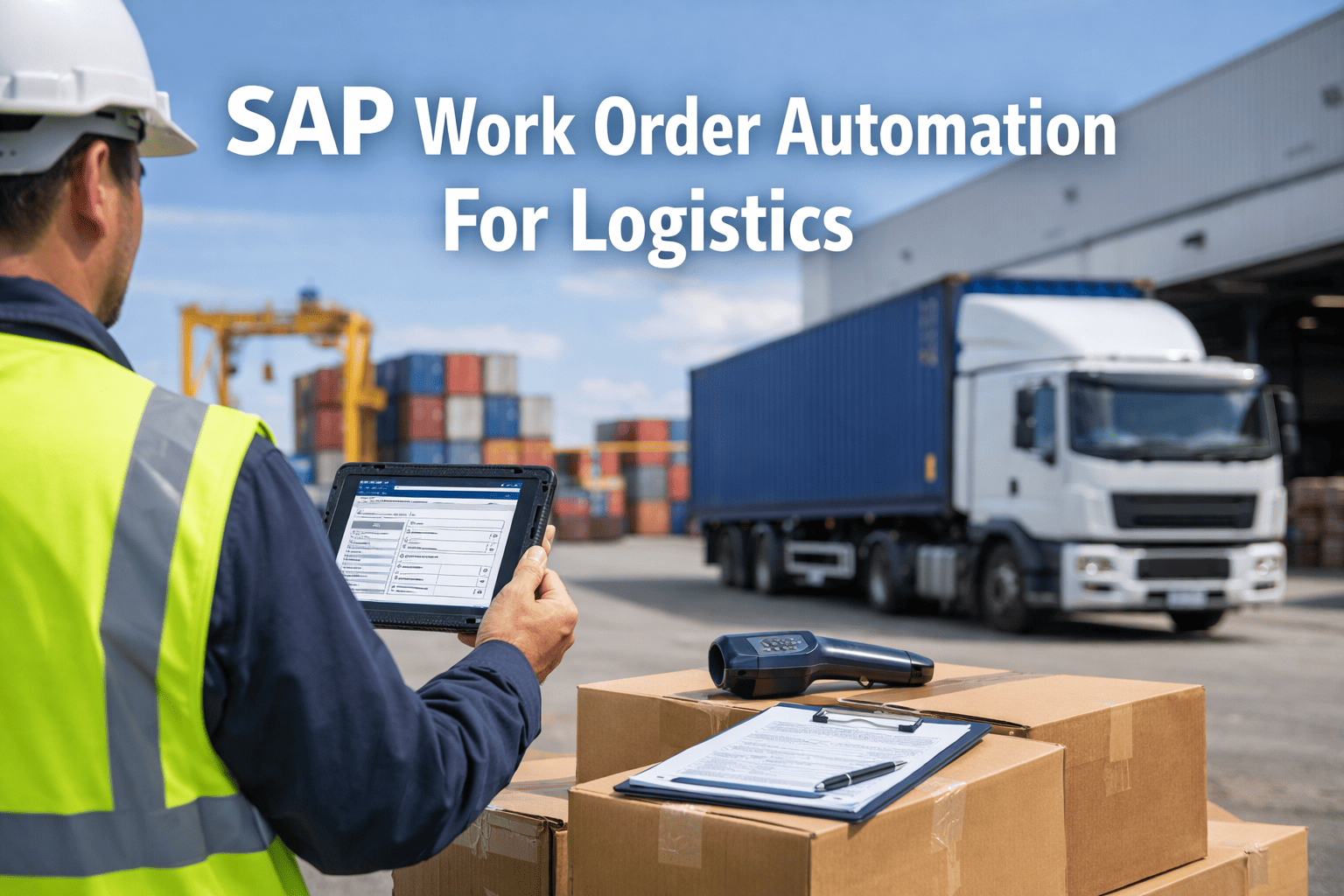
Warehouse maintenance teams lose an average of 48 hours between the moment a conveyor belt sensor throws an alert and the moment a technician completes the repair — not because the work is difficult, but because the work order never got created, assigned, or scheduled fast enough. OxMaint's AI work order automation closes that gap to under 2 hours — start your free trial today.
AI Work Order Automation · Warehouse & Delivery · CMMS Intelligence
AI Work Order Automation for Warehouse & Delivery Maintenance
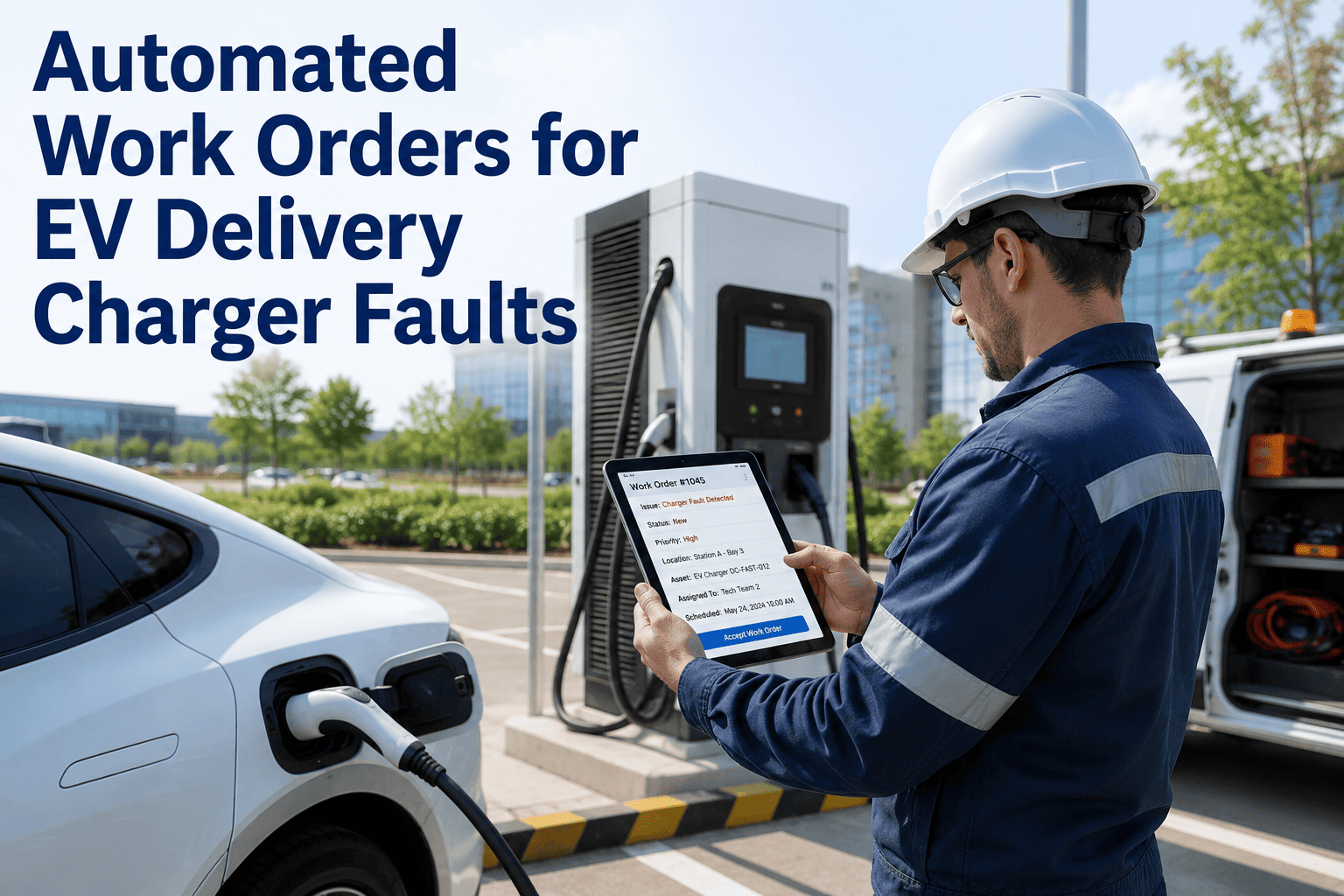
When a sensor detects an anomaly, your CMMS should already be creating the work order, assigning the right technician, and scheduling the repair — without a single manual step. That is what AI work order automation delivers.
48h → 2h
Detection-to-repair time with AI automation
73%
Reduction in manually created work orders
3.4x
Faster technician response with AI dispatch
The Real Problem
Why Warehouses Bleed Hours Before a Wrench Is Even Picked Up
In most warehouse and delivery operations, the work order process has more manual steps than the actual repair. A sensor fires. Someone checks it. Someone else emails the supervisor. A spreadsheet gets updated. A work order gets typed in manually — maybe hours later, maybe the next shift. AI eliminates every one of those manual handoffs.
01
Detection-to-Creation Lag
Sensor alerts sit unread in inboxes or dashboards. Manual work order creation adds 2–6 hours before a technician even knows the job exists.
02
Wrong Technician Assigned
Supervisors assign work orders based on availability, not skill match or current workload — leading to rework, delays, and wasted travel across large warehouse floors.
03
Priority Collisions
Without AI prioritization, a critical conveyor failure competes with a routine lubrication job in the same work queue — and sometimes loses because nobody updated the priority field.
04
No Closed-Loop Tracking
Work orders get created but never closed. Parts ordered are never confirmed received. Repairs completed are never verified — leaving managers blind to actual maintenance status.
How It Works
From Sensor Alert to Completed Repair — Fully Automated
OxMaint's AI engine connects your IoT sensors, asset history, technician availability, and parts inventory into one automated workflow — from anomaly detection through verified repair closure.
Step 1
Anomaly Detected by Sensor or AI Pattern
IoT sensors on conveyors, forklifts, dock doors, and refrigeration units feed real-time data into OxMaint's AI engine. The moment a reading crosses a configured threshold — vibration, temperature, pressure, cycle count — the system flags it immediately.
Step 2
Work Order Auto-Created with Full Context
OxMaint creates the work order automatically — pulling asset history, last maintenance date, failure mode, required parts, and estimated repair time directly into the work order. No manual data entry. No guesswork.
Step 3
AI Assigns the Right Technician Instantly
The AI matches the work order to the best available technician based on skill set, current workload, physical location on the warehouse floor, and certification requirements — then pushes the assignment directly to their mobile device.
Step 4
Repair Executed, Parts and Time Logged
Technicians complete work using the mobile checklist — logging parts consumed, labor time, and repair notes in real time. No paper forms, no retroactive data entry at shift end.
Step 5
Work Order Closed, Asset Record Updated
Closure triggers automatic asset record update, spare parts inventory deduction, and next PM schedule recalculation. Every repair feeds the AI's predictive model — so future failures are caught even earlier.
See AI Work Order Automation Live in Your Warehouse
Configure your first automated work order trigger in under 60 minutes. No complex setup. No dedicated IT resources required.
Before vs. After
Manual Work Orders vs. AI-Automated Work Orders
Manual Process
Sensor alert goes unread for hours
Work order created manually from memory
Assignment based on who's nearby, not skill
Priority set by whoever creates the ticket
Parts availability checked manually
Closure not confirmed — records incomplete
Repeat failures on same assets
With OxMaint AI
Work order created the instant anomaly fires
Full context auto-populated from asset history
AI assigns best-matched technician by skill
Priority set automatically by failure severity
Parts availability confirmed before dispatch
Closed-loop verification with digital sign-off
AI learns from each failure to predict the next
Operational Impact
What Warehouse Teams Measure After AI Automation
73%
Fewer Manual Work Orders
AI handles creation, assignment, and scheduling — supervisors spend time on decisions, not data entry
46h
Average Downtime Saved Monthly
Faster detection-to-dispatch closes the window between failure onset and actual repair start
91%
Work Order Closure Rate
Automated reminders and mobile completion flows drive near-total closure rates vs. industry average of 58%
2.1x
Technician Productivity Gain
AI-optimized scheduling and smart routing reduces travel time and idle time across large warehouse footprints
Asset Coverage
Every Critical Warehouse Asset — One Automated Maintenance System
OxMaint's AI work order automation covers the full range of warehouse and delivery infrastructure — from the dock door to the last-mile vehicle.
Scroll to see more
| Asset Type |
Trigger Signal |
AI Action |
Avg. Response Time |
| Conveyor System |
Vibration / Belt Speed Deviation |
Work order + parts check + tech dispatch |
Under 8 minutes |
| Dock Levelers / Doors |
Cycle Count / Hydraulic Pressure |
PM work order + alignment inspection |
Same shift |
| Forklifts / MHE |
Telematics / Impact Sensor |
Safety hold + inspection work order |
Immediate |
| Refrigeration Units |
Temperature Variance |
Critical alert + emergency work order |
Under 5 minutes |
| Sortation Systems |
Error Rate / Jam Detection |
Fault isolation work order + escalation |
Under 12 minutes |
| Delivery Fleet |
OBD / Mileage / DVIR Fail |
Pre-trip repair order + parts requisition |
Before next route |
"
Before OxMaint, our maintenance supervisor was spending four hours every morning creating and assigning work orders from the previous night's alerts. Now the system does all of it automatically and our supervisor uses those hours on the floor actually solving problems. Our conveyor downtime dropped 61% in the first 90 days.
Maintenance Manager, Regional Distribution Center, 420,000 sq ft Facility
Frequently Asked Questions
AI Work Order Automation — Common Questions
How does AI automatically create a work order from a sensor alert?
When a sensor reading crosses a configured threshold, OxMaint's AI engine identifies the asset, pulls its maintenance history, determines the likely failure mode, and creates a fully populated work order — including task checklist, required parts, and estimated duration — within seconds. No manual trigger needed.
Try the automated work order workflow free for 14 days.
Can the AI assign work orders to the right technician automatically?
Yes. OxMaint's assignment engine matches each work order to the best-fit technician based on skill set, current open work orders, physical zone on the warehouse floor, and any required certifications. The assignment is pushed directly to the technician's mobile device.
See the AI assignment engine in a live demo.
Does this work without a full IoT sensor infrastructure already in place?
Yes. While IoT integration accelerates automation, OxMaint's AI can also trigger work orders from usage-based rules, PM schedules, inspection findings, and manually submitted fault reports — so facilities at any IoT maturity level see immediate value.
How does AI work order automation reduce unplanned downtime in warehouses?
By eliminating the hours-long gap between anomaly detection and work order creation, assets are serviced before a minor fault becomes a full failure. OxMaint customers report 40–65% reduction in unplanned downtime within the first 90 days of AI automation deployment.
Is OxMaint's AI work order system suitable for multi-site warehouse operations?
Absolutely. OxMaint supports multi-site deployment with centralized dashboards and site-level configurations. Maintenance managers can monitor work order performance, technician utilization, and asset health across every facility from a single view.
Start your multi-site free trial — no credit card required.
AI Work Order Automation · Warehouse & Delivery · Free to Start
Stop Creating Work Orders by Hand. Let AI Handle the Entire Maintenance Workflow.
OxMaint automates every step — from sensor detection to work order creation, technician assignment, parts confirmation, and repair verification. Warehouses and delivery operations go live in under 60 minutes with zero complex IT setup.