A charger at the back of the lot throws an intermittent fault at 2 a.m., a driver logs a "won't charge" defect on van 14 the next morning, and a telematics feed quietly flags a voltage drop nobody's watching. Three signals, one real problem, and in most depots none of them talk to each other — so the fault sits until a van shows up at 6 a.m. with 9% battery and nowhere to charge. Automated work orders close that gap by turning any one of those signals into a prioritized, assigned task the moment it fires, instead of waiting for someone to notice the pattern. Start automating EV charger fault response free on OxMaint.ai and stop finding out about a dead charger from a stranded van.
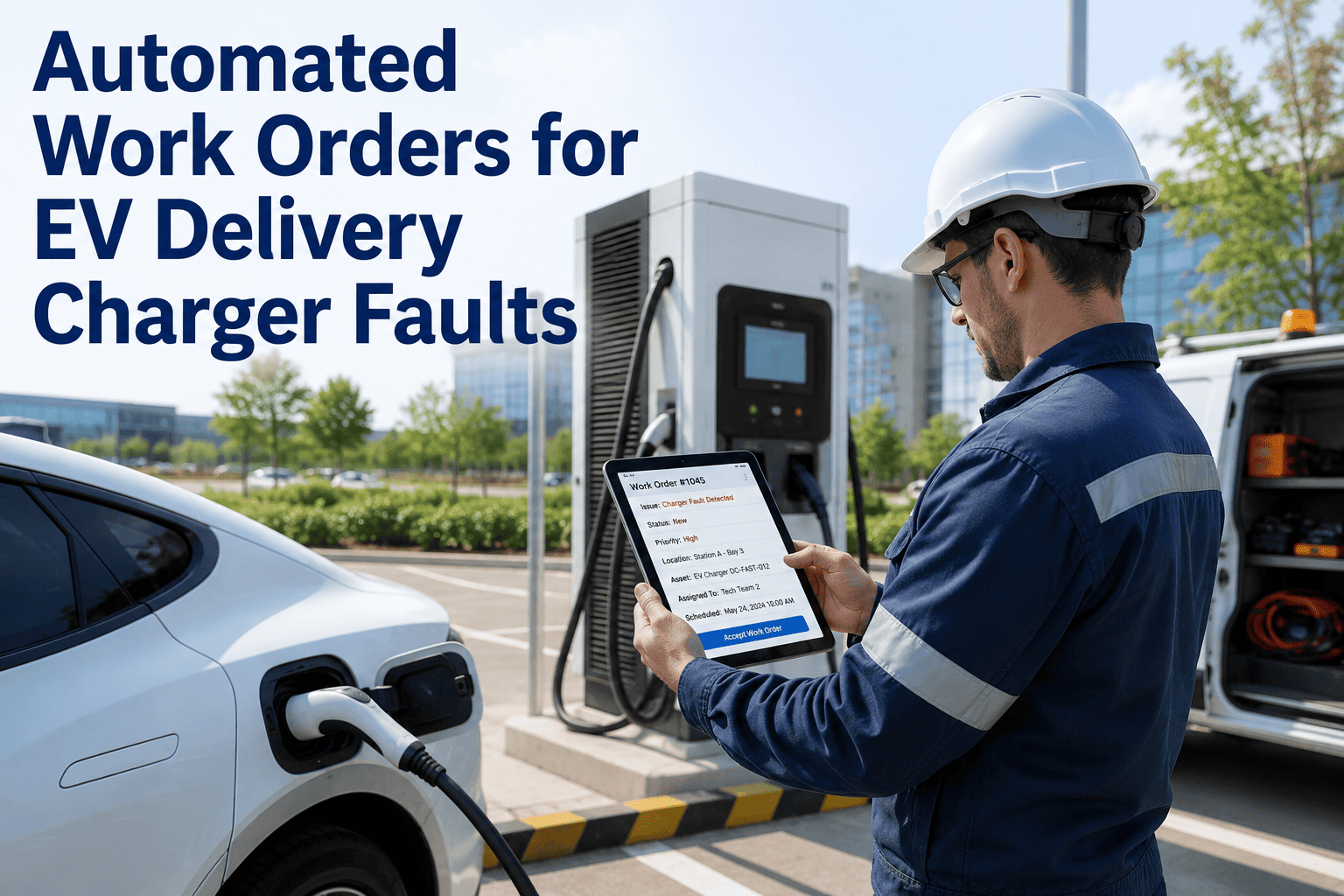
Automated Work Orders for EV Delivery Charger Faults
Turn driver defects, telematics alerts, and charger equipment signals into prioritized work orders automatically — before a fault becomes a stranded delivery van.
58%
of EV fleet charger faults go unnoticed until a van fails to charge overnight
3
separate signal sources typically report the same underlying charger fault
41%
fewer morning dispatch delays once faults are routed automatically overnight
Signal Sources
Where a Charger Fault Actually Shows Up First
A
Driver-Reported Defects
A driver marks "charger unresponsive" or "slow charge" at the end of a route, often the first human signal something's wrong.
B
Telematics & Charger Alerts
Voltage drops, communication errors, and session failures stream in from the charger hardware and vehicle telematics in real time.
C
Scheduled Equipment Checks
Routine inspections catch connector wear, cable damage, and enclosure issues before they trigger a hard failure.
Automation Logic
How a Signal Becomes a Prioritized Work Order
Signal received
A defect, alert, or inspection finding arrives from any connected source.
Severity assessed
The fault is matched against charger criticality and route schedule for that depot.
Work order created
A task is generated with the charger ID, fault detail, and the signal source that triggered it.
Technician assigned
The right technician is notified based on shift coverage and charger location, before the next dispatch window.
Don't wait for a stranded van to find a dead charger
OxMaint converts driver defects, telematics alerts, and inspection findings into prioritized work orders automatically, day or night.
Priority Tiers
Not Every Fault Deserves the Same Response
| Fault Type | Typical Source | Response Priority |
| Charger fully unresponsive |
Telematics alert |
Immediate — before next dispatch window |
| Intermittent voltage drop |
Telematics alert |
Same-day technician review |
| Slow or partial charge |
Driver-reported defect |
Next scheduled maintenance window |
| Connector or cable wear |
Scheduled inspection |
Planned replacement, low urgency |
Expert Review
Most EV charger downtime isn't a hardware problem, it's a communication problem — the fault was reported somewhere, it just never reached the right person in time. Fleets that automate the handoff between signal and work order consistently see fewer overnight surprises, because the response starts the moment the fault is detected instead of the moment someone happens to check.
Reviewed by OxMaint's Fleet Electrification Advisory Team
FAQ
Frequently Asked Questions
Which charger and telematics systems can feed into automated work orders?
OxMaint connects to most major EV charger management platforms and fleet telematics providers through standard integrations.
Book a demo to confirm compatibility with your current charging infrastructure.
How does the system avoid creating duplicate work orders for the same fault?
Signals are matched to the specific charger ID, so a driver defect and a telematics alert pointing to the same charger merge into one work order instead of two separate tickets for the same problem.
Can technicians get notified outside normal working hours?
Yes, high-priority faults like a fully unresponsive charger trigger immediate notifications to on-call technicians, regardless of the time, so a dispatch window isn't missed the next morning.
Do drivers need a separate app to report charger defects?
Drivers can log a defect from the same mobile workflow they already use for vehicle inspections, so reporting a charger issue takes the same few taps as any other defect report.
How quickly can this be set up for an existing EV delivery fleet?
Most fleets connect their first batch of chargers and telematics feeds within a week, since the priority rules are pre-configured and adjustable per depot.
Start free to connect your first charger today.
Turn every charger fault into a work order before it stalls a route
OxMaint automatically prioritizes and assigns work orders from driver defects, telematics alerts, and inspections — so EV chargers stay ready when the routes start.