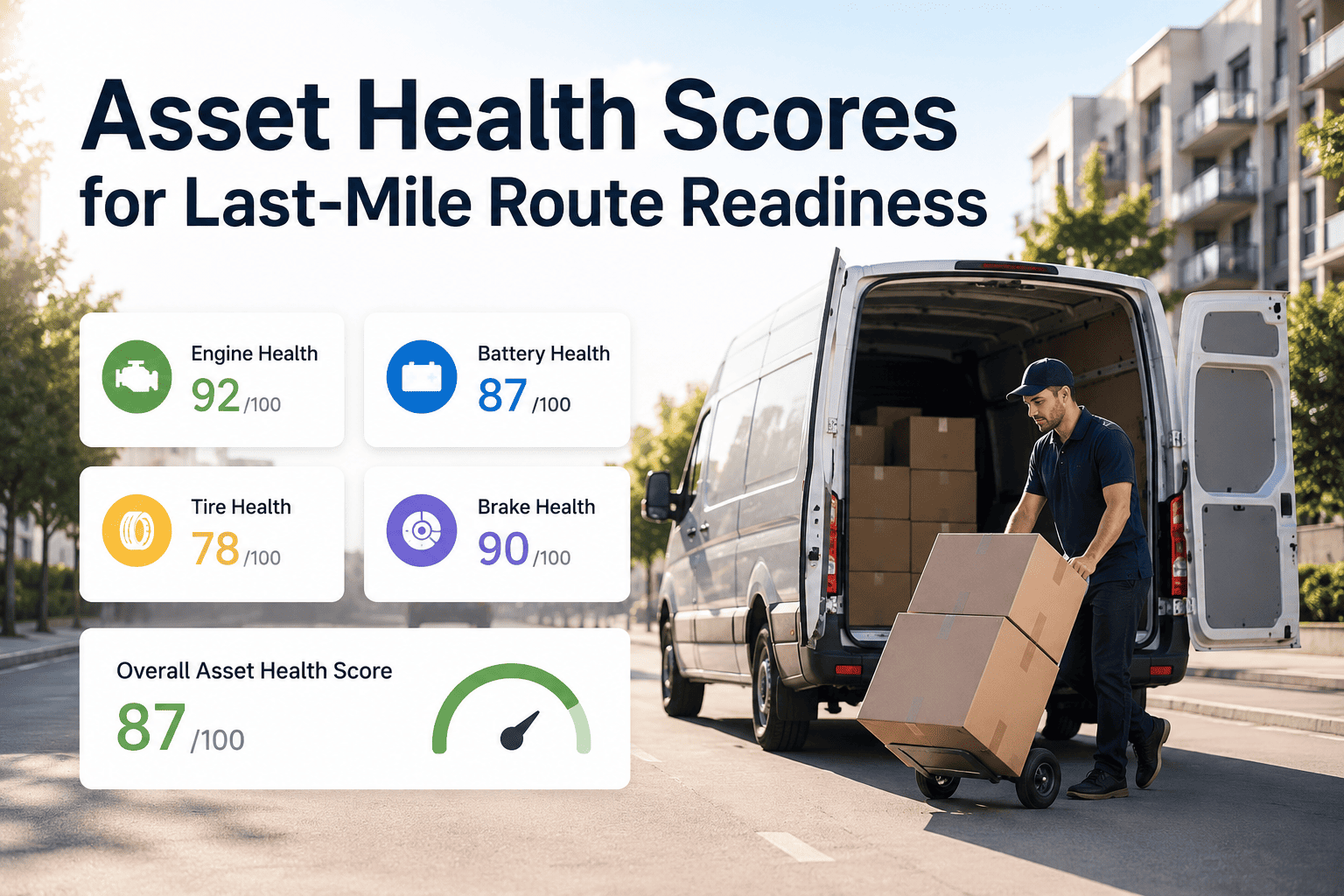
When a diesel delivery van breaks down, a mechanic can diagnose it with a wrench and a code reader in an hour. When an electric delivery van suffers premature battery degradation, you find out at 6 AM when the driver reports the van is showing 60% of its expected range — and you have no idea whether it's been building for six months. EV batteries don't fail suddenly; they degrade silently, charge cycle by charge cycle, thermal event by thermal event. A fleet operating 40 electric delivery vans without battery health monitoring can lose four years of battery service life per vehicle — worth $80,000 to $120,000 in accelerated replacement cost across the fleet. OxMaint's battery health monitoring platform pulls state-of-health data, charging cycle counts, thermal event logs, and degradation rates from your EV telematics into actionable maintenance work orders — before range loss becomes a service problem. Fleets using OxMaint's EV battery monitoring reduce maintenance costs by 35% and improve vehicle uptime by 42% compared to traditional fleet management. Get started free at Oxmaint or book a demo with an EV fleet specialist today.
Battery Health Monitoring for EV Delivery Fleets
Your EV batteries are degrading right now. The question is whether you see it happening — or discover it at the depot gate when a driver can't complete their route.
Understanding Battery State of Health — The Number That Drives Everything
State of Health (SoH) is the ratio of your battery's current maximum capacity to its original rated capacity. When SoH drops below 80%, your delivery van can no longer complete its designed daily route without an unplanned mid-route recharge.
Four Things That Are Draining Your Fleet's Battery Life Right Now
Battery degradation in delivery fleets is rarely random. Four specific operational patterns cause 80% of premature capacity loss — and all four are preventable with real-time monitoring.
Regularly charging EV batteries to 100% accelerates lithium-ion degradation significantly. Delivery fleets that set charge limits to 80–85% for daily operation extend battery life by 20–30% with no range penalty on most urban routes.
DC fast charging above the battery's thermal management threshold causes cumulative heat stress. Each thermal event above 45°C accelerates degradation. OxMaint logs thermal events per vehicle so fleet managers can identify chargers causing damage.
Running batteries below 20% state of charge in temperatures under 5°C creates electrochemical stress that permanently reduces capacity. Drivers doing early winter routes without pre-conditioning are shortening battery life on every run.
Most fleet CMMS tools have no concept of battery SoH. Maintenance is scheduled by calendar or mileage — not by the degradation data that actually drives EV service needs. This leaves battery health invisible until range loss makes it obvious.
OxMaint connects to your EV telematics and converts battery degradation data into maintenance work orders — before range loss disrupts your delivery operations. See how it works in a 30-minute walkthrough.
How OxMaint Turns Battery Data into Maintenance Action
Raw battery telemetry sitting in an OEM portal does not prevent degradation. OxMaint pulls that data into your maintenance workflow — where it creates work orders, flags risks, and tracks resolution.
OxMaint pulls battery SoH, charging cycle count, thermal event log, and degradation rate data from your EV telematics API. Compatible with major EV platforms used in last-mile delivery fleets. Data updates continuously — not once a day.
Fleet managers set SoH thresholds in OxMaint — for example, alert when SoH drops below 88%. When any vehicle crosses that threshold, OxMaint creates a maintenance work order immediately and notifies the fleet manager on mobile and desktop.
The battery health alert generates a structured work order with the vehicle details, current SoH reading, degradation trend, and recommended inspection scope. The technician sees exactly what to check — no diagnosis from scratch required.
Technician findings, charging protocol adjustments, and any battery module replacements are logged against the vehicle's battery health record. SoH readings before and after intervention are tracked — so you can see whether the action improved degradation trajectory.
EV Battery Health KPIs: Unmonitored vs OxMaint-Managed Fleets
These benchmarks reflect real delivery fleet operations managing mixed and full-EV last-mile vehicles. The cost difference compounds with every vehicle added to the fleet.
| Battery Health KPI | Unmonitored Fleet | OxMaint-Managed | Impact |
|---|---|---|---|
| Battery Service Life Achieved | 6 years avg. | 10 years avg. | 4 years recovered |
| Unplanned Mid-Route Range Failures | 4–6 per 20 vans/yr | Under 1 per 20 vans/yr | 85% reduction |
| Annual Degradation Rate | 4–6% capacity/yr | Under 2% capacity/yr | Halved degradation |
| EV Maintenance Cost vs ICE | Similar or higher | 35% lower than ICE | EV savings realized |
| Vehicle Uptime | Baseline | 42% improvement | More deliveries per van |
| Battery Replacement Cost/Fleet | $80K–$120K premature | Deferred 4+ years | Massive capex avoided |
Frequently Asked Questions
Your EV Battery Is Degrading Right Now. The Question Is Whether You Know It.
OxMaint gives EV delivery fleet managers real-time battery health visibility — SoH trends, thermal alerts, charging recommendations, and automatic work orders — so degradation is caught and corrected before it costs you a route. Start free today or speak with an EV fleet specialist.