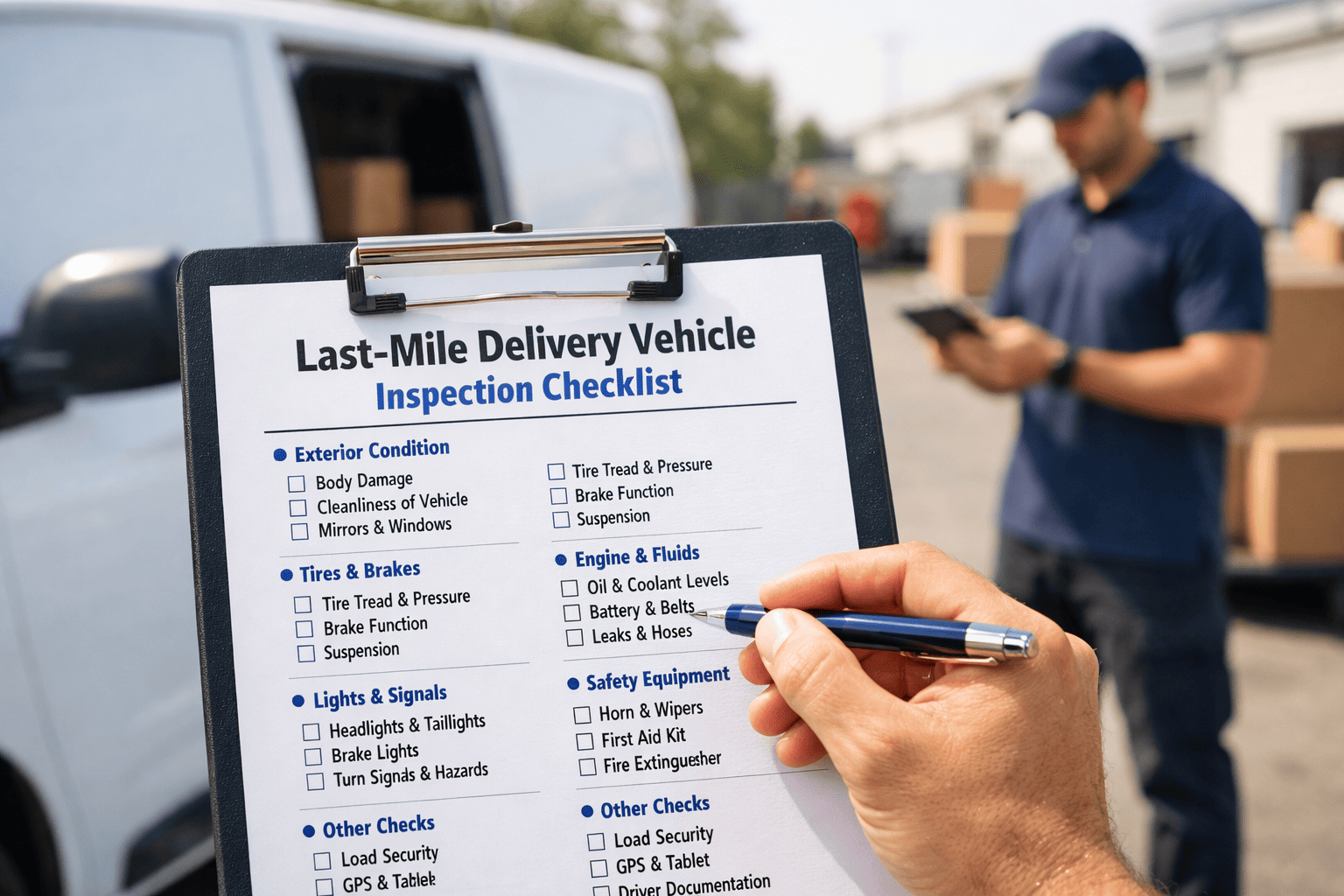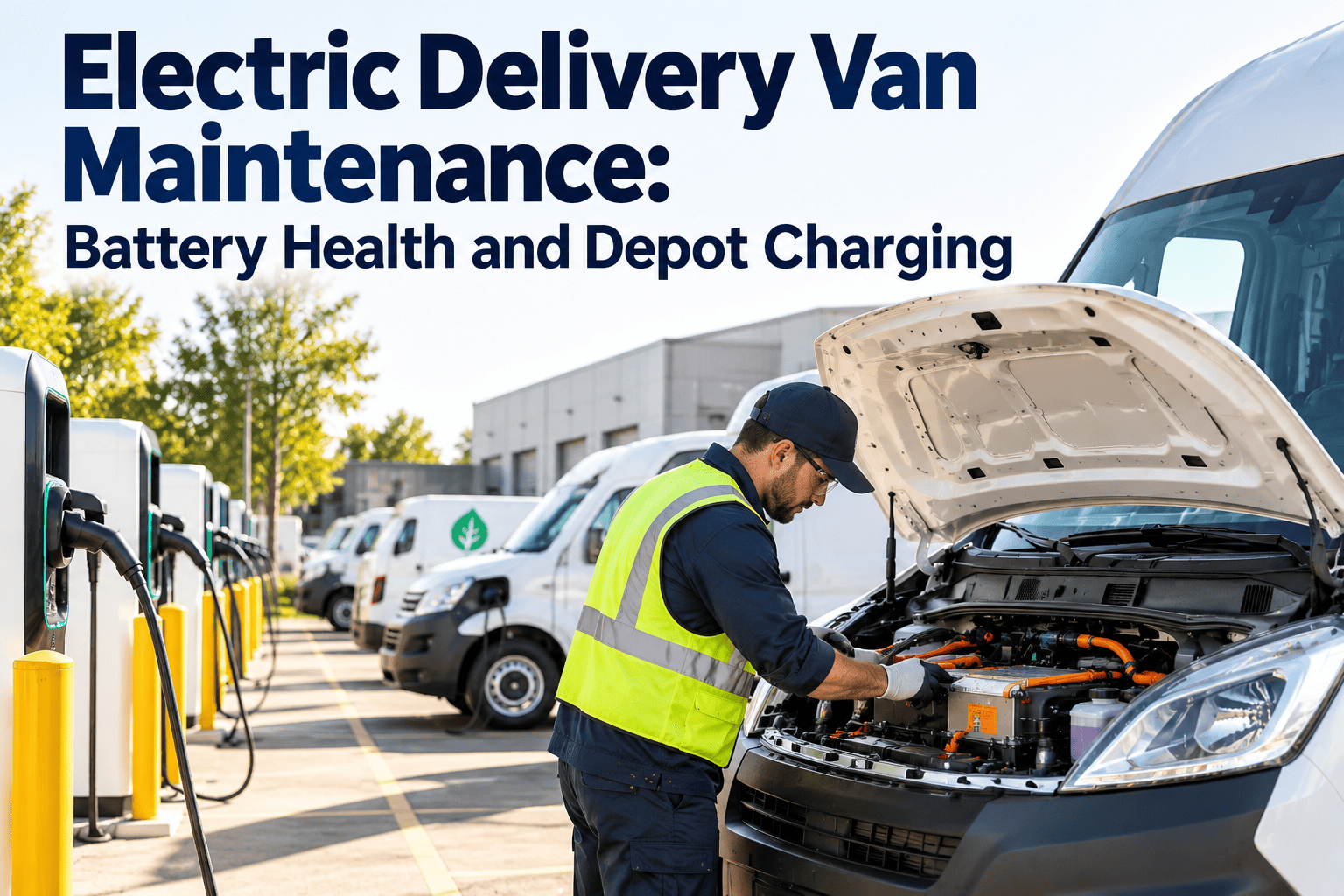
Electric delivery vans remove oil changes and exhaust systems, but they do not remove maintenance. They replace it with a different set of priorities: a battery pack that holds a large share of the vehicle's value, depot chargers that must work every night, and high-voltage systems that demand trained hands. Fleets that treat an electric van like a diesel with a plug usually learn the difference through missed routes or early battery wear. Planning the right preventive tasks from the start protects both uptime and resale value, and teams can manage electric and conventional vans together in Oxmaint with schedules built for each.
Electric Delivery Van Maintenance: Battery Health and Depot Charging
Protect the battery, keep chargers available and schedule high-voltage work safely, so electric vans finish every route and hold their value.
What Actually Changes From Diesel to Electric
The maintenance workload shifts rather than disappears. Some tasks vanish, some shrink, and several new ones appear that conventional shops have never needed.
| Area | Conventional Van | Electric Van |
|---|---|---|
| Engine service | Oil, filters, belts, spark or fuel components | Largely eliminated |
| Energy storage | Fuel tank and a small starter battery | High-voltage pack needing health monitoring |
| Braking | Friction brakes carry most of the load | Regenerative braking reduces pad wear but rotors still need care |
| Cooling | Engine coolant system | Battery and power electronics thermal loops |
| Tires | Standard wear | Often faster wear from vehicle weight and instant torque |
| Refueling | Public stations, quick fills | Depot charging infrastructure to maintain |
| Technician skills | Mechanical and diagnostic | High-voltage safety qualification added |
| Software | Occasional updates | Frequent firmware and calibration updates |
A schedule built for diesel vans will miss the new risks and waste effort on the old ones. Electric vans need their own PM templates from day one.
Battery Health: What to Track and Why
The battery pack is the most valuable and least visible component. Reported state of health is useful, but it is a single number from the vehicle's own software. Good programs watch several signals together.
Reported state of health
Usable range trend
Charge acceptance
Time at high charge
Fast charging frequency
Thermal events and alerts
Why several signals beat one
Software estimates can drift from measured capacity, so cross-checking against range and charge behavior gives a more honest picture. The goal is trend detection, not a perfect single number.
A Night at the Depot: Charging Protocol Timeline
Depot charging is where fleets control battery life. A consistent routine protects the pack and guarantees every van is ready at dispatch.
Charging windows also interact with electricity pricing and site power limits, so coordinate maintenance, dispatch and facilities when setting the schedule.
One System for Every Van, Whatever Powers It
Oxmaint helps teams schedule battery checks, charger inspections and conventional PM together, so mixed fleets run from a single maintenance record.
Charging Infrastructure Is an Asset Too
A van cannot leave if its charger fails. Depot chargers deserve the same asset records, inspections and spare-part planning as any production equipment.
| Charger Component | What to Inspect | Suggested Rhythm |
|---|---|---|
| Connectors and nozzles | Pin wear, cracks, debris, latch function | Visual at each use, closer check monthly |
| Cables and strain relief | Cuts, abrasion, crushing, kinks | Weekly walk-through |
| Charger enclosure | Vents, filters, moisture ingress, corrosion | Monthly |
| Protection devices | Ground fault and safety function testing | Per manufacturer and electrical code guidance |
| Network and software | Connectivity, firmware version, fault logs | Monthly review |
| Site electrical supply | Panels, breakers, load balancing | Periodic inspection by a qualified electrician |
| Signage and bay markings | Trip hazards, cable routing, visibility | Monthly |
Plan for charger downtime
Know your ratio of chargers to vans and what happens when one is out. Keep common spare parts on site and a service contact on file, because a single dead charger can quietly remove a van from the next day's routes.
High-Voltage Safety Is a Workflow, Not a Warning Label
Work on or near high-voltage components must be done by trained and authorized staff following the manufacturer's procedures. The maintenance system should enforce that, not just recommend it.
- Restrict Level 3 work orders to technicians holding the required qualification.
- Require isolation and verification steps to be confirmed on the work order before work begins.
- Record protective equipment checks and tool calibration where procedures require them.
- Keep emergency response information accessible for each van model in your fleet.
Electric Van PM: The Tasks That Matter
An electric van PM template is shorter in some places and deeper in others. These are the main task groups to build in.
Battery and charging system
- Review state of health trend
- Inspect charge port and seals
- Check charge acceptance
- Review thermal and fault logs
Thermal management
- Check coolant level and condition per maker
- Inspect hoses, pumps and radiators
- Verify cooling fan operation
- Clear debris from heat exchangers
Braking and tires
- Inspect rotors and calipers for corrosion
- Check pad wear and slide pins
- Measure tread and check pressure
- Rotate and align on schedule
Low-voltage system
- Test the 12-volt battery
- Inspect terminals and grounds
- Check lights and accessories
- Review any DC-DC converter faults
Software and diagnostics
- Check for pending updates
- Record installed versions
- Read stored fault codes
- Confirm telematics connection
Chassis and body
- Inspect suspension and steering
- Check underbody battery shielding
- Test doors, gates and latches
- Check wipers and glass
The 12-volt battery is a frequent and surprising cause of electric van no-starts. Include it in every PM even though the traction battery gets the attention.
Regenerative Braking, Rotors and Tires
Regeneration changes how brakes and tires age. The result is longer pad life on many routes, but new failure modes if inspections are relaxed.
- Friction brakes work less, so pads often last longer
- Less brake dust and lower heat load
- Smoother deceleration can reduce driver fatigue
- Rotors and calipers can rust or seize from light use
- Heavier vehicles and instant torque can wear tires faster
- Drivers may be less aware of brake condition
Schedule periodic brake inspections and cleaning regardless of how little the pads appear to wear, and watch tire wear closely on electric vans.
Mixed Fleets: Scheduling Without Chaos
Most fleets run electric and conventional vans side by side for years. The challenge is keeping two maintenance philosophies in one workflow.
Climate, Thermal Management and Range
Temperature affects both battery life and the range a driver can count on. Maintenance planning should treat the thermal system as a core safety and reliability function.
Cold weather
- Range falls as the cabin heater and battery warm-up draw energy
- Precondition vans on grid power before departure
- Plan routes with a larger charge margin
Hot weather
- Cooling load rises, especially during fast charging
- Inspect radiators and fans before summer
- Park and charge in shade where possible
Thermal faults
- Treat coolant leaks and pump faults as urgent
- Record every overheating alert
- Compare behavior across sister vans
Why thermal neglect is costly
Cooling faults can limit charging speed or power output long before a pack is damaged, so the first symptom is often a slow or shortened route. A routine thermal inspection costs far less than the disruption it prevents.
Software Updates and Diagnostics Are Maintenance Tasks
Electric vans improve and sometimes change behavior through software. Treat updates the way you treat parts: planned, recorded and verified.
The same applies to depot chargers, whose firmware affects charging speed, safety functions and network behavior.
Warranty, Records and Resale Value
Battery condition drives much of an electric van's resale value, and warranty claims depend on records. Good documentation protects both.
- Warranty claims are hard to support
- Battery condition is argued from memory
- Resale buyers discount for uncertainty
- Charging misuse cannot be traced to a cause
- Health trends and service history support claims
- Charging practice can be shown and improved
- Buyers see evidence of careful use
- Problem batches and chargers are easy to spot
Check the warranty terms first
Battery warranties often specify capacity thresholds, mileage limits and required service practices. Read them before setting your charging policy, so your routine never accidentally undermines your coverage.
Getting Your Shop and People Ready
Electric vans need preparation in the workshop as well as the depot. A few early steps prevent costly improvisation.
- Identify which technicians will receive high-voltage training and certification before vans arrive.
- Designate a safe, marked bay for electric vans, with clear rules about who may approach them.
- Stock the required insulated tools and protective equipment, and record their inspection dates.
- Agree on a procedure for vans with damaged batteries, including where they may be parked.
- Brief drivers on charging routines, warning messages and how to report them.
- Confirm with your insurer and the manufacturer any requirements for storage and repair.
Start with a small pilot group of vans, learn from the first quarter of data, and then scale the schedule rather than guessing at the outset.
Measures for Electric Van Maintenance
Add a few electric-specific measures alongside the usual maintenance indicators.
Frequently Asked Questions
Do electric delivery vans really need less maintenance?
How should we charge to protect battery health?
Who can work on high-voltage components?
Do electric vans still need brake maintenance?
Can Oxmaint manage electric and diesel vans together?
Electrify Your Last Mile Without Losing Control of Maintenance
Give your electric vans the battery tracking, charger inspections and high-voltage workflows they need, alongside the rest of your fleet.