A conveyor jam rarely announces itself before it happens. A carton wedges at a merge point, a belt starts tracking a few millimetres off centre, a photo-eye stops giving a clean read, and within minutes an entire sortation zone backs up into the induction line behind it. Warehouse teams who chase these stoppages with radio calls and a paper jam log lose the one resource that decides whether a shift hits its cut-off: minutes. Every jam that escalates into a full lane shutdown carries idle labor, missed carrier pickups, and a pile of packages someone has to re-induct by hand. The facilities closing this gap have stopped routing jam alerts to a radio channel and started routing them straight into Oxmaint's work order automation, so a jam signal becomes a scoped, assigned, parts-ready ticket before the backlog even forms.
Where Jams Actually Start — A Zone-by-Zone Breakdown
Every sortation line has the same five pressure points, and almost every jam traces back to one of them. Knowing which zone is failing — not just that "the line is down" — is what separates a two-minute correction from a forty-minute manual clear-out.
The Six-Stage Workflow — From First Signal to Closed Ticket
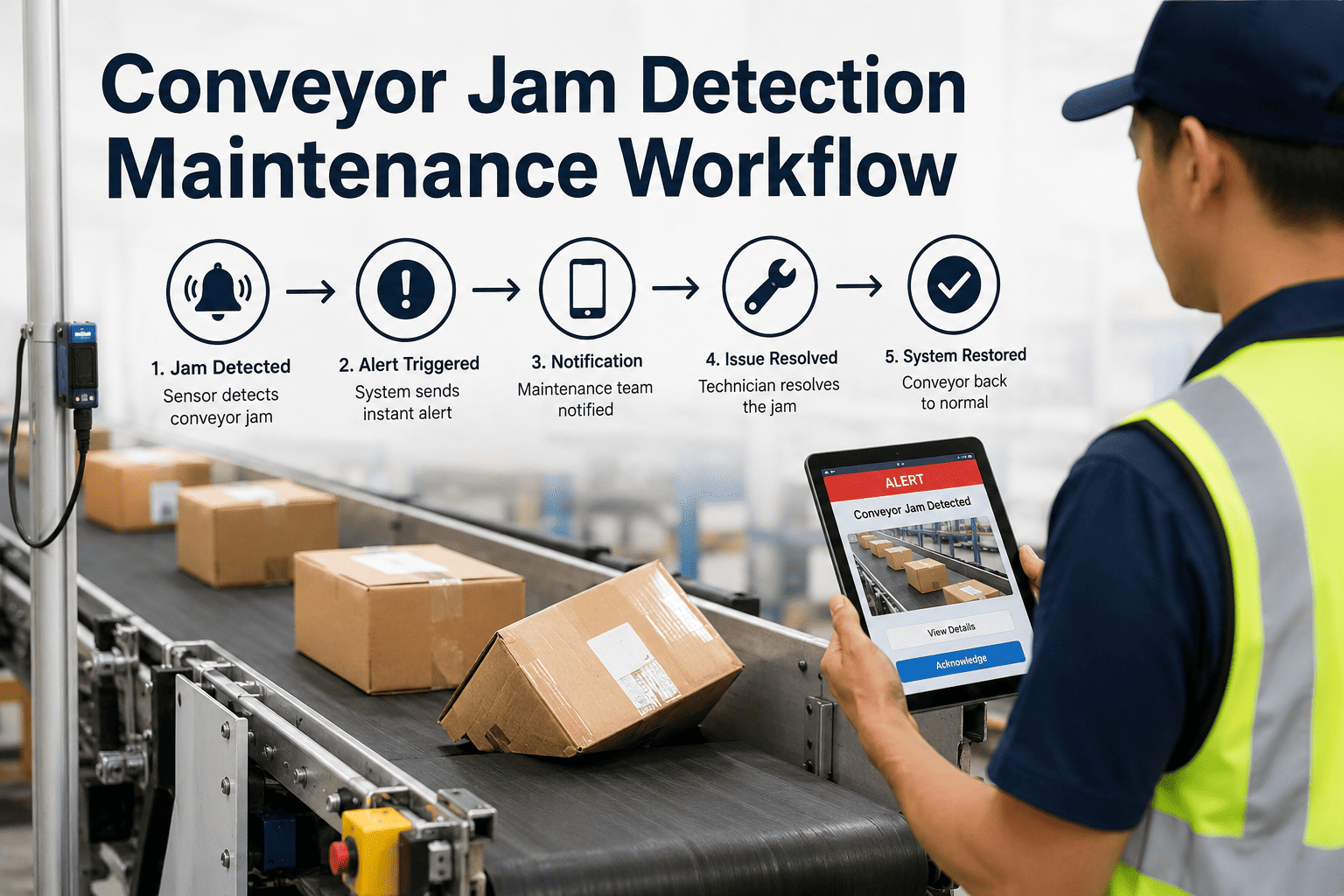
A jam detection workflow only earns its place if it removes manual triage at every single handoff. The stages below are what actually runs between a sensor flagging an anomaly and a technician walking away with the line clear.
Signal Detection
PLC and sensor layer streams photo-eye state, encoder pulses, and divert actuator cycle-time continuously. No new hardware required — the workflow reads what your sortation controls already generate.
Pattern Verification
A blocked photo-eye lasting two seconds is a package wiggle. The same signal lasting twelve seconds is a jam. The workflow filters transient noise so technicians stop chasing false trips.
Zone Identification
The exact zone, lane, and sensor ID are attached to the event — not just "Line 3 down." This is the single biggest time saving versus a radio call describing a general location.
Work Order Auto-Generation
A scoped ticket is created automatically, tagged to the asset record for that zone, carrying prior jam history, last clear-out time, and any open parts requests.
Technician Dispatch
The nearest available technician receives the ticket on mobile with zone photos, sensor trend, and a severity score — no dispatcher relay, no second radio call to confirm location.
Closeout & Pattern Logging
Root cause, parts used, and clear time are logged against the zone's history. Three jams at the same divert inside thirty days automatically flags a preventive inspection.
Stop Letting Jams Travel by Word of Mouth
Every minute between a jam happening and a technician knowing about it is a minute the backlog grows. Route the signal straight into a work order instead of a radio call.
Live Workflow Board — What a Jam Ticket Looks Like in Motion
The board below mirrors what a real shift sees once jam signals are tied to work orders — every ticket moving through detection, assignment, and resolution without anyone having to ask "is someone on it?"
The Cost Gap Between a Radio Call and a Routed Work Order
The detection method decides almost everything downstream — how long the line sits idle, how many packages need manual re-induction, and whether the same jam point shows up again next week.
| Detection Method | Avg. Time to Dispatch | Avg. Resolution Time | Packages Re-handled |
|---|---|---|---|
| Radio call + manual walk | 6–11 min | 18–25 min | 40–90 cartons |
| Camera alert, no CMMS link | 3–5 min | 12–16 min | 20–45 cartons |
| Sensor-to-work-order automation | Under 90 sec | 4–7 min | 5–12 cartons |
The Maintenance Cadence That Keeps Jams from Coming Back
Jam Point Visual Sweep
Operators check the five highest-frequency zones for debris, belt tracking drift, and photo-eye lens fouling before shift start.
Sensor & Divert Calibration
Photo-eye sensitivity and divert actuator timing checked against baseline. Drift beyond tolerance auto-generates a calibration ticket.
Belt Tension & Alignment Audit
Tracking measured against OEM spec at merge and singulation zones, where misalignment most often produces recurring jams.
Actuator Wear & Spares Review
Divert paddle and bearing wear measured against cycle counts. Critical spares stock checked against rolling jam frequency by zone.
What Fulfilment Centers Actually Recover
Year-one average across sortation lines moving from radio-based to sensor-linked work orders.
Versus 6–11 minutes on a manual walk-and-radio route during peak shifts.
Pattern logging flags recurring jam points for preventive work before they trip again.
Based on avoided overtime, re-handling labor, and missed carrier cut-off penalties.
Frequently Asked Questions
Every Jam Ticket You Didn't Have to Chase Down Is Time Back on the Floor
Connect your sortation sensors to a work order system that tells technicians exactly where to go, before the backlog spreads upstream.