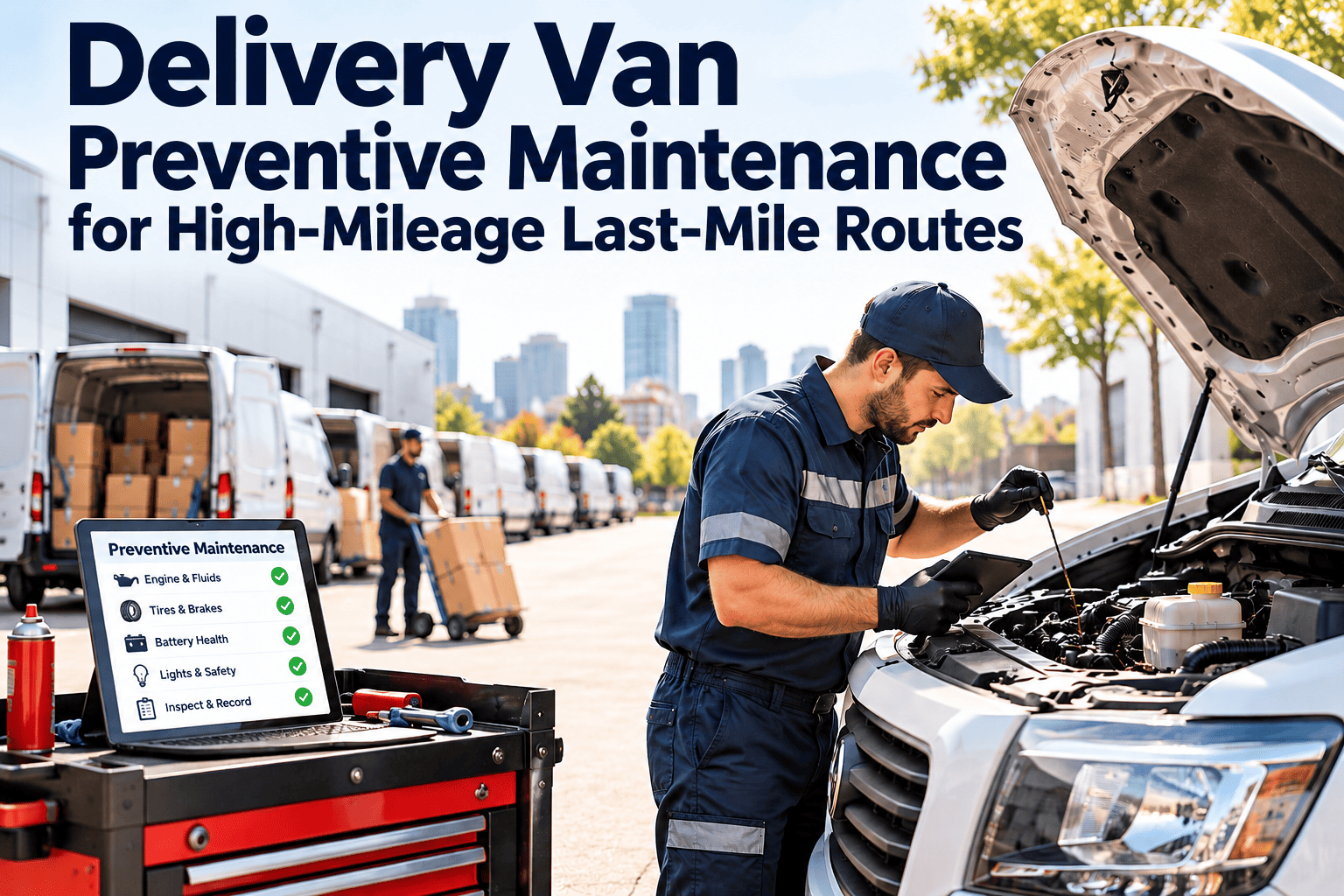
A roadside breakdown does more than cost a tow. It blows the route, strands the driver, and turns every remaining stop into a late parcel and a customer call. Most delivery vehicle breakdowns are not random; they follow warning signs that were visible days or weeks earlier in defect reports, fault codes and repeat repairs. Preventing them means catching those signs and acting while the van is still in the yard. Teams that want to move from reactive repairs to planned reliability can set up Oxmaint for their fleet and connect inspections, fault data and work orders in one place.
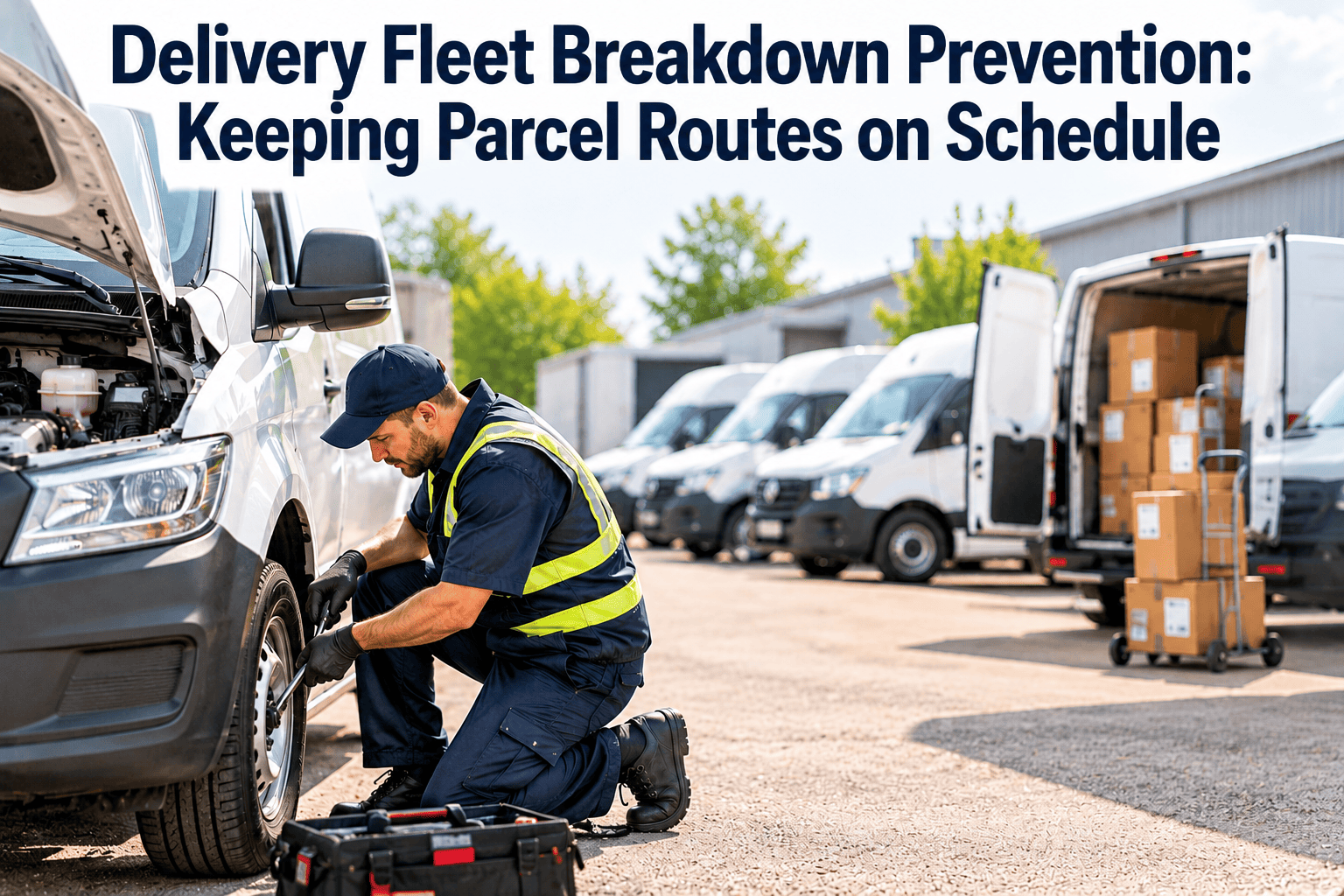
Delivery Fleet Breakdown Prevention: Keeping Parcel Routes on Schedule
Catch failures while the van is still in the depot. Use inspections, fault codes and condition-based service to protect every stop on the route.
What One Roadside Failure Actually Breaks
The repair invoice is the smallest part of a breakdown. The real damage spreads outward from the stopped van.
The route stops
Recovery costs begin
Dispatch scrambles
Customers feel it
The van stays out
Where Breakdowns Come From: A Simple Risk Matrix
Not every failure deserves equal attention. Plot likely causes by how often they occur and how badly they disrupt a route.
The ratings above are a starting frame. Replace them with your own breakdown history so the matrix reflects the vans, routes and climate you actually run.
From Reactive to Predictive: The Reliability Ladder
Fleets rarely jump straight to prediction. They climb through stages, and each stage removes a class of surprise.
| Stage | How Maintenance Is Triggered | Typical Result |
|---|---|---|
| Reactive | Repair after failure or driver complaint | Frequent roadside events and unplanned downtime |
| Calendar and mileage | Fixed intervals regardless of condition | Fewer failures, but some over- and under-servicing |
| Condition-based | Service triggered by measured wear and inspection findings | Work lands where wear actually is |
| Predictive | Fault codes and trends flag likely failures in advance | Parts and bay time arranged before the van fails |
You do not need every sensor on day one
Most fleets gain the largest early improvement from consistent inspections and fast defect-to-work-order flow. Fault codes and trend analysis then add precision on top of a solid base.
Early Warning Signals Worth Capturing
Every breakdown has precursors. The goal is to gather them in one place so patterns become visible.
Turn Warning Signs Into Work Orders Before the Route Starts
Oxmaint keeps inspections, defects, preventive schedules and repair history together, so your team can see which vans are heading toward trouble.
Fixed Intervals vs Condition-Based Service
Replacing parts on a calendar is simple but blunt. Condition-based service asks what the part is doing, not just how old it is.
- Same service for every van at the same distance
- Healthy parts replaced early
- Fast-wearing parts fail between services
- Little data on why failures happen
- Service timing follows measured wear and findings
- Parts used closer to their real life
- Fast-wearing vans get earlier attention
- Every reading builds a usable history
Most fleets blend both: a fixed backstop so nothing is missed, with condition triggers that pull service forward when readings or codes demand it.
Prevention by Failure Category
Each common breakdown category responds to a specific set of preventive tasks.
Tires and Wheels
- Pressure checks at every pre-trip
- Tread depth readings at each PM
- Rotation and alignment after impacts
- Immediate work orders for sidewall damage
Batteries and Charging
- Load tests before winter and summer
- Terminal and cable inspection
- Alternator output check at PM
- Review of slow-crank complaints
Brakes
- Measured pad and rotor thickness
- Brake fluid condition checks
- Prompt action on pulling or noise
- Wear-rate projection per van
Cooling and Engine
- Coolant level and leak checks
- Belt and hose replacement on condition
- Oil analysis on high-hour units
- Temperature alerts on dashboards
Emissions and Fuel
- Weekly fault code review
- Fluid quality and level tracking
- Regeneration event monitoring
- Fuel filter service on schedule
Doors, Gates and Body
- Latch, track and hinge inspection
- Lift gate function tests
- Lighting and signal checks
- Mirror and camera condition
A Roadside Response Playbook That Also Teaches
Some breakdowns will still happen. A consistent response limits damage and turns each event into prevention data.
Check the sister vans
If one van fails from a worn component, others of the same model and age may follow. A quick fleet-wide inspection after a failure often prevents the next two.
Metrics for Road Reliability
Track a few figures consistently. They show whether prevention is working and where to focus next.
The last measure is the most revealing. When a failure had earlier defect reports or codes behind it, the gap is in follow-up, and follow-up is fixable. Share these figures with dispatch and drivers as well as managers, because everyone who touches a van influences whether it breaks down, and visible progress keeps the whole team engaged in prevention.
Reading Fault Codes Without Drowning in Them
Modern vans generate a steady stream of diagnostic codes. Most are harmless, but a few predict an outage. A simple triage rule keeps the team focused on the ones that matter.
| Code Pattern | What It Often Signals | Suggested Response |
|---|---|---|
| Active warning with a derate or limp mode | The van may not finish its route | Pull from dispatch and open an urgent work order |
| Pending code that appears repeatedly | A developing fault that has not yet triggered a light | Schedule inspection at the next planned yard visit |
| Same code on several vans of one model | A fleet-wide weakness or a bad parts batch | Inspect sister vans and review parts supplier |
| Intermittent sensor faults | Wiring, connector or corrosion trouble | Inspect harnesses and record conditions when it occurs |
| Code cleared and returned within days | The root cause was never fixed | Reopen the repair and change the diagnostic approach |
Do not clear and forget
Clearing a code removes the light but not the cause. Always attach the code, the conditions and the repair to the same work order so history shows what really happened.
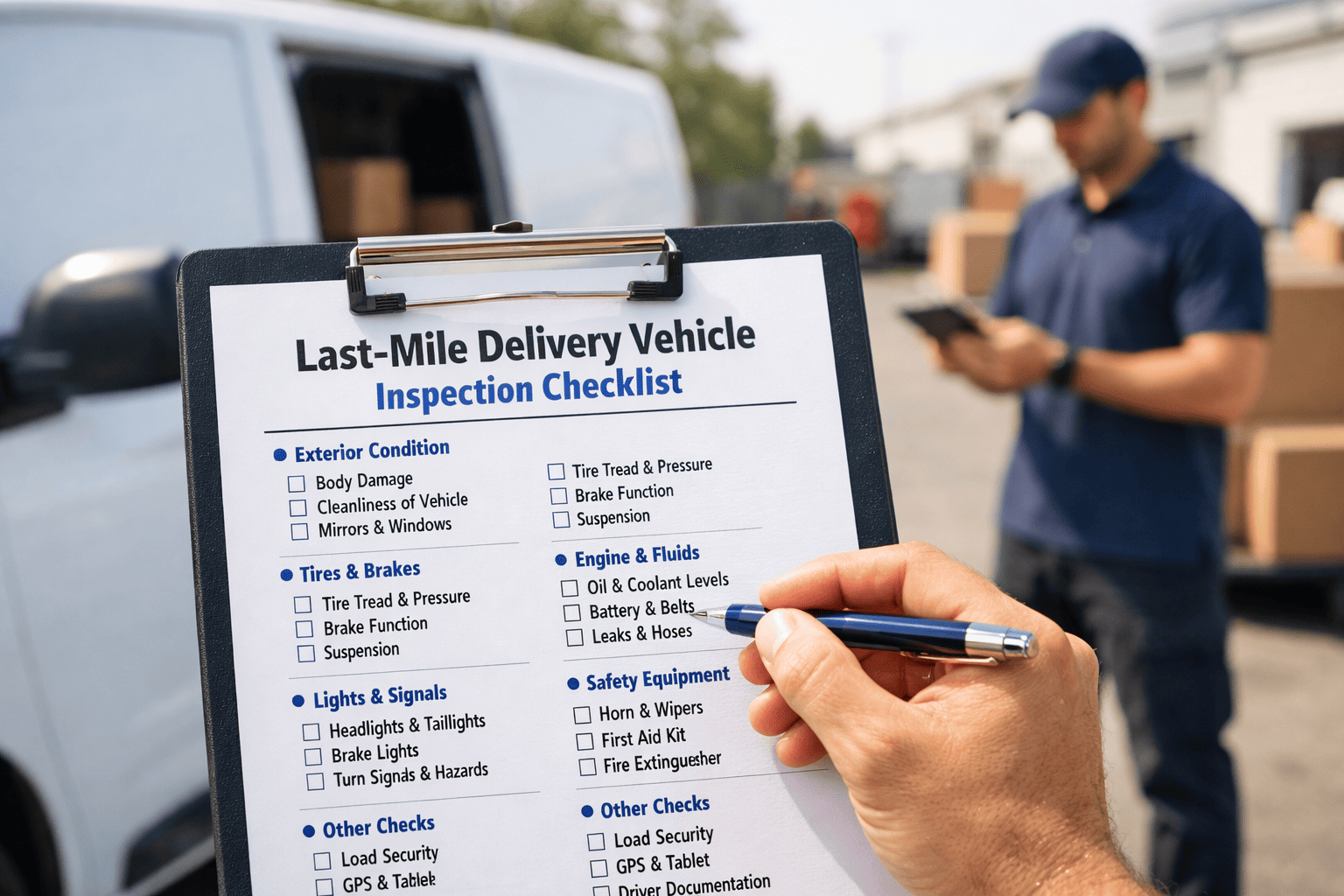
Pre-Trip Discipline That Actually Catches Problems
A pre-trip check only prevents breakdowns if drivers complete it properly and the findings go somewhere. Three habits separate useful checks from paperwork.
Seasonal Breakdown Patterns to Plan Around
Breakdown causes shift through the year. Schedule readiness work ahead of each season instead of reacting once failures begin.
Cold Season
- Battery load tests before temperatures drop
- Fluid freeze protection checks
- Tire pressure checks as air contracts
- Door seal and lock lubrication
Hot Season
- Cooling system inspection and flush on schedule
- Air conditioning service for driver safety
- Belt and hose condition review
- Tire condition checks on hot pavement
Wet Season
- Wiper, washer and lighting checks
- Brake performance inspection
- Tread depth review for wet grip
- Electrical connector corrosion checks
Peak Volume Season
- Fleet-wide suspension and tire campaign
- Spare van availability review
- Parts stocking for likely repairs
- Extended shop hours for quick turnaround
Construction Season
- Alignment and tire damage checks
- Windshield and glass inspection
- Underbody and exhaust checks
- Suspension component review
New Route Launches
- Baseline inspection of assigned vans
- Review of route terrain and stop density
- Adjustment of PM intervals
- Early follow-up inspection after two weeks
Spare Vans and Vendor Readiness
Prevention lowers the number of failures but never reaches zero. Preparing for the remaining events limits how much route time each one costs.
- Dispatch searches for a tow provider at the time of failure
- No spare van is ready, so routes are cut
- Parts are ordered after diagnosis begins
- No record of who authorized the repair
- Roadside vendors are listed by area with contact details
- A small spare pool is kept road-ready
- Common parts are stocked from repair history
- Approvals and costs are logged on the work order
A spare pool costs money to hold, so size it from data. Compare the cost of idle spares with the cost of lost routes during past breakdowns.
Who Owns Follow-Up on Each Warning
Early warnings fail when nobody owns the next step. Assign responsibility in plain terms and the loop closes.
Review the loop every month
A short monthly review of open defects, repeat repairs and breakdown causes keeps ownership visible. The most useful question is simple: which failure could we have seen coming?
Why Breakdown Prevention Programs Stall
Most programs begin with energy and fade within a year. Knowing the usual reasons makes them easier to avoid.
Start small and protect the habit
Begin with one depot or one route group, prove that defects are being closed quickly, and expand from there. A modest program that runs every day does more for road reliability than an ambitious one that fades after a quarter.
Frequently Asked Questions
What causes most delivery van breakdowns?
Do we need telematics to prevent breakdowns?
How does condition-based maintenance reduce roadside events?
How should drivers report problems?
Where should a fleet start with Oxmaint?
Keep Every Route Moving From the First Stop to the Last
Build a maintenance program that finds trouble in the yard instead of on the road, with full records behind every van.