Delivery vehicles are the moving backbone of any logistics operation — and a single brake failure, blown tire, or faulty light can ground a route, expose your business to liability, and put a driver in danger. Fleet operators across courier, e-commerce, food delivery, and freight sectors lose thousands every year to violations, emergency repairs, and insurance claims that a consistent pre-trip inspection would have caught first. A structured DVIR-compliant vehicle inspection checklist — run daily and logged digitally — is the difference between a fleet that stays on the road and one that bleeds cost at every stop. This guide covers every system your drivers and fleet managers need to inspect, how often, and what signs demand immediate attention. Manage every round on OxMaint's mobile CMMS platform and convert paper DVIRs into audit-ready digital records instantly.
Fleet Safety · DVIR Compliance · Driver Checklists
Delivery Vehicle Inspection Checklist Template
Pre-trip to post-trip. Tires to tail lights. A complete DVIR-ready checklist covering seven vehicle systems — built for courier vans, box trucks, and last-mile delivery fleets.
DOT DVIR Ready
Pre-Trip + Post-Trip
Mobile-First
Defect Reporting
34%
of roadside inspection violations are brake-related — the most preventable category
$16K+
Average cost of a commercial vehicle accident where brake defects are a factor
1 in 5
Commercial vehicles placed out of service during FMCSA roadside inspections
72%
Of fleet managers say digital checklists reduce missed defects vs paper forms
Why It Matters
What Happens Without a Daily Inspection
Skipping the pre-trip is the most expensive shortcut in fleet operations. Four consequences stack up fast when inspection discipline breaks down.
01
DOT Violations and Fines
FMCSA requires drivers of commercial vehicles to complete a DVIR every operating day. Missing or incomplete records result in fines starting at $1,000 per violation per day.
02
Roadside Out-of-Service Orders
A defective vehicle flagged at a weigh station is placed out of service immediately — the driver is stranded, the load is late, and the carrier's safety rating takes a hit.
03
Preventable Breakdowns
Tire blowouts, brake fade, and fluid failures are nearly always preceded by visible warning signs. Catching them at the yard keeps the truck moving and the driver safe.
04
Insurance and Liability Exposure
In an accident investigation, lack of inspection records signals negligence. Complete digital DVIR logs are the single strongest evidence layer in any fleet liability case.
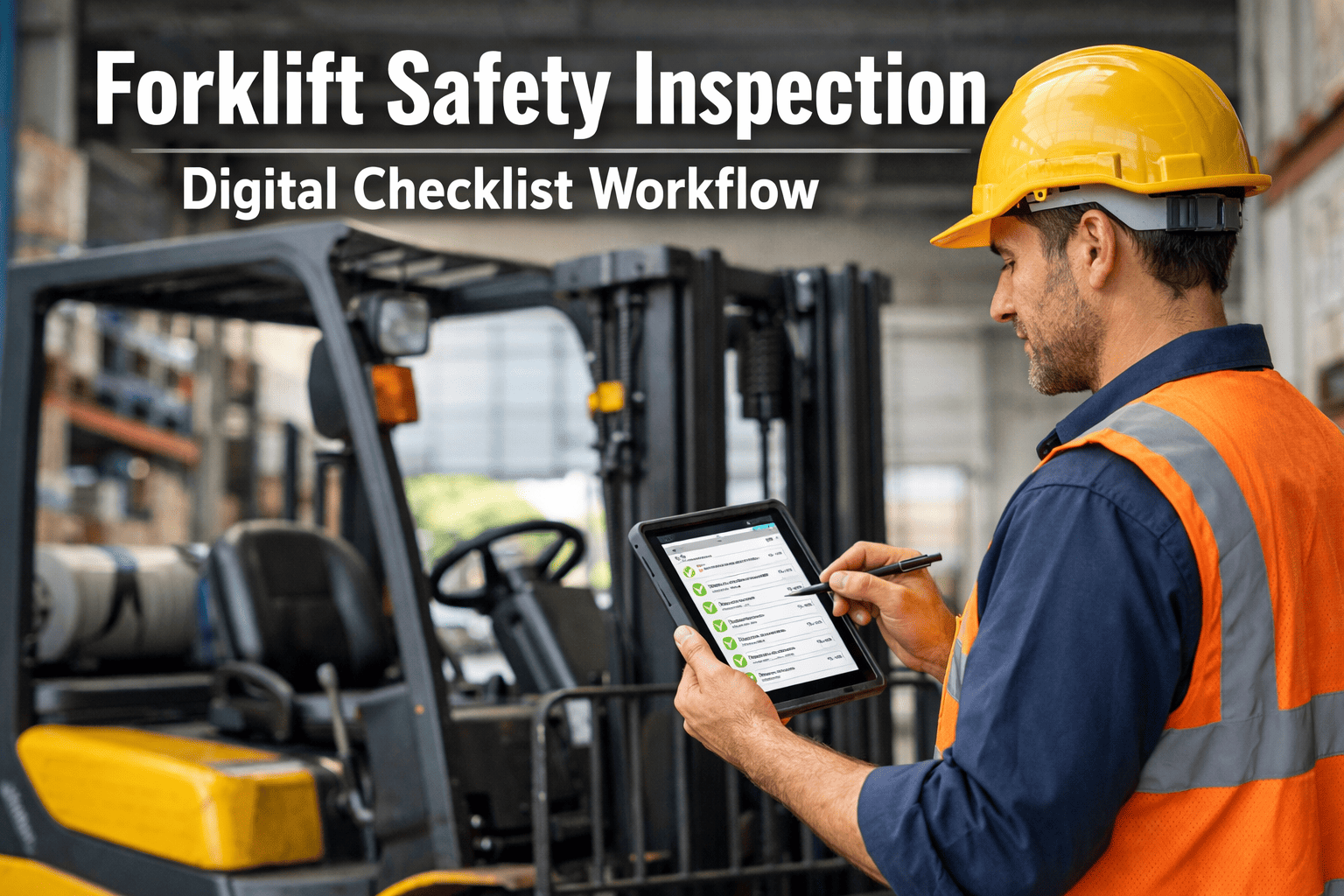
Run every pre-trip and post-trip inspection on a phone. Capture defects with photos, assign corrective work orders instantly, and close every DVIR loop before the truck leaves the yard.
Inspection Checklist
Seven Systems. Every Delivery Day.
Walk through these seven systems in order — they map to the actual walk-around sequence a driver performs starting at the front of the vehicle and working around it.
01
Tires and Wheels
Most common roadside defect category
Tread depth at or above legal minimum (2/32" minimum, 4/32" steer axle)
Use a tread depth gauge on steer tires at every inspection. Worn tread is an immediate out-of-service condition.
Tire pressure checked and within spec for load
Under-inflation increases blowout risk and fuel consumption. Check cold pressure before the first mile of the day.
No cuts, bulges, or sidewall damage visible
A sidewall bulge is a tire ready to fail. Remove from service regardless of tread depth.
Lug nuts present, no rust streaking from studs
Rust streaks around studs indicate loosening. Re-torque immediately and investigate the cause.
Spare tire present and properly secured (if applicable)
A flat spare is useless. Verify pressure and mounting on every inspection.
02
Brakes
Leading cause of commercial vehicle accidents
Service brake response firm, no pull or fade
Low-speed brake application should feel firm and even. Any pull to one side indicates a dragging or seized caliper.
Parking brake holds vehicle on a grade
Engage the parking brake and verify the vehicle does not roll. Parking brake failure is an out-of-service defect.
No brake warning light on dash
ABS and brake warning lights must be confirmed off after engine start. A lit warning means investigate before departure.
Air brake systems — reservoir pressure in normal range (air brake vehicles)
Build pressure to governor cutoff, check for pressure loss below 90 PSI with brakes released.
No grinding, squealing, or dragging sounds during test stop
Any metallic noise during braking signals worn pads or a seized component. Do not depart — report as a defect.
03
Lights and Signals
Visibility and DOT compliance
Headlights — low and high beam operational
Walk to the front of the vehicle and verify both beams function. Cycle between low and high to confirm the switch works.
Brake lights and taillights illuminated on activation
Use a reflective surface or a second person. A failed brake light is an immediate violation.
Turn signals front and rear functional
Check both left and right turn signals. A fast-blinking indicator usually means a bulb failure in the circuit.
Reverse lights and backup alarm active in reverse
Backup alarms are required for delivery vehicles operating near pedestrians. Verify both light and audible alarm function.
Hazard lights cycle correctly
Test all four corners simultaneously. Parked delivery vehicles in traffic lanes require functioning hazard lights.
04
Fluids and Engine Bay
Prevent breakdowns before they start
Engine oil level within operating range on dipstick
Check cold or after a 5-minute cool-down. Low oil means do not depart — top up and investigate source of consumption.
Coolant level in reservoir at MIN or above
A low coolant level is a leak indicator. Check for puddles under the vehicle before topping up.
Brake fluid at correct level in reservoir
Low brake fluid can indicate a leak in the hydraulic system — more serious than just a top-up situation.
No active fluid leaks under the vehicle
Walk the perimeter and look for fresh drips or pooling. Oil, coolant, brake fluid, and fuel all have distinct colors and smells.
Fuel level sufficient for planned route
Running out of fuel causes delays, potential traffic hazards, and customer complaints. Check before every departure.
05
Cab and Controls
Driver environment and operational controls
Windshield free from cracks, wipers operational
A crack in the driver's sight line is an automatic violation. Wiper blades should clear the full sweep area without streaking.
Horn, mirrors, and seat adjustment functional
Mirrors must be properly adjusted for the driver on duty. A stuck mirror or non-functional horn is a reportable defect.
Seat belt present, latches and retracts properly
Seat belt failure is an automatic out-of-service condition. Test the latch and the retractor force before every trip.
Dash warning lights clear after engine warm-up
Check engine, oil pressure, battery, and temperature lights. Any warning lamp still lit after warm-up requires investigation.
Cab clean — no loose items that could shift during braking
Unsecured items in the cab become projectiles during emergency stops. Clear the footwell and dashboard of all loose objects.
06
Cargo Area and Load Security
Protect the load and protect others
Cargo area doors open, close, and latch securely
A door that won't latch can swing open at speed. Test each latch mechanism and all hinge points before loading.
Load secured with tie-downs, straps, or dividers
Shifting load changes vehicle weight distribution and center of gravity. Verify load is secured before departure and after each major stop.
Cargo area floor in good condition — no structural damage
A weakened floor can give way under load. Inspect for corrosion holes, cracked panels, and broken tie-down anchor points.
No hazardous or prohibited materials in load
Verify the manifest against the actual load. Hazmat regulations require specific documentation and placards if applicable.
07
Safety Equipment
Compliance and emergency readiness
Fire extinguisher present, charged, and accessible
Check the pressure gauge and verify the pin and tamper seal are intact. An expired or discharged extinguisher is a violation.
Warning triangles or road flares present and accessible
FMCSA requires three reflective triangles for vehicles operating outside the cab. Verify they are present and serviceable.
First aid kit stocked per company policy
Check expiry dates on key items and restock any depleted supplies before signing off the kit.
Registration, insurance, and inspection documents current
Every document must be in-date and physically present in the vehicle. Expired documents are a separate violation from vehicle condition.
DVIR from previous driver reviewed and defects noted
Drivers must review the previous DVIR and certify either that defects were repaired or that no repairs were needed.
Inspection Frequency
Pre-Trip vs Post-Trip vs Weekly
Not every inspection item needs the same cadence. Use this matrix to assign checks correctly — and keep the daily pre-trip fast and focused.
| Inspection Item |
Pre-Trip (Daily) |
Post-Trip (Daily) |
Weekly |
Monthly |
| Tire pressure and tread |
Full check |
Visual only |
Tread depth gauge |
Rotation assessment |
| Brake performance |
Test stop required |
Listen for fade or noise |
Visual pad/drum check |
Full brake system service |
| All lights and signals |
Full cycle test |
Quick visual walk |
Check bulb condition |
Inspect wiring and mounts |
| Fluid levels |
Oil, coolant, brake fluid |
Check for new leaks |
Full fluid panel |
Fluid analysis if applicable |
| Safety equipment |
Presence confirm |
Restock if used |
Expiry and charge check |
Replace and document |
| DVIR documentation |
Sign and submit |
Log defects found |
Review defect trends |
Compliance audit |
Defect Reporting
When to Ground the Vehicle — No Debate Needed
These conditions are automatic out-of-service. No driver or dispatch pressure overrides them. Log the defect, pull the vehicle, and start the repair work order.
Brakes
Brake warning light active at departure
Air pressure drops below 90 PSI at idle
Grinding or metal-on-metal sound during stop
Parking brake will not hold on a grade
Tires
Tread below 2/32" (4/32" on steer axle)
Visible sidewall bulge or cord separation
Flat tire or tire losing pressure rapidly
Missing lug nuts on any wheel
Steering
Excessive free-play in steering wheel
Vehicle pulls hard left or right at speed
Power steering fluid leak visible
Steering warning light active
Engine
Oil pressure warning light at idle
Temperature gauge in red within 5 minutes
Check engine light with rough running
Visible smoke from engine bay
FAQs
Frequently Asked Questions
What is a DVIR and is it legally required?
A Driver Vehicle Inspection Report is a federally mandated document under FMCSA 49 CFR Part 396.11 for commercial motor vehicles in the US. Drivers must complete a DVIR at the end of every day of operation, reporting any defects that could affect safety.
OxMaint digitizes DVIR completion and storage so records are always audit-ready.
How long does a proper pre-trip inspection take?
A thorough pre-trip inspection on a delivery van should take 15 to 20 minutes. Drivers who rush below 10 minutes are typically skipping systems. A digital checklist keeps the inspection structured and fast — no writing, no ambiguity, just tap and photo.
Book a demo to see the mobile flow.
What happens if a defect is found during pre-trip?
Safety-critical defects mean the vehicle must not depart until repaired and certified. Non-safety defects must still be logged and scheduled for repair. In OxMaint, a defect flagged during inspection automatically generates a corrective work order and notifies the fleet manager in real time.
Can this checklist be used for EV delivery vans?
The core mechanical and safety items apply to any delivery vehicle. EV-specific items — battery state of charge, charging port condition, regenerative brake function, and software alerts — should be added as an additional section.
OxMaint allows custom checklist sections for any vehicle type in your fleet.
How do I prove inspections were completed for an audit?
Paper DVIRs must be retained for 3 months. Digital records in a CMMS like OxMaint are timestamped, GPS-stamped, and tied to the driver's login — giving auditors a chain of custody paper trail that paper forms cannot match.
Book a demo to see the audit export.
Make Every Inspection Count
Mobile-first DVIRs, instant defect work orders, compliance tracking, and fleet-wide trend data — built for delivery fleets that can't afford a vehicle off the road or a compliance gap.