Predictive maintenance promises to fix equipment just before it fails, but many delivery operations start with the technology and end with a pile of unused dashboards. The programs that pay back begin with a short list of failure modes that genuinely give warning, a modest amount of instrumentation, and a clear process for turning a signal into a work order. This guide sets out what to instrument first, how to pilot, and how to scale, with Oxmaint handling the work management that makes predictions useful.
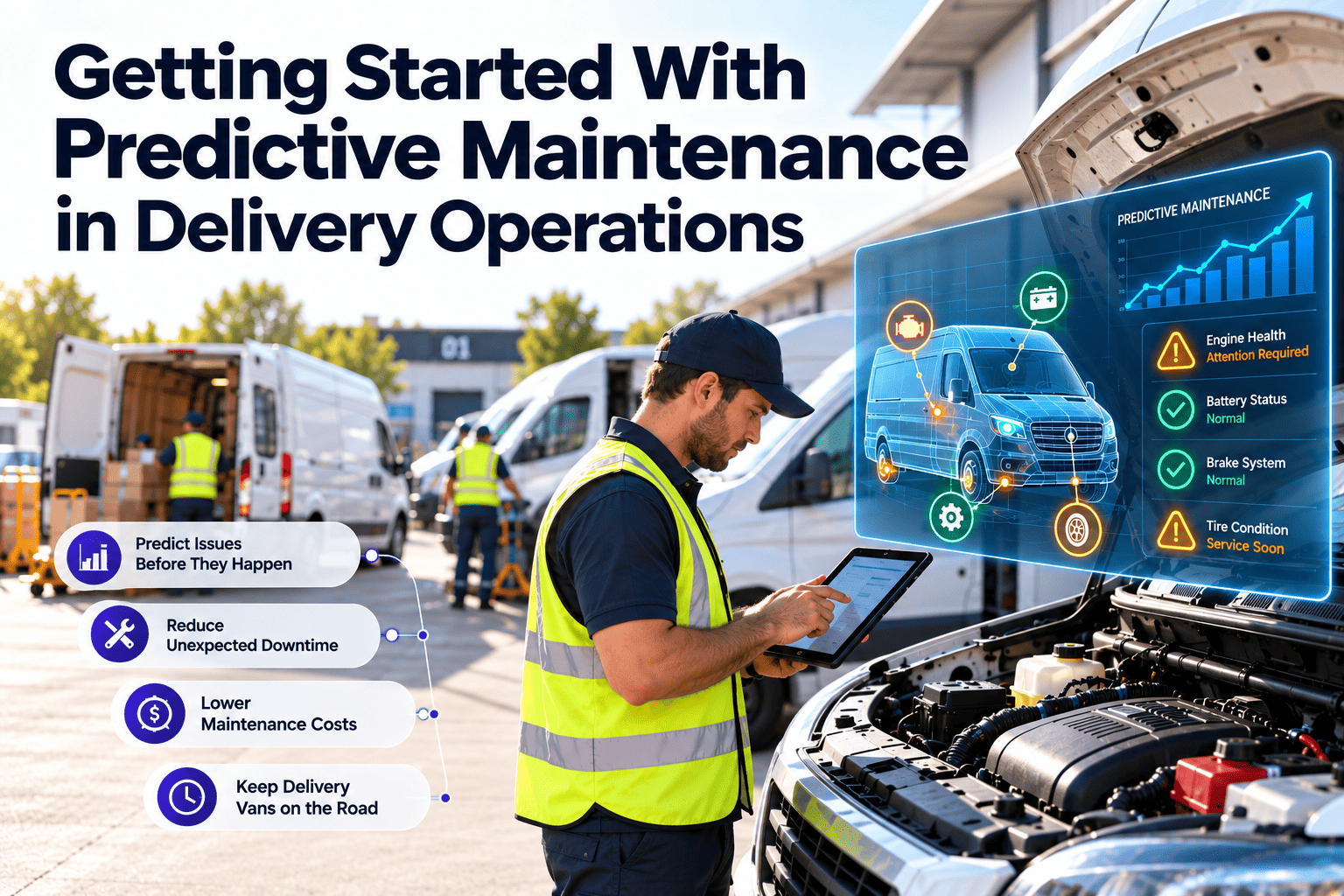
Getting Started With Predictive Maintenance in Delivery Operations
Move from firefighting to foresight in stages, starting with the assets and failure modes where early warning is realistic.
What Predictive Maintenance Actually Means Here
Predictive maintenance uses condition data to estimate when an asset will need attention, so work is done when it is needed rather than too early or too late. In delivery operations, it spans vehicles, conveyors and sorters, forklifts, refrigeration, and charging equipment.
Why most programs stall
- Sensors are installed on assets that fail rarely or without warning, so little value appears.
- Alerts are generated without an owner, a response time, or a work order process.
- Data sits in separate systems, so nobody connects readings to repair history.
- Models are built before basic maintenance records are reliable enough to train or check them.
Choosing Failure Modes That Predict Well
A failure mode is worth monitoring when it develops gradually, produces a measurable signal, and costs enough to justify the effort. This table gives a starting view across delivery assets.
| Asset | Failure mode | Signal to watch | Warning typically available |
|---|---|---|---|
| Conveyor and sorter motors | Bearing wear, misalignment | Vibration, temperature, motor current | Often days to weeks |
| Conveyor belts | Wear, tracking problems, splice failure | Visual inspection data, belt drift, load | Weeks, with regular inspection |
| Delivery vehicles | Brake wear, tire wear, battery decline | Telematics, diagnostic codes, inspection records | Weeks, depending on use |
| Electric vehicle batteries | Capacity loss, charging faults | State of health, charge cycle data, temperature | Gradual, trend based |
| Refrigeration units | Compressor strain, refrigerant loss | Run time, current draw, temperature drift | Days to weeks |
| Forklifts and material handling | Battery, hydraulic, and mast wear | Hour meters, fluid analysis, inspection findings | Weeks |
| Electrical panels and drives | Overheating connections, drive faults | Thermal imaging, fault logs | Variable, often periodic checks |
Failure modes that predict poorly
Sudden electronic failures, impact damage, and random wiring faults give little warning. Use good preventive routines and spares for these instead of forcing a prediction model onto them.
Start With Clean Asset and Work Order History
Oxmaint gives you a structured record of assets, failures, and repairs, which is the foundation any predictive program needs.
What to Instrument First
Rank candidate assets by criticality, then check three questions before buying any sensors.
Low-cost starting points
- Use telematics and diagnostic trouble codes already available from your vehicles.
- Record hour meters and cycle counts, then trigger work by usage rather than calendar.
- Add handheld vibration and thermal checks to routine rounds on critical motors.
- Digitize inspections so findings become trendable data instead of paper notes.
The Technology Stack, Simplified
Rules before models
Simple threshold and trend rules often capture most of the value and are easy for technicians to trust. Add advanced models only when rules stop being enough and enough clean data exists.
From Signal to Work Order: The Response Workflow
Pilot to Scale: A Phased Roadmap
- Build the asset register
- Standardize work order codes
- Rank assets by criticality
- Set baseline downtime and cost
- Pick one or two asset groups
- Add sensors or digital inspections
- Define thresholds and owners
- Run for a full cycle of seasons if possible
- Compare against baseline
- Count true and false alerts
- Document avoided failures honestly
- Decide what to keep or drop
- Extend to similar assets and sites
- Add models where data supports them
- Train technicians and planners
- Review the program quarterly
Common Traps to Avoid
Measuring Whether It Works
Data Quality Requirements
Predictive tools are only as good as the records behind them. Before investing in analytics, check that your data meets these basic conditions.
Condition Monitoring Techniques
Different failures leave different traces. This table links common techniques to the problems they find.
| Technique | What it detects | Typical assets | Skill and cost level |
|---|---|---|---|
| Vibration analysis | Imbalance, misalignment, bearing defects | Motors, gearboxes, fans | Moderate |
| Thermal imaging | Hot connections, overloaded components | Electrical panels, drives, bearings | Low to moderate |
| Oil and fluid analysis | Wear particles, contamination | Hydraulic systems, forklifts, engines | Low per sample, needs a lab |
| Ultrasound | Early bearing wear, leaks | Compressors, bearings, air systems | Moderate |
| Motor current analysis | Load changes, electrical faults | Conveyor and sorter drives | Moderate to high |
| Telematics and diagnostics | Fault codes, harsh events, battery data | Delivery vehicles | Low if already installed |
Match technique to failure
Pick the cheapest technique that reliably sees the failure you care about. A handheld thermal camera on a monthly round can outperform an expensive sensor network if the failure mode is an overheating connection.
Skills and Roles Behind the Program
Technology does not run a predictive program, people do. Name the roles early so signals do not land in an inbox with no owner.
Training priorities
- How to take consistent readings with handheld tools
- How to read trend charts and alert levels
- How to record findings so they can be matched to predictions
- How to escalate when a reading looks urgent
Building the Business Case Honestly
A credible business case survives scrutiny from finance and from skeptical technicians. Keep it grounded in your own numbers.
- Start with measured baseline downtime, repair cost, and emergency freight for the pilot assets.
- Count only failures that gave a usable warning, not every breakdown.
- Include the cost of sensors, connectivity, software, training, and technician time.
- Treat savings from avoided failures as estimates, and record each confirmed case with evidence.
- Review the case after each phase and stop investing where results do not appear.
A Six-Step Pilot Plan
A pilot should be small enough to finish and structured enough to teach something. Follow this sequence for each asset group you test.
Pilot Scorecard
Judge the pilot against a small set of agreed measures. Review them with maintenance, operations, and finance together.
| Pilot measure | How to record it | Healthy sign |
|---|---|---|
| Alerts raised | Count by asset and signal type | A steady, manageable number with clear owners |
| Alerts confirmed | Technician records what was found for each alert | A rising share of alerts that match real conditions |
| Missed failures | Breakdowns that gave no alert | Few, with a reason documented for each |
| Planned share of work | Planned versus reactive work orders on pilot assets | Planned work growing over time |
| Response time | Hours from alert to action | Consistent within agreed limits |
Questions to Ask Any Predictive Maintenance Vendor
Vendor demonstrations can look impressive without proving fit. Ask direct questions that test how the solution will behave in your operation.
- Which failure modes does this detect, and how much warning does it typically give?
- What data is needed from our assets, and what must we install or connect?
- How are alerts delivered, and how do they turn into work orders in our maintenance system?
- How are false alerts measured and reduced over time?
- What does the pilot include, and what results define success or failure?
- Who owns the data, and can we export it if we change providers?
- What skills do our technicians and planners need to run it day to day?
- What are the full costs beyond the license, including sensors and support?
Predictive Maintenance Questions
Build Predictive Maintenance on Solid Ground
Organize assets, inspections, and work orders in one system, then add condition data where it earns its place.