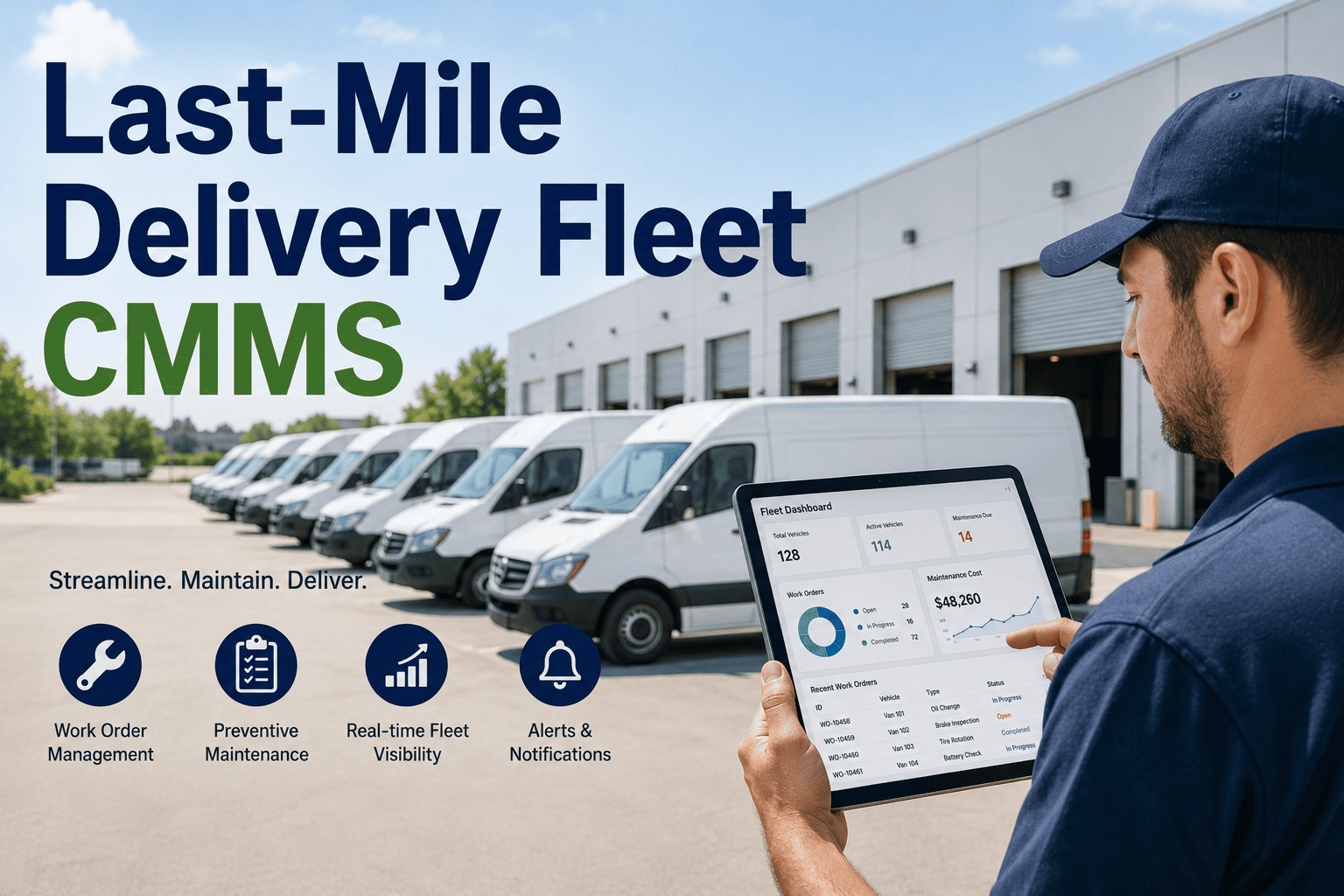
Every missed delivery is a broken promise. In 2026, first-attempt delivery failures remain one of the most expensive and reputation-damaging problems in logistics — costing an average of $17.20 per failed package and driving away nearly 70% of affected customers permanently. But here is what most delivery companies overlook: a significant share of these failures trace back to one root cause — unreliable fleet vehicles. When a delivery van breaks down mid-route, every package on that truck becomes a failed delivery. AI-driven fleet maintenance is emerging as the most effective way to close this gap — predicting vehicle failures before they strand your drivers and your deliveries. This guide breaks down the real connection between fleet health and delivery success, and shows how predictive maintenance technology can transform your first-attempt delivery rate from a liability into a competitive edge. It starts with digitizing your fleet maintenance data in one centralized platform.
The Hidden Link: Fleet Breakdowns Drive Delivery Failures
When industry reports talk about first-attempt delivery failures, the usual suspects get all the attention — wrong addresses, absent recipients, timing mismatches. But there is a category that flies under the radar: vehicle breakdowns. When a delivery truck breaks down mid-route, it does not just fail one delivery — it fails every remaining delivery on that truck's manifest. A single roadside breakdown can cost four times more than a scheduled shop repair, and the cascade effect on your entire day's delivery schedule is devastating.
In 2025, 52% of fleet managers confirmed that AI-powered predictive maintenance directly reduced their vehicle downtime. The connection is clear: healthier vehicles mean more deliveries completed on the first attempt, fewer SLA violations, and stronger customer retention. The companies investing in fleet intelligence today are not just fixing trucks — they are fixing their delivery success rate.
A delivery van's transmission shows early stress signs that go undetected. It fails at 2 PM on a Tuesday, stranding 47 remaining packages. Emergency towing costs $450+, and every customer on that route gets a "delivery attempted" notification. 23% of those customers will never reorder from you.
Telematics sensors detect abnormal transmission patterns 3 weeks before failure. The CMMS auto-generates a maintenance work order scheduled during off-peak hours. Van is repaired for $300 in-shop. Zero missed deliveries. Zero customer impact. Full route completed as planned.
Why Delivery Failures Are So Expensive
The cost of a failed delivery extends far beyond the re-delivery attempt. Each failure triggers a chain reaction across operations, customer service, and brand trust that compounds rapidly — especially during peak seasons when failure rates can surge to 20%.
The 5 Root Causes of Delivery Failures (And Which AI Maintenance Solves)
Not every delivery failure is a fleet maintenance problem — but more are than you think. Here is how the top five root causes break down, and where AI-driven fleet health monitoring makes the critical difference.
| Root Cause | % of Failures | AI Maintenance Impact |
|---|---|---|
| Wrong / Incomplete Address | 45% | Indirect |
| Recipient Not Available | 36% | Indirect |
| Vehicle Breakdown Mid-Route | 8–12% | Direct Elimination |
| Late Departure / Delayed Routes | 10–15% | Preventable |
| Capacity / Load Mismanagement | 5–8% | Optimizable |
Vehicle breakdowns and maintenance-related route delays together account for roughly 18–27% of all delivery failures. These are entirely preventable with the right predictive maintenance system. Even a 5% failure rate on 140,000 annual orders produces nearly $200,000 in direct losses — and that does not include the customer lifetime value destroyed with every failed delivery.
How AI-Driven Fleet Maintenance Prevents Failures
AI-powered fleet maintenance works in three connected layers — each one building on the data generated by the previous. Together, they transform fleet health from a reactive cost center into a proactive delivery enabler.
Continuous Vehicle Health Monitoring
IoT sensors and telematics devices monitor engine diagnostics, tire pressure, brake wear, battery voltage, and fluid levels in real time. Every vehicle in your fleet becomes a data-generating asset — feeding condition signals to your CMMS 24/7. Abnormalities are flagged instantly, not discovered during breakdowns.
Predictive Failure Detection
Machine learning models analyze historical repair data, sensor patterns, route stress, and environmental conditions to predict which components will fail — and when. Instead of fixed-interval servicing, maintenance is triggered by actual vehicle condition. Failures are predicted 2–4 weeks in advance, giving your team ample time to schedule repairs around delivery routes.
Automated Maintenance Orchestration
The CMMS auto-generates work orders, assigns the right technician, checks parts inventory, and schedules the repair during off-peak windows — all without manual intervention. Spare vehicles are pre-allocated for high-risk assets. Your delivery schedule stays untouched while fleet health is continuously optimized in the background.
Reactive vs. AI-Predictive: The Delivery Impact Comparison
The difference between reactive and AI-driven fleet maintenance is not just about repair costs — it is about what happens to your delivery operations on the days that matter most.
Vehicles serviced on fixed schedules or repaired after failure. Breakdowns hit during peak routes. Emergency repairs cost 4x more than planned. 8–12% of deliveries impacted by vehicle-related delays. SLA penalties accumulate. Customer trust erodes with every missed delivery window.
Maintenance happens every 30 days or 5,000 miles regardless of actual condition. Some vehicles are over-serviced (wasting budget), others are under-serviced (still break down). Improvement over reactive, but blind spots remain — especially for route-intensive delivery fleets under high daily stress.
Every vehicle is monitored continuously. Failures predicted weeks in advance. Repairs scheduled around delivery windows. Breakdowns reduced by 70–85%. Fleet availability increases by 20–25%. Maintenance cost per vehicle drops by 25–35%. Delivery SLA compliance becomes consistent and measurable.
AI predicts, schedules, dispatches, and verifies repairs autonomously. Spare vehicles are pre-assigned. Parts are auto-ordered. Delivery routes are dynamically adjusted around maintenance windows. Zero delivery impact. Fleet managers shift from firefighting to strategic oversight.
The Measurable ROI of AI Fleet Maintenance on Delivery Performance
When fleet health improves, delivery performance follows. Here is what the data shows across organizations that have implemented AI-driven predictive maintenance for their delivery fleets.
| Metric | Before AI | After AI |
|---|---|---|
| Unplanned Breakdowns | Frequent | 70–85% Reduction |
| Maintenance Costs | Unpredictable | 25–35% Lower |
| Fleet Availability | 75–85% | 95%+ |
| Delivery SLA Compliance | Variable | Consistent 92%+ |
| Vehicle Lifespan | Standard | 20–25% Extended |
Your Action Plan: From Breakdowns to Breakthrough Delivery Performance
Improving first-attempt delivery rates through fleet maintenance follows a clear, sequential path. Each phase builds on the one before — and the first step delivers the fastest ROI.