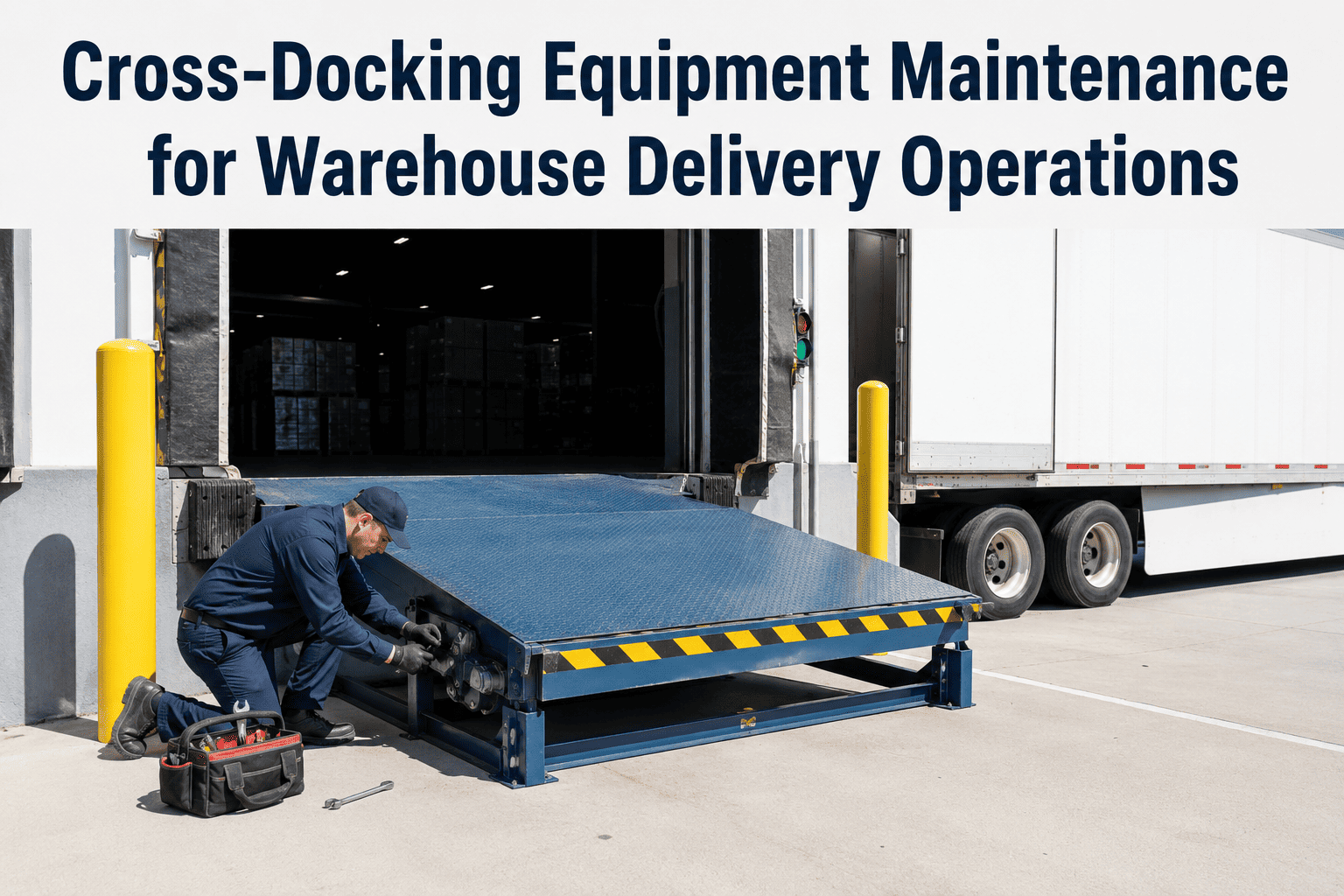
Cross-docking operations run on a simple but unforgiving principle — goods arrive, get sorted, and leave without ever entering storage. When dock doors jam, conveyors mistrack, or barcode scanners lose read accuracy, that flow breaks instantly. Unlike standard warehousing where a failed sorter means delayed picks, a cross-dock failure means missed delivery windows, carrier penalty charges, and customer SLA breaches stacking up in real time. OxMaint CMMS gives cross-dock operations managers a single platform to schedule preventive maintenance, track asset uptime, and close corrective actions before the next inbound trailer docks — keeping every piece of equipment ready at the exact moment it is needed.
Cross-Docking Equipment Maintenance for Warehouse Delivery Operations
Cross-docking has zero tolerance for equipment failure. Here is how structured CMMS maintenance keeps dock doors, conveyors, and scanners at guaranteed uptime — shift after shift.
Maintenance Cost
preventable with PM
dwell time target
unplanned conveyor stop
Why Cross-Docking Demands a Different Maintenance Standard
Traditional warehouses can absorb a 2-hour equipment repair window by shifting pickers to another zone. Cross-docking cannot. Every inbound lane is mapped to outbound trailers on fixed departure schedules. A failed dock leveler or mis-sorted conveyor belt does not just slow the operation — it stops it, and the impact flows directly into carrier penalties and retailer charge-backs.
The Four Equipment Categories That Make or Break a Cross-Dock
Cross-dock reliability depends on four asset categories, each with its own failure signature and PM cadence. A structured CMMS tracks all four with asset-specific work order templates.
Cross-Dock Equipment Failure Cost Analysis
The cost of unplanned equipment failure in a cross-dock is not just the repair — it is the compounding operational impact across the entire shift window.
| Equipment | Common Failure Mode | Avg Repair Time | Downtime Cost / Hr | Preventive PM Cost |
|---|---|---|---|---|
| Dock Door / Leveler | Hydraulic seal failure, spring fatigue | 1.5 – 3 hrs | $800 – $1,800 | $80 – $200 / mo |
| Belt Conveyor | Belt mistracking, drive bearing seizure | 2 – 5 hrs | $1,500 – $3,200 | $120 – $350 / mo |
| Barcode Scanner Array | Lens foul, alignment drift | 0.5 – 2 hrs | $600 – $1,400 | $40 – $90 / mo |
| Shoe Sorter | Slat wear, actuator timing failure | 3 – 8 hrs | $2,400 – $5,500 | $200 – $500 / mo |
| Dock Restraint / Chock | Locking mechanism wear | 1 – 2 hrs | $400 – $900 | $30 – $80 / mo |
Stop Reacting. Start Scheduling.
OxMaint auto-schedules PM for every dock door, conveyor, and scanner on your cross-dock floor — with work order alerts before the next inbound shift starts.
How OxMaint CMMS Maintains Cross-Dock Uptime
Cross-dock maintenance is a shift-by-shift discipline. OxMaint structures it into four operational layers — each reducing a specific failure pathway from detection to closed work order.
Pre-shift inspection checklists assigned to each equipment zone ensure dock levelers, conveyor drives, and scanner arrays are verified operational before the first trailer backs in. Failed checklist items auto-generate corrective work orders with priority flags.
Conveyor belts and sorter slats degrade by cycles, not calendar time. OxMaint schedules PM by dock door actuation count, conveyor throughput tonnage, and sorter divert count — ensuring maintenance happens when equipment actually needs it, not on an arbitrary monthly calendar.
When a PM is missed or a corrective action sits unassigned beyond a set threshold, OxMaint automatically escalates to the shift supervisor and maintenance lead — so no work order gets lost between shifts during handover.
Every PM work order captures parameter readings — belt tension PSI, motor current draw, scanner read rates. OxMaint trends these readings across inspections, surfacing assets where degradation is accelerating before a failure event occurs.
Cross-Dock PM Compliance — Before vs After CMMS
Data from a 3-facility regional distribution network (combined 14 active cross-dock lanes) following OxMaint implementation over 9 months.
Frequently Asked Questions
Every Missed PM on Your Cross-Dock Floor Is a Departure Window at Risk.
OxMaint schedules dock door, conveyor, and scanner maintenance automatically — keeping every lane ready before the next inbound trailer arrives.