The maintenance log told a frustrating story: Third boiler failure this academic year. Same building. Same symptom—low water cutoff triggered. Each time, the technician reset the system and added water. Each time, within six weeks, it failed again. Only when the facilities director demanded a proper boiler failure root cause analysis did the truth emerge: a hairline crack in the feedwater line, hidden behind insulation, had been slowly leaking for months. The repeated "fixes" had addressed symptoms, not the source. Understanding how to systematically trace boiler failures to their origins separates schools that constantly firefight from those that achieve lasting reliability.
For schools and higher education institutions, boiler failures carry consequences beyond discomfort. When heating systems fail during winter months, classrooms become unusable, students are sent home, and emergency repairs drain budgets. A Government Accountability Office study found K-12 schools face $542 billion in deferred maintenance—much of it in aging heating systems. Root cause analysis transforms how facilities teams approach these challenges, replacing reactive repairs with systematic problem-solving that prevents recurrence.
What Is Root Cause Analysis for Boiler Failures?
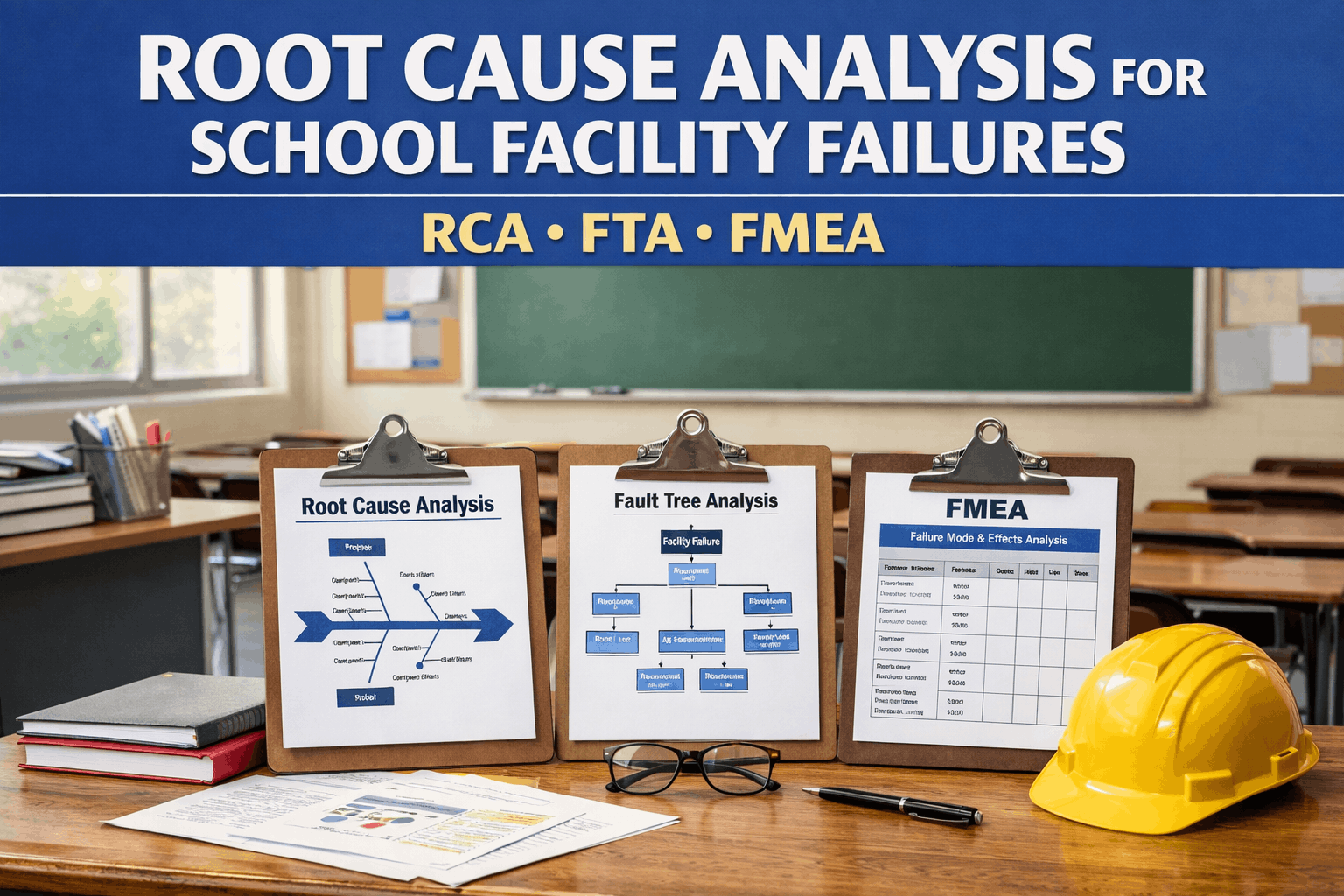
Root cause analysis (RCA) is a systematic process for identifying the fundamental reasons behind equipment failures—not just the immediate symptoms, but the underlying factors that allowed problems to develop. For campus facilities teams, RCA transforms reactive maintenance into predictive intelligence, revealing patterns that prevent future failures.
When a boiler fails, it's tempting to focus on the immediate fix: replace the failed component, restart the system, move on. But without understanding why that component failed, the same problem—or a related one—will likely recur. Effective boiler failure root cause analysis digs deeper, asking not just "what broke?" but "what conditions allowed it to break?" and "how do we prevent this from happening again?"
The 5 Most Common Boiler Failure Categories
Understanding typical failure patterns helps facilities teams focus RCA efforts and develop targeted prevention strategies. Campus boilers experience distinct failure distributions due to unique operational patterns—seasonal cycling, variable loads, and often deferred maintenance from budget constraints.
The 5 Whys Method: A Practical RCA Approach
The 5 Whys technique is one of the most effective and accessible tools for boiler failure root cause analysis. Developed by Toyota, this method involves asking "why" repeatedly until you reach the fundamental cause that, when addressed, prevents recurrence. For campus facilities teams without specialized failure analysis equipment, the 5 Whys provides a structured path to actionable insights.
Problem: Boiler shut down unexpectedly during midterm week
Why 1: Why did the boiler shut down? → The low water cutoff activated.
Why 2: Why was water level low? → The feedwater pump wasn't delivering adequate water.
Why 3: Why wasn't the pump delivering? → The pump inlet strainer was clogged with sediment.
Why 4: Why was there sediment in the system? → The water treatment program had been suspended during budget cuts.
Why 5: Why was water treatment cut? → No one documented the connection between water treatment and boiler reliability for decision-makers.
Root Cause: Inadequate communication of maintenance consequences to administration
Solutions: Restore water treatment AND create maintenance impact documentation AND schedule quarterly strainer cleaning
The 4-Step RCA Process for Campus Boilers
Effective root cause analysis follows a structured methodology that moves from symptom to solution. This framework ensures facilities teams don't stop at surface-level fixes but uncover the systemic issues driving repeated failures.
Be Specific: Instead of "boiler failed," document: "Building C boiler tripped on low water cutoff at 6:15 AM on January 12 during -5°F weather, affecting 200 students in residence halls." Include conditions, timing, and impact.
Gather Everything: Maintenance logs, water treatment records, operating parameters before failure, technician observations, and occupant complaints. Interview operators—they often notice early warning signs that never made it into formal reports.
Dig Deeper: Apply the 5 Whys or fishbone diagram to trace symptoms to origins. Don't stop at the first plausible cause—the goal is the deepest actionable root. Consider equipment, people, processes, and environment factors.
Close the Loop: Develop corrective actions that address root causes, not just symptoms. Assign responsibility, set deadlines, and monitor results. Verify effectiveness by tracking whether the problem recurs over the following months.
RCA Analysis Methods Compared
Different analysis methods suit different types of boiler failures. Selecting the right approach—or combining multiple methods—helps ensure thorough investigation. When supported by a schools and higher education CMMS, these methods become significantly more effective because historical data is readily accessible.
Ready to implement structured RCA for your campus boilers? Sign up free to access RCA templates and failure tracking tools, or schedule a demo to see how OxMaint transforms boiler maintenance management.
Turning RCA Findings Into Prevention
The ultimate goal of boiler failure root cause analysis isn't just understanding what happened—it's preventing recurrence and building institutional knowledge that protects your campus long-term.
When RCA reveals that failures trace back to missed inspection items, update your boiler inspection protocols. If sediment buildup caused pump failure, add strainer inspection to monthly checklists.
If analysis shows that failures cluster at certain intervals, adjust your boiler preventive maintenance program. A well-maintained system lasts 15-20 years; neglected systems fail in 10-12 years.
Many failures are preceded by warning signs that operators noticed but didn't report. Build RCA findings into training programs so staff recognize and escalate early indicators before they become failures.
When one building's boiler fails due to a particular root cause, every similar unit on campus is at risk. Use your CMMS to share RCA findings and apply lessons learned to your entire boiler fleet.