It is a capital preservation crisis. APPA — the association representing educational facilities professionals — estimates that U.S. colleges and universities carry $112 billion in deferred maintenance, and that the average campus building operates with a Facility Condition Index (FCI) of 0.15–0.25, meaning 15–25% of every building's replacement value is consumed by deferred maintenance backlog. The root cause is not insufficient maintenance staffing or inadequate budgets — it is the absence of systematic asset lifecycle management that connects equipment condition data to capital planning decisions. Universities that track every student's GPA to two decimal places cannot tell you the remaining useful life of the chiller that keeps those students' classrooms habitable. Institutions ready to close that gap can sign up for Oxmaint to deploy campus-wide asset lifecycle management.
Campus Asset Lifecycle Management Architecture
Extending equipment life by 40% requires more than preventive maintenance checklists — it requires a systematic approach that captures equipment condition data continuously, applies AI analytics to predict degradation trajectories, and connects maintenance decisions directly to capital budget planning. The following framework transforms campus facilities from reactive cost centers into managed asset portfolios.
01
Comprehensive Asset Inventory
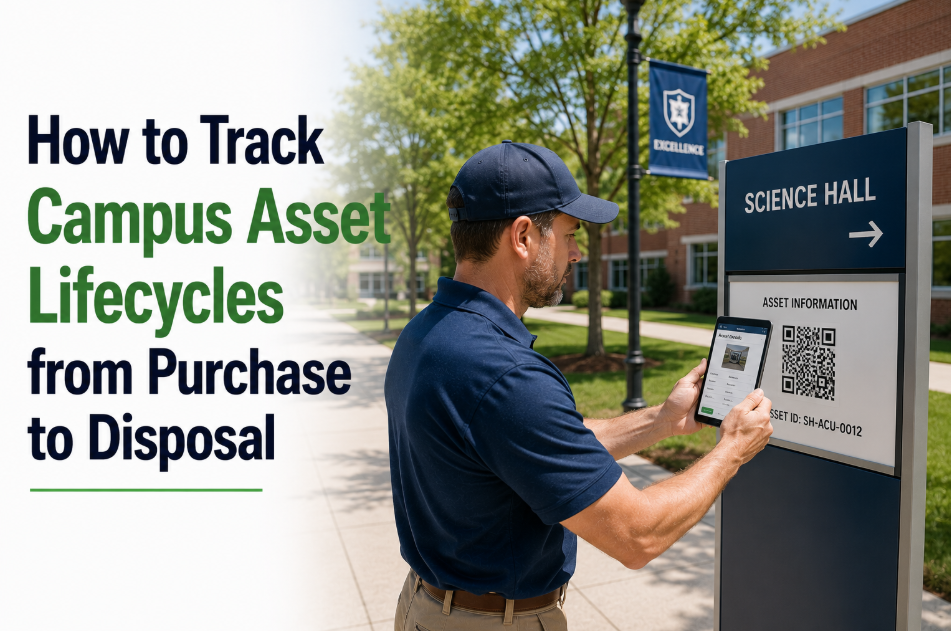
Every mechanical, electrical, and plumbing asset across every campus building is registered with make, model, serial number, installation date, rated lifespan, replacement cost, and criticality classification. QR code asset tags enable mobile access to complete equipment profiles from anywhere on campus. This inventory becomes the single source of truth that replaces filing cabinets, personal spreadsheets, and institutional memory.
02
Condition Monitoring & Data Capture
Scheduled inspections, IoT sensor data, work order history, energy consumption trends, and technician observations feed continuously into each asset's digital record. Every interaction — from a quarterly filter change to an emergency bearing replacement — builds the condition history that AI models use to project remaining useful life.
03
AI Degradation Modeling
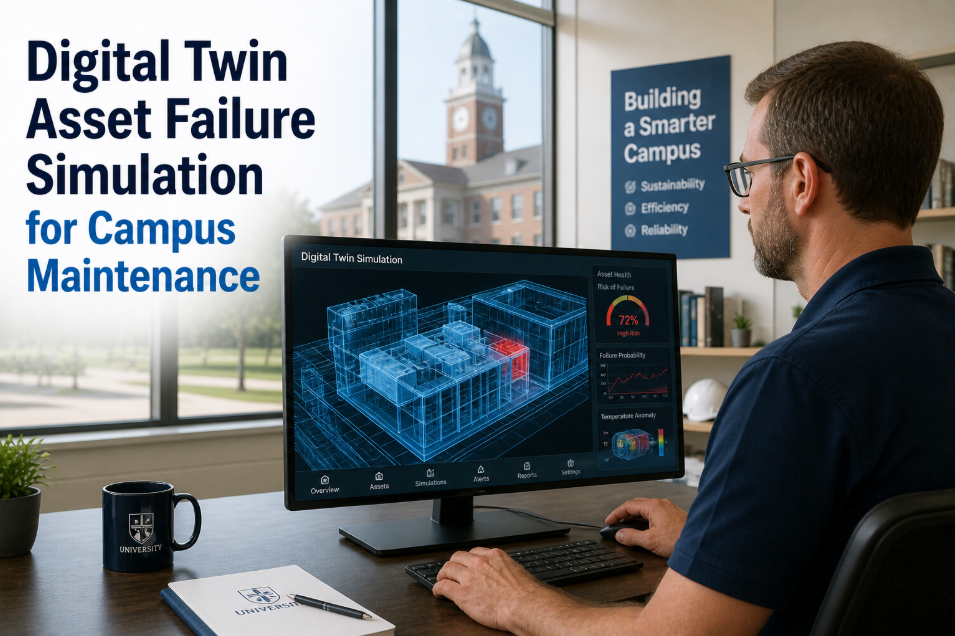
Machine learning algorithms analyze each asset's maintenance history, operational conditions, and performance trends to model its unique degradation trajectory. Two identical RTUs on different buildings wear differently based on sun exposure, usage patterns, and maintenance history — AI captures these differences and projects equipment-specific remaining useful life rather than relying on generic manufacturer estimates.
04
Lifecycle Cost Optimization
The system continuously calculates total cost of ownership for every asset — purchase price, cumulative maintenance cost, energy consumption, and projected remaining maintenance needs. When an asset's annual maintenance cost exceeds the economic threshold (typically 40–50% of replacement cost), the system flags it for capital replacement planning rather than continued repair investment.
05
Capital Planning Integration
AI-generated asset condition data feeds directly into 5-year and 10-year capital replacement schedules. The CFO and board receive data-driven capital requests showing exactly which assets need replacement, when, and why — supported by documented condition histories rather than anecdotal facility director testimony.
Book a demo to see how Oxmaint turns asset data into board-ready capital plans.
Critical Campus Asset Categories for Lifecycle Management
University campuses contain thousands of assets across fundamentally different categories — each with distinct degradation patterns, maintenance requirements, and failure consequences. Effective lifecycle management prioritizes based on replacement cost, failure impact, and the degree to which systematic maintenance actually extends service life.
HVAC Systems
Chillers (25–30 yr rated), boilers (30–35 yr), RTUs (15–20 yr), AHUs (20–25 yr). HVAC represents 35–45% of total campus asset value. Life extension ROI is highest here — a chiller maintained to 30 years vs. replaced at 20 defers $800K–$2M in capital per unit.
Electrical Distribution
Switchgear (30–40 yr), transformers (25–35 yr), generators (20–30 yr), UPS systems (10–15 yr). Electrical failures cause building-wide outages and safety risks. Infrared thermography and oil analysis extend transformer life 30–40% beyond neglected units.
Plumbing & Water Systems
Domestic hot water (15–20 yr), circulation pumps (12–15 yr), backflow preventers (15–25 yr), water heaters (10–15 yr). Water system failures cause the highest collateral damage — a single pipe burst or water heater failure can generate $50K–$200K in building damage.
Building Envelope
Roofing (20–30 yr), windows (25–40 yr), caulking/sealants (10–15 yr), exterior walls (40–60 yr). Envelope failures don't fail catastrophically — they degrade invisibly, increasing energy costs 15–25% and enabling moisture intrusion that destroys interior systems.
Elevators & Vertical Transport
Traction elevators (25–30 yr), hydraulic elevators (20–25 yr), escalators (20–25 yr). Elevator modernization costs $150K–$500K per unit. ADA compliance requires 99%+ uptime — a non-functional elevator can trigger OCR complaints and deny building access.
Fire & Life Safety
Fire alarm panels (15–20 yr), sprinkler systems (30–50 yr), emergency generators (20–30 yr), emergency lighting (10–15 yr). Life safety systems have non-negotiable compliance timelines — expired certifications can trigger building closure orders from the fire marshal.
Each asset category follows a distinct degradation curve. HVAC equipment degrades exponentially after 60–70% of rated life if unmaintained, while electrical systems can operate reliably well beyond rated lifespan with proper testing and preventive programs. Understanding these curves — and tracking actual asset condition rather than relying on age alone — is what separates institutions that extend equipment life 30–40% from those that replace prematurely or suffer catastrophic failures. Universities managing diverse campus assets can create a free Oxmaint account to see how the platform organizes lifecycle data across all asset categories.
Your Campus Assets Are Worth $30–$80 Million. Can You Tell the Board Their Condition?
Most universities can report every student's academic standing in seconds but cannot answer basic questions about the equipment that keeps their campus operational. Oxmaint's campus asset management platform gives facilities directors, CFOs, and boards real-time visibility into the condition, remaining life, and total cost of ownership of every mechanical, electrical, and plumbing asset across every building.
Age-Based Replacement vs. Condition-Based Lifecycle Management
The standard approach to campus equipment replacement is age-based: when an asset reaches the end of its manufacturer-rated lifespan, it gets queued for capital replacement. This approach systematically destroys value by replacing functional equipment prematurely while simultaneously missing equipment that fails before its rated life due to harsh conditions or inadequate maintenance. AI-powered condition-based management replaces calendar assumptions with equipment-specific intelligence.
Age-Based Replacement
- Replaces equipment at manufacturer-rated lifespan regardless of actual condition
- Wastes 20–40% of remaining useful life on well-maintained assets
- Misses premature failures in harsh-condition installations
- Capital requests based on age spreadsheets, not condition data
- No visibility into which assets truly need replacement vs. continued service
$2-5M
wasted annually in premature replacement + surprise failures
Condition-Based Lifecycle Management
- Replaces equipment based on actual condition data and degradation trajectory
- Extends well-maintained assets 30–40% beyond rated lifespan
- Detects accelerated degradation in harsh conditions before failure
- Capital requests supported by documented condition assessments and cost data
- Real-time Facility Condition Index across every building and system
40%
average extension in equipment useful life
Asset Lifecycle Benchmarks by Equipment Type
The following benchmarks quantify the difference between neglected, standard, and optimized lifecycle management for the most capital-intensive campus equipment categories. These figures demonstrate why the 40% life extension target is not aspirational — it is the documented outcome of systematic condition-based management compared to the reactive baseline.
The gap between "Reactive" and "AI-Optimized" represents the full 40% life extension target. A campus with 20 RTUs averaging $30,000 replacement cost that extends their life from 11 years (reactive) to 20 years (optimized) defers $600,000 in capital replacement per RTU cycle. Across all HVAC, electrical, and plumbing assets on a mid-size campus, the total capital deferral from optimized lifecycle management typically exceeds $8–$15 million over a 10-year planning horizon. Institutions tracking asset lifecycle can schedule a consultation to model capital deferral specific to their campus portfolio.
Measurable ROI of Campus Asset Lifecycle Management
The return on investment from systematic campus asset management compounds across four dimensions: deferred capital replacement, reduced emergency repair costs, energy efficiency gains from properly maintained equipment, and improved Facility Condition Index scores that strengthen accreditation, enrollment, and fundraising outcomes.
Average equipment life extension vs. reactive baseline
Reduction in emergency repair spending
Energy cost reduction from maintained equipment
Average FCI improvement within 3 years of deployment
Implementation Roadmap for Universities
Successful campus asset lifecycle management deployment follows a phased approach that captures immediate value from high-cost assets first, then expands systematically. Attempting to inventory and instrument every asset simultaneously overwhelms maintenance teams and delays the ROI that builds organizational commitment to the program.
Month 1-2
Asset Inventory & Classification
Walk every building — document every critical asset
Record make, model, age, condition, replacement cost
Classify by criticality tier and asset category
QR code every asset above $5,000 replacement value
Month 3-4
Baseline Assessment & PM Setup
Condition assessment of all Tier 1 assets
Configure PM schedules per manufacturer specs
Establish maintenance cost tracking per asset
Train technicians on mobile work order tools
Month 5-8
Data Accumulation & Analytics
Accumulate work order and cost data per asset
Deploy IoT sensors on highest-risk equipment
Begin energy consumption correlation analysis
Generate first Facility Condition Index report
Month 9+
Capital Planning & Optimization
Build data-driven 5-year capital replacement plan
Identify assets past economic repair threshold
Present board-ready FCI and TCO reporting
Expand lifecycle tracking to all campus assets
The pivot point comes at Month 5–8, when accumulated data transforms from maintenance records into capital planning intelligence. The facilities director stops saying "the chiller is old and needs replacement" and starts saying "the chiller has consumed $94,000 in maintenance over 4 years, operates at 71% efficiency costing $38,000/year in excess energy, and our AI model projects major component failure within 18 months — total continued-operation cost exceeds replacement cost in Year 2." The first presentation is a request. The second is a business case. Institutions ready to build capital intelligence can sign up free for Oxmaint and begin the asset inventory process immediately.
We spent three years asking the board for a chiller replacement based on the fact that it was old and unreliable. They deferred it every year because they had no way to evaluate the claim. When we implemented asset lifecycle tracking and showed them that the unit had consumed $186,000 in maintenance over 5 years, was operating at 64% efficiency, and that our total cost of continued operation exceeded replacement cost within 14 months, they approved the capital request in a single meeting. The data changed a conversation we had been losing for three years.
Associate Vice President for Facilities, 28,000-Student Public University
Your Equipment Is Aging Right Now. The Only Question Is Whether You Have the Data to Manage It.
Somewhere on your campus, a $400,000 chiller is operating at 71% efficiency because its condenser tubes have never been cleaned. A $15,000 RTU that could last 8 more years is being queued for replacement because nobody knows its actual condition. A lead mechanic is planning retirement, and the service history of $47 million in equipment will walk out the door with him. Oxmaint's campus asset management platform captures everything, tracks everything, and turns maintenance data into the capital planning intelligence that boards approve.
Frequently Asked Questions
How does asset lifecycle management actually extend equipment life by 40%?
The 40% extension is not a single intervention — it is the compound effect of five practices that systematic lifecycle management enables. First, preventive maintenance performed on manufacturer-recommended intervals prevents the cascading failures that destroy components prematurely (a $0.35 grease fitting skipped on a pump bearing leads to a $3,200 pump replacement). Second, condition monitoring detects degradation early, when intervention costs $200–$500, instead of after failure when costs are $5,000–$50,000 and collateral damage multiplies the impact. Third, environmental management (water treatment, air filter schedules, temperature monitoring) eliminates the conditions that accelerate aging. Fourth, operational optimization reduces unnecessary stress — a VFD running a pump at 80% speed instead of throttling a full-speed pump reduces wear exponentially. Fifth, data-driven repair-vs-replace decisions ensure maintenance investment goes to assets with remaining useful life rather than assets past economic repair threshold. Each practice contributes 5–10% life extension; together they compound to 30–40% improvement over reactive management.
How long does it take to inventory an entire campus?
A mid-size campus (25–40 buildings, 500,000–1,000,000 gross square feet) typically requires
6–10 weeks for comprehensive inventory of all critical MEP assets using a phased approach. The recommended strategy inventories one building per day with a two-person team — one technician identifying and assessing assets, one data entry person recording information in the CMMS via mobile device. Priority buildings (central plant, science buildings, residence halls) are inventoried first. Expect to document 200–500 critical assets per building depending on size and complexity. The inventory process itself frequently reveals 10–15% more assets than facilities teams believed existed — equipment in ceiling plenums, mechanical penthouses, and remote closets that was installed by contractors and never formally documented.
Book a consultation for a customized inventory timeline for your campus.
What is Facility Condition Index (FCI) and why does it matter for universities?
The Facility Condition Index is the industry-standard metric for campus facility health, calculated as the total cost of deferred maintenance divided by the current replacement value of the facility. An FCI of 0.05 (5%) indicates excellent condition; 0.10 (10%) is good; 0.15–0.25 (15–25%) is fair and typical for most U.S. campuses; above 0.30 (30%) indicates poor condition requiring immediate investment. FCI matters because it is increasingly used by accreditation bodies to evaluate institutional capacity, by bond rating agencies (Moody's, S&P) to assess creditworthiness, by prospective students and families as a visible indicator of institutional quality, and by state funding formulas that allocate facilities funding based on documented condition. A university that improves its FCI from 0.25 to 0.15 over 5 years has demonstrably reduced institutional risk and improved competitiveness — and that improvement is only possible with systematic asset condition tracking that a CMMS provides.
How do we justify asset management investment to the board or CFO?
The most effective business case frames asset management not as a maintenance expense but as
capital preservation. Calculate the total replacement value of campus MEP assets (typically $30–$80 million for a mid-size institution). Apply the 30–40% accelerated depreciation factor for assets managed reactively vs. systematically. Present the board with two scenarios: Scenario A (current state) projects $X million in capital replacement over 10 years based on current asset failure rates. Scenario B (lifecycle-managed) projects the same assets lasting 30–40% longer, deferring $Y million in capital replacement. The difference — typically $8–$15 million for a mid-size campus — is the value of the asset management program. The program cost (CMMS platform + inventory effort + ongoing data management) is typically $50,000–$150,000 annually — a 50:1 to 100:1 return on capital preserved.
Sign up free to access ROI modeling tools for your specific campus portfolio.
What happens to asset data when maintenance staff retire or turn over?
This is arguably the most urgent reason to implement digital asset management. The average age of skilled trades workers in U.S. educational facilities is 52, and APPA reports that 30–40% of campus maintenance professionals will retire within the next 5–7 years. When an experienced technician retires, they take with them knowledge about equipment quirks, service history, vendor relationships, and institutional memory that took decades to accumulate. A CMMS preserves all of this permanently. Every work order, every inspection note, every parts replacement, every technician observation becomes a searchable, permanent institutional record. When a new technician scans an asset's QR code, they see its complete history — not just what was done, but why, when, and by whom. The knowledge transfer that currently requires months of shadowing happens in seconds through a mobile device. Universities that delay CMMS implementation are actively choosing to lose irreplaceable institutional knowledge with every retirement.