AI-Driven Predictive Maintenance for Campus HVAC Systems

By Oxmaint on January 21, 2026

ai-driven-predictive-maintenance-for-campus-hvac-systems

The library's central air handler failed at 2 AM on finals week. By the time students arrived at 7 AM, temperatures had reached 84°F—forcing administrators to relocate 1,200 students mid-exam. The repair bill: $47,000 in emergency costs plus untold disruption to student performance. The cruel irony? Sensor data had been silently warning of the impending compressor failure for six weeks. No one was listening.

This scenario repeats across campuses nationwide, but a new generation of AI-driven predictive maintenance is changing the equation. By analyzing real-time sensor data and detecting anomaly patterns weeks before failures occur, universities are transforming reactive firefighting into proactive reliability—protecting both budgets and student success.

90%
Reduction in unexpected HVAC equipment failures with AI monitoring

40%
Lower maintenance costs compared to reactive approaches

2-4
Weeks advance warning before HVAC component failures

What Is AI-Driven Predictive Maintenance?

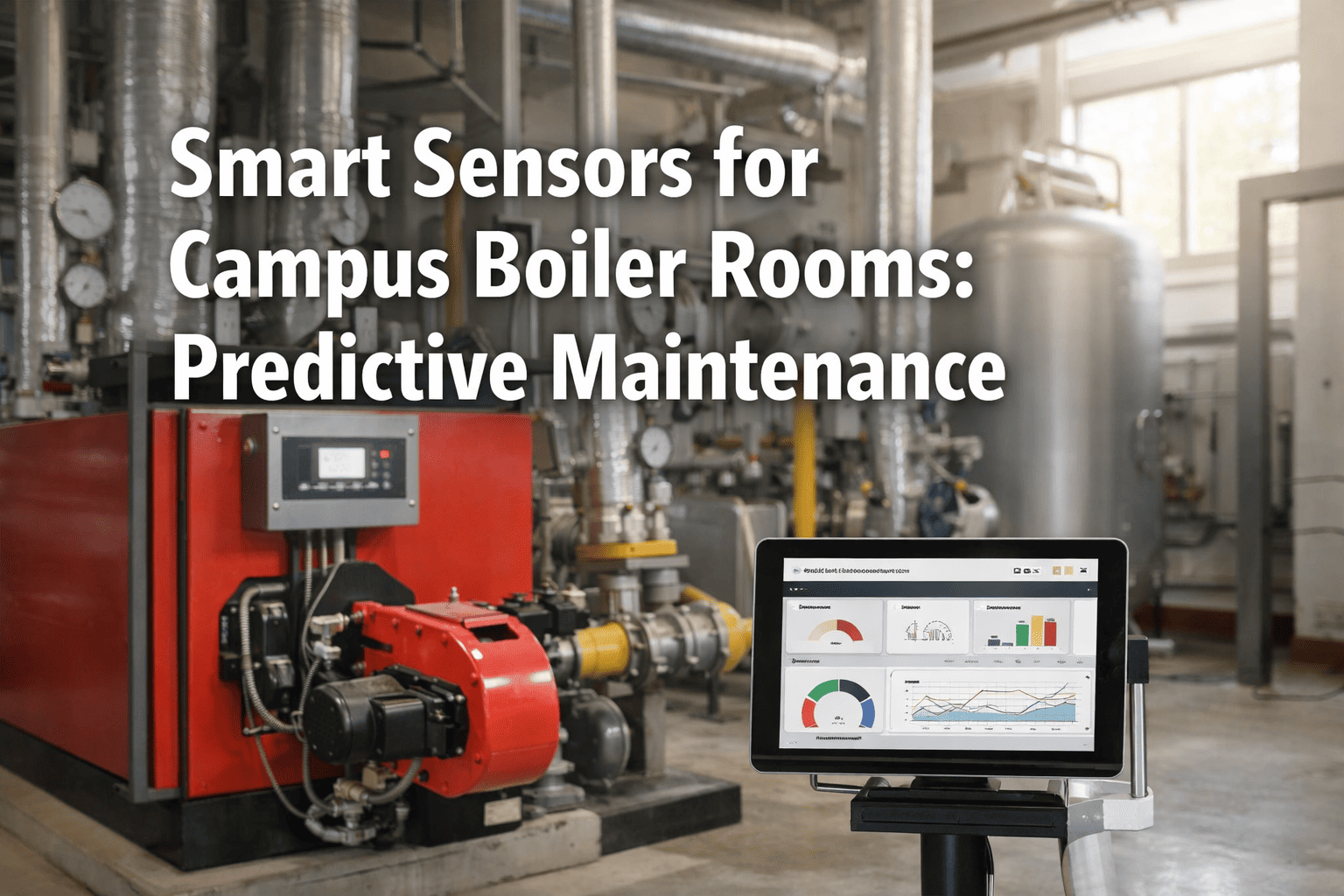
AI-driven predictive maintenance uses machine learning algorithms and IoT sensors to continuously monitor HVAC equipment condition, analyze performance patterns, and predict failures before they occur. Unlike scheduled preventive maintenance that services equipment whether needed or not, predictive systems focus maintenance efforts exactly where and when they're needed.

The technology works by establishing a "digital fingerprint" of healthy equipment operation. When a compressor is running optimally, it produces specific vibration frequencies, draws consistent amperage, operates within defined temperature ranges, and cycles on predictable schedules. AI algorithms learn these patterns over weeks of observation, then continuously compare real-time data against these baselines. When subtle deviations emerge—a slight increase in vibration amplitude, marginally higher motor temperatures, or extended run times—the system flags the anomaly long before human technicians would notice problems.

For campus facilities, this approach is transformative. Universities face unique HVAC challenges—wildly fluctuating occupancy between class periods, extended shutdowns during breaks, aging infrastructure often exceeding 30 years, and zero tolerance for failures during critical academic events like finals, graduation ceremonies, or major athletic competitions. AI monitoring addresses these challenges by learning building-specific patterns and detecting when equipment behavior deviates from normal baselines.

AI-Powered Campus HVAC Monitoring
Predict Failures Before They Disrupt Learning
START FREE

Why Campus HVAC Systems Are Prime Candidates for Predictive AI

University HVAC infrastructure presents a perfect storm of complexity that makes predictive maintenance not just beneficial, but essential. Consider the typical campus environment: dozens of buildings spanning multiple decades of construction, each with different mechanical systems, control protocols, and maintenance histories. A single research university might operate 500+ air handling units, 200+ chillers and boilers, and thousands of VAV boxes—all requiring coordinated monitoring.

The occupancy patterns create additional stress. A lecture hall holding 300 students generates dramatically different thermal loads than the same space empty. Buildings transition from near-zero occupancy during summer breaks to maximum capacity during fall semester within days. These rapid transitions stress equipment in ways that accelerate wear and create unpredictable failure patterns that calendar-based maintenance simply cannot anticipate.

Perhaps most critically, the consequences of HVAC failure on campus extend far beyond comfort. Research laboratories housing temperature-sensitive experiments can lose years of work from a single cooling system failure. Data centers supporting campus IT infrastructure require precise environmental control. Special collections in libraries demand stable humidity levels to protect irreplaceable materials. When these systems fail, the damage often proves irreversible.

How Predictive AI Works for Campus HVAC

The predictive maintenance process combines continuous data collection with intelligent analysis to transform raw sensor readings into actionable maintenance insights. Here's how the system protects your campus facilities through each phase of the process.

Data Collection
IoT sensors capture readings every 15-60 seconds across temperature, vibration, pressure, humidity, and energy consumption parameters.
Pattern Analysis
ML algorithms establish normal baselines unique to each asset, accounting for seasonal variations, occupancy patterns, and equipment age.
Failure Prediction
AI models trained on thousands of failure patterns identify degradation signatures and forecast remaining useful life with 85-90% accuracy.
Proactive Action
Automated work orders trigger with diagnostics, parts requirements, and optimal scheduling windows aligned to academic calendars.

Critical Failure Signatures AI Detects Early

Understanding what predictive AI actually monitors reveals why early detection proves so valuable. Each HVAC component exhibits specific degradation patterns that manifest in sensor data long before functional failure occurs.

⚙️
Compressor Degradation

Early Warning Signs: Increasing superheat/subcooling variance, rising discharge temperatures, extended run cycles, elevated amperage draw

Detection Window: 3-6 weeks before failure

Avoided Cost: $8,000-$25,000 emergency replacement vs. $2,000-$5,000 planned repair

?
Bearing Failure

Early Warning Signs: Increasing vibration amplitude at specific frequencies, elevated motor temperature, audible frequency changes in ultrasonic range

Detection Window: 4-8 weeks before failure

Avoided Cost: $15,000+ motor replacement vs. $800-$1,500 bearing service

?️
Refrigerant Leaks

Early Warning Signs: Gradual pressure decline, increasing delta-T across coils, longer cooling cycles, reduced capacity under load

Detection Window: 2-4 weeks before performance impact

Avoided Cost: $3,000-$8,000 emergency repair vs. $500-$1,200 leak detection and seal

?
Belt Deterioration

Early Warning Signs: Slippage signatures in vibration data, reduced airflow volume, motor working harder for same output

Detection Window: 2-3 weeks before failure

Avoided Cost: $1,500+ emergency service call vs. $150-$300 scheduled replacement

Key Sensors for Campus HVAC Monitoring

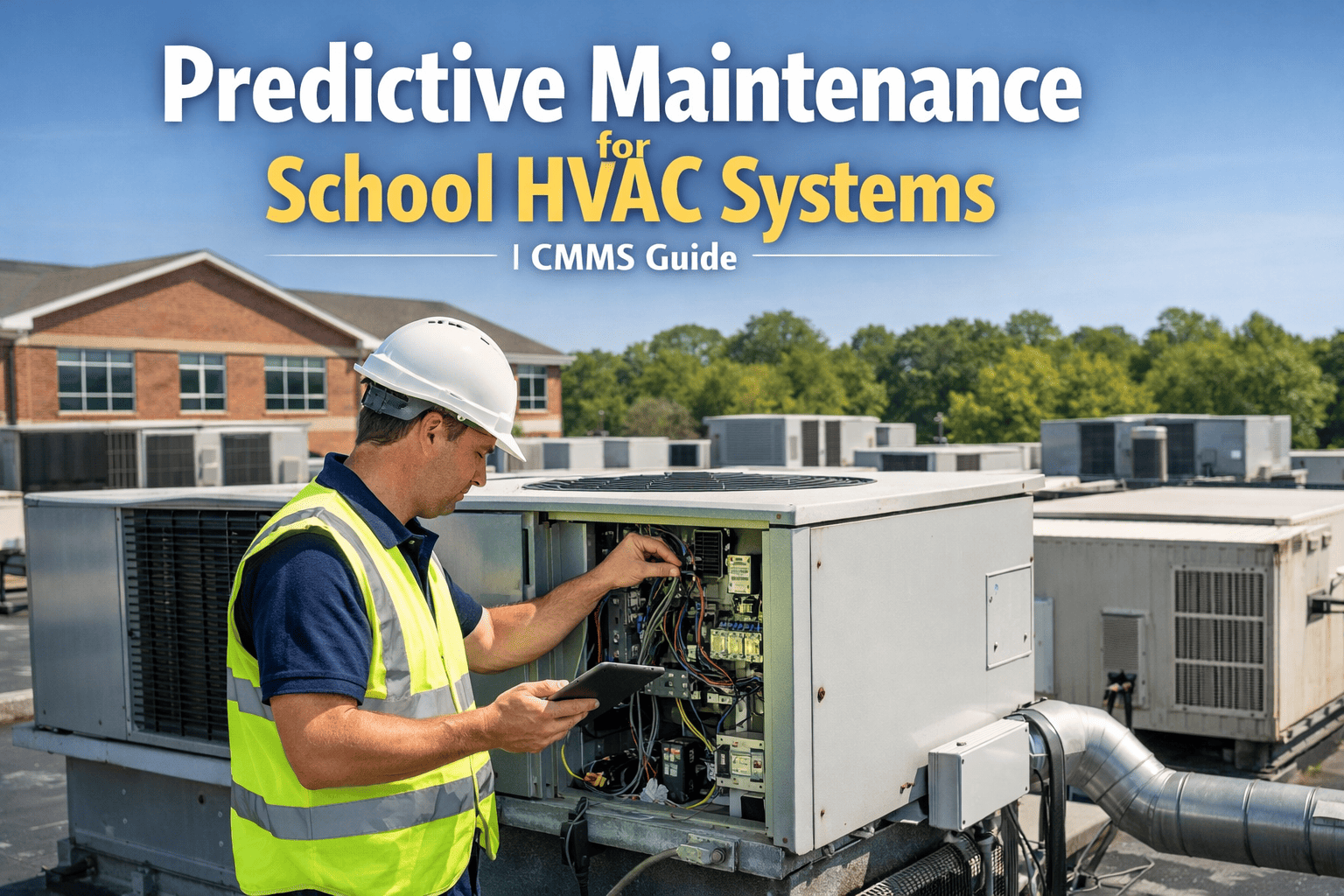
Effective predictive maintenance relies on comprehensive sensor coverage across critical HVAC components. Each sensor type captures specific performance indicators that together paint a complete picture of equipment health. Modern wireless sensors install non-invasively without requiring system shutdowns, making retrofit projects practical even for aging infrastructure.

Temperature Sensors
Supply/return air, discharge temps, refrigerant lines, motor housings
Compressor stress Coil fouling Refrigerant issues
Vibration Sensors
Motors, fans, compressors, bearings, belt-driven assemblies
Bearing wear Imbalance Misalignment
Energy Meters
Power draw, current per phase, voltage stability, power factor
Motor degradation Efficiency loss Electrical faults
Pressure Sensors
Refrigerant high/low side, duct static, filter differential pressure
Refrigerant leaks Filter loading Duct blockages
See Predictive Maintenance in Action
OxMaint integrates with IoT sensors to provide real-time equipment health monitoring, automated failure predictions, and intelligent work order generation for campus HVAC systems.

Predictive vs. Preventive vs. Reactive Maintenance

Understanding how predictive maintenance compares to traditional approaches reveals why leading universities are making the switch. Each strategy has legitimate applications, but the cost and reliability differences are dramatic when managing complex campus HVAC portfolios.

Predictive (AI)
Preventive
Reactive
When Maintenance Occurs
When data indicates need
Fixed calendar schedule
After equipment fails
Unplanned Downtime
-90%
-50%
Baseline (highest)
Total Maintenance Cost
25-40% savings
12-18% savings
0% (most expensive)
Equipment Lifespan Extension
+35-40%
+15-20%
Shortened lifespan
Failure Warning Time
2-6 weeks advance notice
None
None
Parts Inventory Efficiency
Just-in-time ordering
Standard stocking
Emergency procurement

Real-World ROI: Campus Predictive Maintenance Results

Research consistently shows that predictive maintenance delivers exceptional returns for educational facilities. The combination of high equipment criticality, aging infrastructure, and budget constraints makes universities ideal candidates for AI-driven maintenance optimization.

DOCUMENTED RESULTS
University Campus HVAC Predictive Maintenance Outcomes
40%
Reduction in HVAC System Failures
AI algorithms identified impending failures 2-4 weeks in advance, enabling proactive repairs during scheduled maintenance windows rather than emergency responses during academic events.
34%
Lower Annual Maintenance Costs
Eliminated unnecessary scheduled services on healthy equipment while preventing costly emergency repairs, resulting in $287,000 annual savings for a 2.1M square foot campus.
62%
Fewer Unplanned Breakdowns
Continuous monitoring caught developing problems before they caused disruptions during classes, exams, or campus events—protecting both academic operations and institutional reputation.
6 mo
Complete Payback Period
Initial sensor and software investment recovered in under 6 months through combined downtime prevention, maintenance labor optimization, and extended equipment lifespan.

Campus-Specific Predictive Applications

Educational facilities present unique monitoring opportunities where predictive AI delivers exceptional value. These campus-specific applications address the challenges that make university HVAC management particularly demanding.

?
Library & Archive Climate Control

Libraries require precise humidity control between 30-50% RH and temperature stability within ±2°F to protect collections. AI monitors for subtle environmental drift that could damage rare books, manuscripts, and archival materials before visible symptoms like warping, foxing, or mold appear. Special collections areas benefit from continuous dew point monitoring that predicts condensation risk.

Archive protection 24/7 humidity monitoring Mold prevention
?
Research Laboratory Environments

Research labs often require strict environmental conditions—some biological research needs ±0.5°C stability, while clean rooms demand specific pressure differentials. Predictive maintenance ensures temperature-sensitive protocols aren't compromised by HVAC fluctuations. AI can detect when fume hood exhaust systems begin degrading before face velocity drops below safe levels.

Experiment protection Compliance assurance Grant protection
?
Event Spaces & Performance Venues

Auditoriums, gymnasiums, and event centers face high-stakes comfort demands during performances, graduations, and athletic competitions. A 3,000-seat arena during commencement generates enormous thermal loads requiring maximum system performance. AI ensures systems are verified healthy before major events and identifies equipment that might struggle under peak demand.

Event assurance Peak load readiness Reputation protection
?
Residence Hall Comfort Systems

Student housing requires year-round reliability with minimal disruption to residents. Predictive systems schedule maintenance during breaks and detect problems before comfort complaints arise. For residence halls with individual PTAC or fan coil units, AI can monitor dozens of distributed systems and prioritize interventions based on occupancy patterns and failure probability.

Student satisfaction Minimal disruption Retention impact
Transform Your Campus HVAC Operations
OxMaint helps educational facilities implement predictive maintenance with IoT sensor integration, automated alerts, and intelligent work order management—all designed to protect student comfort and reduce costs.

Implementation Roadmap

Transitioning to predictive maintenance doesn't require replacing your entire HVAC infrastructure or massive upfront investment. A phased approach lets you capture value quickly while building toward comprehensive campus coverage and organizational capability.

1
Identify Critical Assets (Week 1-2)
Start with high-impact equipment where failures cause the greatest disruption—central plants, air handlers serving exam spaces, research lab systems, and equipment with poor reliability history. Analyze historical work orders to identify your "frequent flyers" that consume disproportionate maintenance resources. These assets deliver the fastest ROI and build organizational confidence in the predictive approach.
2
Deploy IoT Sensors (Week 2-4)
Install wireless sensors on priority equipment to capture temperature, vibration, pressure, and energy data. Modern sensors are non-invasive, battery-powered (3-5 year life), and can be installed without system shutdowns or specialized contractors. A typical air handling unit requires 4-6 sensors; a chiller might need 8-12 monitoring points. Most pilot deployments covering 20-30 assets complete in under two weeks.
3
Establish Baselines (Week 4-12)
Allow 4-8 weeks for AI algorithms to learn normal operating patterns for your specific equipment and building conditions. The system identifies seasonal variations, occupancy impacts, weather correlations, and equipment-specific behaviors that define "healthy" operation. This learning phase is critical—rushing it produces false positives that erode technician trust in the system.
4
Activate Predictions & Train Staff (Week 8-14)
Once baselines are established, enable predictive alerts and automated work order generation. Train maintenance staff to interpret AI recommendations, understand confidence levels, and integrate predictive insights into daily workflows. Accuracy improves continuously as technicians verify predictions and the system learns from confirmed outcomes.
5
Expand Coverage (Month 6-24)
Use proven results from pilot assets to justify broader deployment and additional budget allocation. Document avoided failures, cost savings, and reliability improvements to build the business case. Most universities achieve full campus coverage within 18-24 months, with each phase building on lessons learned and demonstrating incremental value to stakeholders.

Frequently Asked Questions

How accurate are AI failure predictions for HVAC equipment?
Modern AI systems achieve 85-90% accuracy in predicting HVAC failures, with accuracy improving over time as more operational data becomes available. Machine learning models continuously refine predictions by learning from actual outcomes and technician feedback. Most systems predict failures 2-4 weeks in advance—sufficient time for planned intervention without emergency premiums.
What's the typical investment and ROI timeline?
Sensor costs range from $50-200 per monitoring point, with software typically $2-5 per monitored asset monthly. Most educational facilities achieve positive ROI within 6-12 months through avoided emergency repairs, reduced overtime, and extended equipment life. Studies show 95% of predictive maintenance adopters report positive returns, with campus-wide implementations typically seeing 10:1 to 30:1 ROI ratios within 18 months.
Can predictive maintenance work with older HVAC equipment?
Absolutely. Retrofit sensors can be added to virtually any HVAC equipment regardless of age or manufacturer. Wireless sensors attach non-invasively to motors, compressors, and other components without requiring equipment modifications or control system integration. In fact, older equipment often benefits most from predictive monitoring since it's more prone to unexpected failures and lacks built-in diagnostics.
How does this integrate with our existing BAS and CMMS?
Modern predictive platforms integrate with building automation systems via BACnet, Modbus, or API connections to leverage existing sensor infrastructure where available. CMMS integration enables automatic work order generation with diagnostic information, recommended actions, and parts requirements—streamlining the path from prediction to completed repair without duplicate data entry.
What about cybersecurity concerns with IoT sensors?
Enterprise-grade predictive maintenance platforms implement bank-level encryption, isolated network segments, and SOC 2 compliance. Sensors typically communicate via dedicated low-power networks separate from campus IT infrastructure. Leading vendors undergo regular security audits and provide detailed documentation for IT security review before deployment.
Stop Reacting. Start Predicting.
Join forward-thinking universities using OxMaint to transform campus HVAC maintenance from reactive firefighting into intelligent, data-driven reliability management. Protect student comfort, extend equipment life, and demonstrate fiscal responsibility to stakeholders.

Share This Story, Choose Your Platform!