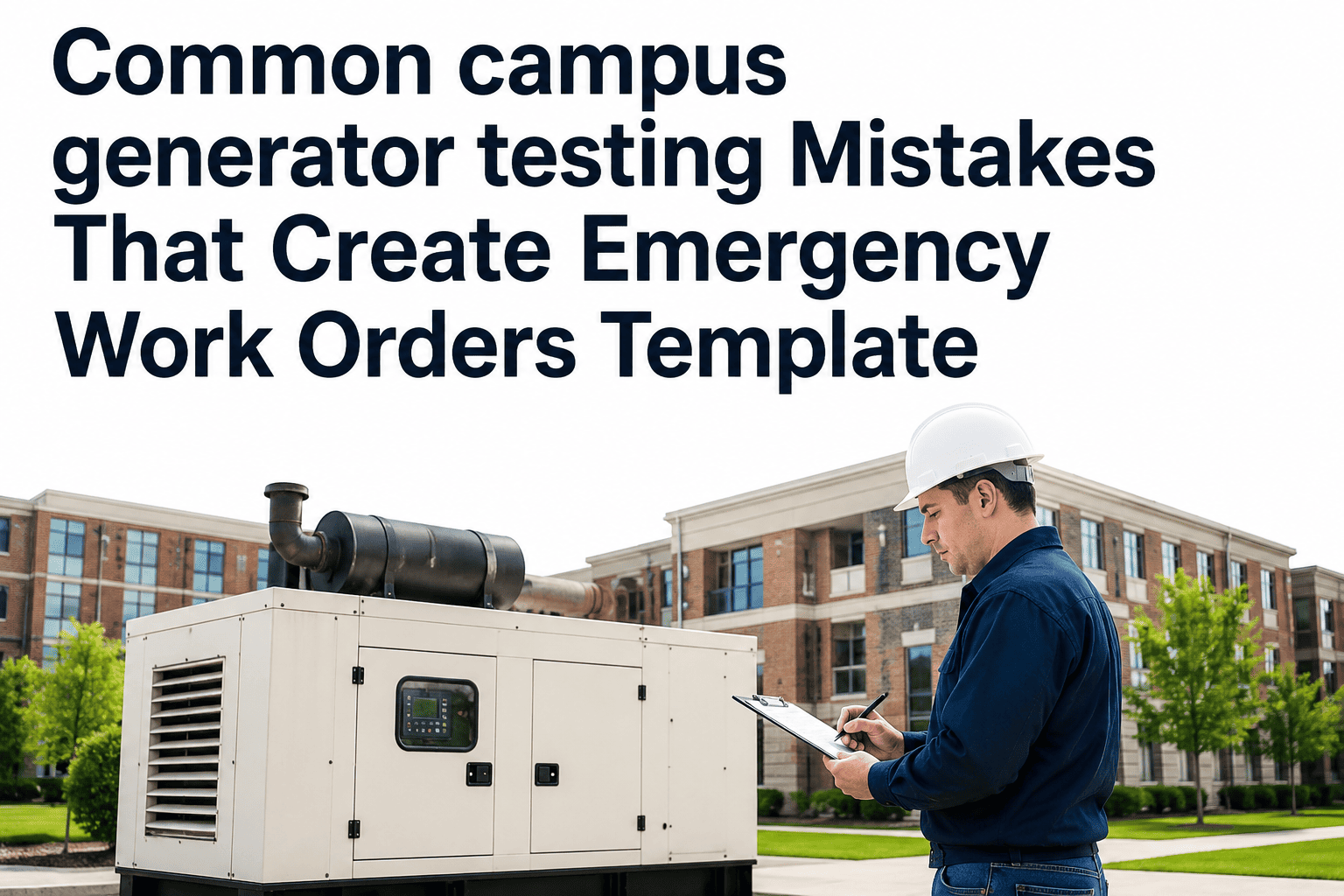
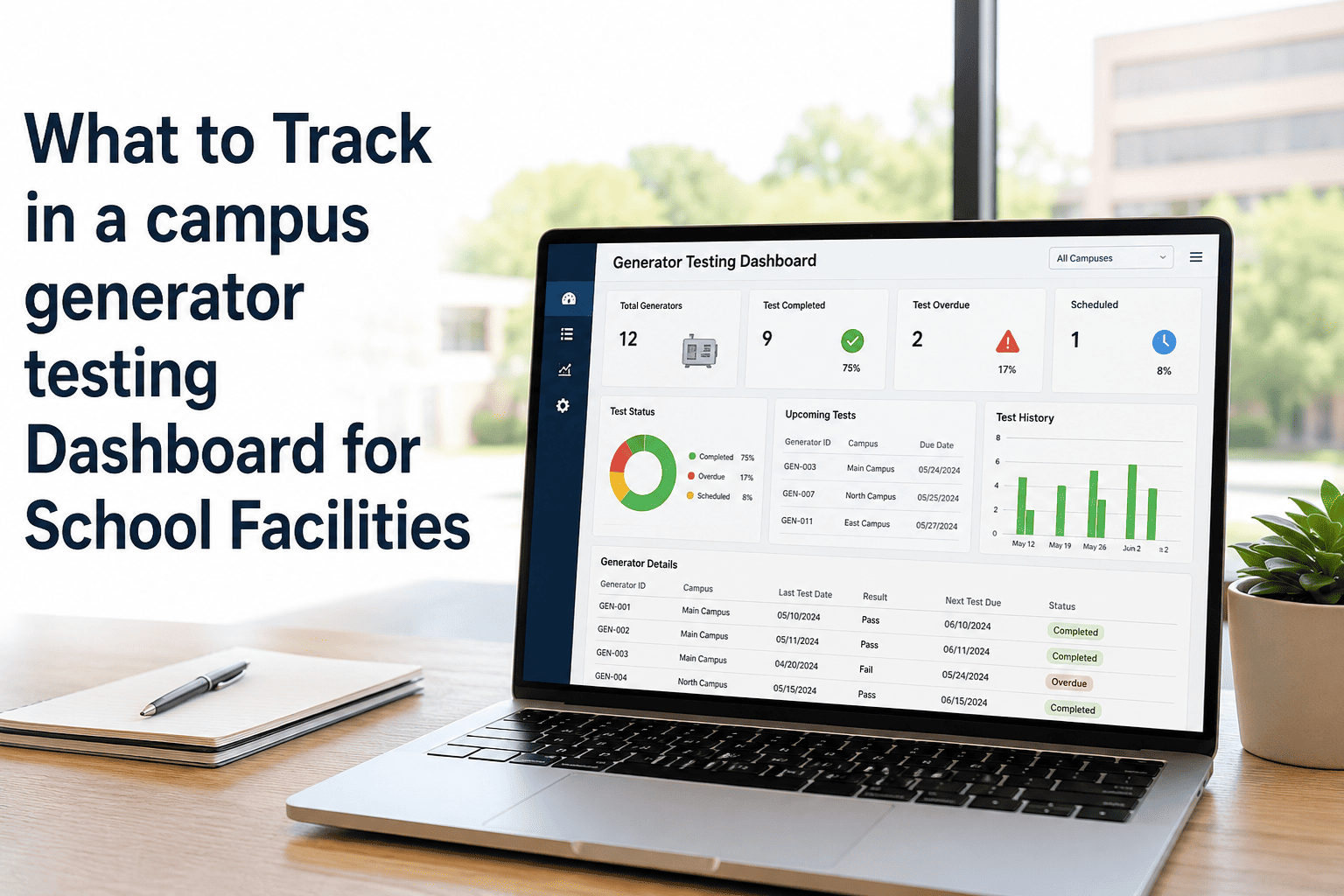
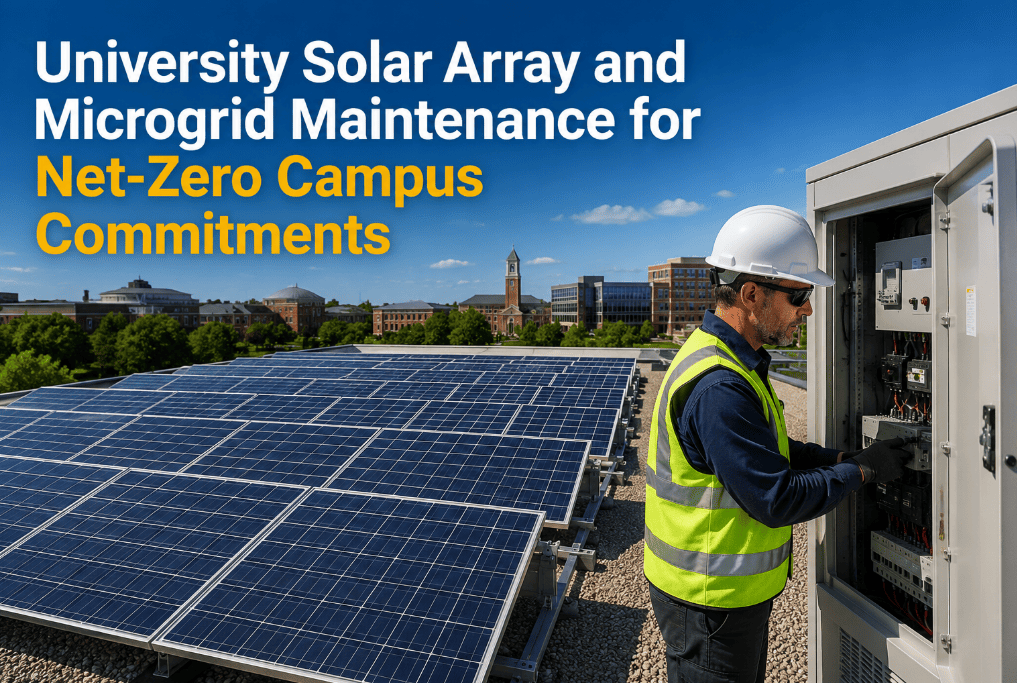
At 6:47 AM on a January Monday, a utility feeder fault knocked out power to the entire north campus of a 22,000-student university. The emergency generators at three buildings — the central data center, the main science building, and a 600-bed residence hall — were supposed to start within 10 seconds and carry critical loads until utility power was restored. Two of three generators started. The third — a 500 kW diesel unit serving the data center — cranked for 12 seconds, fired briefly, then stalled. The battery bank was at 74% capacity from sulfation that had been building for 18 months without load testing. The fuel had accumulated water contamination from a tank vent cap that cracked during a summer heat cycle and was never inspected. The coolant was 14 months past its change interval. The data center ran on UPS battery backup for 22 minutes before the batteries depleted. Every campus network service — email, learning management system, card access, VoIP phones, and building automation — went offline for 9 hours. Emergency lighting in the residence hall failed in two stairwells where sealed lead-acid batteries had reached end-of-life without replacement. Total impact: $340,000 in IT recovery costs, $85,000 in emergency generator repair, $28,000 in spoiled research specimens from failed lab freezers, and an accreditation review that flagged "inadequate infrastructure resilience." Every failure was preventable with a $12,000 annual maintenance program that tests, inspects, and documents every component in the backup power chain. Sign Up — start tracking your backup power assets and PM schedules digitally.
This guide covers every maintainable component in a campus backup power system — generators, automatic transfer switches, UPS systems, battery banks, fuel systems, and emergency lighting — with the inspection frequencies, test procedures, and failure modes that determine whether your backup power actually works when the grid goes dark. Book a Demo — see how Oxmaint's utilities monitoring integration manages your entire backup power program.
What This Guide Covers
This isn't generic generator maintenance advice — it's a complete backup power reliability framework for educational facilities where power failures affect thousands of occupants, millions in research assets, and campus-wide IT infrastructure simultaneously. You'll learn the specific failure modes that disable campus backup power, the test and inspection frequencies that prevent each one, how to build a PM program that satisfies NFPA 110 (Standard for Emergency and Standby Power Systems), and how to document everything for insurance carriers, accreditation bodies, and risk management.
The State of Backup Power Reliability on Campus
Campus backup power systems are among the most critical — and most neglected — infrastructure assets in higher education. Generators, UPS systems, and transfer switches sit idle for months or years between real outages, creating a false sense of security. When they're finally called to perform, deferred maintenance manifests as the failures that matter most. According to facility management research, 30–40% of emergency generators fail to perform as expected during actual outage events — not because the equipment is defective, but because maintenance was deferred, tests were skipped, or fuel and batteries degraded during the long idle periods between real demands.
The financial exposure compounds across systems. When a generator fails, the UPS becomes the last line of defense — and if UPS batteries are degraded, critical loads go dark within minutes instead of the 15–30 minute bridge they're designed to provide. When a transfer switch fails, even a running generator cannot reach its loads. The backup power chain is only as strong as its weakest maintained component. Track every component in your backup power chain in one asset register.
Why Campus Backup Power Systems Are Uniquely Vulnerable
Campus backup power faces challenges that commercial buildings and industrial facilities don't. Understanding these pressures is essential for designing maintenance programs that actually prevent failures during real outage events.
Extended Idle Periods Between Demands
Campus generators may run only during monthly tests and the rare actual outage — sometimes years apart. Diesel engines, fuel systems, batteries, and transfer switch mechanisms all degrade faster from non-use than from operation. Fuel absorbs water from condensation. Batteries sulfate without regular deep discharge. Transfer switch contacts oxidize and mechanisms seize. The equipment that sits idle the longest is the equipment most likely to fail when finally called upon.
Impact: 70% of generator start failures trace to battery or fuel problems that develop during idle periods between demands.
Distributed Infrastructure Across Campus
Unlike a single commercial building with one generator, a university campus may have 10–30 generators, 15–50 UPS systems, hundreds of emergency lighting units, and dozens of transfer switches spread across 40+ buildings over hundreds of acres. Each unit requires its own inspection schedule, fuel management, battery replacement cycle, and compliance documentation. The sheer volume overwhelms manual tracking.
Impact: Without CMMS tracking, 30–50% of campus backup power PM tasks are completed late or not at all. See how Oxmaint manages distributed generator fleets.
Critical Load Diversity
Campus backup power protects fundamentally different load types: life safety (fire alarm, emergency lighting, elevator recall), IT infrastructure (data centers, network switches, VoIP), research (laboratory freezers, clean rooms, animal facilities), and comfort (residence hall HVAC during extreme weather). Each load type has different runtime requirements, different transfer time tolerances, and different consequences for failure — requiring tailored backup strategies.
Impact: A single backup power approach cannot serve all campus load types — each requires specific generator sizing, UPS bridge time, and transfer switch configuration.
Regulatory and Accreditation Requirements
Campus backup power must satisfy NFPA 110 (Emergency and Standby Power Systems), NFPA 111 (Stored Electrical Energy), NFPA 101 (Life Safety Code), NEC Article 700/701/702, Joint Commission requirements for campus health facilities, and institutional accreditation standards. Each standard specifies different test frequencies, documentation requirements, and performance criteria. Non-compliance creates liability exposure and accreditation risk.
Impact: NFPA 110 requires monthly generator testing under load, annual comprehensive testing, and documented maintenance — non-compliance voids the system's code legitimacy.
Emergency Generator Failure Modes
Emergency generators are the backbone of campus backup power — and their failure modes are almost entirely preventable through structured maintenance. Understanding these specific mechanisms allows targeted PM programs that address the actual causes of generator failure rather than generic maintenance checklists. Build generator-specific PM schedules in Oxmaint — start free.
Engine and Mechanical Failures
Starting Battery Failure
Root Causes:
- Sulfation from extended float charge without discharge cycling
- Electrolyte loss from overcharging or high ambient temperature
- Terminal corrosion reducing cranking current delivery
- Battery charger malfunction allowing slow discharge during idle periods
PM Focus: Monthly voltage check, quarterly load test (verify cranking capacity), annual replacement evaluation, continuous charger monitoring. Battery failure is the #1 cause of generator no-start events — 40% of all failures.
Fuel System Contamination
Root Causes:
- Water accumulation from condensation in partially filled tanks
- Microbial growth (diesel bug) in water-fuel interface layer
- Fuel degradation from oxidation — diesel shelf life is 12–18 months without stabilizer
- Clogged fuel filters from particulate and biological contamination
PM Focus: Monthly fuel level verification, quarterly water drain and fuel sample, annual fuel polishing or replacement, semiannual filter replacement. NFPA 110 §8.3.8 requires fuel quality testing.
Coolant System Degradation
Root Causes:
- Coolant additive depletion — corrosion inhibitors deplete even without engine operation
- Hose deterioration from heat cycling and age — internal delamination invisible externally
- Thermostat failure causing overcooling (wet stacking) or overheating
- Radiator fin corrosion or blockage reducing heat rejection capacity
PM Focus: Semiannual coolant analysis (pH, additive levels, glycol concentration), annual hose inspection with squeeze test, biennial coolant replacement, quarterly radiator visual inspection.
Wet Stacking (Diesel Engine)
Root Causes:
- Extended light-load or no-load operation (monthly testing without load bank)
- Unburned fuel and carbon deposits accumulating in exhaust system
- Turbocharger glazing from insufficient exhaust temperatures
- Injector fouling from incomplete combustion during low-load running
PM Focus: Monthly testing must include load bank testing at ≥30% rated capacity for minimum 30 minutes. NFPA 110 §8.4.2 requires this. No-load running actually damages diesel generators over time.
Electrical and Control System Failures
Automatic Transfer Switch (ATS) Failure
Root Causes:
- Contact welding from high inrush currents or arcing during transfer
- Mechanism seizure from non-exercise — ATS should cycle monthly minimum
- Control board failure from power supply degradation or firmware issues
- Utility sensing relay drift — ATS fails to detect outage or transfers prematurely
PM Focus: Monthly transfer test under load, semiannual contact inspection, annual thermographic survey of connections, 5-year comprehensive contact/mechanism service.
Generator Control Panel Malfunction
Root Causes:
- Sensor failure — oil pressure, coolant temperature, or speed sensors providing false readings
- Relay or contactor failure preventing start sequence completion
- Wiring connection loosening from vibration during operation or testing
- Environmental damage — moisture, dust, or rodent intrusion into control enclosure
PM Focus: Monthly control panel inspection, quarterly sensor verification, annual wiring connection retorque, continuous environmental protection verification.
UPS Battery Bank Degradation
Root Causes:
- Cell sulfation from continuous float charge without periodic equalization
- Thermal runaway risk in VRLA batteries from elevated ambient temperature
- Individual cell failure creating voltage imbalance across string
- Capacity loss below 80% of rated — industry replacement threshold per IEEE 450/1188
PM Focus: Monthly float voltage check, quarterly impedance/conductance test per cell, annual capacity discharge test, continuous room temperature monitoring. Replace VRLA at 3–5 years, flooded at 15–20 years.
Emergency Lighting Battery Failure
Root Causes:
- Sealed lead-acid or NiCd battery reaching end-of-life (3–7 year typical lifespan)
- Charger circuit failure — battery never reaches full charge between tests
- High ambient temperature accelerating battery degradation (each 10°C doubles aging rate)
- Lamp or LED driver failure unrelated to battery — fixture appears dead but battery is functional
PM Focus: Monthly 30-second functional test (NFPA 101), annual 90-minute full discharge test, battery replacement at manufacturer end-of-life, fixture cleaning and lamp verification.
Pro Tip: Generator Load Bank Testing
Monthly no-load generator starts are worse than useless for diesel engines — they cause wet stacking that degrades performance over time. NFPA 110 §8.4.2 requires testing under load (minimum 30% of rated capacity for 30 minutes monthly). If your building loads are insufficient, a portable or permanent load bank is required. The $2,000–$5,000 annual load bank rental cost prevents the $50,000+ generator overhaul caused by chronic wet stacking. Book a Demo — configure load bank test scheduling in Oxmaint.
Backup Power Preventive Maintenance Schedule
NFPA 110, IEEE 450/1188, and manufacturer requirements establish minimum maintenance frequencies for each backup power component. The following schedule aligns with code requirements while incorporating best practices for campus environments where equipment sits idle for extended periods. Automate your backup power PM scheduling with Oxmaint — try free.
Every Generator Test, Every Battery Check, Every Fuel Sample — Documented
Oxmaint auto-schedules every PM task across your entire backup power fleet, routes checklists to technicians with the right certifications, captures test data and operating parameters, and builds the NFPA 110 compliance documentation that proves your systems are maintained.
Systematic Troubleshooting: When Backup Power Fails
When a backup power component fails during an actual outage or a test, systematic troubleshooting prevents misdiagnosis and gets systems back online faster. The following matrix guides technicians through diagnostic steps based on observed failure symptoms.
| Symptom | Likely Cause | Diagnostic Steps | Resolution |
|---|---|---|---|
| Generator Cranks But Won't Start | Fuel delivery, air intake, or sensor fault | Verify fuel at injectors, check air filter, review fault codes on controller | Prime fuel system, replace air filter, clear fault codes and retest |
| Generator Won't Crank | Starting battery failure or charger malfunction | Measure battery voltage under load, check charger output, inspect terminals | Charge or replace battery, repair charger, clean and retorque terminals |
| Generator Starts But Shuts Down | Low oil pressure, high temperature, overspeed/underspeed | Check oil level and pressure, verify coolant level and temp, review shutdown log | Add oil, investigate cooling system, adjust governor, check sensor calibration |
| ATS Does Not Transfer | Utility sensing relay, mechanism seized, control board fault | Verify utility voltage at ATS input, manually exercise mechanism, check control signals | Recalibrate sensing relay, lubricate and free mechanism, replace control board |
| UPS On Battery Alarm (No Outage) | Input power issue, bypass fault, or UPS sensing error | Verify input voltage, check bypass circuit, review UPS event log | Restore input power, repair bypass, recalibrate input voltage window |
| UPS Battery Runtime Below Expected | Battery capacity degradation or individual cell failure | Cell-by-cell impedance test, capacity discharge test, temperature check | Replace failed cells or entire string if capacity below 80% of rated |
| Emergency Lighting Fails During Test | Battery end-of-life, charger failure, lamp/driver failure | Measure battery voltage charged and under load, test charger output, inspect lamp | Replace battery, repair charger circuit, replace lamp or LED driver |
Swipe to see more →
Root Cause Analysis: Recurring Backup Power Failures
When the same generator, UPS, or transfer switch fails repeatedly despite repairs, superficial fixes are treating symptoms while root causes persist. Campus facilities teams should apply structured root cause analysis to any backup power component that fails more than once in 12 months. See Oxmaint's RCA tools in action — book a demo.
Case Study: Data Center Generator Failure During Ice Storm
Problem: A university data center's 500 kW diesel generator failed to sustain operation during a winter ice storm that caused a 14-hour utility outage. The generator started, ran for 8 minutes under load, then shut down on high coolant temperature. Three restart attempts failed. The data center ran on UPS for 22 minutes before all services went offline.
RCA Process: Maintenance investigated engine shutdown log, inspected cooling system, and reviewed all PM records for the previous 24 months. The generator had been tested monthly — but every monthly test was a no-load start lasting 10 minutes. No load bank testing had been performed in 3 years.
Root Cause: Three years of no-load testing had caused wet stacking — unburned fuel deposits coated the exhaust system, turbocharger, and intercooler. When actual building loads were applied during the outage, the engine could not achieve proper operating temperature. Simultaneously, the radiator fins were 60% blocked with cottonwood debris from trees adjacent to the generator enclosure — never cleaned because the quarterly visual inspection checklist did not include radiator condition.
Solution: Implemented monthly load bank testing at 75% rated capacity per NFPA 110. Added radiator fin cleaning to quarterly PM checklist. Installed cottonwood screen on air intake louvers. Result: Generator passed next annual full-load test at 100% capacity for 4 hours continuous. PM program cost increase: $3,800/year. Prevented cost of next data center outage: $340,000+.
Compliance Documentation Requirements
Backup power maintenance documentation serves operational, regulatory, and legal purposes. NFPA 110, insurance carriers, and accreditation bodies all require evidence of proper testing, maintenance, and readiness. Inadequate documentation can void insurance coverage, fail accreditation reviews, and create personal liability for facilities directors after an incident.
NFPA 110 Testing Records
NFPA 110 requires documented records of all generator tests including date, duration, load level, fuel consumption, and all operating parameters (oil pressure, coolant temperature, voltage, frequency). Monthly test records must show operation under load ≥30% for ≥30 minutes. Annual records must document full-load testing. Deficiencies and corrective actions must be recorded. Store NFPA 110 test records digitally with instant retrieval.
UPS and Battery Maintenance Records
IEEE 450 (flooded batteries) and IEEE 1188 (VRLA batteries) require documented records of all battery inspections, voltage measurements, impedance/conductance tests, and capacity discharge tests. Records must include individual cell data, ambient temperature, and trending analysis showing degradation over time. Battery replacement decisions must be documented with supporting test data.
Transfer Switch Test Documentation
ATS testing must document successful transfer under load (utility-to-generator and generator-to-utility), transfer time measurement, contact condition observations, and any anomalies during the transfer sequence. Records demonstrate that the transfer switch — the critical link between generator and loads — functions correctly every month.
Emergency Lighting Test Records
NFPA 101 §7.9.3 requires documented monthly 30-second functional tests and annual 90-minute full discharge tests of all emergency lighting and exit signs. Records must identify each fixture by location, test result (pass/fail), and corrective action for failures. Many jurisdictions accept digital CMMS records as compliant documentation. See automated emergency lighting test tracking — schedule demo.
Universities with comprehensive digital backup power maintenance records reduce insurance audit findings by 65% and accreditation infrastructure deficiencies by 80% compared to paper-based systems. More critically, organized records demonstrate due diligence — the factor that determines liability allocation after any outage-related loss. Start building your compliance records today.
Technology Decisions: Generator, UPS, and Battery Strategies
Campus facilities face strategic decisions about backup power architecture that affect reliability, cost, and maintenance burden for decades. Understanding the tradeoffs helps prioritize capital investment where it creates the most resilience per dollar.
Backup Power Architecture Options
Standby Generators (NFPA 110 Level 1/Level 2)
Best For: Life safety loads, data centers, research facilities — any load requiring extended backup runtime
Advantages: Unlimited runtime (fuel-dependent), proven reliability, handles large motor loads and inrush current
Limitations: 10-second start/transfer time gap requires UPS bridge for sensitive loads, fuel storage requirements, emissions compliance, noise
Maintain When: System <20 years, adequate load capacity, fuel system in good condition
UPS Systems (Online Double-Conversion)
Best For: IT loads, network infrastructure, sensitive electronics requiring zero transfer time
Advantages: Zero transfer time (continuous power conditioning), voltage and frequency regulation, bridges generator start gap
Limitations: Runtime limited by battery capacity (typically 5–30 minutes), heat generation, battery replacement every 3–5 years (VRLA)
Upgrade When: Battery replacement cost exceeds 40% of new UPS cost, load has grown beyond UPS capacity, efficiency improvements justify replacement
Battery Energy Storage Systems (BESS)
Best For: Extended UPS runtime, peak shaving, renewable integration, campus microgrid architectures
Advantages: Scalable runtime, silent operation, dual-use (backup + utility cost reduction), lithium-ion offers 10–15 year life
Limitations: Higher capital cost, fire suppression requirements for lithium-ion (NFPA 855), limited to stored energy (no fuel refill)
Consider When: Campus pursuing sustainability goals, high demand charges make peak shaving attractive, microgrid architecture planned
Building Your Backup Power Reliability Roadmap
Improving campus backup power reliability is a multi-year commitment that starts with knowing what you have, progresses through structured testing and maintenance, and matures into predictive monitoring and strategic capital planning. Book a Demo — build a phased roadmap matched to your campus infrastructure.
Asset Inventory & Baseline Assessment
- Inventory every generator, UPS, ATS, battery bank, and emergency lighting unit with location, age, capacity, and fuel type
- Collect all existing maintenance records — identify which equipment has current PM and which has lapsed
- Verify starting battery condition on every generator — the #1 failure point and quickest win
- Fuel sample every diesel generator — water, particulate, and microbial contamination baseline
- Establish baseline metrics: test pass rate, PM completion rate, mean age of battery inventory
Expected Outcome: Complete visibility into backup power fleet, immediate risks identified, baseline documented. Start your backup power inventory today.
PM Program Implementation
- Configure CMMS with PM schedules for every backup power asset — weekly through 5-year intervals
- Implement monthly generator load bank testing per NFPA 110 — eliminate no-load starts
- Begin monthly emergency lighting functional tests with documented pass/fail per fixture
- Start quarterly UPS battery impedance testing and trending per cell
- Train facilities staff on test procedures, parameter recording, and deficiency reporting
Expected Outcome: All PM schedules active, monthly testing producing documented data, staff trained and executing
Deficiency Remediation & Quick Wins
- Replace all generator starting batteries that failed quarterly load test
- Polish or replace contaminated fuel — address every generator with water or microbial findings
- Replace all UPS battery strings below 80% rated capacity on discharge test
- Replace all emergency lighting batteries that failed 90-minute annual test
- Service all ATS units that showed contact pitting or mechanism resistance during inspection
Expected Outcome: 80%+ of quick-fix reliability issues resolved, test pass rates climbing measurably
System Optimization & Capital Planning
- Conduct annual full-load test on every generator (100% capacity, 2+ hours) with full data capture
- Complete annual 90-minute emergency lighting test campus-wide with documented results per fixture
- Analyze 6–12 months of test data to identify equipment requiring capital replacement
- Develop 5-year capital replacement plan prioritized by criticality, age, and maintenance cost trajectory
- Consider utilities monitoring integration for real-time generator/UPS health visibility
Expected Outcome: Strategic capital plan in place, data-driven replacement decisions, real-time monitoring reducing failure risk
Continuous Improvement & Predictive Capability
- Maintain ≥95% PM completion rate across all backup power assets
- Trend battery impedance data to predict replacement timing before capacity falls below threshold
- Trend fuel quality data to optimize polishing and replacement intervals
- Integrate generator SCADA/monitoring with CMMS for automated alarm-to-work-order generation
- Benchmark backup power reliability against peer institutions and industry standards
Expected Outcome: Predictive maintenance capability, zero-surprise battery and fuel failures, best-in-class backup power reliability
When the Grid Goes Dark, Your Maintenance Program Is What Keeps the Lights On
Oxmaint's utilities monitoring integration gives your facilities team one platform to schedule every generator test, track every battery impedance reading, document every fuel sample, and manage every emergency lighting fixture across your entire campus — building the maintenance program and compliance records that ensure backup power works when it matters most.
No credit card required. Build your backup power PM program in 30 days.
Need guidance on your specific campus infrastructure? Schedule a consultation with a campus utilities specialist.
Frequently Asked Questions
How often should campus emergency generators be tested?
NFPA 110 requires monthly testing under load — specifically, generators must operate at a minimum of 30% of rated nameplate capacity for at least 30 minutes. No-load starts do not satisfy this requirement and actually damage diesel engines through wet stacking. Annual testing requires operation at 100% rated capacity for a minimum of 2 hours with all parameters recorded. Many campuses also perform weekly visual inspections (fluid checks, block heater verification, battery charger status) to catch developing issues between monthly load tests. Automate your generator test scheduling — start free.
What is the most common cause of generator failure during actual outages?
Starting battery failure accounts for approximately 40% of all generator no-start events. Batteries degrade from sulfation during extended float charge without load cycling, terminal corrosion reduces cranking current, and battery charger malfunctions allow slow discharge between tests. The second most common cause is fuel system contamination (water, microbial growth, oxidation) at approximately 25%. Together, batteries and fuel account for 65% of generator failures — both are entirely preventable with structured quarterly testing and semiannual fuel quality management.
How long do UPS batteries last and when should they be replaced?
VRLA (sealed lead-acid) UPS batteries have a typical design life of 3–5 years in controlled environments (68–77°F). Every 15°F above 77°F cuts battery life roughly in half. Flooded lead-acid batteries last 15–20 years with proper maintenance. IEEE 450 and IEEE 1188 recommend replacing batteries when capacity drops below 80% of rated on discharge test. Quarterly impedance/conductance testing identifies degrading cells before they cause runtime failure. Most campus IT teams replace VRLA strings on a fixed 4-year cycle rather than risk data center outages from aging batteries.
What emergency lighting testing does NFPA 101 require?
NFPA 101 (Life Safety Code) §7.9.3 requires monthly 30-second functional tests and annual 90-minute full discharge tests of all emergency lighting and illuminated exit signs. Monthly tests verify that the unit activates when normal power is interrupted and provides visible illumination. The annual 90-minute test verifies the battery can sustain required light levels for the full rated duration. All test results must be documented with specific fixture identification, test date, and pass/fail result. Failed units must be repaired within the maintenance interval.
How do we manage diesel fuel quality for generators that rarely run?
Diesel fuel degrades through three mechanisms during storage: water accumulation from condensation (especially in partially filled tanks), microbial growth at the water-fuel interface, and oxidation that produces gums and sediments. NFPA 110 §8.3.8 requires fuel quality testing. Best practices include keeping tanks as full as practical to minimize condensation surface area, draining water quarterly from tank bottoms, collecting fuel samples quarterly for visual inspection (clear and bright = acceptable), sending annual samples to a fuel testing laboratory, using fuel biocide when microbial contamination is detected, and fuel polishing or replacement every 12–18 months for generators with annual runtime below 50 hours.
Can we perform backup power maintenance in-house or must we hire contractors?
Most routine backup power maintenance can be performed by trained in-house facilities staff — weekly visual inspections, monthly load test operation, battery voltage checks, fuel level monitoring, and emergency lighting tests. Specialized tasks typically requiring contractors include annual generator full-load testing with portable load banks, UPS battery capacity discharge testing, ATS major contact service, thermographic surveys, fuel quality laboratory analysis, and generator control system programming. A hybrid model optimizes cost: in-house staff for routine PM (80% of tasks), qualified contractors for annual and specialized testing (20%).