The physical environment of a classroom is not a neutral backdrop — it is an active variable in learning outcomes. A student with sensory processing differences cannot concentrate in a room where the HVAC hums at 55dB and the fluorescent lights flicker at 120Hz. A child with ADHD performs differently in a bright, high-contrast space than in warm, diffused light. A reading group needs acoustic separation that an open-plan space cannot provide without active management. Research consistently shows that lighting quality, thermal comfort, air quality, and acoustic environment account for a measurable share of variance in student attentiveness, reading comprehension, and behavioural incidents. Start your free trial to build smart facility maintenance schedules that keep learning environments performing. Book a demo to see how OxMaint supports inclusive and adaptive school facility management.
Smart Facility Management
Every Classroom Optimised. Every Student Supported. Every Environment Maintained.
OxMaint schedules the lighting, HVAC, acoustic, and accessibility maintenance that keeps personalised learning environments performing consistently — with automated task triggers, IoT sensor integration, and audit-ready records for every space.
26%
improvement in student task performance in optimised lighting vs standard fluorescent environments
15%
reduction in behavioural incidents when thermal comfort and air quality are consistently maintained
35%
of students with sensory sensitivities report environment as a primary barrier to learning
Why the Physical Environment Is a Learning Variable, Not a Background Condition
Traditional facility management treats classrooms as spaces to be cleaned, heated, and lit — infrastructure serving the real work of education. Smart facility management recognises that the physical environment is a pedagogical tool. The quality of light in a classroom affects circadian rhythm, alertness, and reading accuracy. Thermal drift of just 2°C above the comfort zone measurably reduces concentration duration. Background noise above 35dB increases cognitive load for all students and creates near-complete barriers to learning for students with auditory processing differences or hearing loss.
Lighting level & quality
300–500 lux, CRI >80, flicker-free
Eye strain, headaches, reduced reading accuracy, sensory distress
Lumen output drops >20%
Thermal comfort
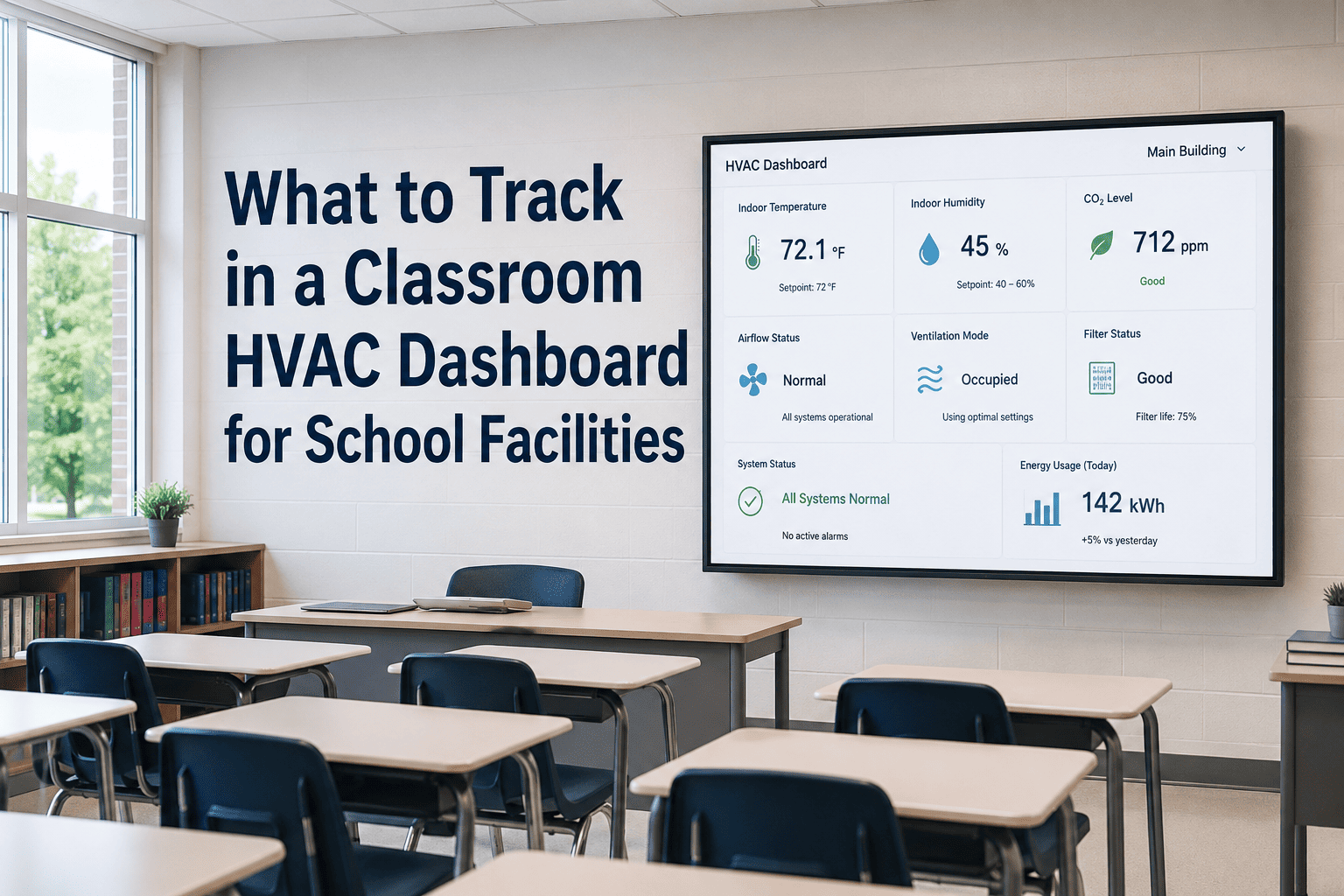
20–22°C, RH 40–60%
Concentration loss, fidgeting, dysregulation in sensory-sensitive students
±2°C from set point
Air quality (CO₂)
<1,000 ppm CO₂
Drowsiness, reduced decision-making, increased sick days
CO₂ above 1,200 ppm
Background noise
<35dB ambient, RT60 <0.6s
Increased cognitive load, comprehension reduction, complete barrier for APD students
HVAC noise above 40dB
Adjustable Lighting: Maintaining the Systems That Make It Work
Tunable LED lighting systems — capable of shifting colour temperature from warm 2700K for calm, focused work to cool 5000K for energising activities — are increasingly specified in new school construction and retrofits. The research basis is solid: cool, bright light increases alertness and reading speed; warm, dimmer light supports creative tasks and emotional regulation. But the system only delivers these benefits if it is maintained. A tunable LED driver that has drifted from its calibration cannot accurately reproduce the specified colour temperature. A dimmer control with a failing actuator gets stuck at one setting. A sensor-controlled system with a contaminated photocell responds to ambient light incorrectly, over-brightening spaces on overcast days and under-brightening on sunny ones.
All zones confirm correct scene for scheduled activity — confirm via controller display or app
Any non-responding fixture or zone logged and work order raised same shift
Daylight sensor operation verified — shading and blinds position confirmed correct
Spot-check lumen output with lux meter against baseline at 3 points per zone
Colour temperature verified at warm and cool scene settings with a colorimeter
Photocell and occupancy sensor lenses cleaned — contamination causes incorrect dimming
Full lumen output mapping across all zones — results trended against commissioning baseline
LED driver operating temperature checked — overheating drivers have reduced lifespan
Scene programming verified — schedules confirmed against current timetable, no orphaned scenes
Flicker measurement at critical frequencies — failing drivers produce flicker below visible threshold
Full photometric survey — compare against original design specification and flag underperforming zones
LED driver replacement schedule updated based on hours logged and temperature history
Control system firmware update reviewed and applied during summer shutdown
Teacher and student feedback from the year reviewed — reported discomfort mapped to maintenance findings
The maintenance programme above sounds intensive — but the total time investment is under 90 minutes per month for a standard 10-classroom building. The alternative is a tunable lighting system that costs three times as much as standard lighting but delivers standard lighting performance because nobody checked whether the drivers were still calibrated.
Zoned Climate Control: What Maintenance Makes Possible
A zoned HVAC system that delivers 21°C to a sensory-sensitive student in a quiet corner workspace while maintaining 23°C in the active learning area of the same classroom is a remarkable piece of engineering. It is also a system with 40% more components than a single-zone system, 40% more opportunities for failure, and a direct dependency on clean sensors, calibrated thermostats, and functioning zone dampers. When any one of these fails, the zone loses independence and the system reverts to a compromise temperature that serves nobody well.
Temperature sensors drift gradually — a sensor reading 1°C low causes the controller to overheat the zone. In a sensory-sensitive classroom, a 2°C drift above comfort is a behavioural incident waiting to happen.
Check intervalQuarterly
Calibration tolerance±0.3°C of reference
Recalibration trigger>0.5°C drift
Damper actuators fail gradually — slipping, sticking, or losing full travel range. A damper stuck at 60% open in a quiet zone delivers full heating/cooling to a space that should be at setback, making independent control impossible.
Check intervalBi-annual
Full travel test0–100% commanded
Replace triggerTravel loss >10%
Demand-controlled ventilation relies on CO₂ sensors to increase fresh air when occupancy rises. A drifted sensor that reads 200ppm low keeps ventilation at minimum even when CO₂ is at a level that produces measurable cognitive impairment in students.
Check intervalAnnually
Calibration methodKnown gas reference
Replace trigger>75ppm drift
Acoustic Management: The Most Under-Maintained Learning Variable
Background noise is the most consistently under-maintained environmental variable in school buildings — and the one with the most dramatic impact on students with auditory processing differences, hearing loss, or autism spectrum conditions. The standard recommendation for unoccupied classroom background noise is below 35dB(A) and a reverberation time below 0.6 seconds at speech frequencies. In practice, most classrooms run at 45–55dB(A) background noise simply because the HVAC system has never been balanced, the ceiling tiles have never been inspected for replacement, and the acoustic seals on doors have been ignored since installation.
HVAC Noise
35–45dB(A) from ductwork and diffusers
Dirty diffusers and unbalanced ductwork add 8–12dB above design noise level. The single biggest maintainable acoustic variable.
Fix: Annual duct cleaning and balancing — brings noise back to design intent
Ceiling Tile Degradation
NRC drops 0.05–0.10 per year without replacement
Acoustic ceiling tiles lose absorption capacity through moisture cycling, dust loading, and physical damage. Damaged tiles are often left in place because they are invisible from below.
Fix: Annual tile condition survey — replace damaged and moisture-stained tiles on schedule
Door & Partition Seals
STC drops 10–15 points when perimeter seals fail
Acoustic door seals degrade through compression fatigue — a door with intact panels but failed perimeter seals transmits noise as effectively as a 30% open door. Corridor noise bleeds into classrooms continuously.
Fix: Bi-annual seal inspection and compression test — replace seals before STC loss affects learning
Universal Design: Maintaining Accessibility as a Performance Standard
Universal Design for Learning principles recognise that environments built to accommodate the widest range of learner differences produce better outcomes for all students. In facility terms, this means the accessibility features that support students with physical, sensory, or cognitive differences must be maintained to the same performance standard as the core building systems — not treated as supplementary features that can be deferred when the maintenance budget is tight.
Visual
High-Contrast Wayfinding and Visual Cues
High-contrast floor markings, door edge indicators, and visual schedule boards must be inspected for fading, damage, and legibility quarterly. A visual cue system that has faded to 50% contrast provides 50% of its design function for students with visual impairments or cognitive differences who rely on it for orientation and routine.
Sensory
Sensory Break Spaces and Quiet Zones
Designated sensory break spaces must be maintained to their design specification — acoustic treatment intact, lighting controls functional, and the space free of storage clutter that accumulates over time. A sensory break space that has become a storage area is not providing the therapeutic and regulatory function it was designed for, and the students who need it most cannot access it.
Motor
Flexible Furniture and Height-Adjustable Surfaces
Height-adjustable desks and tables must be inspected for actuator function and full range of travel semi-annually. A desk whose electric actuator has failed at its lowest position cannot serve a standing learner; a stuck mechanism that requires physical force to adjust is inaccessible for a student with fine motor difficulties and a health and safety risk for the teacher.
Tech
Assistive Technology Infrastructure
Power outlets at accessible heights, cable management for mobility device users, hearing loop systems, and projection screen accessibility must all be included in the scheduled maintenance programme — not treated as IT department responsibilities separate from facilities. A hearing loop with a 30% coverage gap is a compliance failure and an equity failure simultaneously.
How CMMS Makes Smart Facility Management Systematic
The maintenance programmes described above — lighting calibration, zoned HVAC sensor maintenance, acoustic upkeep, and universal design asset tracking — have one structural requirement in common: they need a system that schedules them automatically, logs results against the specific asset, and surfaces degradation trends before they become barriers to learning. A CMMS provides this at a fraction of the cost of a single learning environment incident or accessibility complaint.
Tunable lighting
Auto-schedules calibration, logs lumen output trends per zone, alerts on driver temperature
Driver calibration drift undetected until teachers report complaints
Lighting performs to specification
Zoned HVAC
Schedules sensor calibration, damper travel tests, CO₂ reference checks — all per zone
Zone independence lost gradually — reverts to single-zone compromise
Each zone maintains design temperature
Acoustic systems
Annual duct balancing, ceiling tile survey, and door seal inspection scheduled per room
Background noise rises 8–15dB above design as maintenance deferred
Classroom meets <35dB(A) target
Universal design assets
Every accessibility feature tracked with inspection schedule and condition history
Accessibility features degrade invisibly — complaints are the first indicator
Full accessibility function maintained continuously
Smart Facility Management
Lighting. Climate. Acoustics. Accessibility. Every Learning Environment. One System.
26%
task performance gain from optimised lighting
35dB
classroom noise target — maintainable with structured HVAC PM
30 Days
to full smart facility programme in OxMaint
Trusted by school districts and facility teams across 40+ countries. No credit card required.
Frequently Asked Questions



.png)
.png)


